

TL;DR:
- Lesser-known regions in Italy offer authentic cultural experiences, fewer crowds, and deeper emotional connections. The country invests in sustainable tourism support, benefiting local communities through slow travel and off-season visits. Exploring these hidden gems ensures genuine discovery, artistic inspiration, and environmental preservation for travelers and residents alike.
Italy has a way of seducing every traveler with the same postcard images — the Colosseum at golden hour, the canals of Venice, the leaning tower framed against a cloudless sky. Yet if you have ever stood shoulder to shoulder with a thousand strangers at the Trevi Fountain, you may have sensed that something deeper was missing. The real answer to why visit lesser known Italy lives in a quieter piazza in Basilicata, a fishing village along the Calabrian coast, or a hilltop borgo in Le Marche where the scent of wood smoke drifts through cobbled streets and nobody is posing for a photograph.
Key takeaways
| Point | Details |
|---|---|
| Slow travel restores and connects | Slower-paced destinations deliver deeper emotional well-being and genuine place attachment. |
| Italy is investing in lesser-known regions | The Italian government has committed €5 million to tourism support for Calabria, Sicily, and Sardinia in 2026. |
| Off-season visits amplify authenticity | Shoulder and off-season travel aligns with sustainable cultural programs and reduces overcrowding. |
| Local economies benefit directly | Proximity tourism embeds economic value inside host communities rather than exporting it to large operators. |
| Comparison matters before you plan | Understanding the qualitative gap between iconic tourist hubs and charming small towns Italy helps you make a more intentional choice. |
Why visit lesser known Italy for a richer experience
There is a concept in contemporary travel research called slow tourism, and it describes something many travelers instinctively crave without having the vocabulary for it. Slow tourism is not about transport speed. According to research on emotional well-being in travel, the experiential dimension of slower-paced environments actively restores emotional health through deeper person-environment interaction. In plain terms, wandering through a quiet medieval village in Umbria genuinely makes you feel better than queuing outside the Uffizi for two hours.
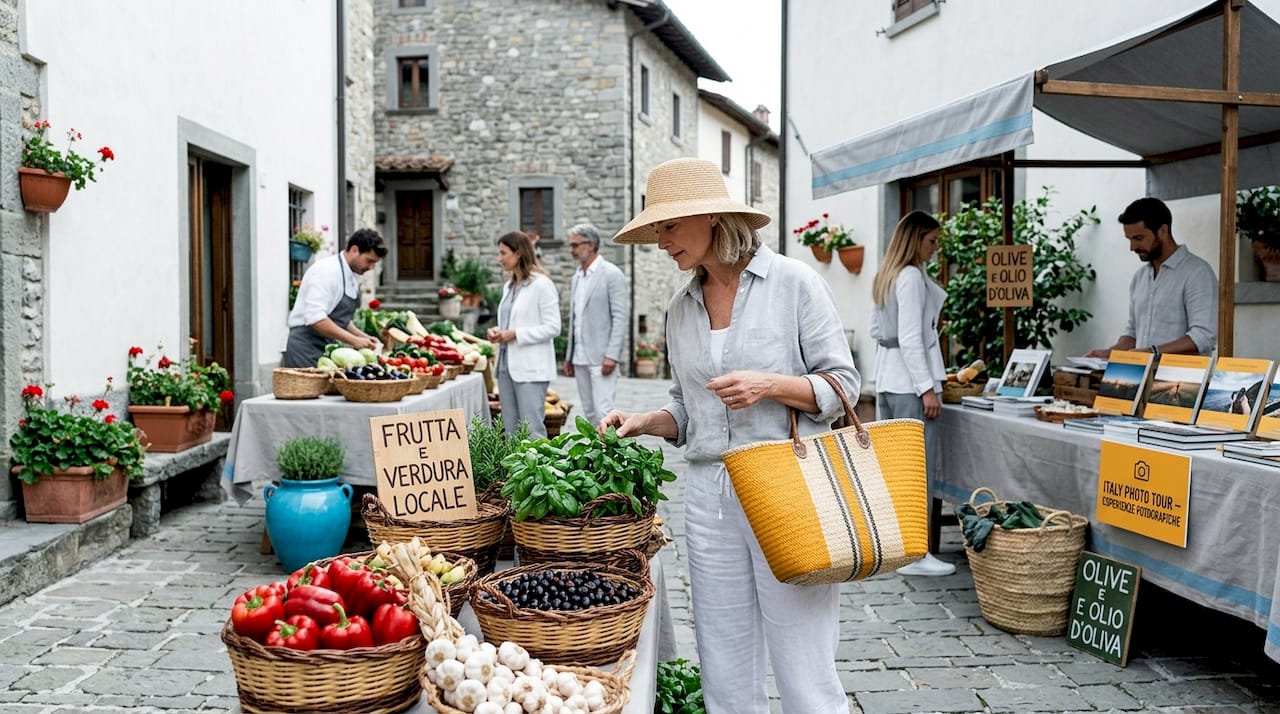
Lesser-known destinations create the conditions for this kind of restoration almost automatically. When a town square is not overwhelmed by tour groups, you notice the texture of the worn limestone steps, the sound of a nonno calling from a window above, the smell of fresh bread from a forno that has served the same neighborhood for four generations. These are the sensory details that stay with you long after photographs fade.
The emotional case for exploring off the beaten path Italy is also deeply personal. Travelers who return from lesser-known regions consistently report stronger feelings of belonging and discovery than those who followed the standard itinerary. You are not a spectator; you are a participant in the ordinary, beautiful rhythm of Italian life. That distinction is the heart of what Italyphototour calls authentic engagement, and it is precisely why so many photographers choose to seek hidden gems instead of the same landmark that millions have already captured.
Here are the experiential qualities that lesser-known Italian destinations tend to offer that crowded cities rarely can:
- Unscripted conversations with locals who are genuinely curious about you
- Visual details unmarred by commercial signage and souvenir stalls
- A pace of life that allows you to absorb rather than rush
- Food and wine that exists for the community, not for tourists
- A feeling of genuine discovery rather than rehearsed wonder
Pro Tip: Before you arrive in a lesser-known Italian town, learn five phrases of the local dialect. You will not use them perfectly, but residents will absolutely remember you for trying.
How lesser-known destinations support sustainable tourism
There is a political dimension to this conversation that most travel articles skip entirely, and it matters. The Italian government is directing €5 million toward tourism support in underserved regions including Calabria, Sicily, and Sardinia in 2026. This is not charity; it is a recognition that the overcrowding of major cities and the economic stagnation of peripheral regions are two sides of the same problem. When you choose to visit a lesser-known destination, your euros flow into communities that genuinely need and cherish them.
Proximity tourism acts as an economic catalyst for these areas in a way that large-scale resort tourism never quite manages. The economic activation is embedded directly in the host community. You sleep in a family-run agriturismo, you eat at a trattoria where the owner’s grandmother still makes the pasta on Thursdays, and you hire a local guide who grew up in the valley you are about to explore. None of that money evaporates into a multinational hotel chain’s quarterly report.
Researchers studying cultural tourism in Southern Italy have found that narrative-based initiatives in small towns do something remarkable. They redistribute tourism’s benefits by activating minor heritage sites and everyday local spaces that icons would never reach. A village storytelling walk, a traditional ceramics workshop, a harvest festival in a hill town in Campania: these experiences reduce the spatial pressure on over-visited landmarks and keep heritage alive in the communities that created it.
There are four concrete ways that choosing underrated Italian destinations supports sustainable tourism:
- You reduce foot traffic and environmental pressure at saturated sites like the Amalfi Coast and the Cinque Terre.
- You stimulate local artisan economies that depend on visitors who care about craftsmanship.
- You support accommodation, food, and guiding services that remain locally owned rather than franchised.
- You participate in off-season cultural programs designed to spread tourism value across the calendar year.
“Visiting lesser-known places can raise awareness of important social and environmental issues affecting local residents, encouraging a form of responsible tourism that supports ethical and environmental causes.”
This is not abstract idealism. It is how thoughtful travelers can align personal experience with genuine community benefit.
When and how to plan your off the beaten path visit
Timing is arguably the most underestimated variable in any Italian travel plan, particularly for hidden gems in Italy. The best window for authentic experiences in lesser-known areas is the shoulder season, roughly March through May and September through November. The light is warmer, the crowds are smaller, and the towns return to their natural rhythms. A September morning in a hilltop village in Molise feels completely different from the same place in August, when even quiet destinations can attract domestic vacationers.
There are also real infrastructure considerations. Some of Italy’s most compelling areas, including parts of inner Sicily and the Apennine villages of Basilicata, have limited public transportation. Renting a car is often not optional; it is the only way to reach the places that make your trip unforgettable. That friction, though, is precisely what keeps those places uncrowded and unspoiled.
Local festivals and cultural calendars are your best friends when planning. The DisAbitanti Project in Southern Italy is one example of performative cultural initiatives that activate lesser-known spaces during quieter seasons, turning ordinary piazzas into living stages of regional memory. Finding and attending these events transforms a sightseeing trip into something closer to participation.
- Check regional tourism boards for annual calendars of sagre (local food festivals), historical reenactments, and open-heritage days
- Allow at least two full days per village rather than planning multiple stops in a single day
- Book accommodation directly with family-run properties to access genuine local knowledge
- Arrive without a fixed schedule for at least one full afternoon and see where the town takes you
Pro Tip: The Italian concept of “campanilismo” means fierce local pride in one’s home village. Ask residents what makes their town different from the one in the valley below, and you will hear stories that no guidebook has ever printed.
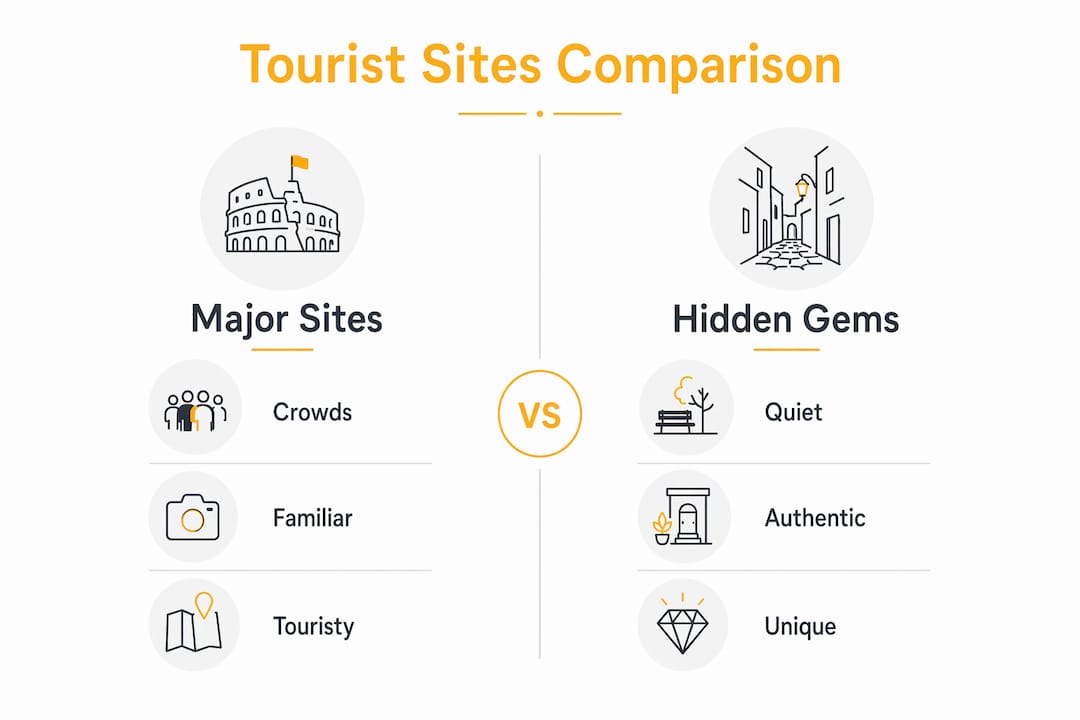
Major tourist sites vs. lesser-known places
The difference between visiting Florence in August and visiting a Tuscan hill town in October is not merely a matter of crowds. It is a fundamentally different relationship with the place itself.
| Aspect | Major tourist sites | Lesser-known destinations |
|---|---|---|
| Crowds | Dense year-round, often overwhelming | Sparse to moderate, especially off-season |
| Local interaction | Limited, largely transactional | Genuine, spontaneous, and memorable |
| Food experience | Standardized menus for tourist palates | Seasonal, regional cooking for local residents |
| Photography | Thousands of near-identical shots exist | Unique photo spots with original compositions |
| Environmental pressure | High. Overtourism degrades sites and local quality of life | Low to moderate, with your visit often welcomed |
| Cultural depth | Iconic but rehearsed | Layered, living, and still evolving |
| Economic benefit to locals | Largely absorbed by large operators | Retained within the host community |
Research on urban tourism economics confirms that enhancing cultural offer quality raises both visitor satisfaction and local tolerance for tourism, a virtuous cycle that lesser-known destinations are far better positioned to create. When a town has ten thousand visitors a year instead of ten million, every traveler is a guest rather than a statistic.
The photography case alone is compelling. The hidden gems to photograph in Italy that exist beyond the postcard circuit offer compositions that feel entirely your own. A doorway draped in wisteria in a village in Puglia, light falling through a baroque window in a Sicilian interior, the geometry of dry-stone walls climbing a volcanic hillside in Pantelleria — these images hold a resonance that the five-hundredth shot of the Rialto Bridge simply cannot.
My perspective: what quieter Italy taught me
I have guided photographers through Rome, Venice, and the Cinque Terre, and I have watched their faces light up with genuine wonder. But the moments I remember most vividly happened somewhere else entirely. A misty morning in Civita di Bagnoregio. A shepherd crossing a road in Abruzzo so unhurried that everyone in the car simply stopped talking. A fisherman in a Calabrian port mending nets with the same knot his grandfather used.
What those moments have in common is that they were not arranged for me. They existed before I arrived and would continue after I left. That is the difference I keep coming back to when someone asks me whether popular destinations are worth skipping.
My honest advice, shaped by years of finding hidden photo spots across this country: do not skip Florence or Rome. But do not stop there. Add one place that nobody in your circle has visited, one destination with no brand recognition and no Michelin-starred restaurant. You will return from that corner of Italy carrying something you cannot buy. You will carry proof that the country still has room for you.
— Mino
Discover authentic Italy through a photography lens
Italy’s lesser-known places reward every sense, and they reward a camera held with intention perhaps most of all. Italyphototour specializes in exactly this kind of travel: immersive, slow, and attuned to the stories that ordinary light tells on extraordinary walls. Led by professional photographer Mino Di Vita, our photography tours across Italy take you beyond the expected and into the living heart of regions most travelers overlook entirely.

Whether you are drawn to the ochre-washed villages of Sardinia, the brooding volcanic landscapes of Sicily, or the intimate hill towns of Calabria, Italyphototour designs each experience around cultural depth, natural light, and genuine local connection. You can explore what we do and discover how our guided tours turn a travel itinerary into a deeply personal creative chapter.
FAQ
What makes lesser-known Italy better than popular destinations?
Lesser-known Italian destinations offer authentic local culture, fewer crowds, and a slower pace that supports deeper emotional connection and genuine community interaction. Research confirms that slow travel environments provide measurable restorative and well-being benefits that crowded tourist hubs rarely deliver.
When is the best time to visit off the beaten path Italy?
The shoulder seasons, March through May and September through November, offer the ideal combination of good weather, reduced visitor numbers, and access to local cultural programs designed to bring authentic regional experiences to life.
Does visiting lesser-known places actually help local communities?
Yes. Proximity tourism keeps economic benefits inside host communities, supporting family-run accommodations, local artisans, and regional food producers in ways that mass tourism at major sites rarely achieves.
Why are hidden gems in Italy so valuable to photograph?
Lesser-known locations offer original compositions free from the visual saturation of iconic landmarks, allowing photographers to create images with genuine narrative depth and personal significance.
Is the Italian government supporting tourism in lesser-known regions?
Yes. In 2026, Italy committed €5 million specifically to support tourism development in Calabria, Sicily, and Sardinia, signaling a national shift toward promoting and sustaining underrepresented Italian destinations.