

Standing in the sunlit hills of Tuscany, many American photographers find themselves drawn into an environment where art and nature are inseparable. This region offers more than just beautiful scenery. Its landscapes, including medieval villages and cypress-lined roads, remain visually authentic thanks to over 120 protected nature reserves and centuries of artistic heritage. Explore how Tuscany’s unique blend of creative history, preserved settings, and atmospheric light can spark your artistic vision and transform your photography.
Table of Contents
- What Makes Tuscany Artistically Unique
- Influence of Renaissance and Local Masters
- Iconic Landscapes and Natural Light
- Atmosphere, Villages, and Human Stories
- How Local Culture Sparks Creativity
Key Takeaways
| Point | Details |
|---|---|
| Tuscany’s Artistic Uniqueness | The region’s blend of natural light, historical significance, and preserved landscapes creates a unique environment for visual storytelling. |
| Renaissance Influence | The creative foundations laid by Renaissance masters continue to shape modern photography through principles of observation and integration with the landscape. |
| Authentic Atmosphere | The ongoing life within Tuscan villages offers genuine moments that convey depth and authenticity, enriching photographic narratives. |
| Cultural Engagement | Immersing oneself in local traditions and crafts enhances creativity, enabling photographers to capture more meaningful and expressive images. |
What Makes Tuscany Artistically Unique
Tuscany stands apart from other European destinations because it combines three elements that rarely align: exceptional natural light, layered historical significance, and landscapes that have remained relatively unchanged for centuries. As a photographer, you’re drawn to places that tell visual stories, and Tuscany does this with remarkable consistency. The rolling hills, cypress-lined roads, and medieval villages aren’t just picturesque backdrops. They’re a direct inheritance from centuries of human intention and artistic vision that shaped the land itself.
The region’s artistic uniqueness flows from its role as the birthplace of the Italian Renaissance, a period when European culture fundamentally shifted toward observing nature with scientific precision while celebrating human achievement. The Medici Villas and Gardens in Tuscany, constructed between the 15th and 17th centuries, represent something revolutionary: they were designed as integrated systems where architecture, gardens, and landscape merged intentionally. This wasn’t accidental beauty. It was engineered harmony. The Medici family understood that visual composition extends beyond buildings to how those buildings sit within their environment. This principle, born in Renaissance Tuscany, became the template for princely residences across all of Europe. When you photograph a Tuscan villa framed by its gardens and hillsides, you’re capturing the visual philosophy that transformed Western aesthetics.
What truly distinguishes Tuscany for photographers is how history, nature, and light converge. The region contains over 120 protected nature reserves, which means the landscape has been intentionally preserved rather than developed into modern sprawl. Medieval villages perch on hilltops exactly as they did 500 years ago. Stone farmhouses follow the same patterns. This continuity creates visual authenticity that you simply cannot replicate. You’re photographing landscapes that inspired Renaissance painters, and those landscapes still carry that same golden light, the same atmospheric depth, the same sense of timelessness. The artistic heritage didn’t just happen in galleries and studios. It shaped the actual terrain you’re walking through, which means every frame you capture inherits centuries of intentional design.
Pro tip Visit Tuscan locations during early morning and late afternoon when the light becomes thick and directional, emphasizing the texture of ancient stone and rolling terrain. This mimics the chiaroscuro techniques Renaissance painters used, transforming ordinary scenes into compositions with genuine artistic depth.
Here’s how key elements combine to shape Tuscany’s unique artistic appeal for photographers:
| Element | Role in Tuscany | Impact on Photography |
|---|---|---|
| Natural Light | Distinct golden tones | Enhances depth and texture |
| Historical Continuity | Preserved villages/land | Provides authentic, timeless scenes |
| Human Innovation | Designed villas/gardens | Creates harmonious compositions |
Influence of Renaissance and Local Masters
When you stand in front of a Tuscan landscape, you’re not just looking at scenery. You’re viewing the world through the visual framework that Leonardo da Vinci, Michelangelo, and Botticelli established five centuries ago. These weren’t theoretical artists working in isolation. They were investigating the actual landscape around them, translating what they observed into principles that fundamentally changed how humans perceive and represent the world. Italian Renaissance painting, originating mainly in Florence, developed techniques like mathematical perspective and realism that moved art beyond medieval representation into something closer to how our eyes actually see. When you frame a shot in Tuscany, you’re applying visual logic that these masters invented while working in this exact region.
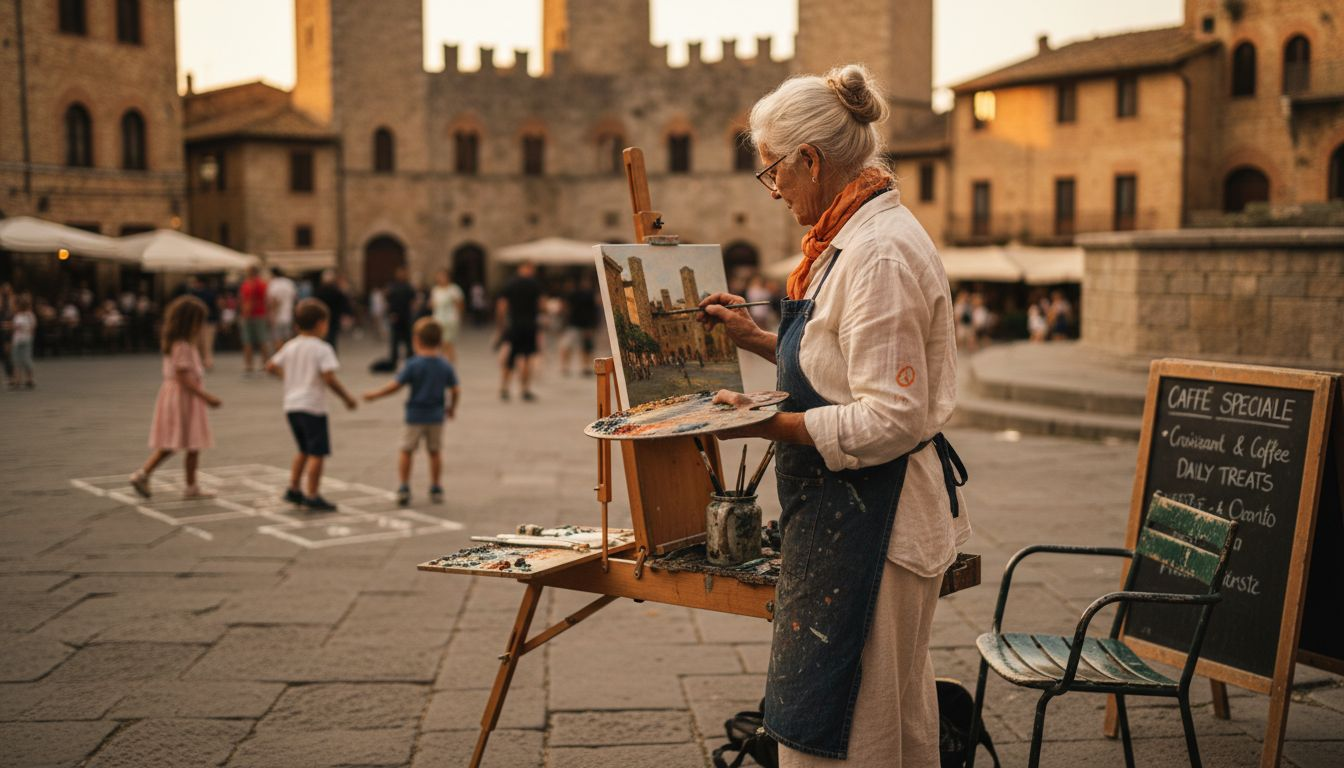
The specific genius of Tuscan Renaissance masters came from their obsession with observation over convention. They didn’t paint what tradition said should be painted. They painted what they actually saw: light hitting surfaces at specific angles, shadows falling with geometric precision, human figures occupying three dimensional space rather than flat surfaces. Leonardo sketched the Arno River, studied cloud formations, and analyzed how water moves. Michelangelo carved human anatomy with anatomical accuracy because he understood the actual structure beneath skin. This empirical approach transformed Tuscany into an open studio where art and science merged. For photographers, this matters enormously. These masters were solving the same problems you face: how to capture light, how to create depth, how to make viewers feel the weight and presence of what they’re seeing.
What makes Tuscany unique as an artistic destination is that the Renaissance produced significant developments in literature, art, and architecture that spread educational and cultural ideals throughout Europe, but the physical traces remain concentrated here. You can photograph the same hillsides that inspired these artists. The light hasn’t changed. The stone hasn’t changed. The geometry of villages and farms follows the same proportions. Walking through these landscapes, you absorb visual principles subconsciously. You begin to see like a Renaissance master because you’re seeing what they saw. The Tuscan environment taught them their craft, and now it can teach you. Every photograph you take inherits their discoveries about perspective, light, and composition.
Pro tip Study Renaissance paintings of Tuscan landscapes before your visit, paying specific attention to how light is rendered and how foreground, middle ground, and background create depth. Recreate these compositional approaches with your camera to develop an intuitive understanding of perspective that transforms your photography.
This table summarizes major Renaissance innovations and how they influence photographers working in Tuscany today:
| Renaissance Innovation | Original Purpose | Modern Photographic Benefit |
|---|---|---|
| Mathematical Perspective | Realistic space in painting | Accurate depth in landscape photos |
| Focus on Natural Light | Rendered realistic illumination | Guides timing and angle for captures |
| Integration with Landscape | Harmonized art and environment | Inspires balanced compositions |
Iconic Landscapes and Natural Light
Tuscany’s visual identity rests on a handful of repeating elements that work together like a perfectly composed photograph. Cypress trees rise like dark exclamation points against golden hillsides. Olive groves create horizontal layers of silvery green. Stone villages cluster on ridgetops, their terracotta roofs warming under the afternoon sun. These aren’t random features. They’re the foundational vocabulary of Tuscan imagery, and understanding how they interact with light is essential to capturing what makes this region so magnetic for photographers.
The landscape’s power comes from its architectural integration with nature. The Medici Villas and Gardens illustrate architecture built in harmony with the region’s natural landscape, blending artistic qualities with the outdoors in ways that influenced how Europeans understood the relationship between human creation and natural environment. When you photograph a villa surrounded by sculpted gardens and then rolling countryside beyond, you’re capturing that Renaissance principle in action. The built environment doesn’t dominate the landscape. It conversates with it. This harmony extends throughout Tuscany, where farmhouses, walls, and roads follow the contours of hills rather than imposing rigid geometry. The result feels organic rather than constructed, which is precisely what makes it so visually compelling. Your camera responds to this balance because it’s genuinely balanced.
Tuscany’s iconic landscapes are characterized by diverse tree species including elegant cypress trees, olive groves, and pine forests, all contributing to the region’s natural charm and deeply influencing the unique atmosphere. These elements do more than create picturesque scenery. They structure light itself. Cypress trees create vertical shadows that break horizontal sunlight. Olive groves scatter light into dappled patterns. Pine forests deepen the atmospheric perspective that makes distant hills fade into blue haze. The light in Tuscany at sunrise and sunset becomes almost tangible because it’s filtered and shaped by these botanical elements. Golden hour here feels different from golden hour in most places because the landscape is specifically designed to catch and hold that light. This is why photographers return to Tuscany repeatedly. The light is generous, predictable, and shaped by centuries of intentional land use.
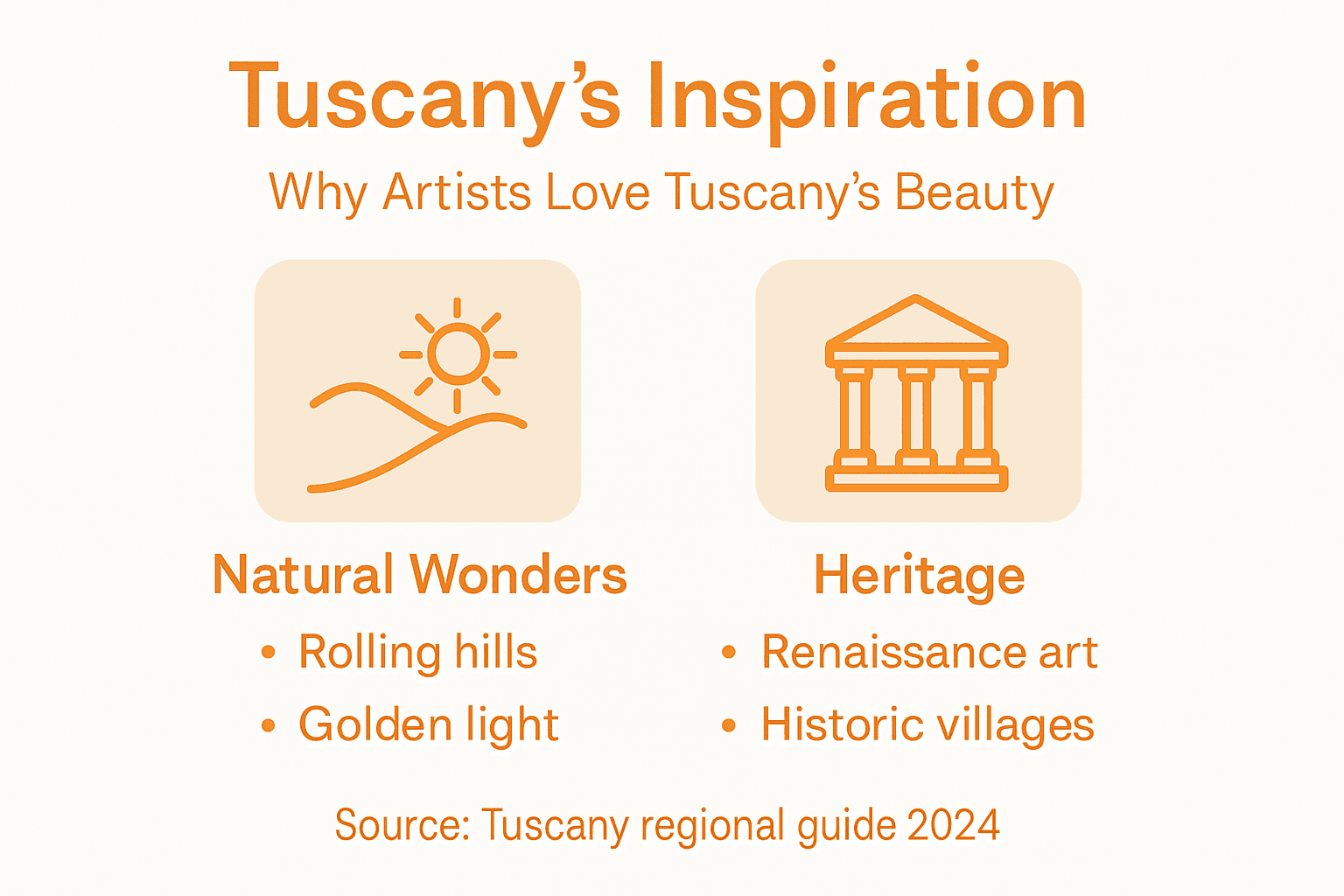
Pro tip Scout your shooting locations during midday when harsh sunlight reveals the landscape’s full geometry and structure, then return during golden hour to capture how the cypress trees and hillsides transform that same scene into rich, directional light. This two phase approach helps you understand the landscape’s fundamental composition before executing your strongest images.
Atmosphere, Villages, and Human Stories
Walk through a Tuscan village at dawn and you’ll understand why photographers keep returning to this region. The light hasn’t changed much in 500 years. The stone pathways still narrow unpredictably. Laundry still hangs between buildings. An elderly woman might arrange flowers on a windowsill or sweep a doorstep in exactly the way her grandmother did. These moments exist in nearly every Tuscan village, and they’re not staged for tourism. They’re the ongoing rhythm of life in communities that have maintained their character through centuries of change. This is what photographers actually chase in Tuscany: not postcard perfection, but authentic atmosphere where time moves differently.
Medieval villages such as San Gimignano maintain their traditional character, embodying centuries of history and local life that inspire a strong sense of place and community. These villages weren’t designed as photogenic backdrops. They were built as functional settlements on defensible hilltops, with narrow streets that provided shade in summer and windbreaks in winter. The arrangement of buildings, the width of alleys, the placement of wells and gathering spaces all solved real problems that medieval communities faced. This practical intelligence creates visual richness that feels earned rather than contrived. When you photograph a village street in San Gimignano or Montepulciano, you’re capturing spatial solutions that worked so well they’ve remained essentially unchanged for 700 years. That authenticity translates into compelling images because viewers sense the depth of real human occupation.
Rural tourism has contributed to the renaissance of the Tuscan countryside by emphasizing unique agricultural landscapes, traditional villages, and local culture, showing how identity and local resources support social and economic renewal. This means villages remain living communities rather than museum pieces. Local people still farm the surrounding land. Markets still function. Restaurants serve food grown within walking distance. This vitality attracts photographers because dynamic communities generate authentic moments. A farmer bringing produce to market, children playing in a piazza, an elderly craftsperson working at a window. These aren’t performances. They’re real life happening in settings that have survived wars, plagues, and centuries of upheaval. You’re documenting not just landscape but resilience and continuity. The human stories that unfold in Tuscan villages carry weight because the villages themselves carry history.
Pro tip Arrive in villages early morning before tour groups appear, and visit local markets or cafes where residents gather rather than focusing exclusively on landmarks. These authentic moments reveal the actual atmosphere that makes villages compelling, creating images with genuine emotional resonance that distinguish your work from standard travel photography.
How Local Culture Sparks Creativity
Tuscany doesn’t inspire creativity through passive beauty alone. The region actively shapes how you think visually because you’re immersed in a culture that has prioritized aesthetic refinement for centuries. When you eat a meal prepared with ingredients from within kilometers of where you’re sitting, when you walk through villages where every window has been considered for its proportion and placement, when you encounter craftspeople still practicing techniques their ancestors perfected generations ago, you absorb a framework for thinking about quality and intentionality. This cultural context rewires how you see. Your camera becomes an extension of that same pursuit of precision and beauty that defines Tuscan culture itself. You’re not just observing a beautiful place. You’re temporarily adopting a cultural perspective that values craft, proportion, and authentic expression.
Culture shapes creativity by influencing how individuals conceive of creativity and the creative processes they prefer, providing a framework within which creativity is expressed and evaluated. Tuscan culture emphasizes usefulness alongside novelty. A photograph should be beautiful, yes, but it should also communicate something true about what exists in front of the camera. You see this principle everywhere in Tuscany. Agricultural practices are efficient and beautiful simultaneously. Buildings solve practical problems while maintaining visual harmony with their surroundings. Wine production combines scientific precision with artistic sensibility. This cultural framework influences your creative decisions at a subconscious level. You find yourself asking different questions about composition because you’re absorbing a culture that asks those same questions.
Creative tourism in Tuscany demonstrates how local culture fuels creativity by engaging visitors in authentic experiences rooted in distinctive landscapes, art, food, and traditions, fostering innovation while preserving local identity. This isn’t manufactured creativity tourism. Tuscany’s creative vitality comes from actual residents continuing genuine cultural practices: small-scale farmers, artisan producers, painters, sculptors, and musicians who work within traditions while constantly innovating. When you engage with these practitioners and their work, you’re not participating in a performance. You’re witnessing real creative problem-solving that happens to be rooted in centuries of tradition. That authenticity catalyzes your own creativity because you see how tradition and innovation can coexist productively. The Tuscan approach to creativity isn’t about breaking with the past. It’s about deepening your relationship with craft while pushing toward something new. Your photography benefits because you absorb this philosophy through proximity and experience.
Pro tip Spend time in local studios, artisan workshops, or markets observing how Tuscan craftspeople make decisions about materials, composition, and refinement. These observations directly transfer to photographic practice, teaching you how to balance technical precision with authentic expression in your own work.
Capture the Timeless Light and Artistic Soul of Tuscany
Are you inspired by Tuscany’s unique blend of natural light, historical layers, and thoughtfully preserved landscapes but unsure how to translate that inspiration into your photography? Many photographers face the challenge of capturing authentic moments that reflect the region’s deep artistic heritage rather than just postcard images. Key concepts like Renaissance perspective, golden hour light, and the harmony between human innovation and nature require more than casual shooting — they call for an immersive experience where creativity meets tradition.
Italy Photo Tour offers personalized guided photography tours designed specifically to help you unlock these very principles. Led by professional photographer Mino Di Vita, these tours immerse you in Tuscany’s atmospheric villages, iconic landscapes, and cultural stories. You will learn how to harness natural light reflecting the chiaroscuro techniques of Renaissance masters while discovering the living history behind every frame.
Join a photography experience that goes beyond sightseeing and connects you with the artistic philosophy that shaped Tuscany. Visit Italy Photo Tour now and start planning your journey to capture not just images but the soul of one of the world’s most inspiring regions. Explore all our destinations including Tuscany and transform your photography with insight and passion.
Frequently Asked Questions
What makes Tuscany unique for photographers?
Tuscany combines exceptional natural light, historical significance, and preserved landscapes that create authentic and picturesque settings for photography, reflecting centuries of artistic vision.
How did the Renaissance influence photography in Tuscany?
The Renaissance artists, including Leonardo da Vinci and Michelangelo, pioneered techniques such as mathematical perspective and realistic light representation that continue to inform photographic practices today.
What are the best times to photograph in Tuscany?
Early morning and late afternoon are ideal for photography in Tuscany, as the light becomes thick and directional, enhancing textures and providing depth, similar to the chiaroscuro techniques used by Renaissance painters.
How do local traditions and culture impact creativity in Tuscany?
The vibrant cultural context of Tuscany, with its emphasis on quality, intentionality, and authentic expression, helps artists and photographers refine their visual thinking and approach to composition.
Recommended
- Pavese hills, an enchanted corner of Lombardy – Italy Photo Tour
- Tuscany Photo Tour | Landscapes & Medieval Villages | discover
- Italy Photo Tours | Traveling and photograph Italy | discover more
- Burano and the charm of the colorful houses – Italy Photo Tour
- Art History for Beginners – Paths to Self-Meaning – Curiocanvas
- Understanding the Role of Light in Arts and Crafts Homes –
- Tips For Better Nature Photography – Amateur Photographer Guide