

TL;DR:
- Photographing local culture helps preserve traditions, fosters community pride, and deepens personal understanding.
- Italy’s diverse regions offer unique stories through daily life, festivals, artisans, and ordinary moments.
- Ethical photography requires respect, permission, and genuine engagement to capture authentic, meaningful images.
Across the world, living traditions are quietly fading. 40% of local traditions face the risk of disappearing within the next 50 years, carried away by modernization, migration, and the relentless pace of change. For photographers, this reality is both sobering and galvanizing. Your camera is not merely a tool for making beautiful images. It is a vessel for memory, a way of honoring the vivacity of cultures that might otherwise vanish without a trace. This guide explores why photographing local culture matters deeply, how Italian traditions offer extraordinary stories for your lens, and how you can approach this practice with both skill and integrity.
Table of Contents
- The lasting impact of photographing local culture
- How Italian scenes offer unique photographic stories
- Ethical considerations: Showing respect and gaining trust
- Practical steps: How to authentically capture local culture
- What most guides miss about photographing local culture
- Deepen your experience with Italian photo tours
- Frequently asked questions
Key Takeaways
| Point | Details |
|---|---|
| Preserve at-risk traditions | Photographing local culture helps save customs that might disappear for future generations. |
| Boost personal and community identity | Your photos can foster local pride while deepening your own sense of connection and growth. |
| Prioritize ethical storytelling | Respectful, authentic interactions yield the most meaningful and lasting images. |
| Practical frameworks work best | Combining research, immersion, and reflection leads to more powerful cultural photography. |
The lasting impact of photographing local culture
To appreciate the full value of capturing local culture, it’s essential to understand the unique and far-reaching impacts your photos can have. When you photograph a Sicilian fisherman mending his nets at dawn, or a Venetian glassblower coaxing molten color into form, you are doing something far more significant than filling a memory card. You are building a visual archive, a living record that future generations can study, cherish, and draw inspiration from. Photographing local culture preserves traditions and creates visual records that stand against disappearance, offering a form of cultural continuity that words alone cannot achieve.
The ripple effects extend into communities themselves. Photography projects centered on local life and heritage have been shown to increase community pride by as much as 27%, reinforcing a shared sense of identity and belonging. When people see their own traditions reflected with dignity and artistry, something awakens in them. The act of being seen, truly seen, is a gift.
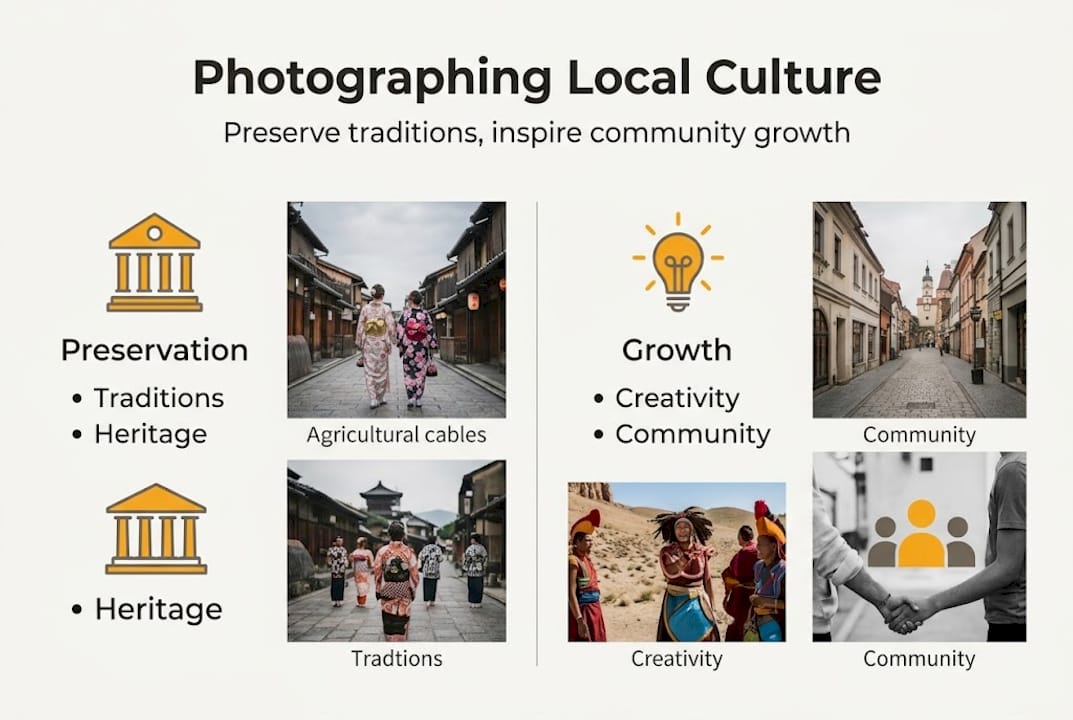
For the photographer, the rewards are equally profound. Engaging deeply with a culture, slowing down to observe a market vendor arranging blood oranges, or watching children chase pigeons through a sunlit piazza, nurtures both mindfulness and a richer sense of self. Photography boosts well-being through the twin powers of nostalgia and mindfulness, grounding you in the present while connecting you to something larger than yourself. The cultural immersion benefits that come from this kind of engaged, attentive photography are genuinely transformative.
| Impact area | Benefit for photographer | Benefit for community |
|---|---|---|
| Cultural preservation | Deepens personal understanding | Creates lasting visual archives |
| Community pride | Builds empathy and connection | Strengthens shared identity |
| Well-being | Encourages mindfulness | Celebrates local heritage |
| Portfolio growth | Adds authentic storytelling | Increases cultural visibility |
The creative storytelling ideas that emerge from immersive cultural photography are unlike anything you can find in a studio or a landscape shoot. They carry the weight of real human experience, and that weight is precisely what makes them unforgettable. Developing strong visual storytelling tips will help you translate these moments into images that resonate long after the shutter clicks.
“Photography is the art of observation. It has little to do with the things you see and everything to do with the way you see them.” — Elliott Erwitt
The most enduring cultural photographs share one quality: they make the viewer feel present in a moment they never personally experienced. That is the quiet magic you are reaching for.
How Italian scenes offer unique photographic stories
While the impact of cultural photography is profound, Italian culture offers particularly rich ground for storytelling through the lens. Italy is not one country so much as a kaleidoscope of micro-cultures, each region carrying its own dialects, recipes, festivals, and ways of moving through the world. The fog-draped canals of Venice speak an entirely different visual language than the sun-scorched markets of Palermo or the rolling lavender fields of Tuscany. This regional diversity is a photographer’s dream, offering an almost inexhaustible range of textures, moods, and human stories.
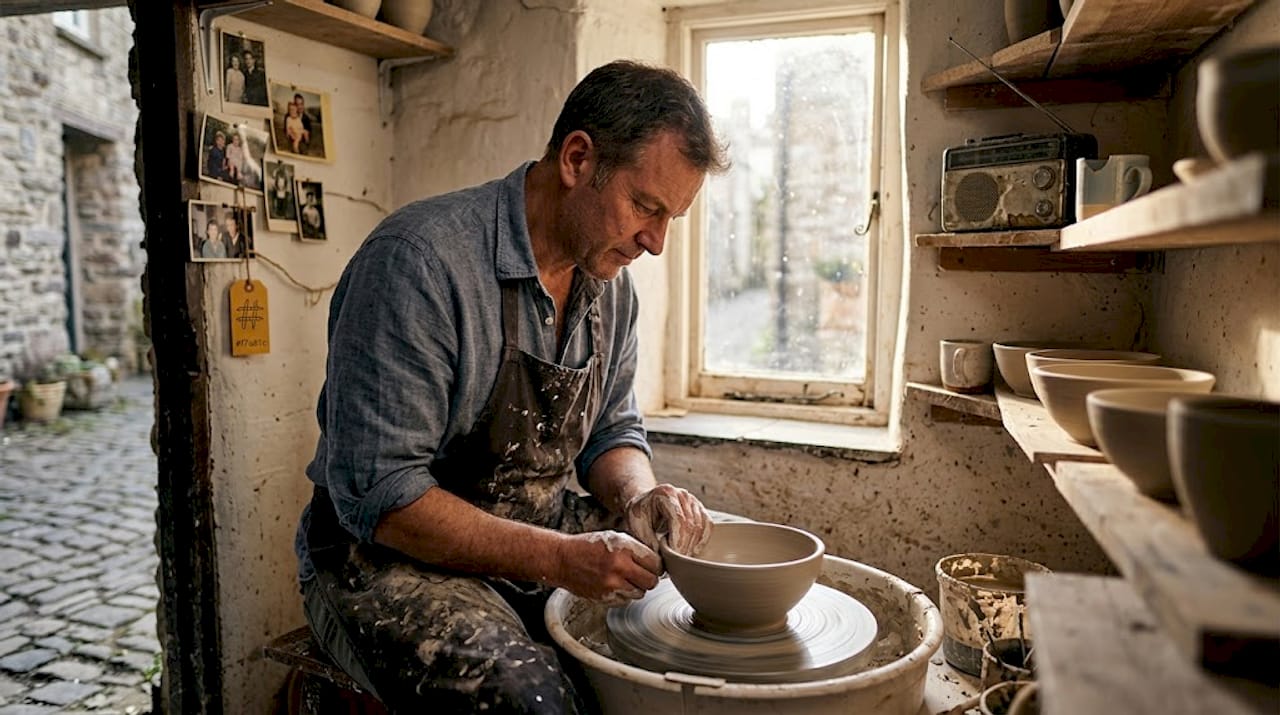
Amateur USA photographers gain personal growth, deeper cultural understanding, and meaningful portfolio building through immersive street and cultural photography. Italy accelerates all of this. The country’s daily rhythms, the morning espresso ritual, the afternoon passeggiata, the animated gestures of a neighborhood conversation, are themselves photographic compositions waiting to be discovered.
Some of the most compelling subjects you will encounter include:
- Artisans at work, from leather craftsmen in Florence to ceramic painters in Vietri sul Mare
- Weekly outdoor markets overflowing with seasonal produce and local color
- Religious festivals and processions that fill narrow streets with candlelight and devotion
- Elderly residents gathered in village squares, their faces telling decades of stories
- Children playing in courtyards, unbothered and beautifully unselfconscious
Pro Tip: Resist the pull of the iconic and the obvious. The most unique shots often emerge from ordinary, daily-life interactions: a grandmother hanging laundry between terracotta buildings, a fisherman sharing a joke with a neighbor. These quiet moments carry an authenticity that no postcard can replicate.
| Approach | What you capture | Emotional quality |
|---|---|---|
| Tourist photography | Landmarks, crowds, surfaces | Impressive but impersonal |
| Immersive cultural photography | Rituals, relationships, texture | Intimate and enduring |
Exploring place-based photography in Italy means learning to read a location before you raise your camera, absorbing its pace and personality. Committing to enhancing your skills through dedicated practice will help you move from observer to genuine storyteller.
Ethical considerations: Showing respect and gaining trust
Even in the most picturesque Italian villages, capturing culture responsibly means engaging with communities authentically and mindfully. Ethics in cultural photography are not a checklist to complete before pressing the shutter. They are an ongoing, living practice that shapes every interaction you have in the field.
Vulnerable subjects require extra caution. Balancing spontaneity with permission, and avoiding the trap of exoticizing or stereotyping the people you photograph, are among the most important skills a cultural photographer can develop. Italy’s communities are warm and generous, but they are not props in your visual story. They are its authors.
Here are four principles to carry with you:
- Ask when in doubt. A smile and a gesture go a long way, even across language barriers. Most people respond warmly to genuine interest and respect.
- Observe before you photograph. Spend time in a location before raising your camera. Let people grow accustomed to your presence so your images reflect natural, unguarded moments.
- Avoid reductive framing. Photograph the full humanity of your subjects, not just the picturesque or the exotic. Seek complexity, not caricature.
- Honor the dignity of the moment. Ethics prioritize dignity over the perfect shot. If someone seems uncomfortable, lower your camera. No image is worth another person’s distress.
“The camera is an instrument that teaches people how to see without a camera.” — Dorothea Lange
Pro Tip: Building genuine trust with your subjects transforms your photography. Spend an afternoon in a market without photographing anything. Talk, listen, share a coffee. When you finally raise your camera, the images you make will carry an entirely different quality of connection.
Understanding street photography ethics in the Italian context is essential reading before your first trip. A thorough street photography guide will help you navigate the nuances of public versus private space, consent, and cultural sensitivity. Reflecting on the role of culture in photo tours will deepen your understanding of how guided experiences can support ethical practice.
Practical steps: How to authentically capture local culture
With the right ethical approach in mind, you can start putting practical strategies into action. Authentic cultural photography is not accidental. It is the result of preparation, genuine curiosity, and a willingness to be changed by what you encounter.
Follow this four-part framework to guide your practice:
- Prepare. Research the region, its history, its festivals, and its social customs before you arrive. Understanding context transforms what you see through the viewfinder.
- Engage. Participate in Italian festivals, visit artisan workshops, and linger in daily street life. Immersive experiences like tours and workshops accelerate your learning while ensuring ethical practices and genuine access to locals.
- Reflect. After each session, review your images with a critical and compassionate eye. Ask yourself whether your photographs honor your subjects or simply exploit their visual appeal.
- Share. Present your work in ways that credit and celebrate the communities you photographed. Consider how your images will be read by the people in them.
| Stage | Key action | Expected outcome |
|---|---|---|
| Prepare | Research culture and context | Informed, respectful approach |
| Engage | Join festivals, workshops, daily life | Authentic access and richer images |
| Reflect | Review images critically | Stronger storytelling and ethics |
| Share | Credit communities, share responsibly | Meaningful cultural contribution |
Some practical habits that will serve you well include:
- Arriving early to locations to catch the soft, golden light of morning and the unhurried pace before tourists arrive
- Carrying a small notebook to record names, stories, and context for your images
- Learning a handful of Italian phrases to open doors and signal genuine respect
Exploring immersion in Italian photo tours offers a structured pathway into these experiences, connecting you with local guides who understand both the culture and the craft. Developing immersive storytelling methods will help you weave all of these elements into a cohesive and compelling body of work.
What most guides miss about photographing local culture
Having learned the core guidelines, it’s worth stepping back to reflect on what really makes photographing local culture both rewarding and challenging. Most guides focus on technique or permission protocols. Very few acknowledge the emotional complexity at the heart of this practice.
Ethics in cultural photography are rarely black and white. Candid photography can be both an intrusion and a vital form of cultural commentary, depending entirely on the spirit in which it is made. The difference between exploitation and celebration often lives not in the image itself, but in the relationship between photographer and subject.
The most memorable photographs we have seen from Italy are not the technically perfect ones. They are the ones where the photographer clearly sacrificed the ideal frame in favor of a genuine, dignified moment. A slightly soft focus, an imperfect composition, but a subject who is fully, beautifully themselves. That emotional honesty is irreplaceable.
We encourage you to interpret culture rather than merely document it. Your perspective, your sense of light and shadow, your feeling for the chiaroscuro of a Neapolitan alley at dusk, these are not distractions from the subject. They are part of the story. Developing your voice through immersive storytelling is what transforms a record into a revelation.
Pro Tip: Let your camera be a tool for building relationships and understanding, not just for capturing images. The best cultural photographs are made by photographers who were genuinely present, not just technically prepared.
Deepen your experience with Italian photo tours
If you’re ready to translate these principles into your own work, consider how structured experiences can help you grow faster and more confidently.

Italy Photo Tour, led by professional photographer Mino Di Vita, offers curated photography tours in Italy designed to immerse you in the authentic rhythms of Italian life. From the golden light of Tuscany to the labyrinthine streets of Venice, each experience is crafted to sharpen your eye, deepen your cultural understanding, and help you build a portfolio that truly tells a story. Visit Italy Photo Tour to explore upcoming workshops and guided walks that will bring every lesson in this guide to vivid, unforgettable life.
Frequently asked questions
What are the main benefits of photographing local culture?
Photographing local culture preserves traditions at risk, builds community pride, and enriches your own creative and cultural understanding in ways that purely technical photography rarely achieves.
How can photographers avoid stereotypes and ethical pitfalls?
Always treat subjects with dignity, ask for permission when needed, and avoid exoticizing or oversimplifying the people or traditions you photograph, prioritizing their humanity over the perfect shot.
Why is Italy considered a top location for cultural photography?
Italy’s regional variety and traditions create a richness of daily life, festivals, and artisan culture that offers photographic opportunities genuinely unlike anywhere else in the world.
Are guided workshops useful for learning cultural photography?
Yes, guided experiences provide structured access, ethical support, and direct learning from local experts, helping you develop both your technical skills and your cultural sensitivity far more quickly than solo exploration.