

Travelers looking for more than ordinary snapshots often find themselves drawn to the hidden stories woven across Italy’s diverse terrain. Italy offers photographers an extraordinary blend of natural beauty and complex human interaction, from Alpine glaciers to Renaissance-crafted hills and vibrant cityscapes. Understanding the deeper meaning behind these landscapes lets American photographers move beyond pretty postcards, seeking images that capture the emotional and cultural heart of Italy. This guide helps you discover how to tell those richer stories through your lens.
Table of Contents
- Italian Landscape Photography Defined
- Types of Italian Landscapes Worth Capturing
- Emotional and Artistic Value of Photography
- Technical Skills Needed for Landscape Shots
- Risks, Challenges, and How to Avoid Them
Key Takeaways
| Point | Details |
|---|---|
| Understanding the Essence | Italian landscape photography focuses on the complex interactions between humans and their environment, emphasizing cultural narratives rather than just aesthetics. |
| Landscape Types | Photographers should explore diverse types of landscapes in Italy, each revealing unique stories shaped by human and natural influences. |
| Technical Proficiency | Mastery over camera settings and exposure techniques is essential for capturing Italy’s intricate landscapes effectively. |
| Anticipating Challenges | Photographers must prepare for unpredictable weather and technical limitations, ensuring flexibility and adaptability in their approach. |
Italian Landscape Photography Defined
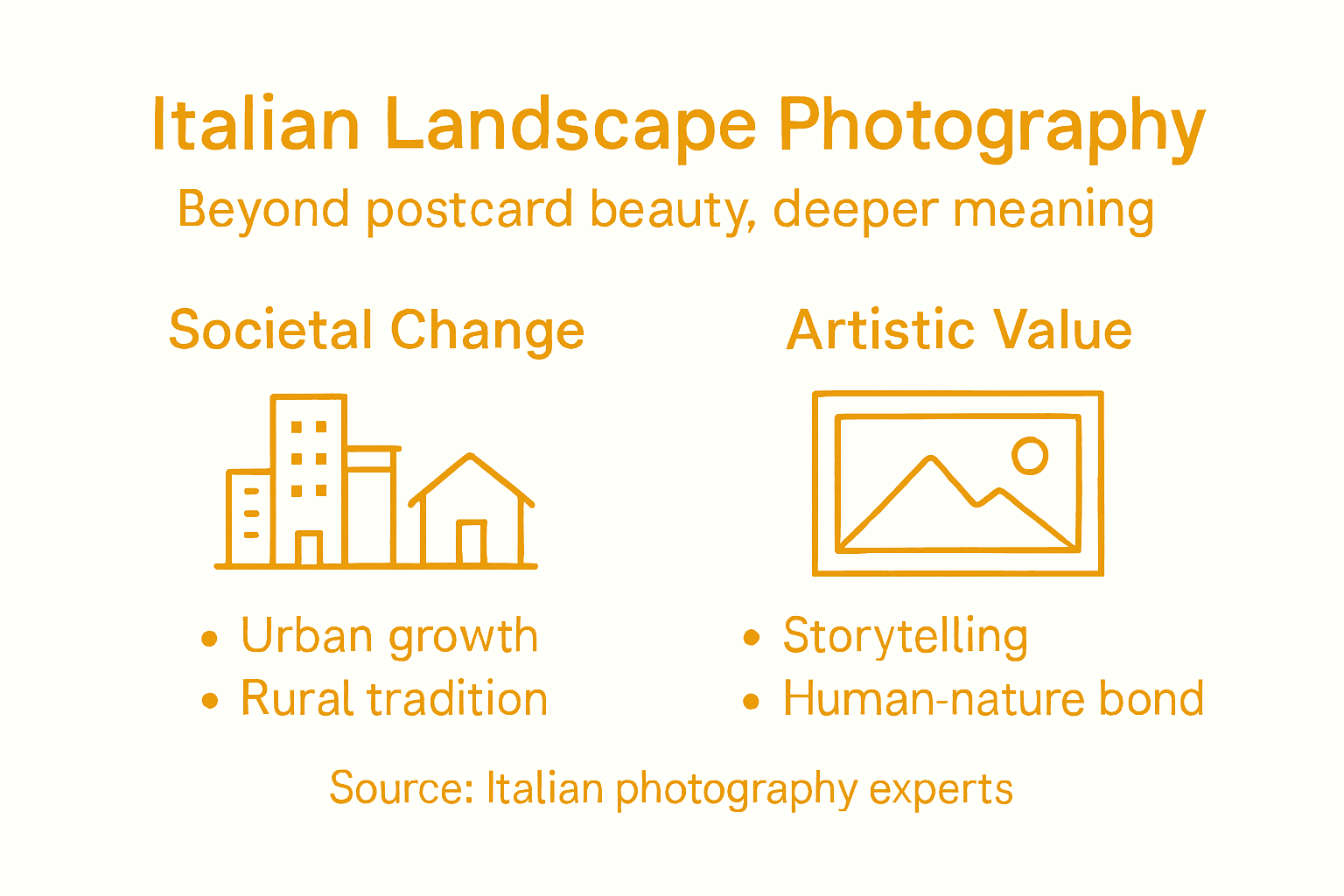
Italian landscape photography represents a profound artistic discipline that transcends mere visual documentation, emerging as a critical medium for exploring the complex relationship between humans and environment. Photographic movements in Italy during the 1980s marked a transformative period where photographers began challenging traditional representations and developing a unique aesthetic language.
This photographic approach distinguishes itself through several key characteristics:
- Rejection of postcard-style imagery
- Deep engagement with social and territorial transformations
- Emphasis on conceptual storytelling over single dramatic shots
- Critical examination of urban and peripheral landscapes
Photographers in this tradition often come from interdisciplinary backgrounds – architecture, philosophy, and literature – which enables them to view landscapes through multiple intellectual lenses. Their work goes beyond scenic beauty, instead investigating how human intervention reshapes territorial narratives.
Conceptual Foundations of Italian landscape photography emerge from a desire to document societal changes, moving past romanticized views of Italy. Photographic series exploring urban peripheries became powerful tools for social commentary, revealing complex interactions between built environments and human experiences.
Pro tip: When exploring Italian landscape photography, look beyond picturesque scenes and seek images that tell deeper stories about cultural transformation and human interaction with space.
Types of Italian Landscapes Worth Capturing
Italy offers photographers an extraordinary canvas of landscapes that blend natural beauty with deep cultural narratives. Diverse geological formations create a rich tapestry of photographic opportunities, ranging from dramatic mountain ranges to intricate coastal systems, each telling a unique story of natural and human interaction.
The most compelling Italian landscapes for photographers can be categorized into several distinctive types:
- Alpine Regions: Dramatic mountain landscapes with glacial formations
- Volcanic Territories: Dramatic landscapes around Etna and Vesuvius
- Coastal Environments: Dramatic seaside vistas with complex geological features
- Agricultural Landscapes: Cultivated terrains like Tuscany’s rolling hills
- Urban Architectural Landscapes: Historic cityscapes in Rome, Venice, and Florence
Tuscany exemplifies how landscape photography transcends mere visual documentation. Iconic landscapes like Val d’Orcia reveal intricate interactions between human agricultural practices and natural terrain, showcasing how cultural interventions reshape environmental aesthetics.
Photographers seeking to capture Italian landscapes must look beyond surface beauty, understanding that each frame represents a complex dialogue between human intervention and natural evolution. The most compelling images reveal not just scenic views, but the nuanced relationships that have shaped these environments over centuries.
Here’s a summary of how different Italian landscape types interact with human influence:
| Landscape Type | Natural Features | Human Influence | Photographic Challenge |
|---|---|---|---|
| Alpine Regions | Glacial valleys, rugged peaks | Ski resorts, small villages | Managing swirling mountain light |
| Volcanic Territories | Craters, lava flows | Urban settlements, vineyards | Dealing with volcanic haze |
| Coastal Environments | Rocky cliffs, sandy beaches | Ports, historical ruins | Balancing bright sea reflections |
| Agricultural Landscapes | Rolling hills, fertile plains | Farms, vineyards, rural roads | Capturing evolving farm activity |
| Urban Architectural Landscapes | Ancient monuments, city parks | Dense historic buildings, traffic | Navigating crowded scenes |
Pro tip: When photographing Italian landscapes, focus on capturing the subtle interactions between human presence and natural terrain, revealing the deeper narrative behind each scene.
Emotional and Artistic Value of Photography
Photography transcends mere visual documentation, emerging as a profound medium for human emotional expression and connection. Photography serves as a fundamental social strategy for understanding and communicating complex human experiences, allowing individuals to capture memories, express identity, and create lasting emotional narratives.
The artistic value of photography can be understood through several key dimensions:
- Emotional Preservation: Capturing moments that evoke deep personal memories
- Cultural Documentation: Recording societal transformations and human experiences
- Narrative Construction: Creating visual stories that transcend linguistic barriers
- Identity Expression: Revealing personal and collective psychological landscapes
- Sensory Communication: Translating complex emotions into visual language
Photographic storytelling represents a powerful emotional legacy that connects people with their roots, experiences, and broader human contexts. Through carefully composed images, photographers can communicate nuanced emotional landscapes that words often struggle to articulate.
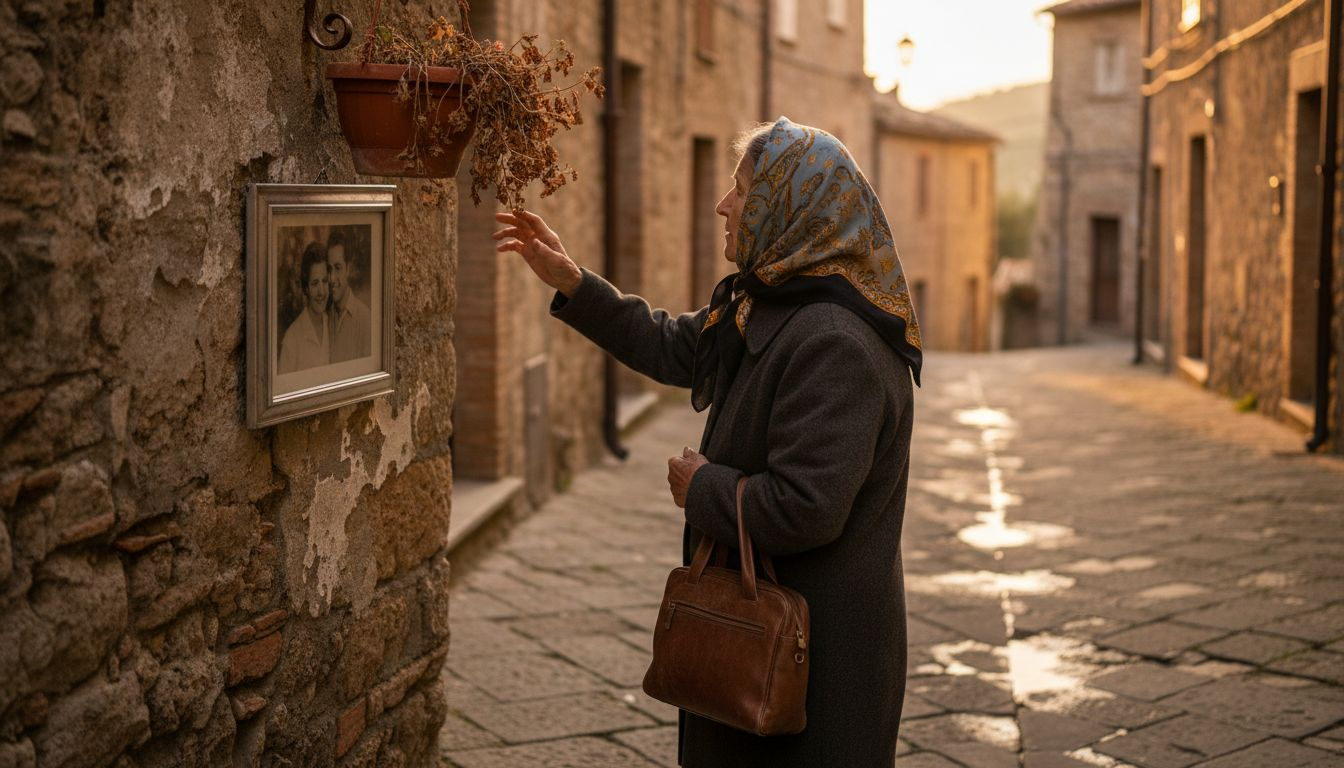
Beyond technical skill, exceptional photography demands emotional intelligence. The most compelling photographs are not just technically perfect, but resonate with viewers on a deeply personal level, triggering memories, empathy, and shared human experiences. These images become more than visual records – they transform into emotional artifacts that bridge individual and collective consciousness.
To clarify the main artistic and emotional values, here’s a concise reference table:
| Artistic Value | Social Impact | Emotional Outcome |
|---|---|---|
| Narrative construction | Connects communities | Evokes nostalgia |
| Cultural documentation | Preserves local identity | Inspires empathy |
| Identity expression | Highlights diversity | Strengthens self-awareness |
| Sensory communication | Enhances understanding | Deepens emotional response |
Pro tip: When creating photographs, focus on capturing the emotional essence of a moment rather than simply documenting its visual appearance.
Technical Skills Needed for Landscape Shots
Italian landscape photography demands a sophisticated blend of technical precision and creative vision. Mastering the exposure triangle is fundamental, requiring photographers to understand how ISO, aperture, and shutter speed interact to capture the nuanced light and terrain of Italian landscapes.
Key technical skills for exceptional landscape photography include:
- Camera Control: Understanding advanced camera settings and manual modes
- Exposure Management: Balancing light across complex landscape scenes
- Focus Techniques: Achieving sharp details from foreground to background
- Composition Skills: Creating visually compelling spatial arrangements
- Environmental Adaptation: Managing challenging lighting and weather conditions
Creative technical workflows enable photographers to transform technical knowledge into artistic expression. This involves not just understanding camera mechanics, but developing an intuitive ability to read and interpret landscape dynamics, anticipating how light, shadow, and atmospheric conditions will interact.
Successful landscape photography transcends technical proficiency. It requires a deep connection with the environment, an understanding of how different camera settings can reveal or obscure the emotional essence of a landscape. Photographers must learn to see beyond the immediate visual scene, anticipating how technical choices will translate three-dimensional experiences into two-dimensional images.
Pro tip: Practice adjusting your camera settings quickly in changing light conditions to capture the fleeting moments that define exceptional landscape photography.
Risks, Challenges, and How to Avoid Them
Landscape photography in Italy presents a complex array of potential risks and challenges that demand strategic preparation and adaptability. Mastering photographic challenges requires photographers to anticipate and proactively address environmental and technical obstacles that can compromise image quality and creative vision.
Key risks and strategic mitigation strategies include:
- Weather Unpredictability: Carry protective gear and have backup equipment
- Technical Equipment Limitations: Understand camera settings for diverse conditions
- Lighting Complexity: Learn multiple exposure techniques
- Physical Access Constraints: Research locations and plan alternative routes
- Composition Challenges: Develop flexibility in visual storytelling approaches
Contemporary landscape photographers face market challenges beyond technical skills, including oversaturation of images and declining print sales. Successful photographers must differentiate themselves through unique perspectives, consistent quality, and strategic digital presence.
Navigating these challenges requires more than technical proficiency – it demands creative resilience and a deep understanding of both photographic craft and artistic storytelling. Photographers must remain adaptable, continuously learning and evolving their approach to capture the nuanced landscapes of Italy.
Pro tip: Always carry backup batteries, memory cards, and weather-appropriate protective gear to ensure you can capture unexpected photographic opportunities.
Capture the True Artistic Impact of Italian Landscapes with Expert Guidance
Italian landscape photography challenges you to see beyond postcard images and reveal the deeper narrative of human interaction, cultural transformation, and emotional storytelling. If you seek to master the delicate balance of light, shadow, and composition while exploring Italy’s diverse terrains, it is essential to embrace both technical skills and creative vision. Many photographers struggle with unpredictable conditions, capturing authentic moments, and conveying the emotional essence that makes each Italian landscape unique.
Embark on a personalized journey with Italy Photo Tour, where professional photographer Mino Di Vita leads immersive experiences designed to inspire artistic expression and help you overcome the challenges described in the article.
Join our community of photography enthusiasts who value storytelling over snapshots. Through our curated tours in Milan, Tuscany, Venice, and beyond, you will develop your ability to capture the emotional and cultural layers that define Italian landscapes. Explore our selection of experiences on the Uncategorized Archivi – Italy Photo Tour page and take the next step toward transforming your photography into meaningful visual narratives today.
Frequently Asked Questions
What distinguishes Italian landscape photography from other styles?
Italian landscape photography is characterized by its rejection of traditional postcard-style imagery, emphasizing social and territorial transformations, conceptual storytelling, and a critical examination of urban and peripheral landscapes.
How can photographers convey deeper stories in their landscape images?
Photographers can achieve this by focusing on the nuanced interactions between human activities and natural environments, capturing moments that reflect cultural transformations rather than just picturesque scenes.
What technical skills are essential for capturing Italian landscapes successfully?
Essential technical skills include understanding camera control, managing exposure, employing focus techniques, mastering composition, and adapting to environmental conditions.
What challenges should photographers prepare for when shooting landscapes?
Photographers should be ready for unpredictable weather, equipment limitations, complex lighting, physical access constraints, and composition challenges. Strategies include carrying protective gear, understanding camera settings, and developing flexibility in storytelling.