

Every photographer knows the excitement of landing in a city where every street, building, and plaza invites exploration. Milan stands out as a vibrant hub for urban photography, offering a mix of architectural diversity and thriving local culture that draws creative minds from around the world. With historic gems, world-famous fashion scenes, and lively neighborhoods, Milan challenges and inspires photographers to capture its ever-evolving visual stories in fresh and meaningful ways.
Table of Contents
- What Makes Milan a Photographer’s City
- Iconic Landmarks and Architectural Marvels
- Vibrant Neighborhoods and Street Scenes
- Art, Fashion, and Cultural Inspiration
- Best Light, Seasons, and Shooting Tips
- Common Challenges and How to Overcome Them
Key Takeaways
| Point | Details |
|---|---|
| Milan’s Architectural Diversity | The city features a blend of historical and modern structures, offering unique photographic opportunities across various styles. |
| Dynamic Urban Landscapes | Neighborhoods like Navigli and Brera provide rich settings for street photography, showcasing authentic urban life and character. |
| Seasonal Light Variations | Each season in Milan presents different lighting conditions, impacting mood and composition—strategic planning for the golden hour is essential. |
| Navigating Challenges | Photographers should develop timing strategies and technical adaptability to overcome common urban challenges like congestion and unpredictable weather. |
What Makes Milan a Photographer’s City
Milan isn’t just a city – it’s a living canvas for photographers, blending historic architectural grandeur with contemporary urban energy. Since 1839, Milan has been a pivotal center for photographic innovation, transforming from an industrial hub into a global visual storytelling destination. Photographers have documented Milan’s cultural evolution through generations of compelling visual narratives.
What distinguishes Milan as a photographer’s paradise are several key characteristics:
- Architectural Diversity: Renaissance palazzos standing alongside modernist structures
- Dynamic Urban Landscapes: Intricate street scenes with layered visual textures
- Cultural Institutions: Museums, galleries, and exhibition spaces that celebrate visual arts
- Creative Infrastructure: Robust creative industries supporting artistic expression
The city’s photographic appeal stems from its remarkable ability to blend historical depth with contemporary creativity. Milan offers photographers multiple visual narratives – from the elegant symmetry of the Galleria Vittorio Emanuele II to the industrial chic of its peripheral districts. Urban photographers find endless inspiration in the city’s architectural juxtapositions and human interactions.
Moreover, Milan’s creative ecosystem provides an unparalleled environment for visual storytellers. Creative workers find a stimulating urban landscape that encourages artistic exploration. The city’s well-developed infrastructure, combined with its rich cultural capital, makes it a magnet for photographers seeking both professional opportunities and creative inspiration.
Pro tip: Arrive during the early morning or golden hour to capture Milan’s most photogenic moments, when soft light transforms urban landscapes into extraordinary visual compositions.
Iconic Landmarks and Architectural Marvels
Milan stands as a photographer’s dream, offering an extraordinary visual feast through its rich architectural tapestry. Milan’s architectural diversity captures photographers’ imagination with an incredible range of styles spanning centuries of design innovation. From Gothic cathedrals to sleek modernist structures, the city presents a compelling narrative of architectural evolution that begs to be captured through a camera lens.
The most iconic photographic landmarks in Milan include:
- Milan Cathedral (Duomo di Milano): A stunning Gothic masterpiece with intricate marble details
- Galleria Vittorio Emanuele II: A spectacular glass-roofed 19th-century shopping arcade
- Velasca Tower: A brutalist architectural marvel representing post-war urban design
- Sforzesco Castle: A medieval fortress showcasing Renaissance architectural principles
- Bosco Verticale: Modern vertical forest skyscrapers representing contemporary ecological design
Each landmark offers unique photographic opportunities that challenge and inspire visual storytellers. The Milan Cathedral, with its elaborate white marble facade, provides complex geometric patterns and dramatic light interactions. The Galleria Vittorio Emanuele II presents an elegant iron-and-glass structure that creates mesmerizing symmetrical compositions, especially when sunlight streams through its magnificent roof.
Here’s a quick comparison of Milan’s most photogenic landmarks and their ideal shooting conditions:
| Landmark | Best Time for Photography | Distinctive Feature |
|---|---|---|
| Duomo di Milano | Early morning, golden hour | Intricate Gothic marble details |
| Galleria Vittorio Emanuele II | Afternoon with sunlight | Symmetrical glass and ironwork |
| Velasca Tower | Late afternoon | Brutalist urban silhouette |
| Sforzesco Castle | Early morning or dusk | Dramatic fortress architecture |
| Bosco Verticale | Sunset | Vertical greenery, modern design |
Urban photographers will find Milan’s architectural landscape particularly compelling because of its seamless blend of historical and contemporary design. The contrast between ancient stone structures and cutting-edge modern buildings creates a dynamic visual environment that tells a rich story of urban transformation. Architectural photography in Milan becomes less about capturing individual buildings and more about documenting the city’s ongoing dialogue between past and present.
Pro tip: Invest in a versatile wide-angle lens to capture Milan’s architectural grandeur, allowing you to embrace both intricate details and expansive urban landscapes.
Vibrant Neighborhoods and Street Scenes
Milan’s neighborhoods reveal a photographer’s hidden treasure trove of visual storytelling opportunities. Beyond the iconic landmarks, the city’s diverse urban quarters pulse with raw, authentic energy waiting to be captured through a lens. Each neighborhood offers a unique narrative, transforming street photography from simple documentation into a rich exploration of urban life and human interaction.
The most compelling neighborhoods for photographers include:
- Brera: An artistic district with bohemian charm and narrow cobblestone streets
- Navigli: A canal-lined area featuring vibrant street life and historic architecture
- Isola: A trendy quarter mixing street art, modern design, and working-class history
- Porta Romana: A sophisticated neighborhood with elegant residential scenes
- Chinatown: A multicultural zone offering dynamic street scenes and cultural contrasts
Each district presents distinct photographic opportunities that capture Milan’s multifaceted urban character. The Navigli district, with its picturesque canals and bustling street cafes, offers photographers a chance to document spontaneous moments of local life. Street photographers will find rich visual narratives in the interplay of historic architecture, contemporary fashion, and everyday urban rhythms.
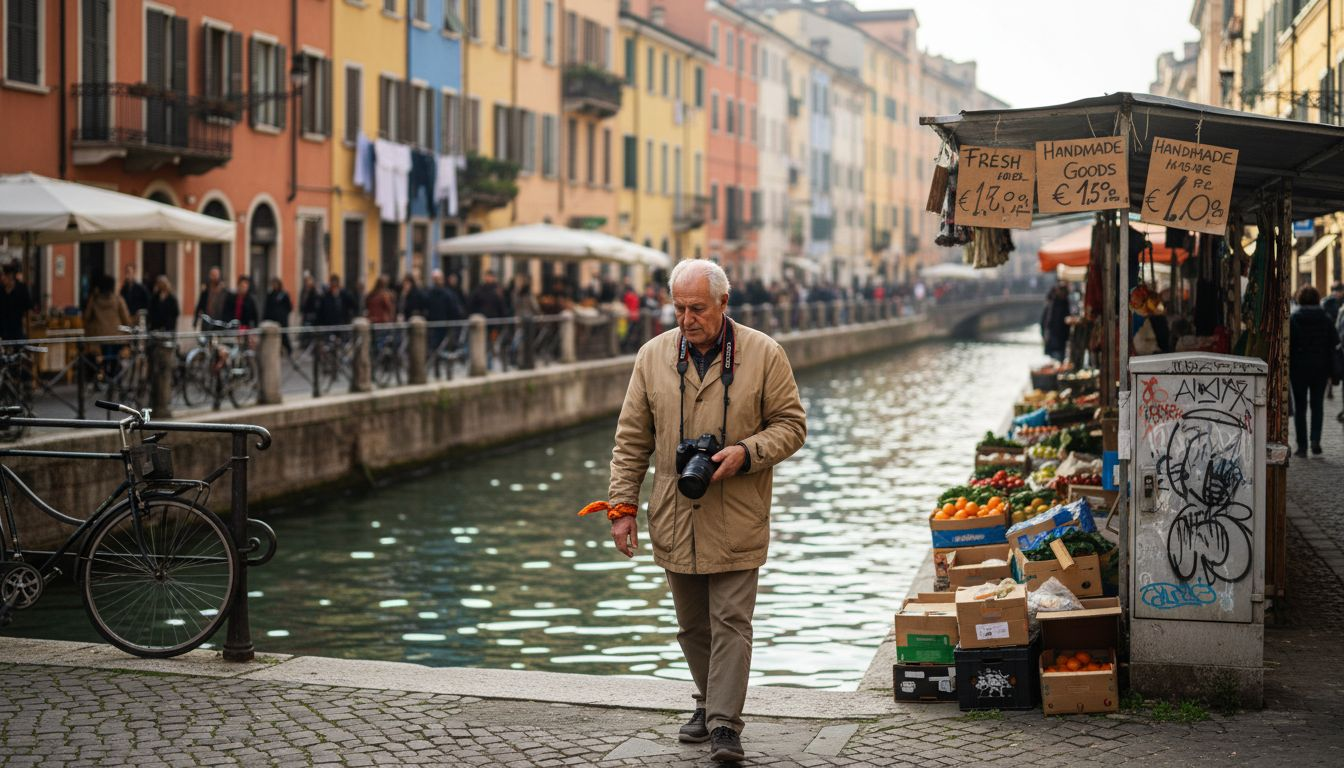
The city’s photographic landscape is defined by its ability to blend historical depth with contemporary energy. Urban street photography in Milan becomes an exercise in capturing the nuanced layers of human experience – from fashionable professionals to traditional artisans, from historic market scenes to cutting-edge design studios. The constant movement and diverse social tapestry create an ever-changing canvas for visual storytellers.
Pro tip: Carry a versatile prime lens and practice zone focusing techniques to capture spontaneous street moments without disrupting the natural flow of urban life.
Art, Fashion, and Cultural Inspiration
Milan’s artistic landscape offers photographers an extraordinary creative playground, blending historical masterpieces with cutting-edge contemporary expressions. The city breathes creativity, transforming every street, gallery, and public space into a potential canvas for visual storytelling. From world-renowned fashion houses to underground art studios, Milan provides photographers with an endless array of inspiring subjects that capture the essence of cultural innovation.
Key cultural inspiration zones for photographers include:
- Brera Art District: Home to prestigious galleries and historic art academies
- Triennale Design Museum: Showcasing contemporary Italian design and creative movements
- Pinacoteca di Brera: Housing classic Italian Renaissance and modern art collections
- Fashion Quadrilatero: The epicenter of global fashion photography and style
- Fondazione Prada: A contemporary art space blending architecture and artistic expression
Milan’s unique cultural ecosystem goes beyond traditional art spaces. The city’s fashion and design industries create a dynamic visual environment where creativity flows continuously. Street fashion photography becomes particularly compelling, with stylish professionals and avant-garde designers transforming urban spaces into spontaneous runway scenes. The constant interplay between historic artistic traditions and forward-thinking creative industries provides photographers with rich, multilayered visual narratives.
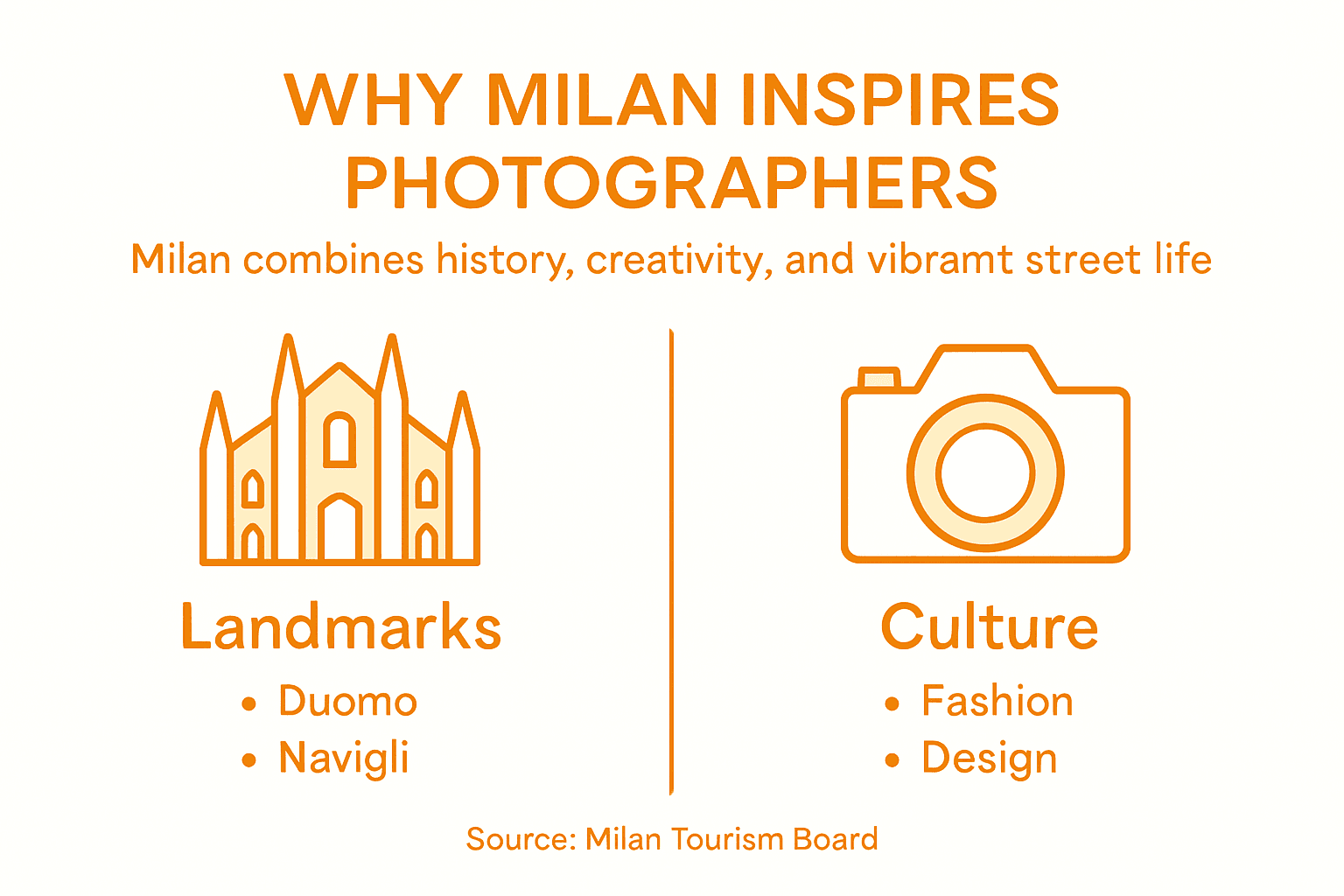
The city’s global reputation as a creative hub means photographers can capture more than just aesthetic beauty. Milan represents a living, breathing cultural laboratory where art, fashion, design, and personal expression intersect in unexpected and inspiring ways. Every corner offers a potential story, from the meticulously curated window displays of high-end boutiques to the raw, authentic street art emerging in urban neighborhoods.
Pro tip: Develop a keen eye for unexpected moments of beauty by exploring Milan’s less-touristy districts, where spontaneous artistic expressions often reveal themselves most authentically.
Best Light, Seasons, and Shooting Tips
Milan’s photographic light transforms dramatically throughout the year, offering photographers a dynamic canvas of visual opportunities. Each season brings unique atmospheric qualities that dramatically influence composition, color, and mood. Understanding these seasonal nuances can elevate a photographer’s ability to capture the city’s essence with remarkable depth and precision.
Key seasonal photography considerations include:
- Spring (March-May): Soft diffused light with emerging greenery
- Summer (June-August): Intense golden hours with long daylight hours
- Autumn (September-November): Warm, muted tones and dramatic shadows
- Winter (December-February): Crisp, clear light with potential for dramatic architectural shots
- Transitional Periods: Early morning and late afternoon offer the most compelling light conditions
Photographers should strategically plan their shooting schedule around specific lighting conditions. The golden hour – occurring shortly after sunrise and before sunset – provides the most flattering and dramatic illumination for urban landscapes. Milan’s architectural diversity means photographers can capture extraordinary scenes with minimal post-processing, leveraging natural light’s transformative qualities.
Technical considerations are equally important when shooting in Milan. Photographers should anticipate rapid light changes, especially during transitional seasons, and come prepared with versatile equipment. Wide-angle lenses work exceptionally well for capturing architectural details, while prime lenses can help isolate subjects against Milan’s rich urban backgrounds. Understanding how light interacts with different surfaces – from marble cathedral facades to modern glass skyscrapers – becomes crucial for creating compelling visual narratives.
The following table summarizes key photography tips for Milan across different seasons:
| Season | Typical Light Quality | Recommended Subjects |
|---|---|---|
| Spring | Soft, even lighting | Blossoming parks, lively streets |
| Summer | Bold, high contrast | Outdoor events, vibrant nightlife |
| Autumn | Warm, muted tones | Colorful foliage, cozy markets |
| Winter | Clear, sharp light | Architectural facades, empty plazas |
Pro tip: Carry a lightweight tripod and neutral density filters to maximize your ability to shoot in varying light conditions, allowing for greater creative flexibility across Milan’s diverse photographic landscape.
Common Challenges and How to Overcome Them
Milan presents unique photographic challenges that require strategic planning and creative problem-solving. Navigating the city’s complex urban landscape demands both technical skill and adaptable approach. Understanding these potential obstacles becomes crucial for photographers seeking to capture Milan’s authentic visual essence.
Key challenges photographers typically encounter include:
- Tourist Congestion: Overcrowded landmark locations
- Rapidly Changing Light: Quick atmospheric transitions
- Complex Urban Environments: Intricate architectural layouts
- Limited Shooting Windows: Restricted access to prime locations
- Weather Unpredictability: Sudden meteorological shifts
Successful urban photographers develop specific strategies to mitigate these challenges. Timing and location scouting become essential skills, requiring photographers to explore alternative shooting angles and less-traveled neighborhoods. Early morning and late evening hours often provide the most promising opportunities, with fewer tourists and more dramatic lighting conditions. Utilizing telephoto and wide-angle lenses allows creative framing that minimizes distracting background elements and maximizes compositional impact.
Technical preparation can significantly reduce potential shooting complications. Photographers should carry versatile equipment that enables quick adaptation to changing environments. This includes lightweight tripods for stability, multiple lens options, and weather-sealed camera bodies. Understanding local regulations, respecting private spaces, and maintaining cultural sensitivity are equally important when navigating Milan’s diverse urban landscape. Patience and flexibility transform potential challenges into unique photographic opportunities.
Pro tip: Always carry a compact backup camera and extra batteries, allowing you to continue shooting even if primary equipment encounters unexpected issues.
Capture the True Spirit of Milan Through Your Lens
Photographing Milan presents unique challenges such as navigating crowded landmarks, mastering the city’s rapidly changing light, and finding authentic urban scenes beyond tourist hotspots. If you are passionate about embracing Milan’s rich architectural diversity and vibrant street life while overcoming these challenges with expert guidance you will find invaluable support with Italy Photo Tour. Our curated photo tours unlock the city’s hidden gems and perfect lighting moments aimed at enhancing your visual storytelling and creative expression.
Ready to transform your Milan photography experience with personalized insights and immersive exploration Join our community at Italy Photo Tour and discover exclusive guided photo journeys designed by professional photographer Mino Di Vita. Explore authentic narratives across Italy’s urban landscapes through our well-crafted photography tours and deepen your craft with practical techniques tailored for dynamic city environments. Immerse yourself now by visiting our Uncategorized Archivi – Italy Photo Tour, where your next artistic adventure awaits.
Frequently Asked Questions
What makes Milan a great destination for photographers?
Milan offers a unique blend of architectural diversity, dynamic urban landscapes, and a rich creative ecosystem. Its historical and contemporary structures provide endless visual narratives, making it a captivating place for photography.
When is the best time to photograph in Milan?
The golden hour, shortly after sunrise and before sunset, is ideal for capturing Milan’s beauty. Additionally, exploring the city during early mornings or late afternoons can help you avoid crowds and achieve soft, flattering light.
What types of photography are popular in Milan?
Popular photography types in Milan include architectural photography, urban street photography, and fashion photography. The city’s mix of historic landmarks and vibrant neighborhoods offers ample opportunities for various styles.
How can I overcome common challenges when photographing in Milan?
To tackle challenges such as tourist congestion and rapidly changing light, plan your shoots during off-peak times and scout locations in advance. Use versatile equipment, including lightweight tripods and different lenses, to adapt to the environment and capture stunning images.