

TL;DR:
- Atmosphere in photography creates emotional mood and storytelling, not technical perfection.
- Techniques like shooting during golden hour, using proper exposure, and embracing imperfections enhance atmosphere.
- Italy’s unique landscapes and conditions are ideal for practicing atmospheric photography through patient, intentional capture.
Most photographers spend years chasing sharper lenses, faster autofocus, and cleaner high-ISO performance. It is a natural instinct. Yet the images that stop you mid-scroll, the ones you save and return to, rarely owe their power to technical perfection. They owe it to atmosphere. That intangible quality of light, mood, and feeling that pulls you into the frame and refuses to let go. Whether you are wandering the misty canals of Venice or standing before a sun-drenched Tuscan hillside, atmosphere is the invisible thread that transforms a snapshot into a story worth telling.
Table of Contents
- What does ‘atmosphere’ mean in photography?
- Why atmosphere creates deeper emotional impact
- Techniques for capturing atmospheric photos during Italy tours
- Common challenges and advanced nuances
- Why embracing imperfection leads to atmospheric mastery
- Take your atmospheric photography further with Italy Photo Tour
- Frequently asked questions
Key Takeaways
| Point | Details |
|---|---|
| Atmosphere drives emotion | Photos with atmosphere evoke deeper feelings and connections than perfectly exposed but flat images. |
| Light and weather matter | Using fog, mist, and great natural light adds dimension and mood to your photography. |
| Embrace imperfections | Letting go of technical perfection often results in more memorable, impactful photos. |
| Practice and adapt | Capturing atmosphere takes patience, experimentation, and practical skill, especially in dynamic settings like Italy. |
What does ‘atmosphere’ mean in photography?
Atmosphere in photography is not a single element you can dial in on a camera menu. It is the cumulative emotional experience a photograph creates, the mood that washes over a viewer before they can even name what they are feeling. Think of it as the soul of an image, shaped by the interplay of light, shadow, color temperature, weather, and the quiet stories unfolding within the frame.
Italy’s atmospheric beauty is a masterclass in this concept. A narrow Venetian alley at dawn, veiled in silver mist. A Tuscan farmhouse glowing amber under a sinking sun. These scenes carry weight not because of megapixels, but because of mood. As one fine art photography resource notes, emotional impact in photography emerges when mood, light, and elements like fog work together to evoke feelings of tranquility, mystery, or nostalgia, creating truly immersive experiences.
“The most powerful photographs are not the sharpest ones. They are the ones that make you feel something you cannot quite explain.”
So what are the building blocks of atmosphere? Several qualities tend to appear in the most evocative images:
- Soft, directional light that sculpts subjects and creates chiaroscuro depth
- Haze or mist that layers the scene and adds visual mystery
- Warm or cool color temperature that shifts the emotional register of the entire frame
- Light rays filtering through trees, arches, or morning fog
- A sense of human presence or its deliberate absence, which adding human presence to a scene can profoundly alter
Atmosphere also lives in the unexpected: a shaft of golden light breaking through storm clouds, condensation on a café window, the blue-gray stillness of a lagoon before sunrise. These are not accidents. They are invitations. Skilled photographers learn to read environmental cues and position themselves to receive these gifts. Storytelling through images becomes possible only when you train your eye to see atmosphere as a creative tool, not a lucky coincidence.
Why atmosphere creates deeper emotional impact
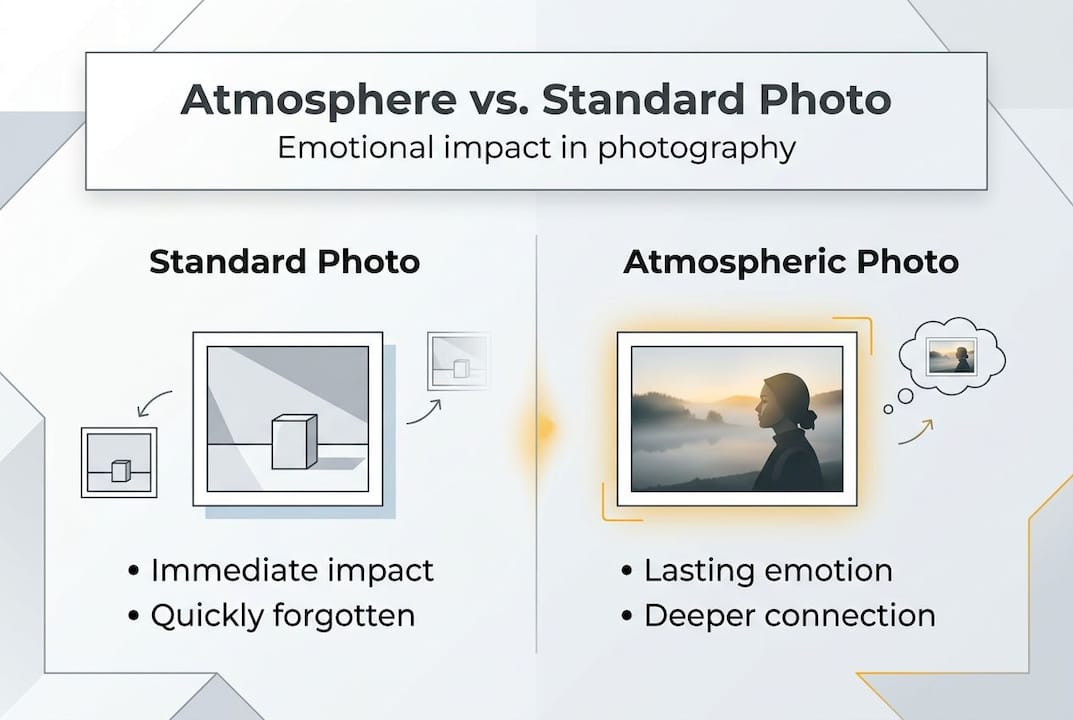
Defining atmosphere is just the start. Understanding its emotional impact reveals why it should be central to your creative process. A technically perfect photograph can document a place. An atmospheric photograph can transport you there.
Fine art and landscape photographers consistently note that mood-rich images generate stronger viewer connection than technically flawless but emotionally flat ones. The atmospheric fine art examples that circulate most widely in photography communities share one trait: they make the viewer feel something visceral, something that lingers. This is the difference between a photo someone glances at and one they print and frame.
Consider this comparison:
| Quality | Standard snapshot | Atmospheric photo |
|---|---|---|
| Impact | Immediate but forgettable | Slow-burning and lasting |
| Story | Documents what was there | Evokes what it felt like |
| Memorability | Low, easily scrolled past | High, invites return visits |
| Engagement | Passive viewing | Emotional participation |
The gap between these two columns is atmosphere. And closing that gap is entirely within your reach.
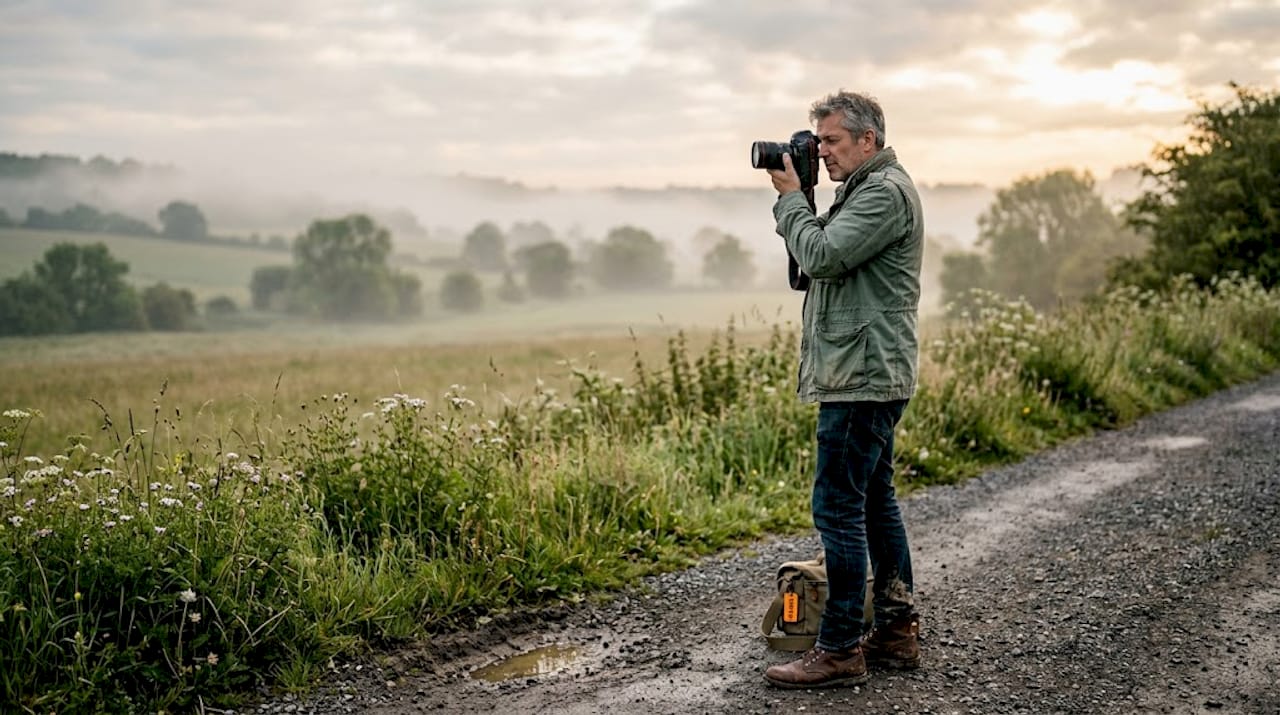
Pro Tip: Before you raise your camera, ask yourself one question: What do I want the viewer to feel? Let that answer guide every creative decision, from where you stand to when you press the shutter. Turning captivating travel stories into photographs begins with this single, intentional shift in mindset.
Experts who study visual storytelling techniques reinforce this consistently. Emotional resonance, not resolution, is what drives lasting audience connection. When you photograph Italy with atmosphere as your north star, you stop being a recorder of places and become a narrator of experiences.
Techniques for capturing atmospheric photos during Italy tours
Knowing why atmosphere matters, here is how you can capture it yourself, especially amid Italy’s moody cityscapes and rolling landscapes. The good news is that Italy is extraordinarily generous with atmospheric conditions. The challenge is being ready when they arrive.
Follow these steps to consistently capture atmospheric images:
- Shoot during golden and blue hour. The hour after sunrise and before sunset bathe scenes in warm, directional light. The blue hour just before dawn or after sunset wraps everything in cool, luminous stillness. Both windows reward patience.
- Use exposure compensation in fog. Fog tricks your camera’s light meter into underexposing. As exposure tips for atmosphere advise, apply +0.7 to +2 EV compensation to preserve tonal richness in misty scenes.
- Switch to manual focus. Autofocus struggles in low-contrast, hazy conditions. Manual focus gives you precise control over where the eye travels within the frame.
- Choose apertures between f/8 and f/16. This range delivers the depth of field that makes layered, atmospheric landscapes feel expansive and immersive.
- Keep ISO between 100 and 400. Lower ISO preserves tonal subtlety, which is essential for rendering the delicate gradients in fog, mist, and soft light.
- Use a tripod. Atmospheric conditions often mean low light. A tripod eliminates camera shake and allows longer exposures that smooth water and deepen mood.
| Condition | Best time | Aperture | ISO | Gear |
|---|---|---|---|---|
| Morning fog | 6:00 to 8:00 AM | f/8 to f/11 | 100 to 200 | Tripod, lens cloth |
| Golden hour | 30 min before sunset | f/8 to f/16 | 100 to 400 | Tripod |
| Blue hour | 20 min after sunset | f/5.6 to f/8 | 200 to 400 | Tripod |
| Overcast light | Any time | f/8 | 100 to 200 | Polarizer |
Pro Tip: Keep a dry cloth in your bag when shooting in misty conditions. Condensation on your front lens element softens the image in ways that feel accidental rather than artistic. A quick wipe keeps your creative choices intentional. These Venice photography techniques and broader landscape tips for Italy will help you apply these principles to specific locations.
Common challenges and advanced nuances
With foundational techniques in hand, being mindful of challenges and creative nuances unlocks the full expressive potential of atmospheric photography. Even experienced photographers stumble here, so knowing these pitfalls in advance saves you frustration in the field.
The most common challenges include:
- Too much fog obscuring your subject. Dense fog can erase the very thing you came to photograph. If your main subject needs clarity and detail, fog photography tips suggest waiting for a lighter veil or repositioning to use the fog as background rather than foreground.
- Underexposure flattening the mood. A scene that looks dramatic to your eye can appear muddy and lifeless if underexposed. Dial in that exposure compensation and review your histogram.
- Condensation on gear. Moving from a warm interior to cold, damp air causes moisture to form on lens elements and camera bodies. Acclimatize your gear slowly and keep that lens cloth accessible.
- Over-relying on a single atmospheric element. Fog alone does not guarantee atmosphere. Light, composition, and subject still matter enormously.
For those ready to push further, advanced fog techniques reveal nuances that separate competent atmospheric photos from truly extraordinary ones. Shooting toward the light source creates those luminous god rays that seem to breathe life into a scene. Time-blending, where you composite exposures taken minutes apart, lets you capture the precise fog density you envisioned. And crucially, resist the urge to aggressively apply dehaze tools in post-processing. That haze is the atmosphere. Strip it away and you are left with a technically cleaner but emotionally emptier image.
“Sometimes the most powerful image is the one where you chose mood over meter. Embrace the imperfection. It is often where the drama lives.”
Artistry, in the end, matters more than precision. Italy rewards the photographer who shows up with curiosity and patience, not just a checklist of faster travel photography skills.
Why embracing imperfection leads to atmospheric mastery
Conventional photography wisdom insists on correct exposure, sharp focus, and clean shadows. These are worthy goals. But some of the most haunting images ever made break every one of those rules with apparent joy.
When you let a foggy highlight blow slightly, or allow a shadow to swallow detail at the edge of the frame, you are making an emotional choice. You are saying: the feeling matters more than the record. This is a profound creative shift. As artistic nuance in photography demonstrates, the photographers who develop a truly distinctive voice are almost always the ones who learned the rules thoroughly and then chose, deliberately, when to set them aside.
Perfect exposure can be emotionally flat. It renders everything equally, which means nothing stands out emotionally. A slightly underexposed foreground leading to a luminous, fog-wrapped background creates visual tension and draws the eye exactly where you want it. That is not a mistake. That is craft.
The invitation here is to experiment freely. Shoot the same scene at different exposures, different focal lengths, different moments in the fog’s shifting density. Review what you captured not by asking is this technically correct? but by asking does this make me feel something? That question, asked honestly and repeatedly, is the engine of atmospheric mastery.
Take your atmospheric photography further with Italy Photo Tour
Understanding atmosphere as a creative force is one thing. Practicing it in the field, surrounded by Italy’s extraordinary light and landscape, is something else entirely.

Italy photography tours with Italy Photo Tour are designed precisely for this journey. From misty early mornings on Venice’s canals to the cinematic golden light rolling across Tuscan hillsides, each experience is curated to place you in the most atmospheric conditions Italy offers. Led by professional photographer Mino Di Vita, these tours blend guided practice, real-time feedback, and access to locations most travelers never find. Whether you want to refine your technique or simply explore Italy with us through a creative lens, the path to mastering technique and storytelling begins with a single, inspired step.
Frequently asked questions
What are the signs of good atmosphere in a photo?
Good atmosphere reveals itself through strong mood, emotional depth, and visual layers often shaped by light, haze, or dramatic shadow, rather than technical sharpness alone. As atmospheric photography experts note, the feeling an image evokes is its most reliable measure of atmospheric success.
When is adding fog or mist not desirable?
Fog works against you when your subject requires clarity and fine detail to read well. Fog best practices suggest avoiding dense mist if peak visibility is essential, and instead using it selectively when mood and separation matter more than sharpness.
How do I shoot atmospheric photos with just a smartphone?
Seek soft, natural light during early morning or late afternoon hours, enable manual or pro mode controls if your device allows, and resist the urge to over-edit. Embracing imperfect exposure often produces more mood-rich results than a perfectly corrected image.
Is it better to correct foggy photos with dehaze tools?
Avoid aggressive dehazing in post-processing. The haze itself carries the atmosphere, and removing it often leaves a technically cleaner but emotionally hollow image. As fog and mist guidance advises, embrace natural haze and let the mood breathe.