

Getting off the beaten path in Italy forces any photographer to confront what travel photography truly is—a way to create memories that resonate beyond souvenirs. Many American amateurs still think only flawless gear captures the spirit of Tuscany or Rome, but real impact comes from storytelling and connection. This guide breaks down myths, explains approaches, and helps you develop a more personal style, so every image from your Italian journeys reflects both the landscape and its vibrant culture.
Table of Contents
- Travel Photography Defined And Common Myths
- Popular Types And Creative Approaches
- Key Skills For Capturing Authentic Moments
- Ethical Practices And Legal Considerations
- Common Mistakes And How To Avoid Them
Key Takeaways
| Point | Details |
|---|---|
| Travel Photography is Storytelling | It captures the essence of cultures and landscapes, emphasizing emotional connection over technical perfection. |
| Common Myths Debunked | Better equipment doesn’t equate to better photos; vision and creativity are paramount. |
| Ethical Practices are Essential | Always seek informed consent and respect local customs while photographing subjects. |
| Preparation Avoids Mistakes | Research locations and master your camera settings to enhance photographic outcomes. |
Travel Photography Defined and Common Myths
Travel photography transcends simple image capture – it’s a powerful storytelling medium that documents the essence of cultures, landscapes, and human experiences. Visual narratives that document places and people emerge through skilled photographers who understand how to translate geographic moments into compelling visual stories.
The Photographic Society of America defines travel photography as creating images that express the feeling of a specific time and place, unrestricted by geographical boundaries. This genre uniquely blends several disciplines:
- Ethnography: Documenting cultural practices
- Tourism: Capturing destination experiences
- Documentary photography: Recording authentic moments
- Landscape photography: Showcasing environmental beauty
Contrary to popular misconceptions, travel photography isn’t about owning expensive equipment or capturing technically perfect images. The genre celebrates personal journeys and storytelling over mechanical precision. Many amateur photographers mistakenly believe they need high-end cameras to create meaningful images, when creativity and emotional connection matter far more.
Common travel photography myths include:
Here is a comparison of common myths and the realities of travel photography:
| Common Myth | Reality |
|---|---|
| Better cameras mean better photos | Vision and creativity matter most |
| Photographers miss experiences | Photography can deepen engagement |
| Only professionals excel | Amateurs create meaningful images |
| Perfection is essential | Storytelling trumps flawless technique |
- Better cameras automatically produce better photographs
- Photography distracts from experiencing a destination
- Only professional photographers can create compelling travel images
- Technical perfection matters more than storytelling
Authentic travel photography requires deep engagement with your environment, understanding local contexts, and developing a genuine connection with the places and people you’re documenting. It’s less about technical prowess and more about capturing genuine human experiences and cultural nuances.
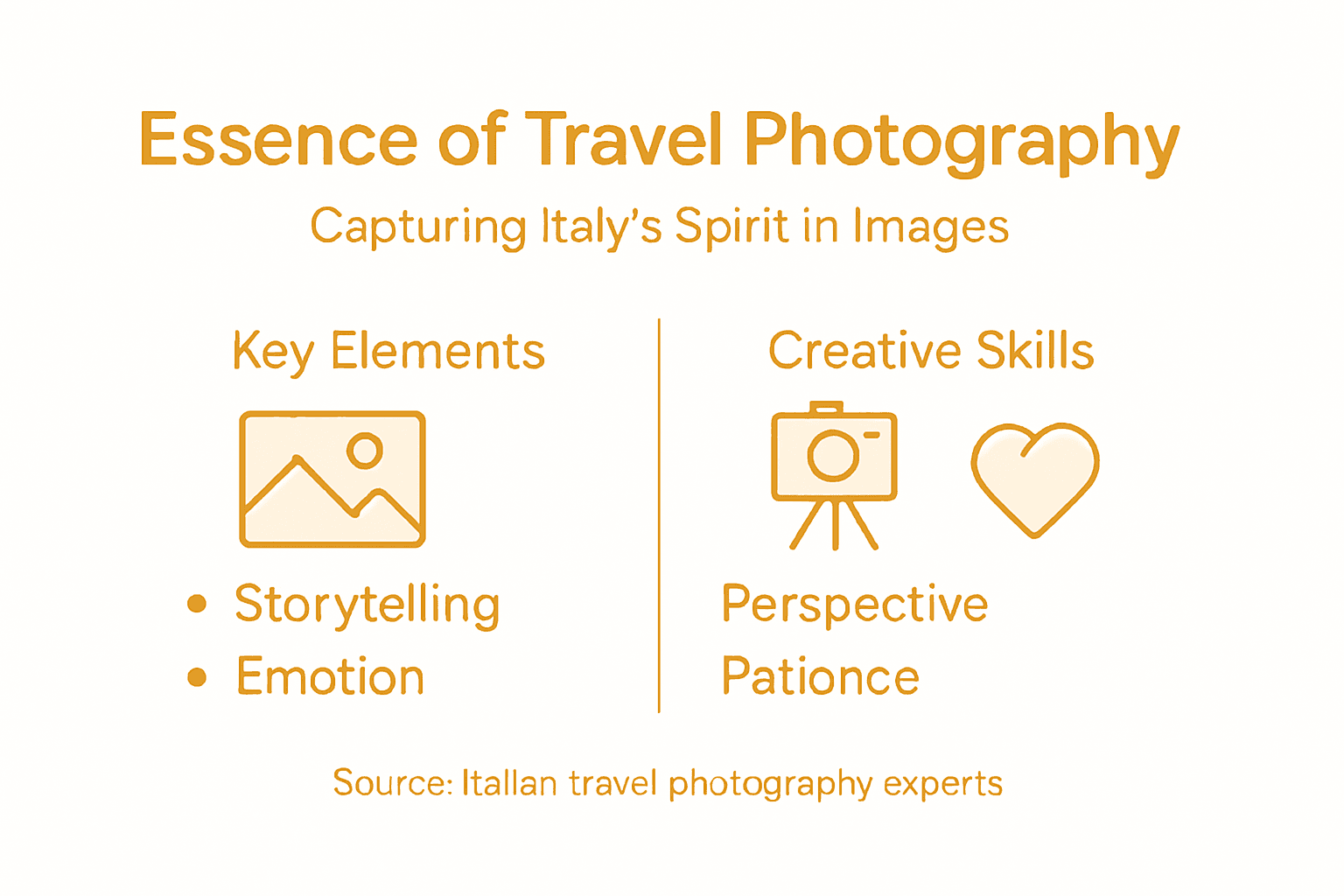
Pro tip: Focus on telling stories through your images rather than collecting technically perfect but emotionally sterile photographs.
Popular Types and Creative Approaches
Travel photography encompasses a diverse range of styles and techniques, each offering unique opportunities for creative expression. Multiple specialized photography genres provide photographers with exciting ways to capture different aspects of global experiences.
The main categories of travel photography include:
- Landscape Photography: Capturing sweeping natural vistas and environmental beauty
- Urban and Street Photography: Documenting city life, architecture, and human interactions
- Cultural Photography: Exploring local traditions, customs, and human narratives
- Wildlife Photography: Recording animal behaviors in their natural habitats
- Adventure and Sports Photography: Highlighting human energy and physical achievements
- Architectural Photography: Showcasing design, structures, and spatial relationships
- Night and Astrophotography: Capturing celestial scenes and low-light environments
Each photographic genre demands specific technical skills and creative approaches. Landscape photographers might require wide-angle lenses to capture expansive scenes, while street photographers need fast lenses for capturing spontaneous moments in challenging lighting conditions.
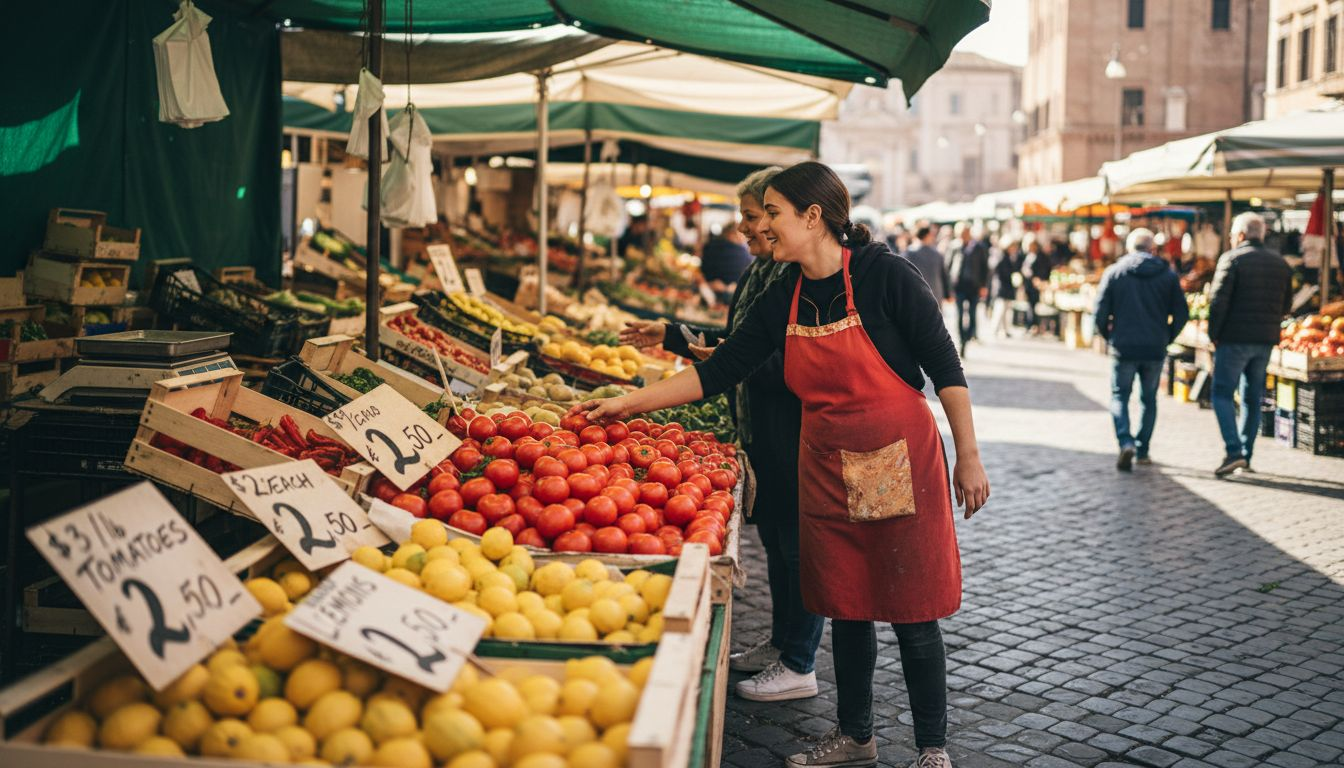
Explore how popular travel photography genres differ in focus and creative approach:
| Genre | Main Subject | Creative Priority |
|---|---|---|
| Landscape Photography | Natural scenery | Composition and light |
| Street Photography | City life and people | Candid moments |
| Cultural Photography | Traditions and rituals | Human connection |
| Wildlife Photography | Animals in habitat | Patience, timing |
Creative approaches in travel photography go beyond technical equipment. Successful photographers develop a unique perspective by:
- Experimenting with unconventional shooting angles
- Playing with composition and framing
- Capturing raw emotional moments
- Understanding local cultural contexts
- Telling compelling visual stories
Creativity matters more than expensive gear. Your unique vision transforms ordinary scenes into extraordinary memories.
Pro tip: Challenge yourself to photograph the same location from multiple perspectives, revealing hidden layers of beauty and complexity.
Key Skills for Capturing Authentic Moments
Authentic travel photography requires more than technical skill – it demands a deep understanding of human connection and cultural sensitivity. Capturing genuine moments relies on patient observation and an approach that respects local environments and human experiences.
Key skills for creating meaningful travel photographs include:
- Cultural Awareness: Understanding local customs and social dynamics
- Emotional Intelligence: Reading subtle human interactions
- Technical Proficiency: Mastering composition and lighting techniques
- Storytelling Ability: Transforming visual scenes into compelling narratives
- Adaptability: Responding quickly to unexpected photographic opportunities
Photographers seeking authentic moments must develop strategies for genuine engagement:
- Slow down and immerse yourself in the environment
- Build rapport with local communities
- Observe without disrupting natural interactions
- Embrace imperfection and spontaneity
- Shoot from a documentary perspective
Creative approaches are fundamental to capturing authentic experiences. Narrative storytelling through cultural immersion enables photographers to create images that transcend simple visual documentation.
Authentic photography is about connection, not just composition. Your camera is a bridge between cultures, not just a recording device.
Pro tip: Practice becoming invisible – blend into your surroundings and let genuine moments unfold naturally before your lens.
Ethical Practices and Legal Considerations
Ethical travel photography transcends technical skill, demanding a profound respect for human dignity and cultural nuances. Respecting individual rights and cultural sensitivities becomes paramount when capturing moments across different societies.
Key ethical principles for responsible travel photography include:
- Informed Consent: Always seek permission before photographing individuals
- Cultural Sensitivity: Understand and honor local customs and traditions
- Accurate Representation: Avoid stereotyping or exploitative imagery
- Transparency: Communicate your photographic intentions clearly
- Respect for Sacred Spaces: Recognize and honor cultural and religious boundaries
Legal considerations vary significantly across different countries:
- Understand local photography regulations
- Recognize differences in image rights
- Obtain necessary permits for commercial photography
- Respect privacy laws in each region
- Be aware of restrictions in public and private spaces
Legal frameworks for travel photography differ dramatically between countries. In the United States, public space photography offers considerable freedom, while European countries like France and Italy have more stringent protections for individual image rights.
Ethical photography is a dialogue, not a monologue. Your lens should tell stories with compassion, not exploit vulnerabilities.
Pro tip: Research local customs and legal requirements before your photography journey, and always prioritize human dignity over capturing an image.
Common Mistakes and How to Avoid Them
Travel photography is an art form fraught with potential pitfalls that can undermine even the most well-intentioned photographer’s efforts. Common mistakes often stem from lack of preparation and an uninspired approach to capturing moments.
Key mistakes amateur photographers frequently encounter include:
- Gear Overload: Carrying unnecessary equipment
- Technical Rigidity: Relying exclusively on auto mode
- Compositional Weakness: Failing to create intentional framing
- Subject Uncertainty: Lacking clear visual storytelling
- Location Ignorance: Not researching shooting environments
Strategic approaches to avoid these common errors involve:
- Master manual camera settings
- Research locations thoroughly
- Pack thoughtfully and efficiently
- Seek unique perspectives
- Focus on narrative elements
Travel photography requires thoughtful technique beyond simply pointing and shooting. Photographers must develop a nuanced understanding of light, composition, and storytelling to transform ordinary scenes into extraordinary visual narratives.
Great photography isn’t about perfect images, but meaningful moments captured with intention and respect.
Pro tip: Always scout your location before shooting and visualize potential compositions to maximize your creative opportunities.
Unlock Italy’s Spirit Through Your Lens with Expert Guidance
Are you passionate about capturing authentic moments and the true essence of a place as highlighted in the article “What Is Travel Photography: Capturing Italy’s Spirit”? Many photographers struggle with translating their creative vision into compelling travel images that tell meaningful stories. At Italy Photo Tour, we understand the importance of deep cultural engagement, emotional storytelling, and mastering the play of light and shadow to reveal Italy’s unique landscapes and vibrant human experiences. This is why we offer tailored photography tours that go beyond typical snapshots.

Take your travel photography to a new level today with a personalized journey designed to inspire and hone your craft. Discover insider insights and local secrets in iconic locations like Milan, Tuscany, and Venice, all led by professional photographer Mino Di Vita. Start creating images that truly capture Italy’s diverse spirit by exploring our curated experiences in the Uncategorized Archivi – Italy Photo Tour. Don’t wait to transform your creative vision into timeless visual stories. Visit our main page Italy Photo Tour now to learn more and book your experience.
Frequently Asked Questions
What defines travel photography?
Travel photography is defined as the artistic process of capturing images that convey the essence of a specific time and place, emphasizing cultural experiences, landscapes, and human interactions.
What are some common myths about travel photography?
Common myths include the belief that better cameras automatically produce better photos, that only professionals can excel in this genre, and that technical perfection is more important than storytelling.
What skills are essential for capturing authentic travel photographs?
Key skills include cultural awareness, emotional intelligence, technical proficiency, storytelling ability, and adaptability to engage meaningfully with the environment.
How can I improve my travel photography techniques?
To improve your travel photography, focus on mastering manual camera settings, researching locations, seeking unique perspectives, and incorporating narrative elements into your compositions.