

TL;DR:
- Minimalist photography focuses on simplicity and intentional composition, using minimal elements and negative space to create powerful images.
- Applying these principles across landscapes, architecture, and culture in Italy reveals serenity through careful framing, light, and restraint.
There is a common misconception that minimalist photography is simply empty. Too sparse. A photo of a white wall with one branch and nothing to say. But what is minimalist photography, really? It is an intentional compositional style built on the idea that fewer elements create stronger images. Defined by extreme simplicity, it strips away visual noise to let a single subject breathe and speak. For photographers exploring Italy’s vast and layered beauty, from the rolling hills of Tuscany to the geometry of Milanese architecture, this approach offers a quiet and powerful way to tell stories.
Table of Contents
- Understanding the principles of minimalist photography
- Applying minimalist techniques in different photography genres
- Techniques and gear tips for minimalist photography
- Minimalist photography in black and white: mastering contrast and light
- Capturing Italy’s landscapes and culture with a minimalist eye
- A photographer’s perspective on minimalist photography’s power and challenges
- Explore minimalist photography on Italy photo tours
- Frequently asked questions
Understanding the principles of minimalist photography
At its heart, minimalist photography is guided by one deceptively simple rule: less is more. Rather than filling the frame with detail, texture, and competing subjects, you make a deliberate choice to reduce. You eliminate. You leave space. Clean composition and limited color variation are the hallmarks of this style, and every element you allow to remain in the frame must earn its place.
“Simplicity is the ultimate sophistication.” Though attributed to Leonardo da Vinci, this sentiment lives at the core of every great minimalist photograph.
One of the most powerful tools in minimalist photography is negative space, the empty area surrounding your subject. Far from being wasted, negative space actively isolates subjects and creates a visual calm that invites the viewer to rest and reflect. Think of a lone fisherman on a flat Venetian lagoon, surrounded by silver-gray water and pale sky. Nothing competes for your attention. The man becomes monumental.
The principles that define this style include:
- Simplicity of subject: Choose one clear focal point and commit to it fully.
- Negative space: Use open areas of sky, water, or wall to give your subject room and weight.
- Subject isolation: Remove or avoid background distractions that dilute your message.
- Limited color palette: Reduce hues to two or three complementary tones, or embrace monochrome entirely.
- Clean composition: Every line, edge, and element should guide the eye rather than scatter it.
For those drawn to Italian landscapes photography, these principles offer a fresh lens through which to interpret familiar scenes. A cypress tree standing alone against a pale Tuscan sky becomes something close to poetry.
Applying minimalist techniques in different photography genres
With the foundational principles clear, let’s see how minimalist techniques adapt to different types of photography. This is where many photographers are surprised: minimalism is not a genre. It is an approach. Applied across landscapes, street photography, portraits, and architecture, the style holds as long as simplicity and clarity remain the guiding values.
- Landscape photography: Find a single horizon line, a lone tree, or a simple reflection. Early morning light over the Umbrian hills offers vast open skies that serve as perfect negative space.
- Street photography: A single figure walking through an empty piazza in Bologna, caught at the right moment, carries enormous narrative weight without any supporting cast.
- Portrait photography: Place your subject against a plain textured wall, a muted doorway, or soft diffused light. The face becomes the entire story.
- Architectural photography: Italy is full of geometry. The clean arches of a Roman aqueduct or the spare lines of a modern Milanese building reward the minimalist eye beautifully.
The city of Milan, in particular, offers remarkable minimalist opportunities. Its rational architecture, spare interiors, and deliberate use of space feel almost designed for this kind of photography. A practical guide to minimalist photography in Milan can help you identify the precise corners and angles where simplicity reveals itself most powerfully.
Techniques and gear tips for minimalist photography
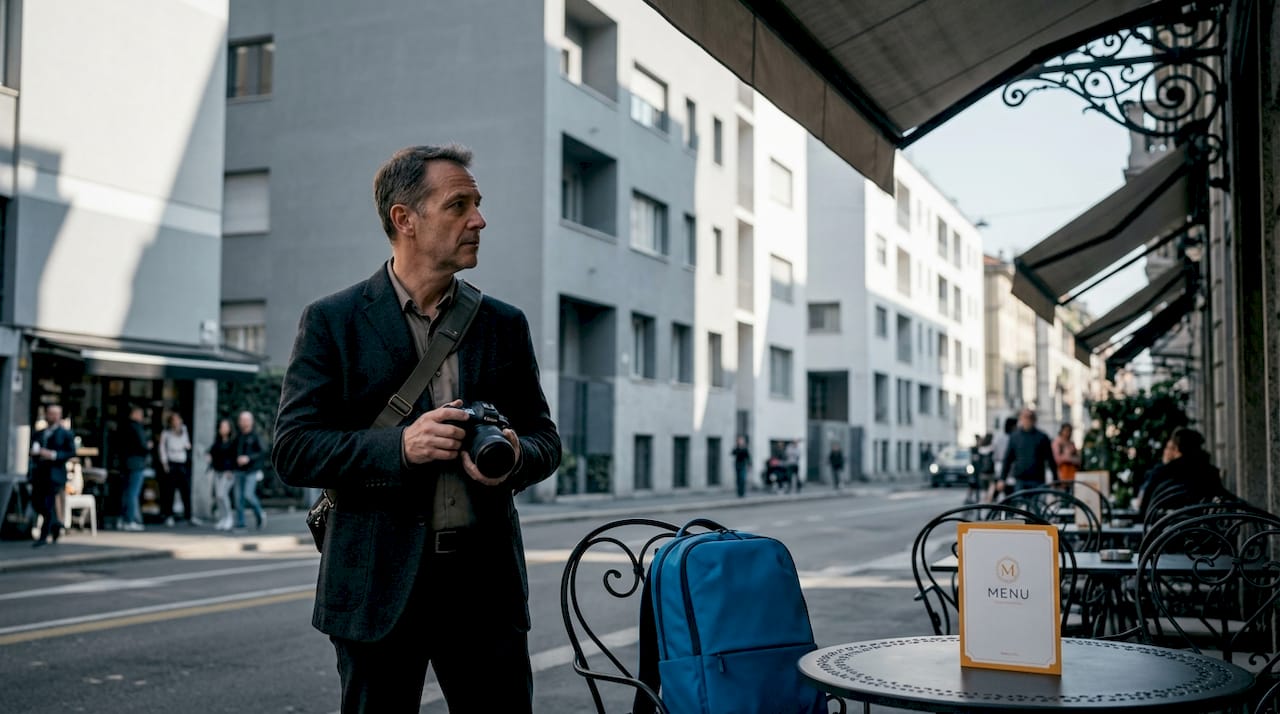
Now that you understand where minimalist photography applies, let’s look at practical techniques and tools to help you create minimalist images effectively. Knowing the philosophy is one thing. Executing it in front of a scene is another.
The most important technique is choosing your background before you choose your subject. A cluttered background cannot be fixed by a beautiful subject. Photographers isolate single subjects using clean backgrounds, negative space, shifting perspective, and deliberate cropping to reduce visual noise before the shutter clicks.
- Look for walls, open sky, calm water, or fog as your background canvas.
- Move your feet. Changing your angle by even a few steps can remove a distracting lamppost or wire from the frame entirely.
- Shoot upward to place your subject against sky. Shoot downward to use smooth pavement or still water as your backdrop.
- Crop in-camera rather than relying on post-processing to simplify.
When it comes to gear, the good news is that minimalist photography does not demand expensive equipment. However, certain tools genuinely help. Telephoto lenses isolate subjects beautifully, and a tripod opens up long exposure possibilities that smooth water and sky into clean, featureless planes of tone. Choosing the right camera gear for Italy travel makes a real difference when you’re working in varied light conditions.
| Technique | Effect on image | Best used for |
|---|---|---|
| Negative space | Creates calm and focus | Landscapes, seascapes |
| Telephoto compression | Isolates subject, flattens background | Portraits, architecture |
| Long exposure | Smooths water and sky into flat tones | Seascapes, cityscapes |
| High angle / low angle | Removes ground clutter or sky chaos | Street scenes, still life |
| Minimal color palette | Reduces visual noise, adds mood | Any genre |
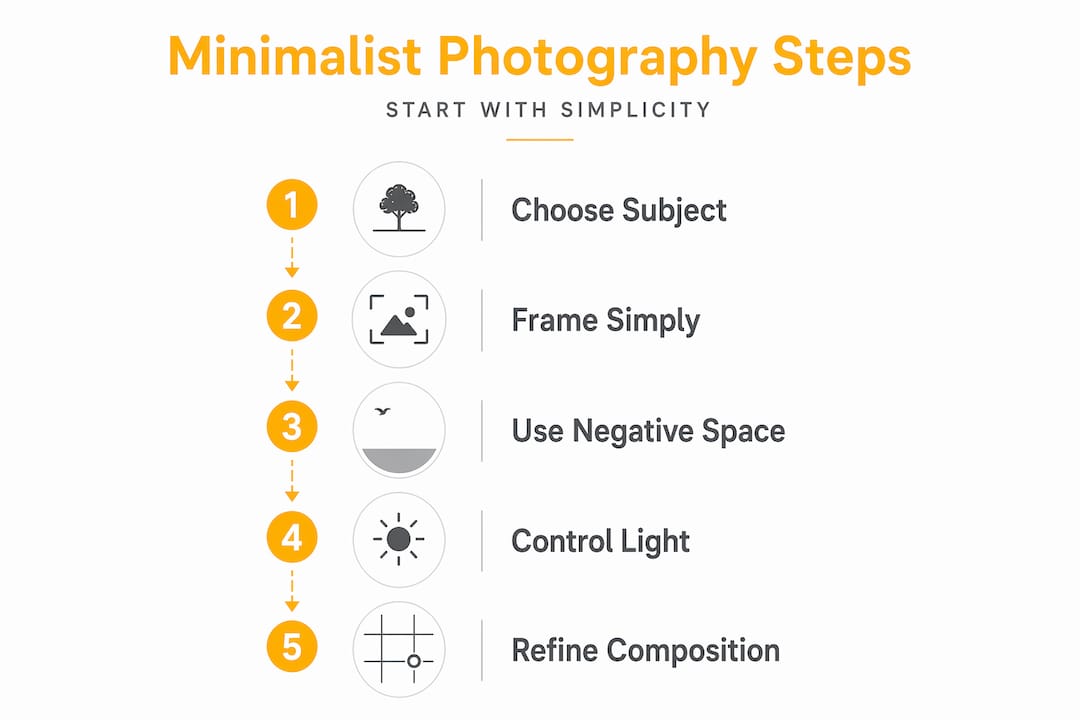
Pro Tip: Before raising your camera, spend 60 seconds studying the scene. Ask yourself what you would remove if you could. Then physically move, reframe, or wait until that element leaves the frame. This one habit separates intentional minimalism from accidental emptiness.
Minimalist photography in black and white: mastering contrast and light
Beyond color photos, minimalist photography in black and white demands a unique approach to light and contrast. Monochrome removes one layer of visual noise, which sounds like an advantage. But it also amplifies another: background texture. In black-and-white minimalist photography, any unevenness in your backdrop becomes far more visible without color to distract the eye.
This means your background choices must be even cleaner when shooting in monochrome. A slightly mottled gray wall that reads as neutral in color becomes a complex and competing texture in black and white. The key principles to work with include:
- Seek uniform backgrounds: Smooth plaster, open sky, and still water all translate beautifully in monochrome.
- Use directional light: A single light source creates strong shadows that define your subject’s edges without the need for color separation.
- Prioritize tonal contrast: Your subject must be tonally distinct from the background. A dark jacket against a bright wall. A pale face against deep shadow.
- Simplify further: If a scene feels minimalist in color, push it one step further before converting to black and white.
Pro Tip: When scouting a scene in Italy, mentally drain the color from what you see. If the composition still works, it will translate powerfully to black and white. If it falls apart without color, you need to simplify before shooting.
Capturing Italy’s landscapes and culture with a minimalist eye
Finally, let’s focus on how you can apply minimalist photography to capture the spirit of Italy’s landscapes and rich culture. Italy is often associated with abundance: color, history, architecture layered upon architecture, markets overflowing with produce, piazzas alive with movement. The minimalist photographer must learn to find stillness inside that richness.
Minimalist storytelling in Italy emphasizes serenity by stripping focus to framing and exposure rather than gear or volume of shots. A single Roman arch framed against a pale morning sky. The geometry of a canal reflection in Venice. A solitary figure crossing the empty Piazza del Campo in Siena before the tourists arrive. These images do not explain Italy. They feel it.
| Subject type | Minimalist approach | Ideal Italian location |
|---|---|---|
| Landscape | Single focal point, vast sky or water | Tuscany, Amalfi Coast |
| Cultural scene | One figure, one gesture, empty space | Rome, Venice piazzas |
| Architecture | Clean lines, strong shadows, spare framing | Milan, Ostia Antica |
| Seascape | Long exposure, horizon, one element | Cinque Terre, Sicily |
The practical steps for applying a minimalist eye in Italy include:
- Arrive early: Iconic locations are quieter before 7 a.m., giving you clean, crowd-free compositions.
- Seek mist and fog: The Po Valley and hill towns of Umbria regularly offer mornings where fog simplifies landscapes into layers of tone.
- Frame to exclude: Use doorways, archways, and windows as natural frames that automatically remove surrounding complexity.
- Follow the light, not the crowd: Italy’s unique photo spots often reward the photographer who turns away from the famous view to find something quieter behind them.
Exploring must-visit Italian landmarks with a minimalist eye often means photographing them differently than everyone else, from unexpected angles, in unusual light, or with deliberate patience.
A photographer’s perspective on minimalist photography’s power and challenges
Here is something most tutorials will not tell you: minimalist photography is harder than complex photography. Not technically. Emotionally. Because it requires you to trust restraint at the moment when everything in you wants to include more.
Minimalism is a deliberate process of elimination during shooting, not afterward. This is the point most beginners miss. They shoot a cluttered scene and then try to crop and edit their way to simplicity. It rarely works. The image carries the weight of what was removed. True minimalist photographers make their choices before they press the shutter.
The mental discipline this demands is real. You must learn to look at a beautiful Italian scene, one full of history and texture and color, and consciously decide what not to include. That act of refusal is where the photographic craftsmanship and storytelling live. Anyone can photograph everything. It takes a trained eye to photograph almost nothing and make it mean everything.
Post-processing in minimalist photography is mainly refinement: adjusting exposure, increasing contrast slightly, or converting to black and white. The image’s power should already exist before you open any editing software. If it doesn’t, no amount of processing will create it. The camera is where minimalism happens.
Explore minimalist photography on Italy photo tours
If you’re ready to put these minimalist photography principles into practice, consider joining Italy Photo Tour’s immersive experiences designed for photographers like you. Italy’s landscapes and cultural scenes are among the richest in the world for this kind of work, and exploring them with an experienced guide changes everything.

Italy Photo Tour’s guided photography tours are led by professional photographer Mino Di Vita, whose approach emphasizes light, atmosphere, and intentional storytelling. Whether you’re drawn to Milan’s architectural precision or Tuscany’s open horizons, the Italy Photo Tour services are designed to help you develop a genuine minimalist eye in real settings. Learn more about what awaits you through immersive Italy photo tours and begin your creative journey through one of the world’s most visually extraordinary countries.
Frequently asked questions
What does minimalist photography mean?
Minimalist photography is a style that emphasizes simplicity by using very few elements and generous empty space to create powerful, clear images. It uses the smallest number of objects and a clean composition with little color variation to draw full attention to a single subject.
How can negative space improve my photos?
Negative space surrounds your subject with openness rather than distraction, giving the eye nowhere else to wander. It actively guides attention and creates visual calm, making even a simple subject feel significant and intentional.
What gear is best for minimalist photography?
Any camera works for minimalist photography, but certain tools genuinely help. Telephoto lenses isolate subjects effectively, and tripods allow long exposures that smooth water and sky into simple, featureless tones.
Can minimalist photography be done in black and white?
Absolutely, and it can be extraordinarily powerful. Black-and-white minimalist photography relies on strong tonal contrasts, carefully isolated subjects, and deliberate use of light and shadow to replace the visual separation that color would otherwise provide.
How can I practice minimalist photography in Italy?
Choose calm, uncrowded moments in Italy’s landscapes and cultural spaces, then frame selectively to include only what matters. Italy-themed minimalist photography emphasizes serenity by focusing on framing and exposure rather than trying to capture everything at once.