

Landscape photography is often misunderstood as simply capturing pretty scenery, but it’s actually a sophisticated blend of technical mastery, artistic vision, and cultural storytelling. Italy’s diverse environments, from the Dolomites to Mediterranean shores, offer the perfect classroom for amateur photographers eager to master this compelling art form. This guide clarifies what landscape photography truly involves and provides the techniques you need to create powerful images that resonate emotionally and visually.
Table of Contents
- Definition Of Landscape Photography
- Techniques And Skills For Landscape Photography
- Landscape Photography In Italy: A Cultural And Scenic Exploration
- Common Misconceptions About Landscape Photography
- Conceptual Framework And Mental Models For Landscape Photography
- Practical Tips For Amateur Landscape Photographers
- Explore Italy’s Landscapes With Expert Photography Tours
- FAQ
Key takeaways
| Point | Details |
|---|---|
| Definition and scope | Landscape photography captures outdoor environments emphasizing aesthetic presentation of natural and human-made features through composition and light. |
| Essential techniques | Mastering natural light, composition rules, camera settings, and using tripods with wide-angle lenses are fundamental to success. |
| Italy’s unique advantage | Diverse geography from alpine peaks to coastal vistas, combined with rich cultural elements, creates unmatched storytelling opportunities. |
| Common misconceptions | Effective landscape work can include human elements, requires planning beyond equipment, and benefits from cultural context integration. |
| Practical framework | Combine technical skill with emotional storytelling and environmental awareness for images that transcend simple documentation. |
Definition of landscape photography
Landscape photography captures outdoor environments including natural and human-made features, often focusing on the vastness and beauty of nature or specific scenic views. This genre emphasizes the aesthetic presentation of landforms, skies, water bodies, and scenic vistas through careful composition and lighting choices. Understanding what sets landscape photography apart helps you approach your craft with intention and clarity.
The genre distinguishes itself through several core characteristics:
- Environmental focus: Prioritizes the land itself rather than wildlife or architectural details as primary subjects
- Natural illumination: Relies predominantly on available daylight and atmospheric conditions to shape mood
- Compositional intention: Uses framing techniques to guide viewers through the scene and create visual hierarchy
- Scale and perspective: Conveys the grandeur or intimacy of outdoor spaces through lens choice and positioning
- Storytelling elements: Incorporates human-made features when they enhance narrative without dominating the frame
Landscape photography is distinct from wildlife photography and urban photography by uniquely emphasizing the aesthetic presentation of environment over subjects such as animals or people. While a wildlife photographer waits for animal behavior and an urban photographer captures city energy, you as a landscape photographer orchestrate how viewers experience a place through light, composition, and timing. This distinction matters because it shapes your entire approach, from scouting locations to choosing equipment and planning shooting windows around optimal conditions.
The genre welcomes human elements when they contribute meaningfully to the story. A weathered farmhouse in Tuscany’s hills or a stone bridge crossing a mountain stream adds cultural context and scale without shifting focus from the environment itself. This flexibility allows you to capture Italy’s landscapes authentically, where centuries of human presence have shaped the land into the scenes that attract photographers today.
Techniques and skills for landscape photography
Successful landscape photographs rely on skillful use of natural light and composition techniques such as the rule of thirds, leading lines, and framing to create emotional impact. Mastering these elements transforms ordinary scenes into compelling images that hold viewers’ attention and communicate your artistic vision effectively.
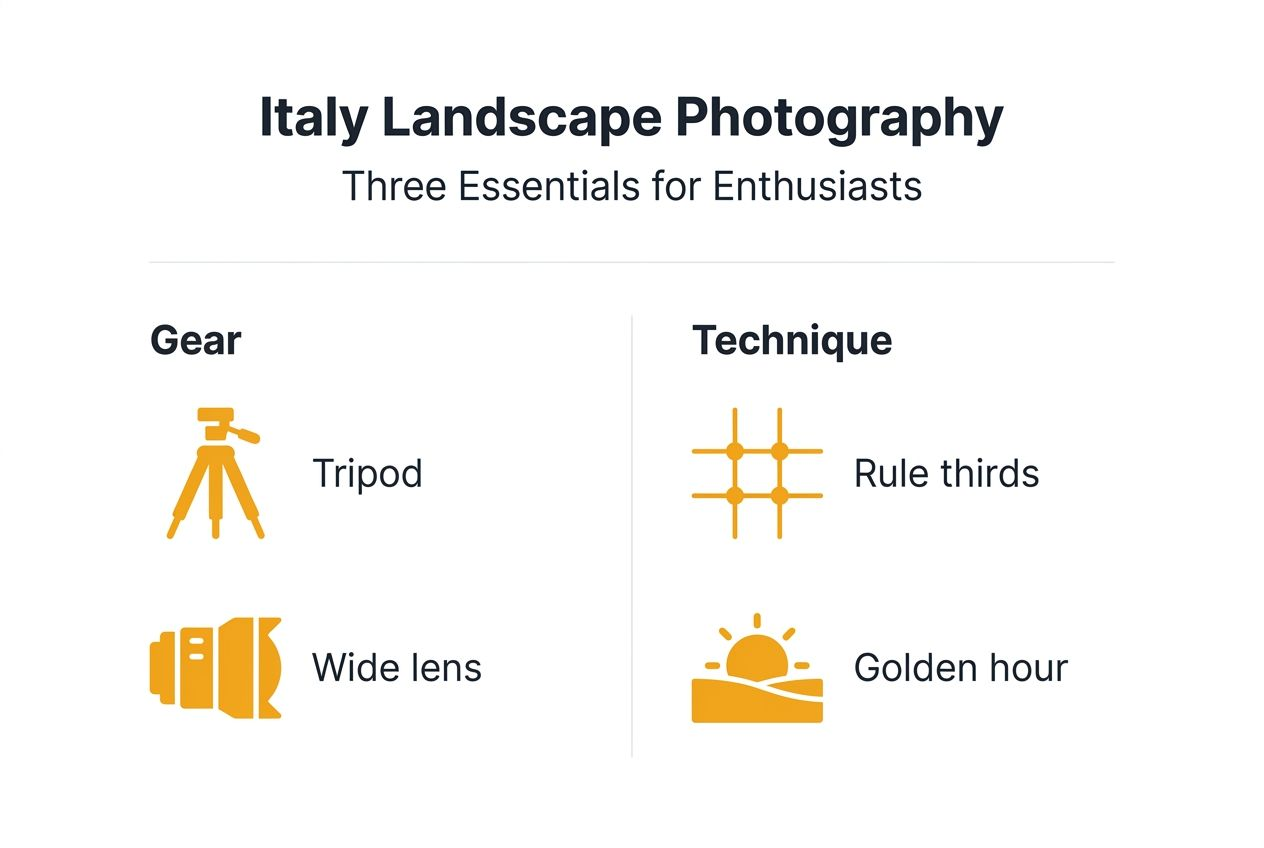
Golden hour, the period shortly after sunrise and before sunset, offers soft directional light that sculpts landscapes with warm tones and long shadows. Blue hour provides cooler, more dramatic lighting ideal for coastal scenes and architectural elements. Weather conditions like fog, rain, and dramatic clouds add atmosphere and depth that clear skies cannot match. Learning to work with rather than against these natural phenomena separates competent photographers from exceptional ones.
Composition techniques structure your images for maximum impact:
- Rule of thirds: Position key elements along imaginary gridlines dividing the frame into nine sections
- Leading lines: Use paths, rivers, or fence lines to guide eyes through the composition
- Foreground interest: Include rocks, flowers, or other elements to create depth and anchor wide vistas
- Framing: Use natural elements like tree branches or archways to create visual boundaries
- Negative space: Allow breathing room around subjects to emphasize scale and isolation
Equipment essentials include a sturdy tripod for sharpness, wide-angle lenses (16mm to 35mm) for capturing expansive views, and shooting in RAW format to preserve editing flexibility. Camera settings mastery means understanding how aperture controls depth of field, shutter speed freezes or blurs motion, and ISO affects image noise. Modern digital technology enables amateurs to achieve professional-quality landscape images, democratizing access to this art form through affordable cameras and powerful editing software.
Preparation separates lucky snapshots from intentional photographs. Scout locations beforehand using maps and online resources, check weather forecasts for optimal conditions, and arrive early to set up before peak light. Understanding landscape photography tips specific to Italy helps you anticipate unique challenges like crowded tourist sites and variable Mediterranean weather patterns.
Pro Tip: Stabilize your camera with a tripod for sharper images and use the lowest ISO setting possible to minimize digital noise, especially in low light conditions where longer exposures become necessary.
Landscape photography in Italy: a cultural and scenic exploration
Italy’s geographical diversity creates unmatched opportunities for landscape photographers. Alpine peaks in the Dolomites offer dramatic mountain scenery with jagged limestone formations and pristine lakes. Mediterranean coastlines provide turquoise waters, rugged cliffs, and golden beaches. Rolling Tuscan hills showcase geometric vineyard patterns and cypress-lined roads. Historic landmarks from Roman ruins to Renaissance villas integrate seamlessly into natural settings, creating scenes where culture and environment merge.
Cultural elements enrich your storytelling beyond pure nature photography:
- Architectural integration: Medieval hilltop towns, stone farmhouses, and ancient bridges add human scale and historical depth
- Agricultural landscapes: Vineyard terraces, olive groves, and wheat fields reveal centuries of land cultivation
- Festival moments: Religious processions, harvest celebrations, and local markets provide vibrant cultural context
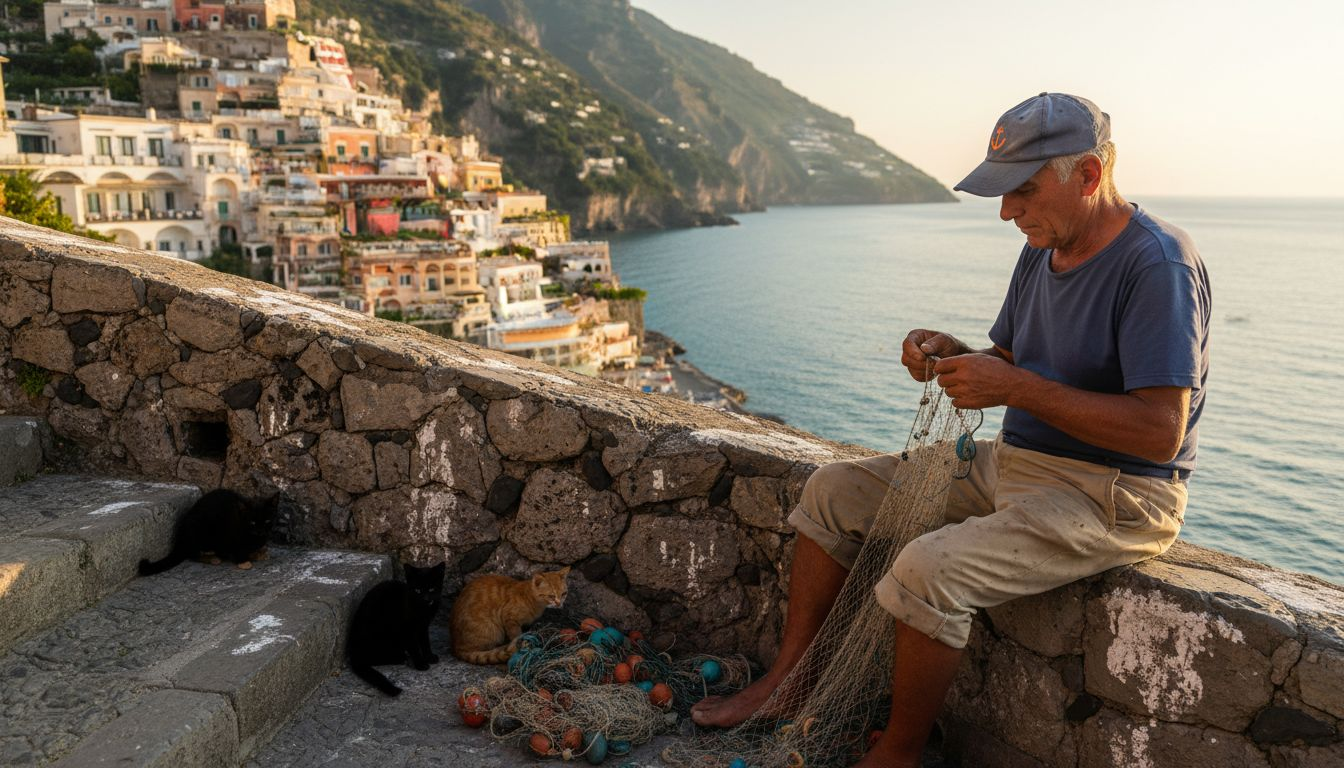
- Daily life: Fishermen mending nets, farmers tending crops, or villagers gathering in piazzas humanize your environmental portraits
UNESCO World Heritage sites across Italy blend natural beauty with historical significance. The Amalfi Coast combines vertical limestone cliffs with colorful villages clinging to slopes. Cinque Terre offers terraced vineyards meeting the sea. The Dolomites provide geological wonders shaped by ancient seas. These locations demand varied techniques, from wide-angle vistas capturing entire valleys to telephoto compression emphasizing layered ridgelines.
| Region | Landscape Type | Best Season | Cultural Elements |
|---|---|---|---|
| Dolomites | Alpine mountains, lakes | Summer, autumn | Mountain refuges, hiking culture |
| Tuscany | Rolling hills, vineyards | Spring, autumn | Farmhouses, cypress trees, wine estates |
| Amalfi Coast | Coastal cliffs, villages | Spring, early summer | Terraced gardens, fishing harbors |
| Cinque Terre | Terraced coastline | Spring, autumn | Hillside villages, vineyard paths |
Environmental diversity requires adapting your approach. Coastal photography benefits from polarizing filters to manage reflections and enhance sky contrast. Mountain work needs careful exposure management for high-altitude brightness. Understanding why photographing Italian landscapes offers unique rewards helps you appreciate how geography and culture create scenes unavailable elsewhere.
Pro Tip: Use local cultural cues like traditional architecture, agricultural patterns, or seasonal festivals as compositional anchors that tell deeper stories reflective of place and connect viewers emotionally to your images.
Mastering natural light specific to Italy’s latitude and Mediterranean climate improves your timing and technical execution throughout different regions and seasons.
Common misconceptions about landscape photography
Many beginners believe landscape photography must exclude all human presence to remain authentic. Including human or cultural elements can enhance storytelling, especially in Italy where centuries of habitation have shaped the land itself. A solitary figure on a mountain path provides scale and emotional connection. A weathered stone wall tells stories of agricultural history. These elements add narrative richness without compromising the environmental focus that defines the genre.
Another misconception holds that expensive equipment guarantees superior results. While quality gear helps, technical skill and artistic vision matter more. Smartphone cameras now offer manual controls and RAW capture sufficient for learning composition and light. Understanding when and how to shoot outweighs megapixels and lens sharpness. Many award-winning landscape images come from mid-range cameras paired with thoughtful execution rather than flagship models used carelessly.
Key myths that limit creative potential:
- Pristine wilderness only: Urban parks, agricultural land, and cultural sites offer equally valid subjects when approached artistically
- Perfect weather required: Fog, rain, and storms create atmosphere and drama often more compelling than clear skies
- Technical perfection obsession: Emotional resonance and storytelling trump pixel-level sharpness in memorable images
- Gear before skill: Mastering light and composition with basic equipment produces better results than poor technique with premium gear
- Spontaneity myths: Great landscape images require planning, preparation, and often multiple visits to perfect timing
Beginners often overlook how critical lighting quality is compared to location grandeur. A modest hillside photographed during golden hour with careful composition outperforms an iconic vista shot in harsh midday sun. Learning to recognize and wait for optimal light separates snapshots from photographs that resonate emotionally and technically.
The accessibility of digital tools means amateurs today work with capabilities that required professional budgets a decade ago. Post-processing software, online tutorials, and camera technology have democratized landscape photography. Your limitations come from knowledge and practice, not equipment budgets. Focusing on skill development rather than gear acquisition accelerates improvement and produces more satisfying results.
Understanding how human storytelling enhances Italy photos helps you move beyond restrictive rules and embrace creative flexibility that produces distinctive work reflecting your personal vision.
Conceptual framework and mental models for landscape photography
Thinking about landscape photography through three integrated pillars helps you approach scenes holistically rather than mechanically. Technical mastery covers camera operation, exposure control, and equipment use. Emotional storytelling involves using light, color, and composition to evoke specific feelings. Cultural and environmental awareness means understanding how place, history, and human presence shape what you photograph. Balancing these three elements transforms competent images into compelling ones.
Landscape photography balances technical mastery, emotional storytelling, and cultural context to transform scenes into meaningful images that resonate beyond simple documentation. This framework guides decision-making from planning through execution. Before pressing the shutter, consider how technical settings serve your emotional intent and whether cultural elements enhance or distract from your narrative.
The three pillars in practice:
- Technical foundation: Master exposure triangle, focus techniques, and equipment capabilities to execute your vision reliably
- Emotional communication: Use light quality, color palette, and compositional flow to create specific moods and viewer responses
- Contextual awareness: Integrate environmental understanding and cultural knowledge to add depth and authenticity to your storytelling
Understanding this framework helps integrate skills and vision for impactful photos that communicate beyond surface aesthetics, connecting viewers to places through both technical excellence and emotional resonance.
Light serves as your primary tool for emotional communication. Soft dawn light creates peaceful, contemplative moods. Dramatic storm light generates tension and energy. Warm sunset glow evokes nostalgia and comfort. Recognizing how different lighting conditions affect emotional response lets you match technical execution to intended feeling. This conscious choice separates intentional artists from passive documentarians.
Cultural context adds layers of meaning unique to Italy’s landscapes. A Tuscan hillside isn’t just rolling terrain; it represents centuries of agricultural tradition, Renaissance aesthetic ideals, and contemporary wine culture. Recognizing these layers informs your compositional choices, helping you decide what to include, emphasize, or exclude. This deeper understanding produces photographs that resonate with viewers who recognize the cultural significance and intrigue those discovering it.
This mental model aids planning beyond technical settings. Before visiting a location, research its cultural history, typical weather patterns, and seasonal changes. Visualize how these factors might combine during your shoot. This preparation positions you to recognize and capture meaningful moments when technical skill, emotional opportunity, and cultural context align perfectly.
Practical tips for amateur landscape photographers
Selecting appropriate equipment balances capability with portability based on your shooting style and physical constraints. DSLR cameras offer extensive lens selections and long battery life but add weight. Mirrorless systems provide similar image quality with reduced size and weight. Modern smartphones deliver surprising results for learning composition and light, though they limit manual control and lens flexibility.
| Camera Type | Advantages | Limitations | Best For |
|---|---|---|---|
| DSLR | Extensive lens options, long battery life, optical viewfinder | Heavy, bulky for travel | Serious enthusiasts prioritizing image quality |
| Mirrorless | Compact, excellent image quality, advanced features | Shorter battery life, smaller lens selection | Photographers balancing quality and portability |
| Smartphone | Ultra-portable, always available, improving quality | Limited manual control, fixed lens | Learning fundamentals, spontaneous shooting |
Planning shoots around weather and golden hour lighting dramatically improves results. Check forecasts for cloud cover, precipitation, and wind that affect atmospheric conditions. Arrive at locations well before optimal light to scout compositions and set up equipment. Golden hour provides roughly 30 to 60 minutes of premium light, so preparation ensures you maximize this brief window rather than fumbling with gear.
Manual camera settings give you creative control over final images:
- Aperture: Use f/8 to f/16 for maximum depth of field keeping foreground and background sharp
- Shutter speed: Employ slower speeds (1/15s to several seconds) with tripods for silky water; faster speeds freeze motion
- ISO: Keep at base level (100-200) for cleanest images; raise only when necessary for proper exposure
- Focus: Use manual focus or focus-and-relock to ensure critical sharpness on your chosen element
Using the lowest ISO and a tripod with proper shutter speeds improves image clarity, essential for landscape shots where detail and sharpness separate amateur work from professional results. Tripod stability eliminates camera shake, allowing longer exposures that smooth water, capture subtle light, and maintain sharpness throughout the frame.
Carrying a sturdy tripod prevents blur and enables creative techniques impossible handheld. Look for models balancing stability with reasonable weight for your fitness level and travel style. Carbon fiber offers strength with reduced weight but costs more than aluminum. Ensure the tripod extends to comfortable working height without requiring the center column, which reduces stability.
Pro Tip: Scout your location ahead of your shoot and pack gear for anticipated environmental conditions, including weather protection, extra batteries for cold conditions, and cleaning supplies for coastal salt spray or dusty environments.
Understanding best camera gear for Italy travel helps you make informed choices balancing image quality needs with the physical realities of traveling through varied Italian terrain. Reviewing landscape photography tips for Italy provides location-specific guidance on timing, weather patterns, and seasonal considerations unique to Mediterranean environments.
Explore Italy’s landscapes with expert photography tours
Now that you understand landscape photography’s technical and artistic foundations, imagine applying these skills while exploring Italy’s most photogenic locations with professional guidance. Italy Photo Tour offers immersive photography experiences led by expert photographers who know exactly when and where to capture Italy’s diverse landscapes at their best.

Our photography tours across Italy combine hands-on instruction with cultural immersion, taking you beyond tourist crowds to authentic locations where light, landscape, and local life create unforgettable images. Whether you’re drawn to Tuscany’s rolling hills, the Dolomites’ dramatic peaks, or coastal villages clinging to cliffs, our tours match your skill level and photographic interests. You’ll join a community of passionate photographers while receiving personalized guidance on technique, composition, and storytelling. Discover what we do and transform your landscape photography skills through experiences designed specifically for enthusiasts ready to elevate their craft in Italy’s inspiring environments.
FAQ
What equipment is best for beginner landscape photographers?
Mirrorless or DSLR cameras with manual controls provide the best learning platform for developing landscape photography skills. Smartphones with advanced camera apps can be effective for understanding composition and light before investing in dedicated cameras. A sturdy tripod and wide-angle lens improve stability and compositional options significantly. Learn more about camera gear suitable for Italy travel.
How can I incorporate cultural elements into my landscape photos in Italy?
Include human subjects, architecture, or festivals to add narrative layers that reflect Italy’s rich cultural heritage. Frame shots to highlight interactions between natural environments and human presence, such as vineyard workers during harvest or villages integrated into hillsides. Use local knowledge or guided tours to find authentic moments beyond typical tourist perspectives. Discover techniques for enhancing Italy photos with storytelling.
What is the best time of day to shoot landscapes in Italy?
Golden hour shortly after sunrise and before sunset offers soft, warm light that sculpts landscapes beautifully. Blue hour, just before sunrise or after sunset, provides dramatic cool tones ideal for coastal scenes and architectural elements. Avoid harsh midday sun which creates flat, unflattering light with minimal shadows and washed-out colors. Review our natural light guide for Italy for seasonal timing specifics.
Do I need expensive camera gear to create quality landscape photographs?
Technical skill and artistic vision matter far more than equipment cost in landscape photography. Mid-range cameras paired with thoughtful composition and optimal lighting produce superior results compared to expensive gear used carelessly. Modern smartphone cameras offer sufficient quality for learning fundamentals before investing in specialized equipment. Focus on mastering light, composition, and timing rather than accumulating gear.
Can I include people in landscape photography or does it violate genre rules?
Including people enhances landscape photography when they contribute to storytelling without dominating the environmental focus. A solitary figure provides scale and emotional connection while maintaining the land as the primary subject. Workers in fields, hikers on trails, or villagers in daily activities add cultural context particularly valuable in Italy where human presence has shaped landscapes for millennia. Balance is key; ensure people support rather than overshadow the environmental narrative.