

TL;DR:
- Experiential travel emphasizes active participation and cultural immersion instead of passive sightseeing. It offers deeper emotional, cognitive, and community benefits by engaging travelers directly with local cultures and traditions.
Experiential travel is defined as a form of tourism centered on active participation and deep cultural immersion rather than passive sightseeing. Where traditional tourism places you in front of a landmark, experiential travel places you inside a culture. You cook with a Sicilian grandmother, walk a Venetian market at dawn with a local fisherman, or learn the chiaroscuro of light in a Tuscan village from a working photographer. Literature as of 2026 classifies hundreds of foundational sources distinguishing these travel forms by engagement level alone. The difference is not just philosophical. It reshapes how you think, feel, and remember.
What is experiential travel and how does it differ from traditional tourism?
Experiential travel is built on active participation, not passive observation. The experiential travel definition, as recognized in academic literature, centers on affective and narrative value rather than transactional utility. You are not consuming a destination. You are in relationship with it.
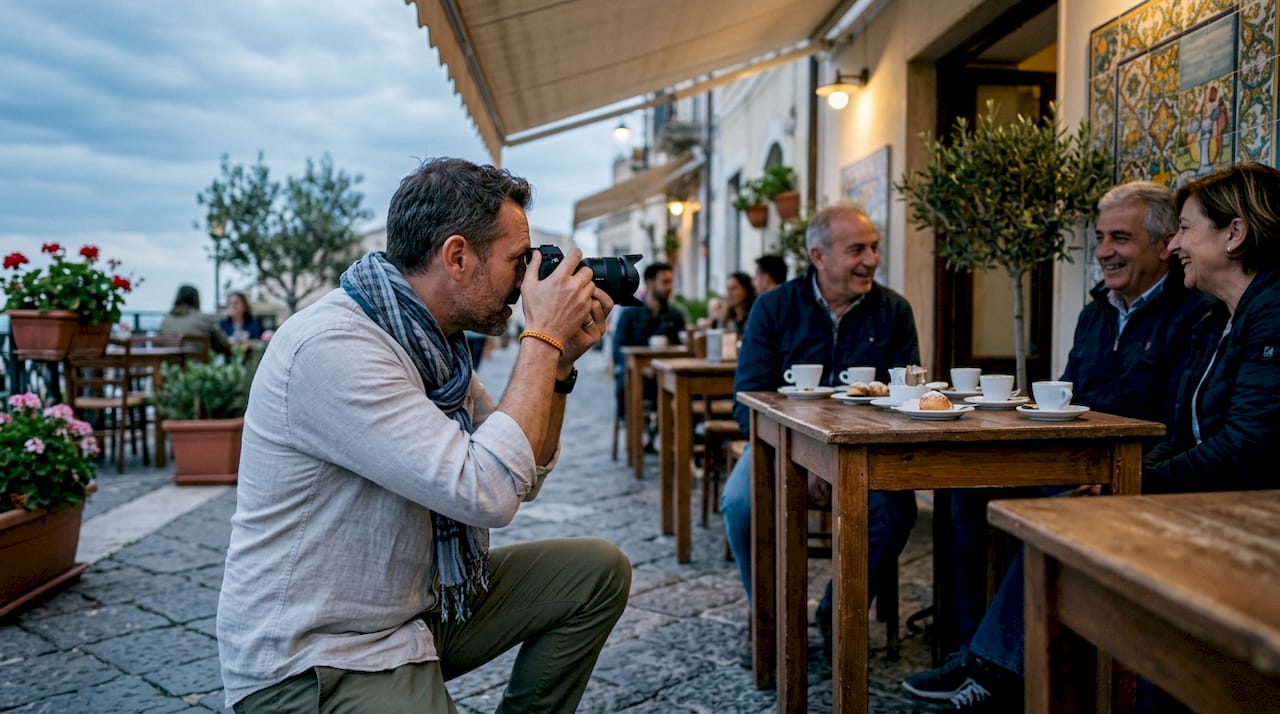
Traditional tourism operates on a simple exchange: pay, observe, leave. Experiential travel replaces that transaction with something more like a conversation. You engage with artisans, share meals with locals, and participate in rituals that were never designed for tourists. The goal shifts from collecting sights to collecting understanding.
The contrast becomes clearest in the details. A traditional tour of Florence might include the Uffizi Gallery and a gelato stop. An experiential version of the same city might involve a morning in a leather workshop in the Oltrarno district, a conversation with a bookbinder whose family has practiced the craft for four generations, and an afternoon shooting portraits in natural light with a local photographer like Mino Di Vita of Italyphototour.
| Point | Traditional tourism | Experiential travel |
|---|---|---|
| Engagement style | Passive observation | Active participation |
| Primary value | Landmark collection | Cultural and emotional depth |
| Interaction with locals | Transactional (service-based) | Relational (shared moments) |
| Memory quality | Photographic, surface-level | Narrative, identity-shaping |
| Economic impact | Concentrated in large operators | Distributed to local artisans |
Pro Tip: Before booking any tour, ask one question: “Will I be watching, or will I be doing?” If the answer is mostly watching, look for a more immersive alternative.
What are the benefits of experiential travel?
Sustained cultural immersion enhances creative problem-solving and cognitive flexibility. These are documented neural shifts, not temporary mood boosts. The brain, when placed in genuinely unfamiliar environments, builds new pathways rather than relying on existing ones.
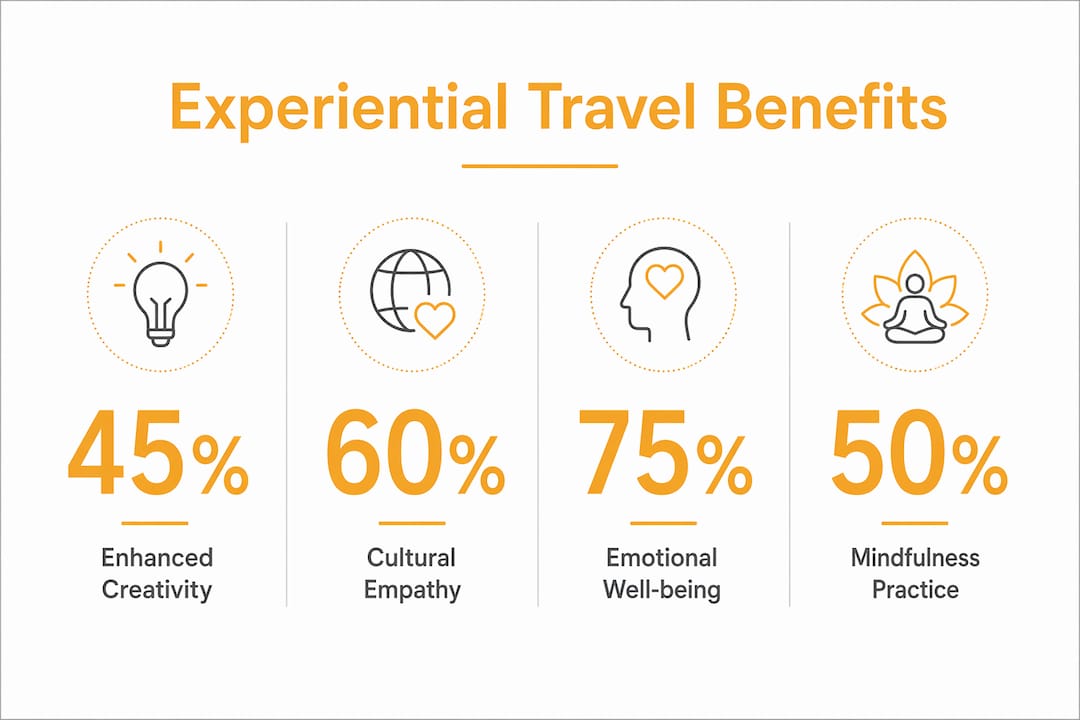
The emotional benefits run just as deep. Research published in the APA journal Emotion confirmed that the feeling of awe triggered by vast, unfamiliar environments consistently increases empathy across diverse populations. That means a morning spent watching the sun rise over the Cinque Terre coastline is not just beautiful. It is quietly rewiring how you relate to other people.
Experiential travel also functions as a form of mindfulness practice. Unfamiliar environments enforce present-moment awareness, pulling you off autopilot and into the texture of the moment. Travel psychologists note that this enforced presence produces vivid, lasting memories that ordinary routine cannot generate.
The benefits extend beyond the individual traveler. Experiential travel supports local communities by preserving cultural traditions and promoting fair-wage economic engagement. When you pay a Venetian glassblower directly for a workshop rather than buying a factory replica at a souvenir stand, that money stays in the community and sustains a living craft. The cultural immersion advantages for travelers and host communities are genuinely reciprocal.
Key benefits at a glance:
- Cognitive growth: Enhanced creativity and mental flexibility from navigating genuinely new environments
- Emotional depth: Increased empathy and capacity for awe, confirmed by psychology research
- Mindfulness: Enforced presence in unfamiliar settings reduces rumination and sharpens memory
- Identity recalibration: Experiential travel extends beyond tourism to moral reorientation and personal growth
- Community impact: Direct support for artisans, producers, and cultural preservation
“True engagement moves beyond paying for services to sharing moments with locals, abandoning photo-centric goals.” — Explorercouple on Experiential Travel
How can travelers authentically engage in experiential travel?
Authentic immersion begins before you board a plane. The planning phase determines whether your trip will be genuinely experiential or merely dressed up as one. The shift from transactional to relational interaction is the clearest marker of success.
A practical framework for planning immersive travel:
- Choose community-owned accommodation. Stay in a family-run agriturismo in Tuscany or a locally owned guesthouse in a Sicilian hill town rather than an international chain hotel. Your money circulates within the community, and your hosts become your first cultural guides.
- Seek skill-based activities. Enroll in a pasta-making class taught by a local cook, join an artisan ceramics workshop in Deruta, or book a guided photography walk with a working artist. These activities place you inside a practice, not outside it.
- Avoid tourism clusters. The streets immediately surrounding major landmarks are designed for passive consumption. Walk three blocks further and the city changes entirely. Avoiding mainstream tourism clusters and supporting community-run businesses ensures your presence benefits cultural preservation.
- Prioritize conversation over content. Put the camera down for at least part of each day. Ask a market vendor about their morning. Learn three words in the local dialect. These small relational moments are what experiential travel is actually made of.
- Reflect daily. Keep a short journal of what surprised you, what made you uncomfortable, and what you want to understand better. Reflection converts raw experience into lasting growth.
Pro Tip: Research local festivals, markets, or community events happening during your travel dates. These are not staged for tourists. They are the living culture of a place, and they offer the most direct path to authentic connection.
Italyphototour builds this framework directly into its guided photography tours across Milan, Venice, Tuscany, and Cinque Terre. Each tour is designed around cultural immersion in photography, placing participants inside local stories rather than in front of them.
What challenges and misconceptions surround experiential travel?
The most persistent misconception is that experiential travel is simply about novelty or staged excitement. A zip-line over a rainforest canopy or a cooking class in a hotel kitchen can be marketed as experiential. Neither qualifies if the interaction is scripted and the local community sees no benefit. True experiential travel is a deeper identity and ethical transformation, not an adrenaline product.
A second challenge is psychological. Experiential travel demands that travelers engage with the discomfort of unfamiliarity to reap cognitive gains. Psychologists are direct on this point: avoiding the coping shortcuts that make unfamiliar situations feel manageable is precisely what triggers neural growth. Comfort-seeking undermines the whole process.
Common pitfalls to watch for:
- Staged authenticity: Many “experiential” packages are designed for tourist consumption, not genuine cultural exchange. Look for guides who are embedded in local communities, not hired from tourism agencies.
- Photo-first mentality: Prioritizing the image over the experience reduces immersive travel to a content-collection exercise. The camera is a tool for connection, not a substitute for it.
- Commercialization creep: Mass tourism has absorbed experiential language without the substance. A “local food tour” run by a multinational operator is not the same as eating with a family in their home.
- Avoiding discomfort: Growth requires genuine unfamiliarity. Travelers who stay within familiar cultural frameworks, even abroad, miss the cognitive and emotional benefits entirely.
Benefits like enhanced empathy and creativity require conscious mental effort. They do not arrive automatically with the plane ticket.
Key Takeaways
Experiential travel delivers lasting cognitive, emotional, and cultural benefits only when it prioritizes active participation, relational depth, and genuine community engagement over passive observation.
| Point | Details |
|---|---|
| Core definition | Experiential travel centers on active cultural participation, not passive sightseeing. |
| Cognitive benefits | Immersive travel produces documented neural shifts including enhanced creativity and flexibility. |
| Emotional impact | Awe in unfamiliar environments consistently increases empathy, confirmed by APA research. |
| Authentic engagement | Relational interactions with locals, not transactional ones, define genuine immersive travel. |
| Community value | Direct support for local artisans and community-run businesses preserves culture and sustains fair wages. |
What photography taught me about being truly present
After years of leading photo tours across Italy, the most common mistake I see is travelers treating the camera as a barrier rather than a bridge. They arrive in Venice or Tuscany with a shot list, a lens plan, and a schedule. They leave with technically correct images and almost no memory of the people in them.
The photographers who grow the most are the ones who put the camera down first. They sit with a fisherman in Burano and ask about the color of his house. They watch a glassblower in Murano for twenty minutes before raising the viewfinder. That patience, that willingness to be in a place without immediately extracting something from it, is where the real images come from. It is also where the real travel happens.
Experiential travel and photography share the same discipline: presence. The moment you stop trying to capture a place and start trying to understand it, both the images and the memories change completely. Vulnerability is not a weakness in this context. It is the method.
— Mino
Photography tours as a form of immersive travel
Italyphototour’s guided photography experiences across Italy are built on the same principles that define authentic immersive travel. Each tour places participants inside local culture rather than in front of it, from the pre-dawn light of a Venetian canal to the warm ochre streets of a Tuscan hill town.

Participants work directly with professional photographer Mino Di Vita, engaging with local communities, capturing human stories, and developing both artistic and cultural understanding. These are not sightseeing tours with cameras. They are structured immersions in Italian life, light, and craft. Explore the full range of photography experiences in Italy and find the tour that matches the depth of experience you are looking for.
FAQ
What is the experiential travel definition?
Experiential travel is a form of tourism defined by active cultural participation and emotional engagement rather than passive observation of landmarks. Academic literature distinguishes it from traditional tourism by its focus on affective and narrative value over transactional utility.
What are the best examples of experiential travel?
Strong examples include cooking classes with local families, artisan workshops, guided cultural photography walks, and stays in community-owned accommodations. These activities place travelers inside a living culture rather than observing it from a distance.
Is immersive travel the same as experiential travel?
Immersive travel and experiential travel describe the same core approach: deep, participatory engagement with a destination’s culture and people. Immersive travel is the more colloquial term; experiential travel is the recognized term in academic and industry literature.
How do you avoid fake experiential travel experiences?
Authentic immersive travel requires local guide participation and independent community activity rather than tourist-focused packages. Look for guides embedded in local communities and activities that would exist without the tourism industry.
Why choose experiential travel over traditional tourism?
Experiential travel produces documented cognitive and emotional benefits, including enhanced creativity, increased empathy, and vivid lasting memories. Traditional tourism rarely generates these outcomes because it does not require the active engagement that drives neural and emotional growth.