

TL;DR:
- Creative exploration involves curiosity-driven experimentation with no focus on finished outcomes.
- It activates neural regions linked to cognitive flexibility and inhibits habitual responses, fostering originality.
- Artists should separate idea generation from evaluation and use constraints to boost genuine discovery.
Creative exploration is defined as the intentional practice of experimenting with creative processes driven purely by curiosity and discovery, with no obligation to produce a finished or optimized outcome. In photography, painting, writing, or any artistic discipline, this process asks you to wander rather than march. It is distinct from skill-building or project completion. Understanding what is creative exploration means recognizing it as a mode of being with your art, not a method for measuring progress. This guide unpacks the neuroscience behind it, contrasts it with goal-driven creativity, and offers concrete techniques you can use today to deepen your artistic practice.
What is creative exploration and its cognitive foundations?
Creative exploration activates specific brain regions that support flexible, open-ended thinking. Neuroscientific meta-analyses link artistic creativity and exploratory behavior to shared neural activations in the bilateral inferior frontal junction (IFJ) and the left pre-supplementary motor area (preSMA). These regions govern inhibitory control and cognitive flexibility. That connection matters because it confirms exploration is not a soft, vague concept. It is a measurable cognitive state your brain enters when you let go of fixed goals.
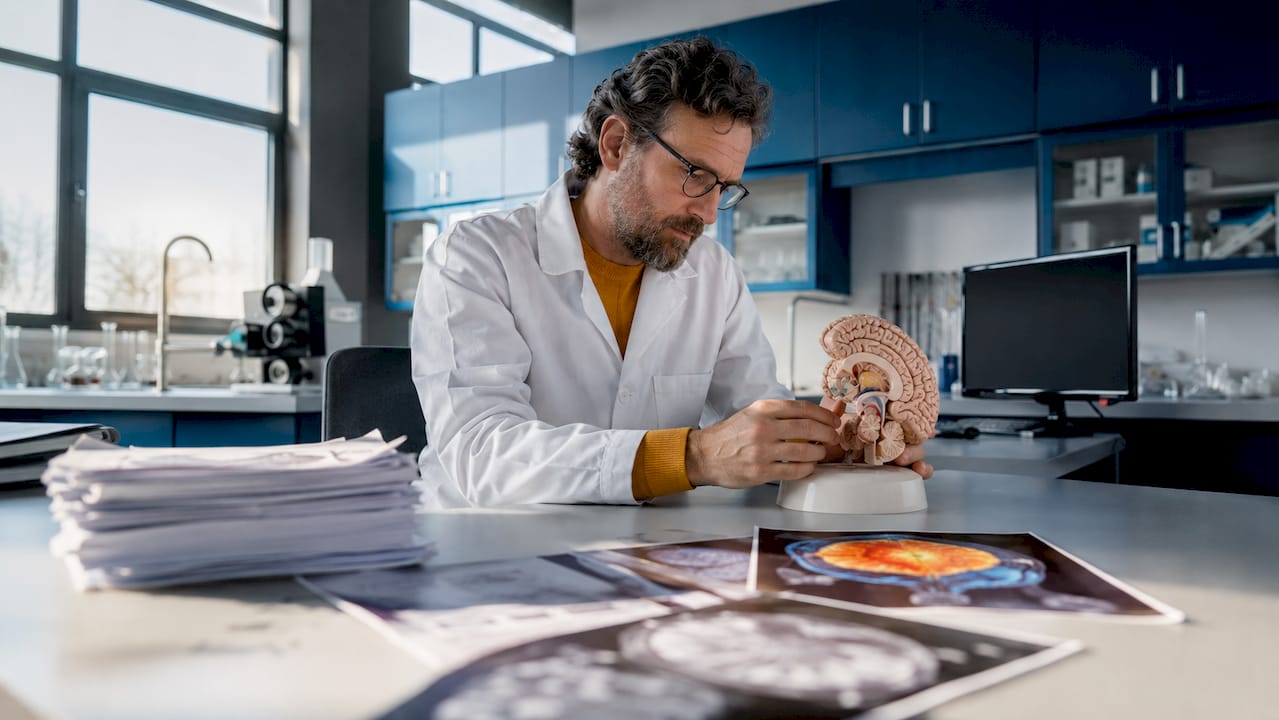
Cognitive flexibility, the ability to shift between ideas and perspectives without getting stuck, is the engine of creative exploration. When you pick up a camera without a shot list, or sketch without a reference image, you force your brain into this flexible mode. The bilateral IFJ and preSMA work together to suppress habitual responses, making room for genuinely novel associations.
The four-stage creative process of preparation, incubation, illumination, and verification maps neatly onto creative exploration. Exploration lives most powerfully in the incubation and illumination stages, where the mind wanders, connects distant ideas, and suddenly sees something new. Skipping these stages by rushing to verification (the polished, finished product) is the most common way artists short-circuit their own originality.
“Creativity is fundamentally mental transformation where reorganization of memories and emotions creates novel ideas, not merely producing objects.” — Keith Sawyer, creativity researcher
That insight reframes what you are actually doing when you explore creatively. You are not wasting time. You are reorganizing your inner world so that something genuinely new can emerge.
How does creative exploration differ from goal-oriented creativity?
Goal-oriented creativity begins with an outcome in mind: a portfolio piece, a client deliverable, a finished painting for the wall. Creative exploration begins with a question, a feeling, or simply a material in your hands. The difference is not about quality or seriousness. It is about where your attention lives during the process.
The most damaging mistake in creative practice is applying judgment too early. Separating the proliferate and consolidate phases of creativity is the clearest way to protect exploration from premature critique. The proliferate phase is pure idea generation, no editing, no ranking, no asking “is this good?” The consolidate phase comes later, when you select and refine. Collapsing these two phases into one kills the exploratory impulse before it can breathe.
Consider the difference between journaling for yourself versus writing for publication. When you write for yourself, you follow threads, contradict yourself, and surprise yourself. When you write for publication from the first sentence, you self-censor. The same dynamic plays out in every art form. A photographer shooting for Instagram metrics thinks about likes before the shutter clicks. A photographer in exploratory mode thinks about light, shadow, and feeling.
- Exploration is process-centered. The act of making is the point, not the artifact produced.
- Exploration suspends the inner critic. Judgment is deferred, not eliminated.
- Exploration tolerates ambiguity. You do not need to know where you are going to start moving.
- Exploration resists monetization. Premature optimization of creativity ends its exploratory benefits immediately.
Pro Tip: Keep a dedicated sketchbook, memory card, or notebook that you never share publicly. Knowing no one will see it removes the performance pressure that kills genuine exploration.
What practical techniques support effective creative exploration?
The creative exploration process does not require expensive tools or elaborate setups. Beginning with minimal supplies and zero commitment to a finished product is the most effective entry point. A single lens, a cheap notebook, or one tube of paint removes the psychological weight of “I spent too much on this to waste it.” That weight is the enemy of play.
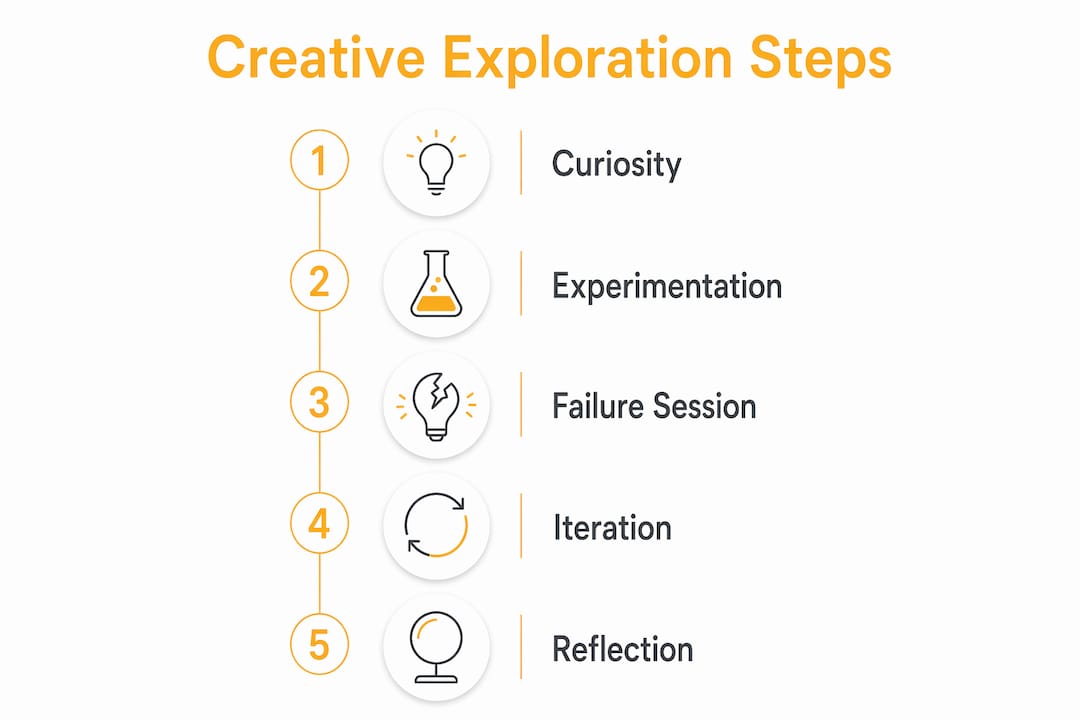
Forced limitations are among the most powerful techniques for breaking creative autopilot. When you restrict your options, your brain stops reaching for familiar solutions and starts genuinely problem-solving. Here are five techniques that work across artistic disciplines:
- Single-constraint sessions. Photograph only in one color palette for an hour, or draw only with your non-dominant hand. The constraint removes comfort and forces invention.
- Time-boxed creation. Set a timer for 15 minutes and complete something, anything, before it ends. Speed removes perfectionism from the equation.
- Material substitution. Swap your usual tool for an unexpected one. A wide-angle lens instead of a portrait lens. Charcoal instead of pencil. The unfamiliar material asks different questions.
- Composition rearrangement. Take a subject you have photographed or painted before and find five entirely different framings. This trains your eye to see beyond the obvious first read.
- Iterative series work. Make ten versions of the same idea without stopping to evaluate. The tenth version is almost always more interesting than the first, because you have exhausted the obvious answers.
Pro Tip: Allow failure to be the expected outcome of at least one session per week. Name it “the failure session” and treat anything that works as a bonus. This reframes your relationship with risk.
The iterative approach is especially powerful for photographers. Mino Di Vita, the photographer behind Italyphototour, often walks the same street in Milan or along the canals of Venice multiple times, each pass with a different intention: once for light, once for human presence, once for geometry. Each pass is a separate exploratory act, not a correction of the previous one.
What are the benefits of embracing creative exploration?
The benefits of creative exploration extend well beyond producing more interesting work. Creative artists who spend more time exploring materials and rearranging compositions consistently produce work judged as more original by expert panels than artists who follow a set plan. Originality, it turns out, is a byproduct of time spent in open-ended discovery, not of talent alone.
The psychological benefits are equally significant. Exploration builds what researchers call creative confidence, the belief that you can generate ideas worth pursuing. This confidence does not come from finishing more projects. It comes from the accumulated experience of having surprised yourself repeatedly during the exploratory process.
“Exploration and play with ideas enrich imagination, originality, and mental imagery, foundational for generating original artworks.” — Psychology Today, 2025
Three core benefits stand out for artists who commit to regular creative exploration:
- Enhanced originality. Open-ended experimentation produces unexpected combinations that planned work rarely reaches.
- Greater creative flexibility. Practicing exploration trains your brain to shift perspectives more easily, a skill that transfers directly to commissioned or goal-driven work.
- Deeper personal insight. Exploration surfaces what you actually find beautiful, strange, or moving, separate from what you think you should find interesting.
Holding productive tension between incompatible ideas without rushing to resolve them is a hallmark of creative breakthroughs. The artist who can sit with “I don’t know what this is yet” long enough to let it become something unexpected is practicing the deepest form of creative exploration. That capacity is built through practice, not talent.
Key Takeaways
Creative exploration is the intentional practice of curiosity-driven experimentation that prioritizes process over outcomes, producing measurably greater originality and creative flexibility in artistic practice.
| Point | Details |
|---|---|
| Definition of creative exploration | It is curiosity-driven experimentation focused on process, not on producing finished or optimized work. |
| Neural basis | The bilateral IFJ and preSMA activate during exploration, enabling cognitive flexibility and inhibitory control. |
| Proliferate before consolidating | Generate ideas freely before evaluating them; collapsing these phases kills originality. |
| Forced limitations work | Restricting materials, time, or tools breaks autopilot and spurs genuine creative problem-solving. |
| Exploration builds originality | Artists who explore materials more deeply produce work judged as more original by expert panels. |
Why I think most artists misunderstand creative exploration
I have spent years walking through Italian cities with a camera, and the single most common mistake I see in photographers, beginners and experienced alike, is treating exploration as a warm-up. They explore for ten minutes, then switch into “serious shooting” mode. That switch is the problem. The exploratory state is not a prelude to the real work. It is the real work.
When I first started leading photo tours in Italy, I noticed that participants who arrived with a clear shot list almost always left with technically competent but emotionally flat images. Participants who arrived with a loose intention, “I want to feel the light in Tuscany today,” consistently produced images that surprised even themselves. The difference was not skill. It was permission. Permission to not know, to wander, to be wrong about what they were looking for.
The hardest part of creative exploration is not the technique. It is tolerating the discomfort of not knowing whether what you are making is any good. That discomfort is not a sign that something is wrong. It is the feeling of genuine exploration. I have learned to treat it as a signal that I am in the right place, not a reason to retreat to familiar ground.
If you take one thing from this article, let it be this: the inner critic is not your quality control department. It is the voice that ends exploration before it can produce anything worth keeping. Suspend it deliberately, and your creative range will expand in ways that no amount of technical practice can replicate.
— Mino
Discover creative exploration through Italy’s landscapes
Italyphototour designs every experience around the principles of creative exploration, placing you inside the living light of Venice, the geometric grandeur of Milan, and the golden hills of Tuscany with the sole purpose of seeing differently. These are not sightseeing tours with cameras. They are guided invitations to experiment, wander, and discover what your eye is actually drawn to when no one is grading the result.

Whether you are drawn to the Milan photo tour for its interplay of shadow and architecture, or to the open skies of Lake Como for its ever-shifting light, each Italyphototour experience is built to push your creative boundaries in a warm, supportive environment. Explore the full range of photography tours in Italy and find the experience that calls to your curiosity.
FAQ
What does creative exploration mean for artists?
Creative exploration is the practice of experimenting with creative processes out of curiosity rather than to produce a specific outcome. It prioritizes the act of making over the artifact produced.
How does creative exploration differ from regular practice?
Regular practice builds technical skill toward a defined goal. Creative exploration suspends goals entirely, using play and open-ended experimentation to generate original ideas and unexpected connections.
What are the best techniques for creative exploration?
Forced limitations such as single-color constraints, time-boxed sessions, and material substitution are among the most effective techniques for breaking habitual thinking and sparking genuine creative discovery.
Why is creative exploration important for originality?
Artists who spend more time exploring materials and rearranging compositions produce work judged as more original than those who follow a set plan, according to 2025 creativity research. Exploration surfaces combinations that planned work rarely reaches.
Can creative exploration be practiced without expensive tools?
Starting with minimal, low-cost supplies and no commitment to a finished product is the recommended entry point for creative exploration. The absence of financial pressure removes a key barrier to genuine play.