

Amateur photographers searching for urban photography experiences in Italy often struggle to identify which cities offer the best combination of architectural diversity, cultural richness, and lighting conditions. Italy’s urban centers provide unmatched opportunities to capture compelling images while developing technical skills and creative vision. This guide explores selection criteria, top city choices, optimal timing strategies, and practical techniques to help you maximize your urban photography adventures across Italian cities.
Table of Contents
- Selection Criteria For Urban Photography Experiences In Italy
- What Is Urban Photography And Its Core Advantages
- Top Cities For Urban Photography In Italy
- Optimal Timing And Lighting For Urban Photography In Italy
- Technical Tips To Maximize Urban Photography In Italy
- Skill Enhancement Through Workshops And Guided Tours
- Summary Comparison Of Urban Photography Advantages In Italy
- Situational Recommendations For Urban Photography In Italy
- Explore Italy Photo Tours To Boost Your Urban Photography Skills
- Frequently Asked Questions About Urban Photography In Italy
Key takeaways
| Point | Details |
|---|---|
| City selection matters | Milan, Bologna, and Rome each offer distinct architectural styles and street photography opportunities suited to different creative goals. |
| Seasonal timing optimizes results | Spring and early autumn provide extended golden hours and mild temperatures ideal for comfortable, productive shooting sessions. |
| Technical preparation enhances quality | Faster shutter speeds, lightweight gear, and location scouting significantly improve image sharpness and compositional opportunities. |
| Guided experiences accelerate learning | Structured workshops deliver personalized feedback and cultural context that fast-track skill development for amateur photographers. |
Selection criteria for urban photography experiences in Italy
Choosing the right urban photography setting in Italy requires evaluating several key factors that directly impact your creative output and learning curve. Your decision should balance practical considerations with artistic goals to ensure meaningful photographic experiences.
Selecting cities based on architectural style, cultural vibrancy, seasonal lighting, and availability of workshops maximizes urban photography benefits. Milan delivers modern glass facades alongside historic cathedrals, while Bologna presents medieval porticoes and warm terracotta buildings. Rome blends ancient ruins with contemporary street life, creating endless compositional possibilities.
Consider these essential selection factors:
- Architectural diversity matching your creative interests (modern vs historical vs mixed styles)
- Cultural vibrancy including markets, festivals, and daily neighborhood activity
- Seasonal lighting conditions during your planned travel dates
- Availability of guided photo tours in Italy offering structured learning
- Accessibility for scouting locations and carrying gear comfortably
Pro Tip: Research your chosen city’s market schedules before arrival. Morning markets provide dynamic human activity, colorful produce displays, and authentic cultural moments perfect for storytelling through urban photography.
Pack lightweight, versatile equipment suitable for extended walking sessions through cobblestone streets and narrow alleyways. Mobility trumps gear quantity in urban environments where spontaneity and quick positioning often determine whether you capture decisive moments. Plan visits during shoulder seasons when mild weather extends comfortable shooting hours without overwhelming tourist crowds.
What is urban photography and its core advantages
Urban photography encompasses a broad creative discipline focused on capturing built environments, architectural details, street scenes, and the intersection of human activity with city spaces. Urban photography is a multidisciplinary genre capturing architecture, streets, and human activity with flexibility beyond street photography.
This genre differs fundamentally from street photography in its inclusive scope. Street photography always includes candid human subjects; urban photography may focus solely on environments or include people. You can photograph empty plazas at dawn, architectural abstracts emphasizing geometry and shadow, or bustling market scenes with vendors and customers.
Italian cities provide exceptional advantages for urban photographers:
- Rich textural variety from weathered stone facades to sleek contemporary surfaces
- Layered historical periods visible within single city blocks
- Dramatic natural light enhanced by southern European sun angles
- Vibrant street culture offering authentic human stories
- Architectural scales ranging from intimate alleyways to grand piazzas
The genre encourages creative exploration of shapes, patterns, light qualities, and cultural narratives embedded in urban environments. Italian settings amplify these opportunities through centuries of architectural evolution and living cultural traditions. You can work abstractly, isolating geometric patterns in Renaissance loggias, or documentarily, capturing daily rituals in neighborhood cafes.
Urban photography transforms ordinary city scenes into compelling visual stories by revealing the extraordinary within everyday environments through thoughtful composition and timing.
This flexibility makes urban photography ideal for amateur photographers developing their artistic voice. You control pacing, revisit locations under different conditions, and experiment with techniques without the pressure of fleeting candid moments. Urban photography tips in Italy help you leverage these advantages systematically.
Top cities for urban photography in Italy
Three Italian cities stand out for their distinct urban photography characteristics, each offering unique visual opportunities matched to different creative priorities and skill development goals.
Milan combines cutting-edge contemporary architecture with historic landmarks, creating striking juxtapositions perfect for modern urban photography. The Porta Nuova district showcases sleek glass towers and innovative public spaces, while traditional neighborhoods preserve 19th-century buildings and bustling street markets. Professional workshops frequently choose Milan for its accessibility and diverse shooting locations concentrated within walkable districts. The Milan photo tour emphasizes this architectural variety.
Bologna’s medieval porticoes create soft lighting and geometric shadows ideal for architectural photography. The city features over 38 kilometers of covered walkways producing consistent, diffused natural light even during midday hours. Warm terracotta facades provide rich color palettes, while the university district generates youthful energy and authentic street scenes. Bologna remains less crowded than Rome or Florence, allowing patient composition without constant tourist interruptions.
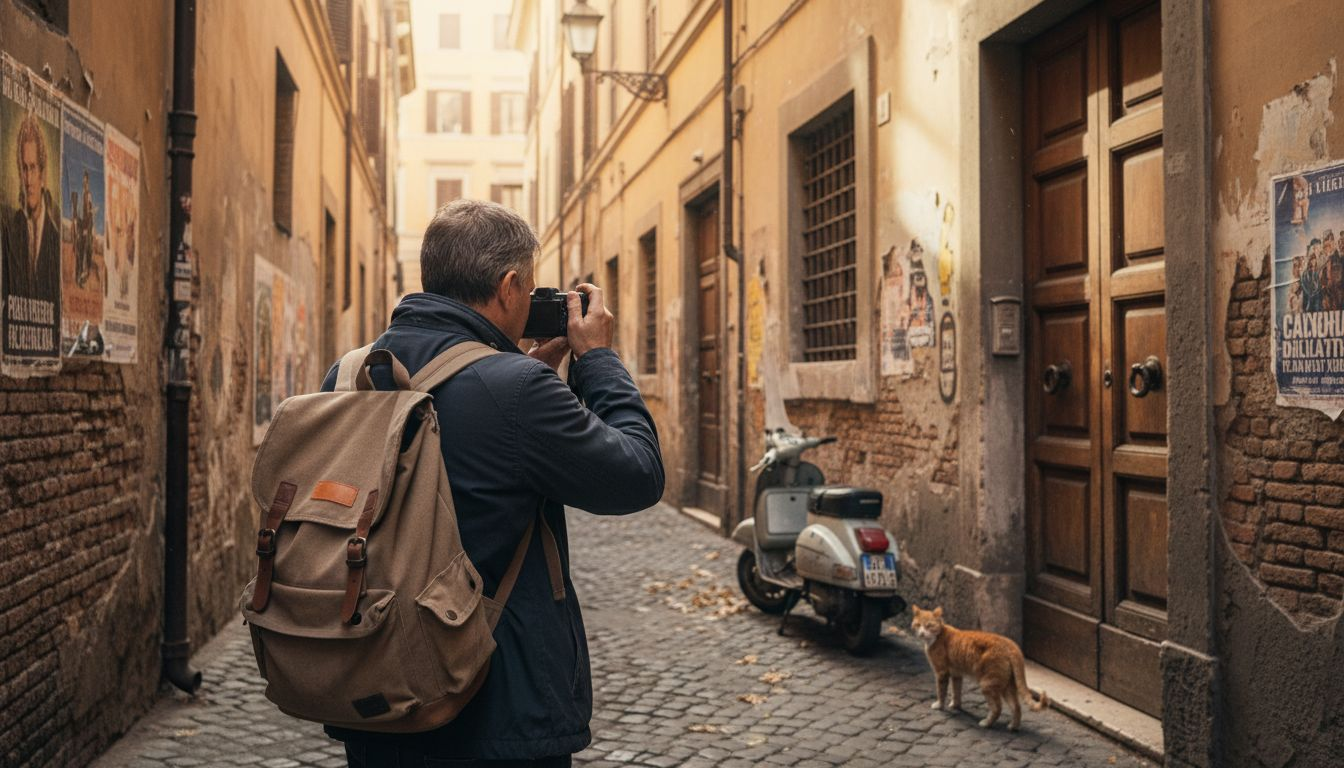
Rome delivers iconic landmarks and diverse urban textures blending ancient, Renaissance, and modern elements within continuous city fabric. You can photograph Baroque fountains at dawn, contemporary street art in Testaccio, or daily life unfolding around neighborhood piazzas. The scale and density of photographic subjects in Rome suits ambitious projects and extensive portfolio building.
| City | Architectural Highlights | Street Vibrancy | Lighting Conditions | Workshop Availability |
|---|---|---|---|---|
| Milan | Modern/historic mix | High (markets, fashion) | Variable, dramatic contrasts | Extensive |
| Bologna | Medieval porticoes | Medium (university life) | Soft, diffused | Moderate |
| Rome | Ancient to contemporary | Very high (tourists, locals) | Strong, directional | Extensive |
Pro Tip: Visit Milan’s Navigli district during evening aperitivo hours. The canal-side setting combines golden hour light, animated social scenes, and reflective water surfaces for dynamic compositional opportunities.
Each city rewards different photographic approaches. Photography tours across Italy often combine multiple cities to expose participants to varied urban photography contexts.
Optimal timing and lighting for urban photography in Italy
Successful urban photography in Italy depends heavily on strategic timing decisions that leverage natural light advantages while ensuring comfortable shooting conditions throughout extended sessions.
Spring (April to May) and early autumn (September to October) offer mild temperatures and extended golden hours ideal for vibrant urban photos. During these shoulder seasons, golden hour light persists for approximately 90 minutes around sunrise and sunset, nearly doubling the premium shooting window compared to winter months. This extended period allows thorough location coverage without rushing between compositions.
Mild temperatures ranging from 15 to 22 degrees Celsius enable comfortable multi-hour walking sessions through city districts. You maintain better concentration and creative energy when not battling extreme heat or cold. Spring and autumn also bring occasional cloud coverage that diffuses harsh sunlight, producing softer shadows and more balanced exposures across architectural scenes.
Extended Golden Hour in Italian Cities:
90 minutes of optimal directional light during spring and autumn shoulder seasons compared to 45 minutes in winter.
Avoid summer midday shooting when overhead sun creates minimal shadows and washes out architectural details. Harsh lighting reduces tonal separation and produces unflattering contrast ratios difficult to manage even with advanced exposure techniques. Summer heat also limits comfortable shooting duration and increases tourist density at popular locations.
Timing considerations within your chosen season:
- Morning golden hour captures fewer tourists and fresh market activity
- Evening golden hour offers vibrant social scenes and animated street life
- Overcast days provide consistent lighting for architectural details and color work
- Blue hour delivers dramatic twilight conditions for illuminated cityscapes
Mastering light and shadow in Italy transforms ordinary urban scenes into compelling images through strategic timing and positioning.
Technical tips to maximize urban photography in Italy
Executing sharp, compelling urban photographs in Italian cities requires specific technical approaches tailored to the unique challenges of dynamic street environments and varied architectural subjects.
Using shutter speeds of 1/125 second or faster helps freeze urban motion and achieve sharp photos in city scenes. This speed stops pedestrian movement, flag motion, and slight camera shake from handheld shooting while walking between locations. Increase to 1/250 second or higher when photographing faster subjects like cyclists or scooters common in Italian streets.
Pre-shoot scouting dramatically improves compositional success. Use mapping tools and photo-sharing platforms to identify promising angles, background elements, and vantage points before arriving at locations. Note sun direction relative to key architectural features to plan optimal shooting times.
Step-by-step technical workflow for Italian urban photography:
- Set camera to aperture priority or manual mode for creative exposure control
- Choose aperture between f/5.6 and f/11 for architectural sharpness with environmental context
- Enable auto ISO with maximum limit of 1600 to maintain shutter speed in changing light
- Shoot RAW format for maximum post-processing flexibility with Italian color palettes
- Review histograms regularly to avoid blown highlights on bright stucco facades
Compact mirrorless cameras or smartphones are sufficient for compelling urban photography in Italy’s city environments. Lightweight gear enables extended shooting sessions and reduces fatigue during long walking days through historic districts. Modern smartphone computational photography handles high-contrast scenes effectively through automatic HDR processing.
Pro Tip: Arrive at promising locations 20 minutes early and observe light direction, pedestrian flow patterns, and compositional possibilities before shooting. Patience reveals optimal moments when light, subject placement, and background elements align perfectly.
Develop a systematic urban photography workflow in Italy that balances spontaneity with technical discipline for consistent results across varied shooting conditions.
Skill enhancement through workshops and guided tours
Structured learning experiences within Italian urban environments accelerate technical growth and creative confidence for amateur photographers through focused instruction, practical assignments, and cultural immersion.
Workshops often feature small groups, creative assignments, and personalized feedback that push photographers’ skills. Typical formats include morning shooting sessions targeting specific techniques like leading lines or shadow play, followed by afternoon reviews where instructors analyze participant images and suggest improvements. Small group sizes, usually four to eight participants, ensure individual attention and customized guidance.
Workshop benefits for skill development:
- Hands-on practice with immediate instructor feedback on composition and exposure decisions
- Challenging assignments designed to expand creative thinking beyond comfort zones
- Technical demonstrations of advanced camera features and post-processing workflows
- Portfolio review sessions identifying strengths and growth opportunities
- Peer learning through observing other participants’ approaches and results
Guided tours combine photography instruction with cultural context that enriches visual storytelling capabilities. Professional guides explain historical significance, architectural styles, and cultural traditions visible in urban scenes, helping you capture images with deeper meaning and authentic narrative power. This contextual knowledge transforms snapshots into purposeful documentary work.
Immersive workshop environments push photographers beyond technical competence into artistic confidence by creating safe spaces for experimentation, failure, and discovery under expert guidance.
The immersive Italian setting naturally inspires creative risk-taking and artistic exploration. Daily exposure to world-class architecture, vibrant street culture, and exceptional Mediterranean light builds visual literacy and compositional instincts that transfer to future photography projects worldwide. Photography workshops and tours in Italy structure these experiences for maximum learning efficiency.
Participants typically expand their portfolios significantly during multi-day urban photography workshops, returning home with both refined technical skills and compelling image collections showcasing their growth.
Summary comparison of urban photography advantages in Italy
Consolidating the key advantages across Italy’s premier urban photography destinations helps photographers match city characteristics with personal creative goals and practical constraints.
| Aspect | Milan | Bologna | Rome |
|---|---|---|---|
| Architecture | Modern/historic fusion | Medieval porticoes | Ancient to contemporary layers |
| Best Season | April to May, September to October | April to May, September | March to May, September to November |
| Crowd Levels | High in center, moderate in districts | Low to moderate | Very high at landmarks |
| Lighting Character | Dramatic contrasts, harsh midday | Soft, diffused under porticoes | Strong directional, varied by district |
| Workshop Options | Extensive, year-round | Moderate, seasonal | Extensive, competitive |
| Street Photography | Dynamic markets, fashion culture | Authentic university scenes | Tourist/local mix, varied contexts |
| Cultural Depth | Contemporary innovation focus | Medieval authenticity | Multi-period historical layers |
Milan suits photographers seeking contemporary urban energy combined with structured learning through professional workshops. The city’s compact center and efficient public transportation enable coverage of diverse districts within single shooting days. Fashion culture and design innovation create visually sophisticated street scenes.
Bologna appeals to photographers prioritizing architectural detail work and softer natural light conditions. The university presence generates authentic youth culture and intellectual atmosphere distinct from tourist-heavy destinations. Lower crowd levels allow patient, contemplative approaches to composition.
Rome rewards ambitious photographers willing to navigate crowds for access to unmatched historical depth and iconic imagery. The density of photographic subjects supports extended projects and portfolio diversification across multiple visual themes within a single city.
Consider booking photography tours in Italy that combine multiple cities to experience these varied advantages within a structured learning progression.
Situational recommendations for urban photography in Italy
Tailoring your Italian urban photography approach to specific goals and constraints ensures optimal creative outcomes and efficient use of limited travel time.
For detailed architectural focus, choose Bologna and schedule visits during spring months when soft morning light illuminates portico details without harsh shadows. The city’s walkable scale allows thorough coverage of key districts within three to four shooting days. Bring a sturdy tripod for long exposure detail work in covered walkways.
Photographers prioritizing dynamic street life and human activity should select Milan and time visits for September when fashion week events energize the city. Focus on Navigli, Brera, and Corso Como districts where concentrated foot traffic and outdoor dining create continuous candid opportunities. Pack lightweight gear enabling quick repositioning as scenes develop.
Those seeking structured learning and cultural context benefit most from booking guided photo tours in Italy led by experienced professionals. Tours provide efficient location access, historical background, and real-time feedback that independent exploration cannot match. Group dynamics also foster creative inspiration through peer interaction.
Recommendations by photographer experience level:
- Beginners: Start with guided Milan tours offering diverse subjects and professional instruction to build foundational skills
- Intermediate photographers: Explore Bologna independently using skills developed elsewhere, focusing on architectural abstracts and shadow work
- Advanced amateurs: Tackle Rome’s complexity through self-directed projects targeting specific visual themes or neighborhood documentation
- All levels: Schedule visits during shoulder seasons for optimal lighting and comfortable shooting conditions regardless of city choice
Budget travelers can achieve excellent results through DIY exploration using location scouting apps and online photography communities for tips. However, guided experiences compress the learning curve dramatically and justify costs through accelerated skill development and insider access to photographic locations.

Explore Italy photo tours to boost your urban photography skills
Transform your urban photography capabilities through expert-led experiences designed specifically for amateur and enthusiast photographers seeking authentic Italian shooting opportunities. Our photography tours in Italy combine technical instruction with cultural immersion across Milan, Bologna, Rome, and other iconic cities.
Professional photographer Mino Di Vita leads small group sessions focused on practical skill development through hands-on shooting and personalized critiques. You’ll master light reading, compositional techniques, and storytelling approaches while exploring vibrant neighborhoods away from standard tourist circuits. Our structured urban photography workshops cater to all experience levels, from beginners building camera confidence to advanced amateurs refining their artistic vision.
Each tour emphasizes authentic experiences over checklist photography, helping you develop a distinctive creative voice informed by Italian visual culture. Flexible formats accommodate different learning styles and schedule requirements. Discover proven urban photography tips through direct practice in cities that have inspired photographers for generations.
Frequently asked questions about urban photography in Italy
How can beginners prepare for urban photography in Italian cities?
Master your camera’s basic manual settings before traveling, focusing on aperture, shutter speed, and ISO relationships. Research your chosen city’s key districts, notable architecture, and seasonal lighting patterns using online photography forums and location guides. Pack comfortable walking shoes, lightweight camera gear, and spare batteries since Italian cities require extensive exploration on foot through cobblestone streets.
What camera gear is recommended for traveling light in Italy?
Compact mirrorless cameras or smartphones are excellent for urban photography due to their portability and sufficient technical capabilities. Carry one versatile zoom lens covering 24mm to 70mm equivalent focal lengths or a single prime lens around 35mm for classic street photography perspectives. Avoid heavy telephoto lenses and multiple camera bodies that reduce mobility during long shooting days.
Are guided photography tours suitable for amateurs with limited experience?
Yes, guided photography tours in Italy specifically design instruction for amateur and enthusiast photographers at all skill levels. Tours provide personalized feedback, technical demonstrations, and cultural context that accelerate learning far beyond independent practice. Small group formats ensure individual attention while the structured itinerary maximizes shooting time at optimal locations during best light.
What cultural aspects can I capture beyond architecture in urban photography?
Market scenes, street vendors, local festivals, and daily neighborhood rituals add emotional depth and authentic storytelling to urban portfolios. Capture morning coffee culture at neighborhood bars, afternoon passeggiata traditions, or evening aperitivo gatherings. These human moments reveal cultural storytelling through photography that transcends purely architectural documentation and connects viewers to place and community.
When is the best time of day to photograph cities like Milan and Rome?
Golden hour around sunrise and sunset delivers warm, directional light creating long shadows and dimensional depth perfect for architectural subjects. Morning light typically offers cleaner air and fewer crowds compared to evening sessions. Avoid midday shooting when overhead sun flattens scenes and creates harsh contrast difficult to manage. Learn more about best times of day for photography in Italy through seasonal timing strategies.