

TL;DR:
- Choosing Italian landmarks aligned with your style and timing ensures meaningful, creative photos.
- Specific locations like Venice, Rome, Florence, Tuscany, and Cinque Terre offer unique lighting and composition opportunities.
- Planning around light, crowds, and seasons, along with personal vision, yields iconic and authentic images.
Italy’s landscape reads like a photographer’s dream journal, yet the sheer abundance of iconic sites can leave you paralyzed before you even lift your camera. From the shimmering canals of Venice to the rolling hills of Tuscany, every corner seems to whisper ‘shoot me first.’ The challenge is not finding beauty; it is knowing which landmarks will reward your specific vision, your preferred light, and your creative instincts. This guide walks you through a clear selection framework, six unmissable sites with tailored shooting strategies, and a side-by-side comparison so you can build an itinerary that feels as personal as the images you dream of making.
Table of Contents
- How to choose the best Italian landmarks for photography
- 6 unmissable Italian landmarks: What, where, and how to photograph them
- Landmark photography in Venice: Planning, techniques, and hidden gems
- Comparing landmark photo potential: Which suits your style?
- Making the most of your Italy photography tour
- Our take: Why bold, personal vision creates iconic images
- Ready to capture Italy’s icons? Join a guided photo tour
- Frequently asked questions
Key Takeaways
| Point | Details |
|---|---|
| Prioritize timing | Sunrise and sunset provide the best light and fewer crowds at iconic Italian landmarks. |
| Seek diversity | Mix famous and hidden locations for a unique and varied photography portfolio. |
| Prep your gear | Bring a tripod and filters to expand your creative options, especially in low light. |
| Emphasize personal vision | Interpret classic locations with your unique perspective to create memorable images. |
How to choose the best Italian landmarks for photography
Building a meaningful shot list starts long before you board a plane. The landmarks that truly deliver are the ones that align with your photographic style, your patience for crowds, and your willingness to wake before sunrise. Here are the core criteria worth weighing before committing to a location.
Accessibility shapes everything. Can you move freely around the landmark, choosing your own angle and framing? A site hemmed in by barriers or constant foot traffic limits creative control, no matter how beautiful it is.
Uniqueness matters just as much. Ask yourself whether this scene offers something you genuinely cannot find elsewhere. Italy rewards photographers who seek the singular: a particular canal reflection, a hillside village glowing amber at dusk, a rooftop view that stretches across centuries of architecture.
Lighting is the invisible ingredient in every great image. Venice landmarks stand out for their unique light and diverse scenery, best captured at dawn or sunset, when warm tones pour across stone and water alike. The same principle applies across Italy: golden hour transforms the ordinary into the extraordinary.
Crowd levels can make or break a shoot. Even the most enchanting piazza loses its magic when it is packed shoulder to shoulder. Research off-peak windows, typically early morning or late evening, and consider visiting on weekdays during shoulder season.
Weather and season add a final layer of nuance. Misty autumn mornings in Val d’Orcia, spring wildflowers framing Tuscan farmhouses, or winter fog drifting over Venetian canals each create a distinct mood that no filter can replicate. You can find more landmarks photography tips to sharpen your selection process before you go.
Pro Tip: Keep a running notes document on your phone with each landmark’s ideal time of day, crowd forecast, and one ‘dream shot’ description. This simple habit turns vague inspiration into a focused shooting plan.
6 unmissable Italian landmarks: What, where, and how to photograph them
Once you grasp what makes a landmark a smart pick, let’s highlight specific sites and tips tailored for memorable shots. These six locations span Italy’s most photogenic regions, and each rewards a slightly different approach.
Venice is a kaleidoscope of possibilities. Piazza San Marco and Rialto Bridge are best captured at specific times for crowd-free or atmospheric moments: San Marco at dawn for a serene Basilica bathed in soft light, and Rialto Bridge at sunset when the Grand Canal turns to liquid gold. Burano Island, with its rainbow-painted houses lining quiet canals, sings at midday when colors are vivid and saturated. Giudecca Island offers a quieter evening skyline, perfect for long exposures across the lagoon.
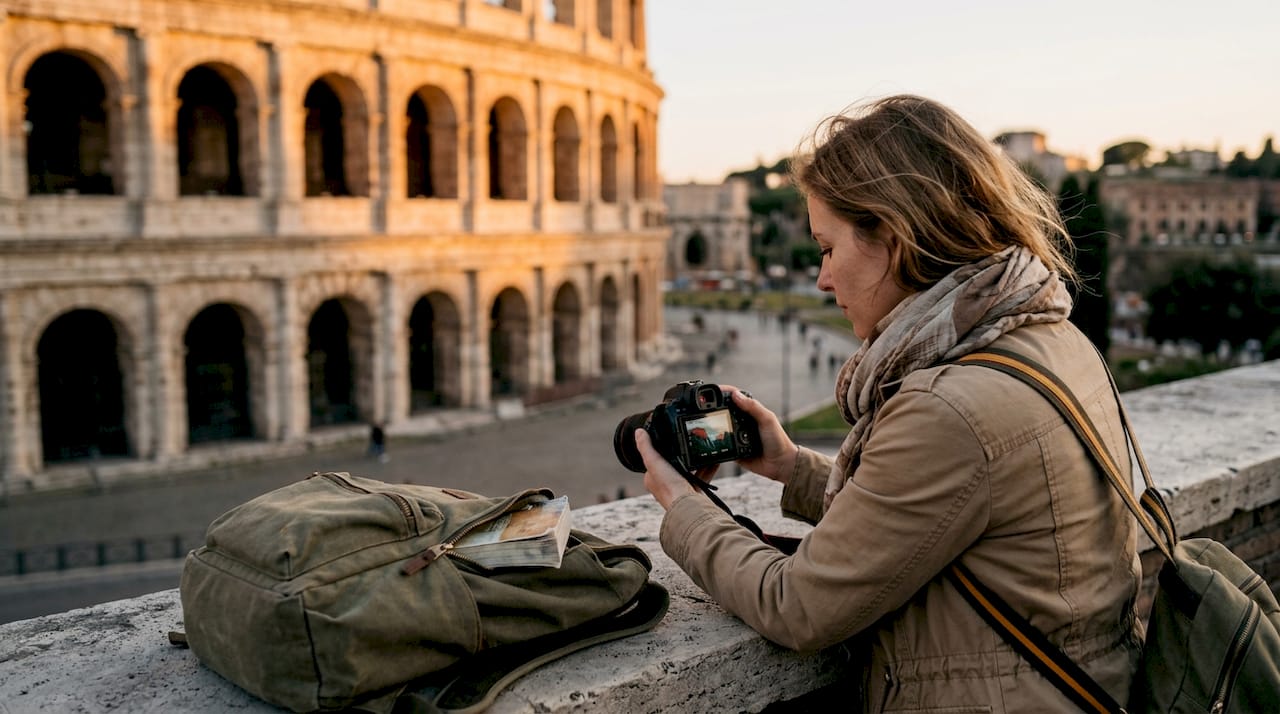
Rome rewards patience. The Colosseum glows with chiaroscuro drama during golden hour, when raking side light carves texture into ancient stone. The Trevi Fountain, notoriously crowded by day, transforms into an ethereal scene before sunrise or under late-night illumination, inviting creative light-trail compositions.
Florence offers the Ponte Vecchio at dusk, its reflection shimmering in the Arno like an artist’s palette dissolved in water. The Duomo is best appreciated from elevated viewpoints, where its scale and symmetry become fully legible.
Tuscany’s Val d’Orcia is pure poetry at misty sunrise, when rolling hills and lone cypress trees emerge from the fog like a Renaissance painting coming to life.
Cinque Terre shines in late afternoon, when Riomaggiore and Manarola’s vivid houses catch warm, directional light and cast long shadows across the cliffs. Explore unique Italian photo spots and historic photography tips to go deeper on each of these locations.
“The best landmark image is rarely the one everyone expects. It is the one that carries your particular sense of wonder.”
Pro Tip: Arrive at least 30 minutes before your target light window. Setup time, composition adjustments, and unexpected obstacles always eat into precious minutes.
Landmark photography in Venice: Planning, techniques, and hidden gems
Of all Italy’s cities, Venice presents distinct challenges and rewards for photographers. Here’s how to master it. The city’s very geography, a lattice of canals and narrow calli (alleyways), means that every turn reveals a new frame. But that same intimacy demands careful planning.
Plan for 2 to 5 days to do Venice justice, capturing its reflections after rain and quiet moments on Burano Island across different lighting conditions and moods. A single day barely scratches the surface.
The following table outlines a suggested Venice photography itinerary by time of day:
| Time of day | Location | Technique |
|---|---|---|
| Dawn (5:30 to 7:00 am) | Piazza San Marco | Wide angle, tripod, long exposure |
| Morning (7:00 to 10:00 am) | Rialto Bridge, Grand Canal | Reflections, street photography |
| Midday (11:00 am to 2:00 pm) | Burano Island | Saturated color, handheld |
| Late afternoon (4:00 to 6:00 pm) | Dorsoduro district | Candid, architectural details |
| Evening (6:00 to 8:00 pm) | Giudecca Island | Long exposure, ND filter, tripod |
For gear, a wide-angle lens captures the sweeping grandeur of canal vistas, while a short telephoto compresses layers of architecture beautifully. ND filters are invaluable for smoothing water surfaces in long exposures. Always carry a sturdy travel tripod; low-light Venice rewards those who are prepared.
Learn more about Venice creative photography and consider joining Italy landmark photo tours to navigate the city’s hidden gems with expert guidance.
Pro Tip: After rainfall, Venice’s stone pavements reflect the sky and surrounding architecture with extraordinary clarity. Keep your camera ready even when the weather feels uninviting.
Comparing landmark photo potential: Which suits your style?
After individual highlights and tips, let’s compare these landmarks head-to-head so you can decide which best fits your style. Morning and evening are ideal for iconic architecture, while midday works beautifully for color-rich scenes; using multiple days maximizes variety across all these sites.
| Landmark | Iconic value | Crowd level | Best light | Dream shot type |
|---|---|---|---|---|
| Piazza San Marco, Venice | Very high | High (low at dawn) | Dawn, golden hour | Architecture, reflections |
| Rialto Bridge, Venice | Very high | High (low at sunset) | Sunset | Canal panorama, silhouette |
| Burano Island, Venice | High | Moderate | Midday | Color, street life |
| Colosseum, Rome | Very high | Very high (low at golden hour) | Golden hour | Texture, drama |
| Val d’Orcia, Tuscany | High | Low | Misty sunrise | Landscape, minimalism |
| Cinque Terre villages | High | Moderate | Late afternoon | Color, cliffside drama |
To build your personalized Italy photography itinerary, follow these four steps. First, identify your primary photographic interest: architecture, landscape, color, or street life. Second, match that interest to the landmarks in the table that score highest for your dream shot type. Third, map out a logical geographic route to minimize travel time between regions. Fourth, assign specific time-of-day windows to each location based on the lighting column, and build your daily schedule around those windows rather than around convenience.
You can find practical guidance on planning photo tours to help structure your itinerary with confidence.
Making the most of your Italy photography tour
Once you’ve picked your landmarks, thoughtful planning and creativity ensure your images stand out. The logistics of an Italy photography trip can feel daunting, but a few simple habits keep you focused on the creative work rather than the operational details.
Balance your schedule across three lighting windows: sunrise shoots for architecture and misty landscapes, midday for vibrant color-rich scenes like Burano or Cinque Terre, and golden hour for dramatic architectural shots. Allocating days for mornings at iconic sites and evenings along scenic canals balances must-have shots with authentic, unplanned moments.
For gear, travel light but smart. A compact travel tripod, one or two ND filters, and a versatile zoom lens cover most landmark scenarios without weighing you down. Lightweight primes are wonderful for street and candid work in narrow alleyways.
Creative challenges push your work beyond the predictable. Shoot in light rain for reflective pavements and moody skies. Chase local life: a fisherman repairing nets in Chioggia, a baker sliding bread from a wood oven in a Tuscan village. Try long exposures at twilight to transform moving gondolas into ghostly streaks of light.
Finally, back up your images every evening to at least two locations, whether a cloud service or a portable drive. Keep a brief shooting journal noting locations, times, and settings; this habit is invaluable when editing weeks later.
Pro Tip: Schedule one completely unplanned half-day on every multi-day trip. Some of the most enchanting images come from wandering without a shot list, letting curiosity lead the lens.
Explore more ideas through artistic photo tours that blend creative freedom with expert local knowledge.
Our take: Why bold, personal vision creates iconic images
Every photographer who arrives in Italy faces the same quiet temptation: to replicate the postcard. The Rialto Bridge from the same bridge, the Colosseum from the same plaza, the Duomo from the same rooftop terrace. These angles exist because they are genuinely beautiful. But the images that endure, the ones that stop a viewer mid-scroll, are the ones that carry a distinct point of view.
The truth is that unplanned moments often define a trip more powerfully than any carefully scouted location. A sudden fog rolling across the lagoon, a shaft of light piercing a narrow Florentine street, a burst of laughter from a doorway in Manarola: these are the scenes that no itinerary can schedule. They reward the photographer who stays curious, stays present, and resists the urge to pack up when conditions seem imperfect.
We believe the most memorable work comes from elevating landmark shots by interpreting classics through your own sensibility rather than chasing someone else’s composition. Italy gives you the raw material. Your vision gives it meaning.
Ready to capture Italy’s icons? Join a guided photo tour
Translating inspiration into unforgettable images is far easier when you have an expert beside you who knows exactly where the light falls at 6:15 am and which hidden courtyard rewards a quiet detour.
Italy photography tours led by professional photographer Mino Di Vita are designed precisely for photographers like you: enthusiasts who want more than a sightseeing itinerary. Each Italy photo tour is crafted around optimal light, insider locations, and creative guidance that helps you see beyond the obvious frame. Whether you are drawn to Venice’s shimmering canals, Tuscany’s painterly hills, or Cinque Terre’s vivid cliffs, there is a tour shaped around your vision. Deepen your craft further by exploring artistic photography techniques that bring nuance and intentionality to every shot you take.
Frequently asked questions
What is the best time of year to photograph Italian landmarks?
Late spring and early autumn offer ideal lighting and lower tourist crowds for capturing Italy’s landmarks. These seasons also bring varied, dramatic skies that enrich both morning and evening shoots.
How can I avoid crowds when photographing famous sites?
Aim for sunrise or late evening, or visit on weekdays during the shoulder season to photograph icons with fewer people. Dawn at San Marco is one of the clearest examples of how timing alone transforms a crowded landmark into a serene composition.
Do I need a tripod for landmark photography in Italy?
A travel tripod is essential for low light, sharp architectural shots, and creative long exposures at Italy’s landmarks. Wide angle and ND filters paired with a tripod unlock the full creative range of Venice’s waterways and Rome’s illuminated monuments after dark.
What are underrated Italian landmarks for photography?
Burano Island in Venice and Val d’Orcia in Tuscany are less crowded spots offering colorful and atmospheric images that feel genuinely personal rather than replicated from a travel brochure.