

TL;DR:
- Professional guides offer cultural insight, logistical management, and storytelling support that transform standard tours into immersive photographic experiences. They excel in timing, location scouting, cultural interpretation, and real-time adaptation to optimize shooting conditions and access exclusive spots. Choosing guides with deep local knowledge and early communication enhances creative collaboration, independence, and the quality of travel photography.
Professional guides are defined as trained experts who provide cultural interpretation, logistical management, and storytelling support that transforms a standard tour into a genuinely immersive experience. For photographers, this distinction matters enormously. The role of professional guides goes far beyond pointing at landmarks. A skilled guide shapes your entire shooting day, from the angle of morning light on a Venetian canal to the hidden courtyard in Tuscany that no travel app has ever indexed. Italyphototour, led by photographer Mino Di Vita, has built its entire philosophy around this truth: the guide is not a convenience. The guide is the experience.
What are the core functions of professional guides on photography tours?
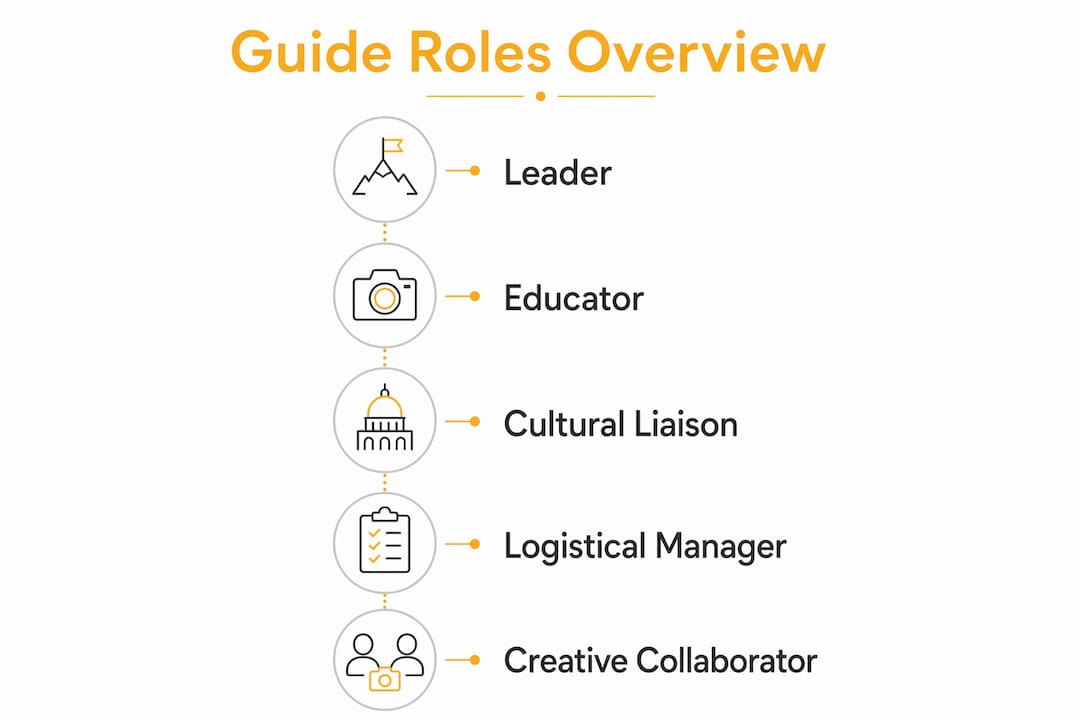
Professional guides perform five distinct roles simultaneously: leader, educator, cultural liaison, logistical manager, and creative collaborator. Each function serves a different need, and for photographers, all five matter. A guide who excels at storytelling but cannot manage timing will cost you the golden hour. A guide who manages logistics brilliantly but lacks cultural depth will leave your images technically correct but emotionally hollow.
Local cultural and historical knowledge is the single most critical performance criterion for selecting a guide, outweighing language skills, time management, and technology adaptation. That finding reframes how photographers should evaluate guides. You are not hiring a scheduler. You are hiring a living archive of place.
The functions of tour guides on photography-specific tours include:
- Timing optimization: Scheduling arrivals at key locations during blue hour, golden hour, or off-peak crowd windows
- Location scouting: Identifying compositions that are invisible to first-time visitors, including rooftops, back alleys, and private courtyards
- Cultural interpretation: Explaining the human stories behind facades, markets, and rituals so your images carry meaning
- Logistical coordination: Managing permits, transport, and bookings so you focus entirely on your camera
- Real-time adaptation: Pivoting the itinerary when weather, crowds, or light conditions shift unexpectedly
Pro Tip: Before your tour begins, share a mood board or a set of reference images with your guide. This single act communicates your visual language faster than any verbal description and allows the guide to tailor every location choice to your photographic voice.
How do guided tours compare to independent travel for photographers?
Guided visitors spend roughly $1,020 compared to $826 for non-guided travelers, approximately 20% more per trip. That gap reflects curated access and exclusive experiences, not inflated prices. Photographers who travel independently often spend that same premium on wasted time, wrong locations, and missed light.
The opportunity cost of independent travel is real. Time lost troubleshooting logistics, navigating unfamiliar transit systems, and recovering from cultural missteps is time you cannot spend shooting. Guides handle transitions proactively, which means you arrive at each location calm, oriented, and ready to work.
| Factor | Guided photography tour | Independent travel |
|---|---|---|
| Access to hidden locations | Guide unlocks private and off-map spots | Limited to publicly known sites |
| Time management | Logistics handled, shooting time maximized | Time lost to navigation and planning |
| Cultural sensitivity | Guide mediates local customs in real time | Risk of unintentional offense |
| Light optimization | Itinerary built around golden and blue hours | Dependent on self-research |
| Local knowledge depth | Years of on-the-ground expertise | Surface-level research from apps |
| Creative support | Guide collaborates on composition and story | Entirely self-directed |
Professional guides prevent social offenses and misinterpretations of local etiquette in ways no travel app can replicate. For photographers, this matters beyond politeness. Photographing a religious procession incorrectly, or pointing a lens at someone without understanding local norms, can end a shooting session and damage community trust. A guide reads the room before you even raise your camera.
What unique value do guides add for photography enthusiasts?
Professional guidance in adventures and photography tours delivers something no algorithm can produce: the emotional and narrative context that makes an image resonate. Modern professional guides have evolved into cultural ambassadors whose storytelling transforms sightseeing into a genuinely photographic experience. When a guide tells you that the fishermen of Burano painted their houses in vivid colors so they could find their way home through the lagoon fog, that story lives in every frame you capture afterward.
The specific ways guides add value for photographers include:
- Revealing the why behind the what. A guide explains why a particular piazza floods with warm light at 4 p.m. in october, not just that it does. That knowledge becomes yours permanently.
- Granting access to exclusive spots. Guides with deep local relationships open doors, literally and figuratively, to locations that never appear in travel guides or photography forums.
- Building your photographic confidence. The best guides share knowledge on why certain locations offer superior light or cultural significance. This education builds independence rather than dependency.
- Shaping your narrative arc. A skilled guide structures the day so your images tell a coherent story, from the quiet of early morning streets to the vivacity of an afternoon market.
Pro Tip: Ask your guide to explain the cultural significance of each location before you shoot, not after. That context changes how you frame, what you include, and what you deliberately leave out of the frame.
The role of local culture in images is something guides make tangible. They translate the chiaroscuro of a city’s history into the specific light falling through a specific archway at a specific hour. That precision is the difference between a travel snapshot and a photograph worth keeping.
How to choose and work effectively with a professional guide
Selecting the right guide is the most consequential decision in planning a photography tour. Credentials matter, but local depth matters more. Contacting a professional guide early during trip planning enables tailored experiences that align with your specific photographic goals. A guide hired two weeks before departure can adjust an itinerary. A guide hired two days before cannot.
When evaluating guides, look for these qualities:
- Verified local expertise: Seek guides with multi-year experience in the specific region, not just the country
- Photography-specific knowledge: Confirm the guide understands golden hour, composition, and the difference between a tourist photo and an artistic one
- Pre-trip communication: A professional guide asks questions before you arrive, not after
- References from photographers: General traveler reviews are useful, but reviews from photographers reveal whether the guide truly serves creative needs
- Flexibility and responsiveness: The best guides treat the itinerary as a living document, not a fixed script
Guides function as logistical project managers, and engaging them early enables photography tours focused on specific goals like optimal lighting or hidden spots. Share your camera gear, your skill level, and your visual references before the tour begins. This gives the guide the raw material to build something genuinely tailored.
Photographers should avoid treating guides as generic narrators. The most productive guide relationships are collaborative. You bring the eye and the camera. The guide brings the map, the story, and the key. Together, you make images that neither of you could produce alone. For photographers interested in enhancing cultural photography skills in a specific region, this partnership is the fastest path to meaningful work.
Key Takeaways
Professional guides are the single most effective investment a photography traveler can make, combining cultural knowledge, logistical expertise, and creative collaboration into one irreplaceable partnership.
| Point | Details |
|---|---|
| Cultural knowledge is the top criterion | Local historical expertise outweighs language skills and time management when selecting a guide. |
| Guided travelers invest more and gain more | Guided visitors spend roughly 20% more per trip and receive curated access that independent travel cannot match. |
| Guides prevent costly cultural missteps | A guide mediates local customs in real time, protecting both your images and community relationships. |
| Early communication shapes the whole tour | Contacting your guide before departure allows full itinerary customization around your photographic goals. |
| Great guides build your independence | The best guides transfer knowledge so you grow as a photographer, not just as a passenger on their tour. |
What I have learned watching guides work
Every time I watch a truly skilled guide work with a photographer, I notice the same thing: the photographer stops rushing. That shift is not accidental. A great guide absorbs the anxiety of logistics so completely that the photographer has no choice but to slow down and actually see.
The guides I respect most are not the ones with the longest speeches. They are the ones who know when to stop talking. They position you in front of something extraordinary, give you the one sentence of context that changes everything, and then step back. That restraint is a form of generosity that takes years to develop.
What I find most underestimated is the emotional intelligence a good guide carries. They read fatigue, frustration, and creative blocks in real time and respond with a route change, a coffee stop, or a quiet moment in a courtyard that resets everything. No app offers that. No itinerary plans for it. The benefits of photographing local culture only become fully visible when someone who loves that culture is standing beside you, pointing at what you would have walked past.
My honest advice: stop thinking of a guide as a service you purchase. Think of a guide as the most knowledgeable creative collaborator you will ever have access to for the price of a single day’s work.
— Mino
Photography tours in Italy with Italyphototour
Italyphototour offers professionally guided photography tours across Italy, including Milan, Venice, Tuscany, and Cinque Terre, each designed around the specific rhythms of light, culture, and season that make Italian photography so rewarding.

Every tour is led by Mino Di Vita, whose approach centers on cultural storytelling, artistic craftsmanship, and the kind of insider access that only comes from years of working within these communities. Itineraries are built around your photographic goals, not a fixed script. Whether you are an amateur photographer seeking your first meaningful travel images or an enthusiast ready to push your creative range, Italyphototour’s guided photo experiences offer the depth, warmth, and expertise that independent travel simply cannot replicate.
FAQ
What is the role of professional guides on photography tours?
Professional guides on photography tours serve as cultural interpreters, logistical managers, and creative collaborators. They optimize shooting schedules around natural light, grant access to exclusive locations, and provide the cultural context that gives images lasting meaning.
How do guides enhance experiences compared to solo travel?
Guided visitors spend roughly 20% more per trip and receive curated access that independent travelers cannot replicate. Guides also eliminate the time lost to navigation, logistics, and cultural missteps.
What skills should I look for in a photography tour guide?
Prioritize deep local cultural and historical knowledge above all other criteria, as research confirms this factor outweighs language skills and time management. Photography-specific knowledge of light, composition, and location is the next most critical quality.
When should I contact a guide before my trip?
Contact your guide as early as possible during trip planning. Early pre-trip communication allows the guide to customize the itinerary around your specific photographic goals, gear, and skill level.
Can a guide help me improve as a photographer?
The best guides actively transfer knowledge about light, location, and cultural significance rather than simply leading you to spots. This education builds your photographic confidence and long-term independence, as noted by outdoor guide experts.