

TL;DR:
- Local guides transform travel into immersive cultural experiences by decoding social customs and unlocking hidden sites.
- They enhance economic and cultural sustainability by encouraging deeper engagement, longer stays, and community support.
Local guides are defined as professional cultural interpreters who transform travel from passive sightseeing into a living, breathing encounter with place, people, and history. The role of local guides in tours extends far beyond pointing at landmarks. They decode social customs, unlock hidden corners of a city, and adapt every experience to the person standing beside them. Research from MDPI 2025 confirms that local cultural knowledge accounts for 31.2% of tour guide evaluation weight, surpassing language skills and logistics combined. That single figure reveals what seasoned travelers already sense: a guide’s true value lives in what they know, not merely where they lead you.
What are the primary roles and responsibilities of local guides?
The guide profession carries five distinct roles, each one shaping the quality of your experience in a different way. Understanding these roles helps you recognize what separates a genuinely skilled guide from someone simply reciting facts along a predetermined route.
Cultural decoder. Local guides interpret social cues, historical layers, and unspoken customs that no app can replicate. In Venice, for instance, a guide explains not just what the Bridge of Sighs is, but why Venetians regard it with a mixture of dark humor and civic pride. Cultural decoders save travelers time and prevent the kind of misunderstandings that quietly sour a trip.
Dynamic itinerary adapter. Private guides enable real-time pivots based on weather, crowd levels, and your evolving interests. A morning plan to photograph Cinque Terre’s Vernazza harbor can shift to a quieter hillside trail the moment a cruise ship docks below. Private guides transform rigid plans into genuinely unique experiences.
Safety facilitator. In unfamiliar environments, guides serve as navigators of both geography and social protocol. They know which neighborhoods to avoid after dark, which vendors are trustworthy, and how to handle unexpected situations with calm authority.
Storyteller and educator. Great guides prioritize what industry practitioners call “insight density.” This means depth and quality of information over the sheer number of sites visited. Insight density distinguishes immersive tours from generic ones, and it is the quality most worth seeking when you evaluate a guide.
Public relations ambassador. Guides represent both their community and their travelers simultaneously. They mediate between local residents and visiting strangers, creating goodwill that benefits everyone.
Pro Tip: Before booking, ask a prospective guide to describe a moment when they changed an itinerary on the spot. Their answer reveals whether they are a true adapter or simply a script reader.
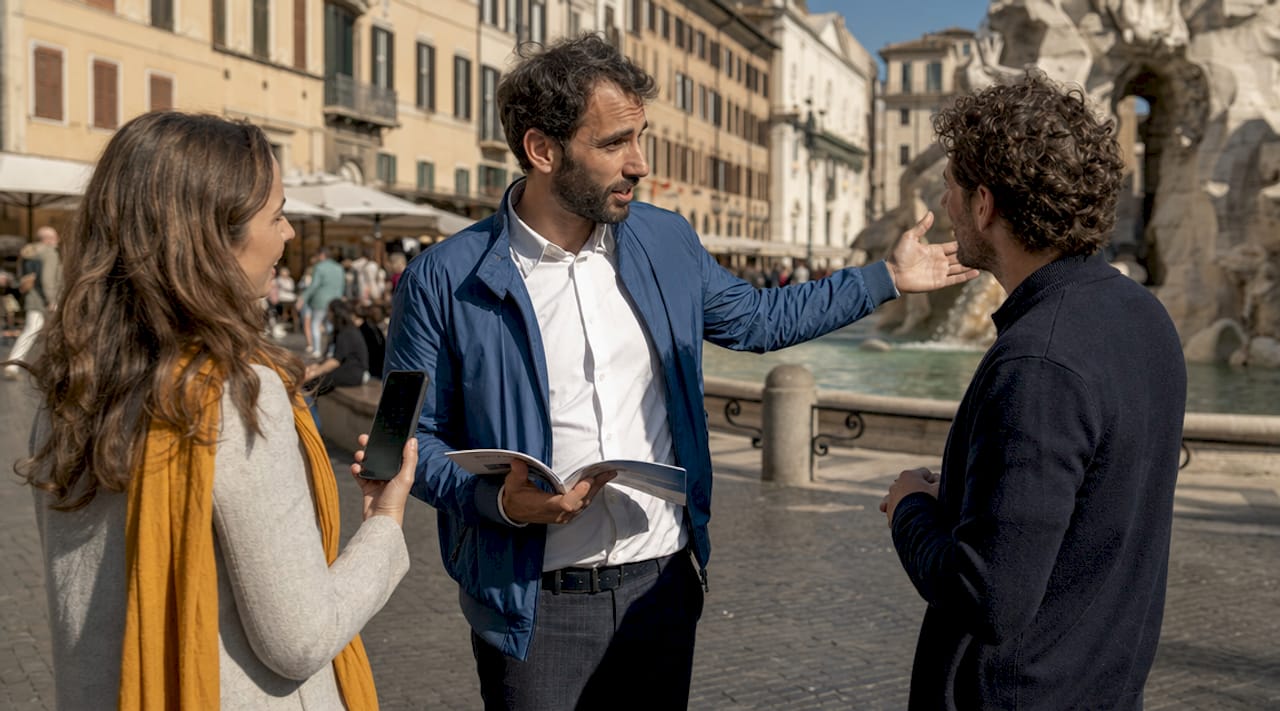
How do local guides enhance the traveler’s experience compared to unguided tours?
The difference between a guided and an unguided tour is not merely convenience. It is the difference between reading a novel’s plot summary and reading the novel itself.
Local guides provide access to places that algorithms and travel apps simply cannot surface. Digital booking platforms risk encouraging over-tourism at popular spots, while local guides steer visitors toward less-known, culturally rich locations that preserve their authentic character. In Tuscany, that might mean a family-run olive oil press in a village with no English signage, or a medieval courtyard that appears on no map yet holds centuries of quiet beauty.
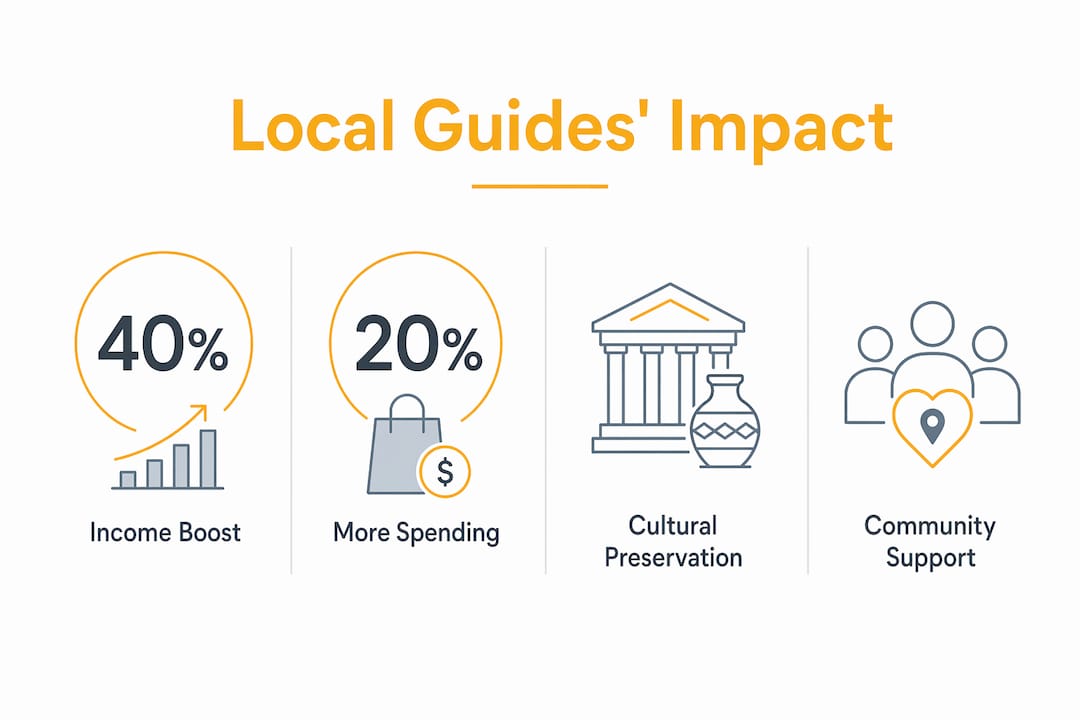
The economic evidence reinforces this. Guided visitors spend approximately 20% more per trip than non-guided travelers, with average guided visitor spend reaching $1,020 compared to $826 for those traveling independently. That gap reflects not reckless spending but deeper engagement. Guided travelers linger longer, eat at locally recommended restaurants, and purchase from artisans their guide has introduced them to personally.
Cultural exchange deepens in ways that are hard to quantify but impossible to miss. A guide in Milan who grew up in the Navigli district does not just show you the canals. She tells you about her grandmother’s memories of washerwomen, the smell of the water in summer, and the bars that opened when the factories closed. That kind of storytelling connects travelers to local culture in a way no guidebook page ever could.
Safety and convenience round out the picture. Guides handle logistics, language barriers, and unexpected complications, freeing you to be fully present. Community-led eco-tours using local guides increase visitor satisfaction by 40%, a figure that speaks directly to how much smoother and richer the experience becomes when someone knowledgeable is at your side.
“Local guides are the linchpin of successful trips, enabling richer cultural exchanges and adaptability that standardized tours lack.” — Wendy Perrin, travel expert
What are the economic and cultural impacts of local guides on destinations?
Local guides are not just service providers. They are economic engines and cultural custodians operating at the intersection of tourism and community life.
The numbers are striking. Guided tourists increase local household incomes by up to 40%, and community-led tourism models create multiple jobs per 100 visitors when guides are drawn from the local population. In Namibia, community-based safari guides have transformed entire villages by channeling visitor spending directly into local hands rather than through distant corporate operators. The same principle applies in Italy, where a guide from Palermo’s Ballarò market quarter keeps tourism revenue circulating within the neighborhood itself.
Culturally, guides act as living archives. They carry oral histories, dialect expressions, and craft traditions that no museum exhibit can fully preserve. When a guide in Florence explains the symbolism woven into a Renaissance fresco, they are not reciting a caption. They are transmitting a lineage of interpretation passed down through teachers, family, and personal study.
| Aspect | With local guides | Without local guides |
|---|---|---|
| Visitor spending | ~$1,020 per trip average | ~$826 per trip average |
| Community income impact | Up to 40% household income increase | Minimal direct local benefit |
| Cultural access | Oral histories, hidden sites, living traditions | Guidebook facts and popular landmarks |
| Sustainable tourism | Off-the-beaten-path routing, crowd dispersal | Concentration at algorithmic hotspots |
The ethical dimension deserves honest attention. Local guides navigate commercial pressures that sometimes lead them to recommend shops or restaurants in exchange for commissions. This is not inherently dishonest, but it does mean that a guide’s recommendations exist on a spectrum between genuine enthusiasm and financial incentive. Travelers who understand this dynamic can engage more thoughtfully, asking follow-up questions and balancing curated suggestions with a little independent exploration.
Pro Tip: When a guide recommends a specific shop, ask them what they personally love about it. Genuine passion is unmistakable. A vague or rehearsed answer suggests a commercial arrangement rather than a heartfelt endorsement.
How to find and choose trustworthy and effective local guides?
Finding a guide worth your time requires more discernment than scrolling through star ratings. Anonymous online reviews are useful as a starting point, but travel experts at Fodor’s recommend prioritizing personal referrals from trusted sources over crowd-sourced scores that can be gamed or skewed.
Here is what to look for when evaluating a guide:
- Genuine passion for their subject. A guide who lights up when discussing the Byzantine mosaics of Ravenna, or who can name the specific fishing families of Burano, carries knowledge that goes beyond professional training.
- Clear communication style. Ask a question before you book. How they answer reveals their ability to read your level of interest and adjust their depth accordingly.
- Specificity over generality. Vague promises of “authentic experiences” are a warning sign. A strong guide describes exactly what you will see, why it matters, and what makes their approach different.
- Transparent pricing and boundaries. Trustworthy guides are upfront about what is included, what costs extra, and how they handle unexpected changes.
Understanding the different types of guides also helps. Tour directors manage logistics across multi-day itineraries. Group guides lead fixed-route tours for larger parties. Private local guides offer the most personalized experience, adapting the day around your specific interests. For photographers, a specialized photo guide adds a further layer, combining local knowledge with an understanding of light, composition, and the precise moment a scene becomes worth capturing.
Vetted online marketplaces that screen guides and allow customization offer a middle ground between cold searching and personal referral. Look for platforms that display guide credentials, sample itineraries, and verifiable client testimonials rather than simple star averages.
Pro Tip: Request a brief video call before booking a private guide. Thirty minutes of conversation reveals more about their personality, depth, and communication style than any written profile.
What practical tips help you maximize the benefits of a guided tour?
Getting the most from a local guide is a two-way exchange. The guide brings knowledge and adaptability. You bring curiosity, openness, and a willingness to let the day breathe.
Share your interests before the tour begins. Tell your guide whether you are drawn to architecture, food, photography, or human stories. The more specific you are, the more precisely they can shape the experience. A photographer who mentions a love of early morning light will find a very different itinerary than one who asks for a general overview.
Welcome spontaneous changes. Some of the most memorable moments on a guided tour happen when the original plan dissolves. A sudden rainstorm that drives you into a centuries-old covered market, or a local festival that appears without warning, can become the highlight of an entire trip. Guides who adapt dynamically are worth following into the unexpected.
Balance guided time with independent exploration. Spending every hour under a guide’s direction can feel overwhelming. Build in time to wander alone, return to a place that moved you, or simply sit in a piazza and absorb what you have learned. This rhythm deepens retention and personal connection.
Ask questions that go beyond the facts. “What do locals think about this place?” or “What has changed here in the last ten years?” opens conversations that reveal a destination’s living character rather than its museum version.
Tip thoughtfully and support ethically. Guides in many Italian cities earn a significant portion of their income through gratuities. A tip that reflects genuine appreciation, offered personally at the end of the tour, honors both the individual and the craft. Supporting lesser-known destinations your guide recommends also keeps tourism revenue flowing to communities that need it most.
Key takeaways
Local guides are the single most transformative element in any tour, converting surface-level sightseeing into genuine cultural immersion through expertise, adaptability, and human connection.
| Point | Details |
|---|---|
| Cultural knowledge is the core value | Local guides’ cultural expertise accounts for 31.2% of evaluation weight, outranking logistics and language. |
| Guided travelers spend more meaningfully | Guided visitors average $1,020 per trip versus $826 for unguided travelers, benefiting local economies directly. |
| Community impact is measurable | Community-led guided tours increase local household incomes by up to 40% and disperse tourism spending locally. |
| Choosing guides requires active discernment | Personal referrals, specific knowledge, and genuine passion outperform anonymous star ratings as selection criteria. |
| Engagement amplifies the experience | Sharing your interests upfront and welcoming spontaneous changes unlocks the full depth a skilled guide can offer. |
Why local guides are the soul of every great tour
I have led photography tours across Italy for years, and the question I hear most often is whether a guide is really necessary. My honest answer is that the question itself misses the point. A guide is not a convenience. A guide is the difference between seeing a place and understanding it.
What I have learned from working alongside local experts in Venice, Tuscany, and Cinque Terre is that the best guides carry something no itinerary can manufacture: a personal relationship with their city. They know which light falls on the Rialto at 6 a.m. in October, which fisherman in Burano still repairs his own nets, and which alley in Palermo smells of jasmine in May. That knowledge is not in any app. It lives in a person.
I have also watched guides navigate the ethical complexities of their work with remarkable grace. They balance authentic storytelling with the commercial realities of tourism, and they do it while keeping the traveler’s experience at the center. That balance deserves respect, not suspicion. The traveler’s responsibility is to show up with curiosity, ask real questions, and recognize that the person beside them is sharing something genuinely irreplaceable.
The guides who have shaped my own understanding of Italy did not lead me to the most famous places. They led me to the truest ones. That distinction is everything.
— Mino
Discover Italy through the eyes of an expert guide
Every photograph tells a story, and the richest stories belong to those who know where to look. At Italyphototour, guided photography tours across Milan, Venice, Tuscany, and Cinque Terre are led by professional photographer Mino Di Vita, whose deep roots in Italian culture transform each outing into an encounter with light, history, and living tradition.

These are not standard sightseeing routes. Each tour is shaped around your photographic vision, your pace, and the hidden corners that only a true local knows. Whether you are chasing the golden hour over Tuscan hills or the vivid geometry of Burano’s painted facades, the experience is crafted to inspire. Explore what we offer and discover how a knowledgeable guide transforms Italy from a destination into a revelation.
FAQ
What is the main role of local guides in tours?
Local guides serve as cultural interpreters, safety facilitators, and dynamic itinerary adapters who provide context, access, and personalization that independent travel cannot replicate. Their cultural and historical knowledge accounts for 31.2% of guide evaluation weight according to MDPI 2025 research.
Why hire a local guide instead of using a travel app?
Travel apps surface popular destinations but cannot decode social customs, share oral histories, or pivot a plan based on your evolving interests. Local guides provide off-the-beaten-path access and human insight that no algorithm can replicate.
How do local guides benefit the local economy?
Guided visitors spend approximately 20% more per trip than non-guided travelers, and community-led guided tours increase local household incomes by up to 40%. This spending flows directly to local restaurants, artisans, and families rather than distant operators.
How do I find a trustworthy local guide?
Fodor’s travel experts recommend prioritizing personal referrals over anonymous online reviews, and evaluating guides through direct conversation before booking. Look for specific knowledge, genuine passion, and transparent communication rather than generic promises of authenticity.
What makes a guided photography tour different from a standard tour?
A guided photography tour combines local cultural knowledge with an expert understanding of light, composition, and timing, allowing photographers to capture a destination at its most expressive. Italyphototour’s photo tours in Italy are designed specifically around these artistic priorities.