

TL;DR:
- Effective landscape composition involves deliberate arrangement of visual elements to guide viewers and evoke emotion, transforming simple scenes into captivating images. Techniques like layering, leading lines, and mindful subtraction create depth and focus, requiring patience and creative risk-taking beyond rigid rule adherence. Mastering composition turns landscapes from mere documentation into powerful storytelling, emphasizing judgment and artistic intent over gear or quick shots.
Composition in landscape photography is the deliberate arrangement of visual elements within the frame to guide the viewer’s eye, create depth, and shape the emotional impact of an image. Where your camera points matters far less than how you choose to organize what falls within that rectangle of light. The role of composition in landscape photography reaches beyond technical rules. It is the invisible architecture that transforms a snapshot of a mountain or a coastal cliff into something that stops a viewer cold and holds them there. Understanding this architecture, from foreground anchoring to negative space, is the single most powerful skill an enthusiast photographer can develop.
What are the essential composition techniques in landscape photography?
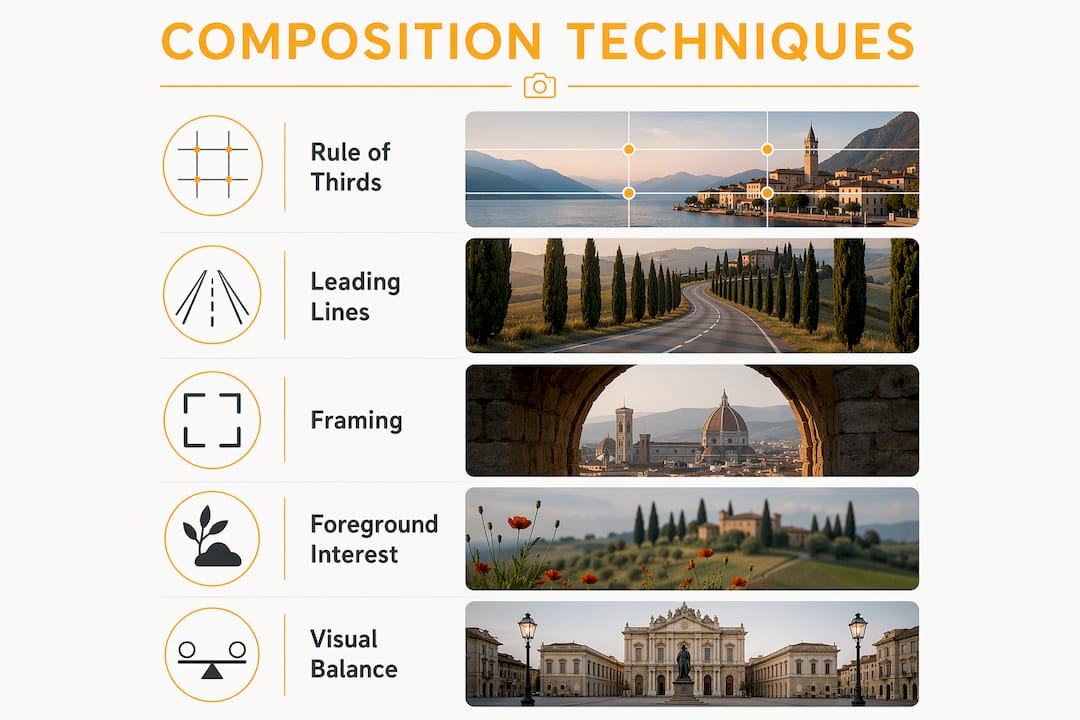
Composition techniques in photography are the deliberate tools that give a landscape image its visual logic. The rule of thirds is the most recognized of these tools. By placing your horizon line along the upper or lower third of the frame rather than dead center, you create natural tension and movement. The rule is a starting point, not a law. Knowing when to break it is as valuable as knowing how to apply it.
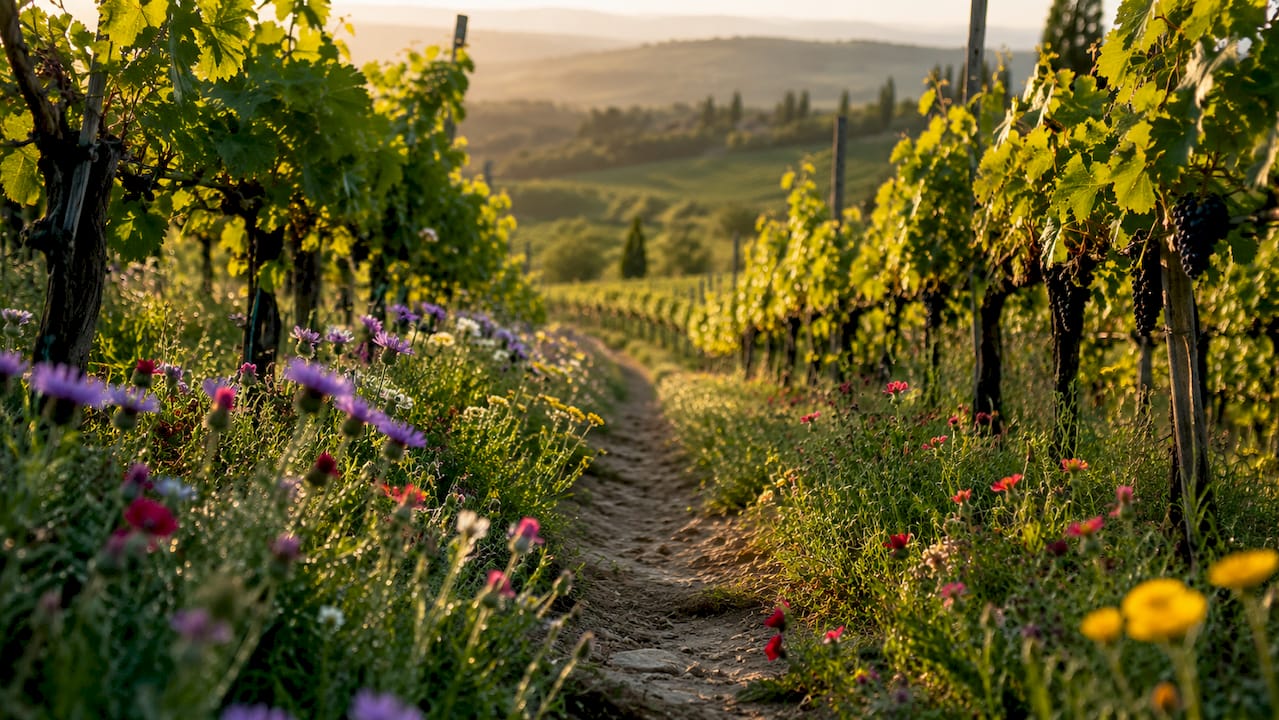
Leading lines are among the most expressive elements in any landscape. A stone path winding through a Tuscan vineyard, a canal cutting through Venice, or a shoreline curving toward a distant headland all pull the viewer’s gaze deeper into the scene. These lines create a sense of journey, of invitation, and they give flat images a sense of forward momentum.
Framing within the frame is a technique that photographers often underuse. Archways, tree canopies, cave openings, or even the gap between two cliffs can act as a natural border that concentrates attention on your subject. This approach adds layers of context and depth without requiring any additional equipment.
Foreground interest is a crucial factor separating exceptional landscape photos from average ones. A patch of wildflowers, a mossy rock, or a tide pool placed deliberately in the lower third of the frame anchors the image and draws the eye inward. Without a strong foreground, even a spectacular background can feel distant and disconnected.
Visual balance in photography does not always mean symmetry. Intentional asymmetry, where a small but visually weighted subject sits opposite a large expanse of sky or water, creates dynamic tension. Negative space, the empty areas of a composition, is not wasted space. It is breathing room that amplifies the emotional weight of whatever occupies the frame.
Pro Tip: Before pressing the shutter, ask yourself what you can remove from the frame. A subtractive mindset, where you strip away competing elements and focus on shapes, texture, and light, consistently produces cleaner and more powerful images.
How does effective layering and depth enhance landscape compositions?
Depth is what separates a photograph from a postcard. Effective layering in landscape photography works through three distinct planes: foreground, midground, and background. Each layer serves a purpose. The foreground anchors and invites. The midground provides context and transition. The background delivers the payoff, the mountain, the sunset, the cathedral spire rising above the rooftops of Florence.
The danger of ignoring this structure is what photographers call a “visual wall.” This occurs when a foreground element, a hedge, a rock face, or a dense tree line, blocks the eye rather than guiding it. Deliberate layering guides the viewer’s eye through the image rather than stopping it at the first obstacle. The difference between a wall and a gateway is simply intention.
Here is a practical sequence for building depth into your compositions:
- Identify your background subject first. Know what story the distant element tells.
- Find a midground element that creates scale or context, a winding road, a lone tree, a farmhouse.
- Seek a foreground anchor that is close, textured, and visually interesting without competing for dominance.
- Use a small aperture (f/8 to f/16) to keep all three layers in focus, reinforcing the sense of spatial depth.
- Slow down before you shoot. Using the optical viewfinder forces greater concentration in composing before the shot, helping you spot clutter and competing focal points that a quick glance at the LCD screen might miss.
“The best landscape compositions are not found. They are built, layer by layer, with patience and intention.”
Manipulating perspective also reinforces depth. Getting low to the ground exaggerates the foreground and creates a dramatic sense of scale. Shooting from an elevated position compresses layers and reveals patterns that are invisible at eye level. Both approaches are worth exploring on every location visit.
Common composition mistakes in landscape photography and how to avoid them
Most composition errors in landscape photography share a common root: rushing. The scene is beautiful, the light is good, and the instinct is to shoot immediately. That instinct costs more great photographs than any technical limitation.
The most frequent mistakes include:
- Rigid rule-following without flexibility. Treating the rule of thirds or the golden ratio as absolute laws produces formulaic images. Combining traditional rules with personal intuition and artistic goals produces photographs with genuine character.
- Ignoring foreground interest. A flat foreground produces a flat image. Even a simple element, a line of pebbles, a reflection in shallow water, transforms the spatial experience of a photograph.
- Busy, cluttered scenes. When everything in the frame competes for attention, nothing wins. Adopting a subtractive mindset removes non-essential elements and focuses attention on what genuinely matters.
- Relying on extreme lenses to compensate for weak composition. A wide-angle lens does not create depth. It only reveals what you have already arranged. Gear should support the story, not mask poor composition.
- Ignoring the background. A distracting telephone pole, a parked car, or a blown-out patch of sky can unravel an otherwise strong composition. Scan the entire frame, not just the subject.
The sky deserves special attention here. The one-third sky rule is a flexible guideline. Sky should only occupy significant frame space when it genuinely adds to the story, through dramatic clouds, golden hour gradients, or a rising moon. A flat, featureless sky is visual noise. Crop it out without hesitation.
Pro Tip: After composing a shot, shift your gaze to the edges of the frame before shooting. The corners and borders are where distracting elements hide. Catching them there costs nothing. Missing them costs the photograph.
Patience is itself a composition skill. Waiting for the scene to evolve, for the light to shift, for a passing figure to clear the frame, for a wave to recede and reveal the wet sand beneath, can transform an ordinary scene into a compelling photograph. The photographers who return from a location with the strongest images are rarely the ones who shot the most frames.
How to apply composition principles creatively to express artistic vision
Rules in photography are the grammar of a visual language. You need to know them before you can break them with purpose. The most expressive landscape photographs often emerge when a photographer consciously chooses to violate a convention, placing the horizon dead center for a mirror-like reflection, or filling the entire frame with texture and eliminating any traditional subject entirely.
Abstraction is one of the most powerful creative tools available. Simplifying scenes to abstract shapes, textures, and colors transforms landscapes into design-oriented images that emphasize mood and composition over literal location. The rolling hills of Tuscany become a study in warm ochre curves. The canals of Venice become a geometry of reflections and shadow. The subject becomes secondary to the feeling.
The table below maps creative composition approaches to their emotional effects, offering a practical reference for developing your own visual language.
| Approach | Emotional effect | Example scene |
|---|---|---|
| Centered symmetry | Calm, meditative, timeless | Still lake reflecting a mountain range |
| Extreme foreground emphasis | Immersive, grounded, tactile | Wildflowers filling the lower two-thirds of the frame |
| Negative space dominance | Solitude, vastness, quiet | A single tree against an open winter sky |
| Abstract texture close-up | Sensory, intimate, graphic | Cracked salt flats or weathered stone patterns |
| Diagonal leading lines | Energy, movement, tension | A coastal road curving toward a stormy horizon |
Experimenting with viewpoint is equally transformative. The same olive grove in Umbria looks entirely different from ground level, from a hillside above, or through the gap in an ancient stone wall. Each viewpoint tells a different story about the same place. Photographers who practice composition in Italy’s landscapes discover that the country’s layered history and varied terrain offer an almost inexhaustible range of compositional possibilities.
The shift from documenting a scene to consciously deciding what story your composition tells is the single most important mental transition a photographer can make. It moves you from observer to author.
Key takeaways
Composition is the primary determinant of whether a landscape photograph communicates, moves, or simply records. It requires layering, patience, subtraction, and the courage to break rules with intention.
| Point | Details |
|---|---|
| Foreground anchors the image | Always seek a textured, close foreground element to create depth and spatial engagement. |
| Layering prevents visual walls | Build compositions across foreground, midground, and background to guide the eye naturally. |
| Subtraction sharpens focus | Remove competing elements from the frame to concentrate emotional and visual impact. |
| Patience is a composition tool | Waiting for light, weather, or subject placement to evolve produces stronger images than shooting immediately. |
| Rules serve intuition | Learn composition rules deeply, then apply them selectively to serve your personal artistic vision. |
Why composition matters more than any piece of gear I own
I have carried cameras across the salt flats of Sicily, through the fog-wrapped hills of Chianti, and along the sea-battered cliffs of Cinque Terre. The photographs I am most proud of were not made with the best lens I own. They were made in moments when I stopped, slowed down, and built the frame with care.
The honest truth is that composition is uncomfortable to master because it demands something gear cannot provide: judgment. You have to decide what matters, what to exclude, and what story you are actually telling. Most photographers, myself included at the start, avoid that decision by shooting wide and hoping something works. It rarely does.
What changed my approach was learning to see the landscape photography checklist not as a set of rules to satisfy but as a set of questions to ask. Where does the eye enter the frame? Where does it rest? What does it feel when it arrives? Those three questions, asked before every shot, produce more consistent results than any technical adjustment.
Breaking rules is not rebellion. It is the mark of a photographer who understands the rules well enough to know when they serve the image and when they do not. The most enchanting landscapes I have photographed in Italy taught me that the scene rarely needs improvement. It needs a frame worthy of it.
— Mino
Discover composition in Italy’s most inspiring landscapes
Italyphototour offers immersive, expert-led photography experiences across Italy’s most visually rich locations, from the golden terraced vineyards of Tuscany to the shimmering canals of Venice and the vivid clifftop villages of Cinque Terre. Each tour is designed around the principles of light, depth, and storytelling, giving you the space and guidance to practice composition techniques in real, breathtaking environments.

Led by professional photographer Mino Di Vita, these experiences go far beyond sightseeing. You will learn to read a scene, build layers, and find the frame that transforms a beautiful place into a photograph worth cherishing. Whether you are refining your eye or picking up a camera with fresh curiosity, the Italy photo tours offered by Italyphototour give you the landscapes, the mentorship, and the creative freedom to grow. Explore the full range of photography tours in Italy and find the experience that speaks to your vision.
FAQ
What is the role of composition in landscape photography?
Composition in landscape photography is the intentional arrangement of visual elements, including foreground, midground, background, lines, and negative space, to guide the viewer’s eye and create emotional impact. It is the primary factor that separates a memorable image from a simple record of a place.
What are the most effective composition techniques for landscapes?
The most effective techniques include the rule of thirds, leading lines, foreground interest, layered depth, and deliberate use of negative space. Combining these with patience and a subtractive mindset produces consistently stronger images.
How do leading lines improve landscape photography?
Leading lines draw the viewer’s eye from the foreground into the depth of the scene, creating a sense of movement and spatial dimension. Roads, rivers, shorelines, and fences are all natural leading lines that add energy and direction to a composition.
What composition mistakes should landscape photographers avoid?
The most damaging mistakes are ignoring foreground interest, cluttering the frame with competing elements, relying on extreme lenses to compensate for weak composition, and shooting without waiting for the scene to reach its most compelling state.
How can I develop a personal composition style in landscape photography?
Start by mastering the foundational rules, then experiment deliberately with breaking them. Explore abstraction, unconventional viewpoints, and asymmetry. Reviewing your composition techniques in Italy or any richly layered environment accelerates this process by offering constant, varied visual challenges.