

Capturing the rhythm of everyday life on Italian streets means stepping into the vibrant intersection of history, art, and spontaneous human moments. For American photographers craving deeper connection with local culture, street photography in Italy offers the chance to develop skills among living layers of Renaissance architecture, expressive gestures, and distinct regional personalities. Discover how Italian street photography blends documentary truth with aesthetic vision, and learn the secrets to documenting urban scenes that tell authentic stories.
Table of Contents
- Defining Street Photography In Italy
- Variations In Italian Street Photography Styles
- Cultural And Artistic Significance In Italy
- Legal And Ethical Aspects For Photographers
- Common Challenges And Mistakes To Avoid
Key Takeaways
| Point | Details |
|---|---|
| Cultural Context Matters | Street photography in Italy uniquely blends documentary and artistic elements, requiring sensitivity to local customs and environments. |
| Embrace Regional Variations | Different Italian cities offer distinct street photography styles, shaped by local culture and architectural characteristics. |
| Balance Legal and Ethical Responsibilities | While capturing public moments is generally legal, ethical considerations about dignity and consent are crucial for responsible photography. |
| Overcome Common Challenges | Anticipate technical and compositional challenges by practicing essential skills and maintaining a close connection to your subject. |
Defining Street Photography in Italy
Street photography in Italy exists at the intersection of documentary truth and artistic vision. This genre captures the raw, unfiltered moments of urban life as they unfold naturally. Unlike posed portraiture or carefully arranged compositions, street photography thrives on spontaneity, chance encounters, and the visual rhythms that emerge when people inhabit their cities without awareness of the camera. In Italy specifically, this practice carries profound cultural weight, as the country’s centuries-old artistic traditions blend seamlessly with contemporary urban reality to create something distinctly Italian.
The Italian approach to street photography operates through what scholars describe as oscillating between documentary and art. This balance creates something unique: your photographs function simultaneously as indexical records of how Italians actually live and move through their cities, while also serving as carefully considered aesthetic statements. When you photograph a fishmonger arranging his daily catch in Rome, you are documenting both the economic reality of urban commerce and the visual poetry of color, light, and human gesture. Both dimensions matter equally in the Italian street photography tradition.
What distinguishes street photography in Italy from street photography elsewhere is the cultural context in which you work. Italian cities are not merely backdrops for your camera. They are living museums where Renaissance architecture shares sidewalks with contemporary fashion, where family rituals play out in piazzas that have hosted human drama for five centuries, and where the quality of light itself seems to carry historical meaning. When you practice street photography in Milan’s Navigli district or Venice’s winding calles, you are engaging with urban spaces that inherently tell stories. The practice here reflects deeper patterns: the rhythms of Italian daily life, the importance of public space as social theater, and the Italian cultural obsession with beauty as a fundamental aspect of existence.
Your role as a street photographer in Italy involves more than technical skill or the ability to catch a decisive moment. You become an observer of how contemporary Italian identity expresses itself through gesture, fashion, social interaction, and the use of urban space. This requires sensitivity to local context, understanding of regional differences, and respect for the people whose lives you document. Whether you are capturing the morning rush in Florence or the evening passeggiata (the traditional evening stroll) in smaller towns, you are participating in a creative practice that communities of photographers have shaped across decades. Understanding this context transforms your work from simple travel photography into something that connects you to a larger tradition of Italian visual storytelling.
Pro tip: _Before you start shooting street photography in any Italian city, spend your first morning simply walking and observing without your camera, noting the rhythms of daily life, the quality of light at different times, and where locals naturally congregate rather than where tourists cluster.
Variations in Italian Street Photography Styles
Italian street photography is not monolithic. Different photographers across the country have developed distinctive approaches shaped by their specific cities, regional cultures, and personal artistic sensibilities. What you will discover when exploring street photography from Milan differs significantly from what you will encounter in Sicily or the Veneto. These variations emerge from Italy’s deeply regional character, where northern efficiency contrasts with southern spontaneity, coastal rhythms differ from mountain villages, and industrial zones express different visual languages than historic centers. Understanding these stylistic variations helps you develop your own voice as a street photographer working in Italy.
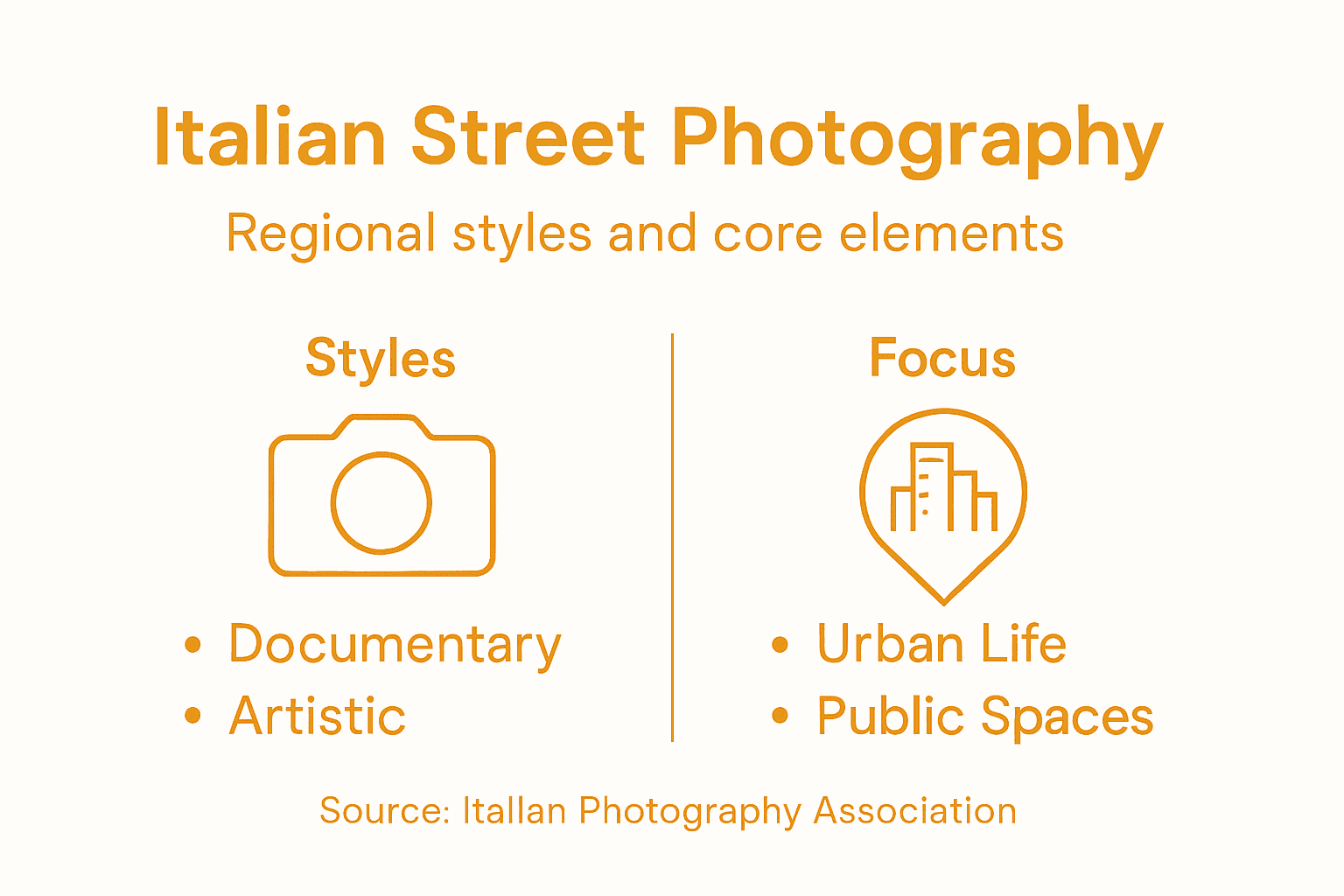
One major variation centers on the documentary approach focused on urban spaces and places. Photographers working in this tradition prioritize the tactile experience of how cities are built, how architecture frames human activity, and how the physical environment tells stories of modernization, decay, or preservation. In Milan, you see this style emphasize clean lines, geometric compositions, and the interplay between contemporary design and aging infrastructure. Photographers here tend to step back slightly, letting the urban landscape occupy equal visual weight with human subjects. Contrast this with the human-centered narrative approach, which prioritizes interpersonal stories, gestures, and emotional moments. This style, particularly strong in Rome, Naples, and smaller Tuscan towns, keeps people at the center and treats the urban environment as context for human drama rather than as the primary subject. The distinction matters tactically when you are composing images: do you frame wide to capture environmental relationships, or do you move closer to isolate faces and emotions?
Regional variations reflect how different Italian communities actually use public space. The formal piazzas of Florence generate different photography than the chaotic energy of Palermo markets or the serene canals of Venice. Northern Italian street photography often emphasizes order and control, mirroring the region’s cultural values around efficiency and planning. Contemporary street narratives across Italy display remarkable diversity in their approach to capturing interpersonal human stories in urban environments. In Venice and coastal areas, photographers frequently incorporate water as a compositional element and use the unique light quality that reflects off canals and the sea. Southern Italian photographers tend toward richer colors, higher contrast, and compositions that embrace visual chaos rather than tame it. This reflects genuine cultural differences: what appears chaotic to a northern viewer is simply the natural density of life to a Neapolitan. A street photographer working in Sicily quickly learns that patience, humor, and acceptance of spontaneous moments matter more than rigid compositional planning.
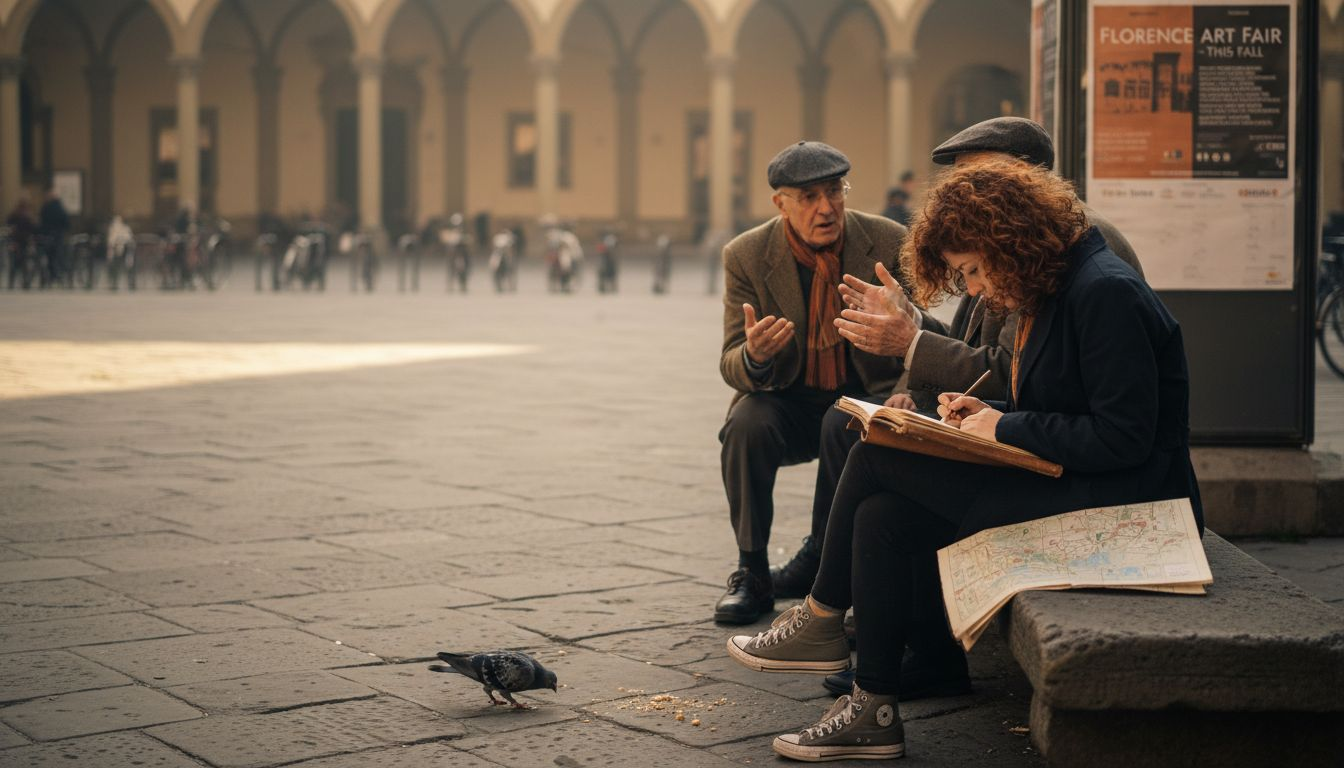
Your personal style will develop through exposure to these regional traditions and conscious choice about which approaches resonate with your sensibilities. Some photographers prioritize geometric precision and find themselves naturally drawn to Milan’s modernist architecture and ordered street scenes. Others gravitate toward emotional intensity and gravitate toward Rome or Naples, where the complexity of human interaction creates constant dramatic possibilities. Some develop a hybrid approach, using architectural elements as compositional anchors while focusing on human subjects. The most important variation is temporal: how different cities and regions reveal themselves at different hours. Morning light in Venice functions completely differently than afternoon light in Florence or the harsh midday sun of southern Sicilian towns. As you photograph across Italy, you will discover that style variations are not arbitrary preferences but rather intelligent responses to the unique visual and cultural conditions of each place.
Here’s how two major Italian street photography styles compare:
| Approach | Core Focus | Typical Composition | Where Most Common |
|---|---|---|---|
| Urban Documentary Style | City architecture, spaces | Wide, geometric, context-rich | Milan, Florence |
| Human-Centered Narrative Style | People, emotions, gestures | Close-up, dramatic, intimate | Rome, Naples, Tuscany |
Pro tip: Study photographs from established Italian street photographers working in the specific region you plan to visit, noting how they respond to local light, architecture, and human behavior, then deliberately shoot differently to develop your own voice rather than copying their aesthetic.
Cultural and Artistic Significance in Italy
When you practice street photography in Italy, you are participating in something far larger than casual documentation. You are engaging with a visual medium that occupies a complex position within Italian cultural life, one that continues to negotiate its identity within the broader artistic landscape. Italy’s relationship with photography as art is fundamentally different from its relationship with painting or sculpture, which have centuries of established prestige and institutional validation. Photography arrived later in Italian cultural history, and its artistic legitimacy developed through different paths and at different speeds than in other European countries. Understanding this context matters because it shapes how your work will be perceived, how galleries and institutions value street photography, and ultimately how you position yourself as an artist rather than simply a tourist with a camera.
Photography in Italy has historically struggled with full artistic recognition, a tension rooted in socio-economic dynamics that distinguished it from traditional mediums. This struggle has created a fascinating cultural situation where processes of differentiation and emulation help position photography within the broader artistic field. What this means practically is that Italian street photographers have worked deliberately to establish photography as a serious artistic practice deserving recognition and institutional support. This context gave birth to some of Europe’s most significant street photography movements. The photographers who came after World War II, documenting the reality of postwar reconstruction and social change, proved that the camera could express artistic vision just as powerfully as a paintbrush. They were not simply recording facts, but interpreting human experience, expressing aesthetic vision, and contributing to broader conversations about what it means to be Italian.
Today, street photography functions as part of Italy’s broader visual and aesthetic culture, documenting and interpreting everyday life while shaping perceptions of authenticity and cultural identity. When you photograph the morning rituals of Romans in the Campo de’ Fiori or capture the quiet dignity of an elderly Venetian waiting in a courtyard, you are contributing to these cultural discourses about what matters, what deserves to be seen, and what stories need to be told. Italian street photography specifically has developed a reputation for its humanism, its focus on real people in real moments, and its refusal to sentimentalize or exoticize ordinary life. This approach reflects deep cultural values: the Italian belief that beauty exists in everyday moments, that human dignity deserves recognition regardless of wealth or status, and that the texture of daily life contains more truth than official narratives. Your work as a street photographer participates in this tradition whether you consciously intend it or not.
The artistic significance becomes even clearer when you recognize that street photography creates a visual record of how societies actually function and change over time. Unlike commissioned portraits or staged photographs, street photography captures the unguarded moments where genuine human character reveals itself. In Italy particularly, where public space functions as genuine theater and social interaction drives cultural life, street photography becomes an invaluable artistic document. You are photographing a specific moment in Italian history, capturing how contemporary Italians dress, move, interact, and use their cities. Fifty years from now, these images will offer historians and cultural scholars direct evidence of how life actually unfolded in 2020s Italy. This documentary power combined with artistic vision positions street photography as something culturally significant, not peripheral. You are not simply making pretty pictures. You are contributing to Italian visual culture and creating a visual dialogue with the long tradition of Italian artists who believed that observing human life carefully and expressing what you see truthfully constitutes serious artistic work.
Pro tip: Research the work of pioneering Italian street photographers like Vivian Maier who worked in Italy or Henri Cartier-Bresson’s Italian photographs to understand how your practice connects to established artistic traditions, then develop your own voice by responding to what contemporary Italy actually looks like rather than mimicking historical styles.
Legal and Ethical Aspects for Photographers
Before you raise your camera in an Italian piazza, you need to understand the legal landscape that governs what you can and cannot photograph. Italy offers genuine freedom for street photographers compared to many European countries, but this freedom comes with specific boundaries and responsibilities that you must respect. The good news is straightforward: street photography in public spaces is generally legal in Italy when conducted as a personal, non-commercial practice. This means you can photograph people, buildings, and scenes in public without asking permission first. However, this legal permission does not settle the question of whether you should photograph every moment you see. Legality and ethics operate on different tracks, and your integrity as a photographer depends on honoring both.
The legal framework in Italy protects your right to photograph in public spaces, but establishes clear limitations on how you can use those images. Street photography is generally legal in public spaces and not for commercial use, consistent with established court rulings that recognize limited privacy expectations outdoors. This means you can capture candid street scenes, architectural details, crowds, and people going about their daily lives without seeking consent. However, the moment you attempt to sell these images commercially, exhibit them for profit, or use them for advertising purposes, you enter different legal territory that may require model releases or face legal challenges. Additionally, you cannot engage in harassment or deceptive practices. If someone asks you to stop photographing them, you must respect that request. Law enforcement cannot arbitrarily seize your camera equipment or demand that you delete photographs without proper legal warrants. Knowing these protections matters because it gives you confidence to work while also clarifying where your rights end and others’ rights begin.
The ethical dimensions of street photography extend far beyond what law permits. Just because you can photograph someone does not mean you should. The ethics of street photography require balancing artistic freedom against subject autonomy, which means considering the dignity and privacy expectations of the people you photograph. Street photography creates a particular ethical tension because you are capturing people without their knowledge or consent, then potentially sharing those images publicly. This power imbalance deserves serious consideration. An American photographer working in Italy operates as an outsider, which amplifies ethical responsibility. You are not simply documenting your own community, but rather making aesthetic and interpretive choices about other people’s lives and cultures. Several ethical principles can guide your work. First, respect the dignity of your subjects. Avoid photographing people in vulnerable, humiliating, or compromising situations. Second, be honest about your photographic activity. If someone becomes aware you are photographing them, do not lie or attempt to hide your camera. Third, recognize that publishing photographs of identifiable people creates lasting consequences in our connected world. A candid photograph shared on social media can reach audiences the subject never imagined, potentially causing embarrassment or harm. Fourth, think about power dynamics. Photographing someone experiencing homelessness, addiction, or obvious hardship raises different ethical questions than photographing someone in a café enjoying coffee.
The proliferation of smartphones and social media has complicated these ethical landscapes significantly. People today understand that they may be photographed in public, yet many still have reasonable expectations about how those images will be used. A photograph taken for your personal portfolio functions differently than one posted immediately to Instagram with commentary or context. Your responsibility intensifies when images move from private creative work to public sharing. Some photographers choose to add an ethical layer by asking permission after photographing someone, explaining their artistic practice and offering to share the final image. Others blur faces or avoid photographing people in ways that identify them personally. Still others maintain stricter standards, photographing only in situations where people have clear awareness they are in a public performance space. None of these approaches is universally correct, but each represents a conscious ethical choice. What matters is that you make deliberate decisions about your own ethical standards rather than drifting into practices that feel comfortable simply because they are legal. Your reputation as a photographer, your peace of mind, and the legacy of your work all depend on navigating these intersections thoughtfully.
Pro tip: Before photographing in any Italian city, spend time observing how locals use public space and what behaviors seem intimate or private despite occurring technically in public, then establish personal ethical guidelines about which moments you will photograph based on respect for dignity rather than assuming all public moments are fair photographic game.
Typical legal and ethical considerations for street photographers in Italy at a glance:
| Aspect | Legal Rule in Italy | Ethical Best Practice | Impact on Work |
|---|---|---|---|
| Public Spaces | Allowed for non-commercial use | Respect dignity, avoid vulnerability | Greater freedom, more trust |
| Commercial Use | Requires permission/model release | Clarify intent, share with subject | Added responsibility |
| Objection | Must stop if requested | Be transparent and responsive | Builds reputation |
Common Challenges and Mistakes to Avoid
Street photography looks deceptively simple from the outside. You see a great image, raise your camera, and capture the moment. Yet the gap between what you envision and what actually appears on your screen reveals itself quickly once you start shooting seriously in Italian cities. Most of the obstacles you will encounter fall into predictable categories, which means they are also preventable with awareness and deliberate practice. Understanding common pitfalls before you face them allows you to make intentional choices rather than stumbling into repeated errors that undermine your work.
Technical mistakes plague many street photographers, especially those transitioning from other photography genres where you have time to meter light carefully and adjust settings between shots. The fast-paced nature of street photography demands that your camera settings work efficiently without constant adjustment. Common technical errors include incorrect camera settings, over-reliance on burst mode, and poor focus, which can fundamentally undermine even compelling compositions. Many beginners default to burst mode, hoping to capture the perfect moment by rapid-firing dozens of exposures. This approach typically results in thousands of mediocre frames where you waste time sorting through nearly identical images later. Instead, discipline yourself to shoot single frames, forcing you to anticipate moments rather than react after they happen. Poor focus represents another technical plague. In Italy’s bright sunlight, especially midday, shallow depth of field becomes treacherous. You might nail composition and timing perfectly, only to discover in post-processing that your focus landed on a background element instead of your subject. Learn to use zone focus or increase your aperture to expand the depth of field. Many American photographers unfamiliar with European light also struggle with exposure. Mediterranean sunlight creates extreme contrast, particularly in narrow streets with deep shadows. Your camera’s meter will struggle. Expose for the shadows and accept blown highlights, or expose for highlights and accept deep shadows. There is no perfect compromise in extreme light, so make a conscious choice rather than letting your meter guess.
Composition and behavioral mistakes often hurt more than technical errors because they reveal a lack of intentionality. Fear of confrontation and hesitation lead to missed moments, while compositional hesitation manifests as shooting from too far away or including cluttered, distracting backgrounds that dilute your intended message. Many photographers stand at a distance where their subject appears small and insignificant, then wonder why the image fails to engage viewers. Street photography requires closeness. You must position yourself where the subject truly dominates the frame. This closeness also creates psychological pressure that many photographers avoid. They worry about confrontation, assume people will become angry, or fear they are violating someone’s space. In reality, most people either do not notice you or do not care once they understand you are a photographer. If someone objects, simply stop. The real obstacle is your own hesitation, not external resistance. Cluttered backgrounds represent another compositional failure. You see a compelling facial expression or gesture, you press the shutter, and in the final image, a distracted passerby or confusing architectural element in the background competes for attention. Before you shoot, scan the entire frame. Is the background clean or chaotic? Can you move slightly to change the background relationship? Does the background add context or create visual noise?
Behavioral and psychological challenges often separate accomplished street photographers from those who give up. Overthinking kills spontaneity. You see a potential image, you calculate composition and exposure, and by the time you raise the camera, the moment has dissolved. Street photography requires moving faster than your analytical mind wants to move. Develop your skills through deliberate practice so that camera operation becomes automatic, freeing your attention for observation and timing. Another common challenge involves fear of failure or perfectionism. You might only shoot when conditions feel ideal, or you might delete images too harshly, convincing yourself they are not good enough. In reality, you learn more from shooting in imperfect conditions and examining what worked and what did not than you do from waiting for perfect circumstances that rarely arrive. Additionally, patience separates serious street photographers from casual ones. You cannot force compelling moments. You must position yourself in locations where interesting interactions naturally occur, then wait. Sometimes you wait for hours and capture nothing. Other times, concentrated observation of a single location yields ten remarkable images. Building confidence through practice, learning to anticipate moments, and simplifying camera settings creates the foundation for moving past initial challenges and developing genuine skill.
Pro tip: Set your camera to a fixed aperture, ISO, and shutter speed before you start shooting in any location, practice until you can operate your camera without looking at it, then focus entirely on observation and composition rather than fiddling with technical settings while moments pass you by.
Elevate Your Street Photography with Authentic Italian Experiences
Capturing the true essence of Italy’s urban life presents unique challenges like mastering regional styles, navigating cultural nuances, and honoring ethical boundaries. If you want to move beyond the basics and develop a personal style while immersing yourself in the rhythms of Italian cities such as Milan, Venice, or Tuscany, guided photographic experiences offer the perfect solution. Italy Photo Tour specializes in helping you overcome hesitation, technical pitfalls, and compositional doubts by providing curated journeys led by professional photographers who understand how to interpret Italy’s rich visual culture.
Start transforming your street photography approach today with immersive tours that hone your observational skills and deepen your understanding of Italian light, architecture, and everyday stories. Learn to photograph like a true insider and connect with a community that values artistic storytelling over snapshots. Discover more about these unique photo tours at Italy Photo Tour and take your passion to the next level. Your authentic Italian street photography adventure awaits—book your spot now and see Italy through a lens that captures genuine moments, not just images.
Frequently Asked Questions
What is street photography?
Street photography is a genre that captures candid moments of everyday life in urban settings, focusing on spontaneity and unposed interactions without prior arrangements or consent from subjects.
How do I improve my street photography skills?
To enhance your street photography, practice observing your surroundings without your camera first. Familiarize yourself with the local rhythms, light conditions, and compositions before shooting to develop your unique style.
What are some common mistakes in street photography?
Common mistakes include poor camera settings, reliance on burst mode, failure to check focus and composition, and not engaging closely enough with subjects, which can dilute the impact of your images.
Are there legal considerations for street photography?
In general, street photography is legal in public spaces. However, it’s important to respect people’s privacy and dignity, avoiding commercial use without permission. Ethical considerations should always guide your shooting practices.