

TL;DR:
- Italy offers diverse landscapes that require different creative approaches and timing.
- Shooting during transitional seasons like spring and autumn provides optimal lighting and fewer crowds.
- Embracing atmospheric conditions and patience creates more compelling, original photographs.
Italy captivates every photographer who steps onto its soil, yet so many visitors leave with images that look identical to a thousand others. The challenge isn’t finding beauty here. It’s finding your version of it. From the jagged Dolomite ridgelines to the amber-washed hills of Tuscany, Italy offers a staggering variety of landscapes, each one demanding a different eye, a different hour, and a different creative approach. This guide moves through the country’s most photogenic terrain, offering site-specific inspiration and practical tips to help you move beyond the obvious and craft a portfolio that feels genuinely alive.
Table of Contents
- How to select the perfect Italian landscape for your shot
- Majestic mountains: Dolomites and the Italian Alps
- Rolling hills and countryside: Tuscany, Umbria, and beyond
- Coastlines and lakes: Dramatic seascapes of Amalfi, Cinque Terre, and Northern Italy
- Timeless towns and cityscapes: Venice, Florence, Rome, and beyond
- Comparing Italy’s top photography landscapes at a glance
- What most guides miss: The mood and timing define your shots
- Ready to capture Italy’s most inspiring landscapes?
- Frequently asked questions
Key Takeaways
| Point | Details |
|---|---|
| Diversity is key | Italy offers mountains, countryside, coasts, and cityscapes—explore them all for a well-rounded portfolio. |
| Timing transforms shots | Spring or autumn and early mornings yield the most unique landscape photos with optimal light. |
| Details tell stories | Local culture, weather moods, and offbeat locations elevate your Italian landscape photography. |
| Plan for variety | Blend famous spots with hidden gems to create original images that stand out. |
How to select the perfect Italian landscape for your shot
Before you pack your bag and board a flight, it’s worth pausing to think about what kind of images speak to your artistic voice. Italy’s landscapes fall into four broad categories: mountains, rolling countryside, dramatic coastlines, and storied cities. Each has its own rhythm, its own quality of light, and its own emotional character. Knowing which resonates with you most deeply is the first step toward intentional, meaningful photography.
When planning your locations, consider these key factors:
- Season and light quality: The angle and warmth of natural light change dramatically between January and July.
- Crowd levels: Peak summer months flood even remote spots with visitors.
- Mood and atmosphere: Misty mornings in the hills feel entirely different from clear, cerulean afternoons by the coast.
- Cultural markers: Local festivals, harvest seasons, and weekly markets add authentic life to your frames.
- Balance of iconic and hidden: Mixing world-famous vistas with lesser-known spots creates a richer, more personal portfolio.
The principles behind photograph Italy tips often emphasize timing above all else, and for good reason. Spring and autumn offer ideal conditions for photography in Italy, with better balance of weather, blooms, and fewer crowds. These transitional seasons reward photographers with softer light, vivid color, and breathing room at popular sites.
For deeper guidance on composing your vision before you arrive, explore this landscape photography advice to start thinking like an artist rather than a tourist.
Pro Tip: Research local sagre (village food festivals) in your target region. These celebrations offer authentic color, traditional costumes, and genuine human warmth that transform a landscape shot into a cultural document.
Majestic mountains: Dolomites and the Italian Alps
Now that you know what criteria to use, let’s explore how to approach Italy’s varied regions, starting with its awe-inspiring mountains. The Dolomites, a UNESCO World Heritage Site, rise in the northeastern corner of the country like cathedrals of pale stone, their spires catching the first blush of dawn with extraordinary drama. For photographers, this is a landscape of extremes, and it rewards patience above all.
The most celebrated iconic Dolomites locations include:
- Seceda ridgeline in Val Gardena: sweeping meadows beneath impossibly vertical cliffs.
- Tre Cime di Lavaredo: three legendary pinnacles that become silhouettes of pure drama at golden hour.
- Lago di Braies: a jewel-green Alpine lake whose mirror surface reflects the surrounding peaks with haunting clarity.
- Alpine villages and mountain huts: intimate human elements that add scale and story to vast scenery.
Spring wildflowers and autumn foliage both offer exceptional palettes for color photography, while the long days of early summer provide extended golden hours. Don’t shy away from overcast or rainy days. As this atmospheric landscape guide explores, rain enhances the Dolomites’ moodiness and offers unique photographic opportunities that clear skies simply cannot replicate.
“The mountains do not reveal themselves all at once. Return on a cloudy afternoon, and they become something else entirely — darker, wilder, more honest.”
Pro Tip: Take the first cable car of the day to reach high viewpoints before the hikers arrive. The combination of low-angle light and solitude transforms even familiar compositions.
Rolling hills and countryside: Tuscany, Umbria, and beyond
Beyond the mountains, Italy’s countryside offers a completely different palette for creative photography. The rolling hills of Tuscany and Umbria have inspired painters for centuries, and standing in Val d’Orcia at sunrise, with ribbons of morning mist curling between cypress-lined ridges, it’s immediately clear why. This is a landscape that seems painted rather than grown.
The countryside rewards photographers who engage with its rhythms:
- Val d’Orcia and Crete Senesi: iconic Tuscan scenery with rolling hills, lone farmhouses, and sentinel cypress trees.
- Sunflower fields in summer: bold, geometric explosions of gold that fill the frame with joyful energy.
- Umbria’s green valleys: quieter and less visited, with medieval hilltop towns hovering above forested ridges.
- Le Marche: an underrated gem offering coastal hills, wildflower meadows, and traditional villages.
Spring brings vivid greens and wildflowers, while summer reveals golden fields across Tuscany, each season rewriting the landscape in a new emotional language. Understanding these cycles helps you choose which story you want to tell and explore different Italian photography styles across seasons.
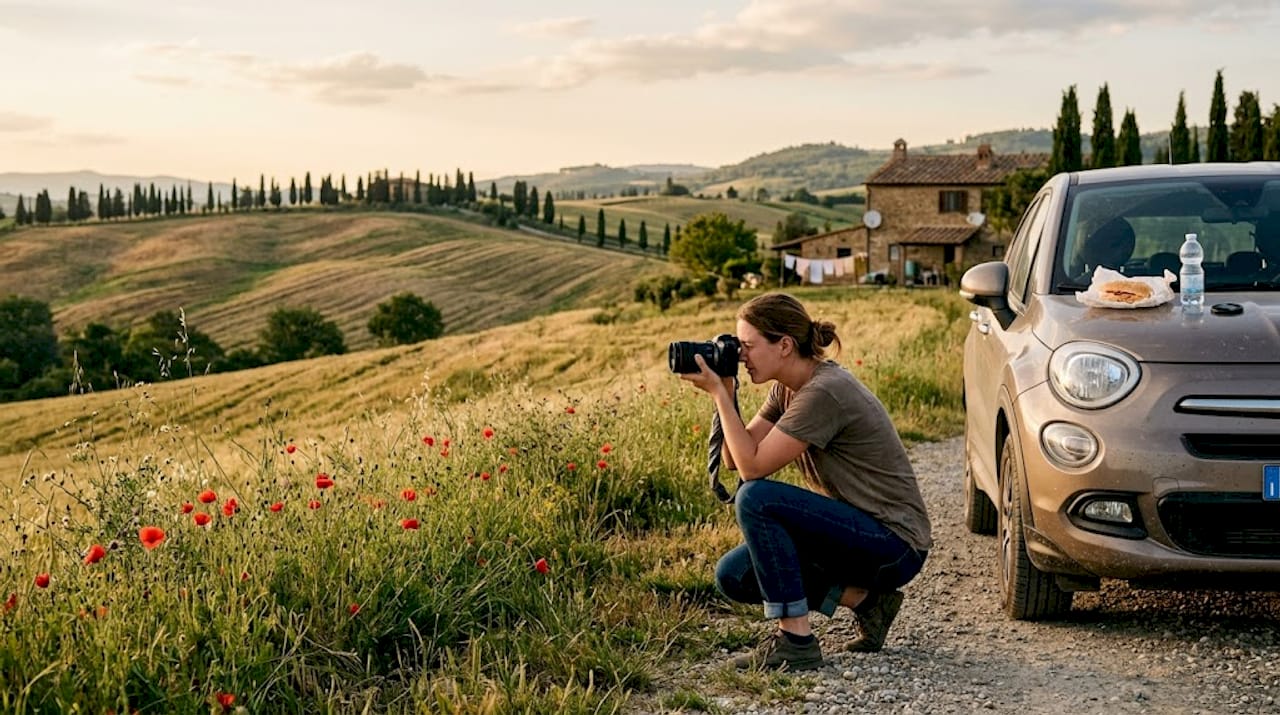
The true artistic landscape impact comes from golden-hour light that rakes across the hillside texture, turning furrows and hedgerows into lines of shadow and warmth. Arrive before sunrise and stay well past sunset.
Pro Tip: Seek out local market days in small Tuscan or Umbrian towns. The sight of farmers arranging produce beneath ancient stone archways adds irreplaceable human warmth to your countryside portfolio.
Coastlines and lakes: Dramatic seascapes of Amalfi, Cinque Terre, and Northern Italy
While rolling hills define Italy’s heartland, its shorelines and lakes offer contrasts every photographer should capture. The Italian coast is not one thing. It’s a series of revelations, from the pastel-stacked villages of Cinque Terre clinging to cliffs above the Ligurian Sea to the grand, winding drama of the Amalfi Coast, where roads snake above impossibly blue water.
Key areas and techniques to consider:
- Cinque Terre: shoot from the hiking trails between villages for elevated perspectives.
- Amalfi Coast: capture sweeping bay views from Ravello or the terraced lemon groves of Positano.
- Lake Como and Lake Garda: use mirror-still dawn conditions for breathtaking reflections of surrounding mountains.
- The Ligurian coast: less visited and often more intimate, with fishing villages that feel genuinely timeless.
Using an ND (neutral density) filter slows your shutter speed dramatically, allowing you to transform choppy water into silky, meditative motion. Spring and autumn at the coast provide vibrant colors and fewer crowds for optimal shooting, making those seasons ideal for both technical experimentation and authentic scenes.
For broader ideas on integrating these views with your city photography, coastal urban photography offers a thoughtful framework. And for essential composition guidance, these landmark photography key tips will help you frame iconic coastal structures with confidence.
Pro Tip: Include a local fishing boat or a weathered net in your foreground. These details anchor the vastness of the sea, adding both scale and a quietly human narrative to your seascape.
Timeless towns and cityscapes: Venice, Florence, Rome, and beyond
No exploration of Italian landscapes is complete without considering the country’s picturesque cities and timeless urban vistas. Italy’s great cities are landscapes in their own right, layered with centuries of stone, light, and living culture. Venice shimmers across its lagoon like a mirage, its canals threading beneath arched bridges and dissolving into open sky.
Each city offers distinct photographic rewards:
- Venice: reflections in still canals at blue hour, intimate calli (narrow alleyways) without a crowd in sight.
- Florence: the panoramic rooftop view from Piazzale Michelangelo at sunrise, or the chiaroscuro of the Duomo’s marble skin in afternoon light.
- Rome: the interplay of ancient ruins and living piazzas, best captured when the city belongs to early risers.
- Bonus cities: Siena, Matera, and Lecce each offer architectural drama that rewards slow, observant walking.
| City | Best spot | Optimal time | Unique feature |
|---|---|---|---|
| Venice | Rialto Bridge | Blue hour | Canal reflections |
| Florence | Piazzale Michelangelo | Sunrise | Duomo panorama |
| Rome | Palatine Hill | Golden hour | Ancient layering |
| Siena | Piazza del Campo | Late afternoon | Shell-shaped piazza light |
As combining landscape and cultural elements tells a more complete visual story, mixing wide establishing shots with tight street details creates a narrative arc within your portfolio. Study these historic landmark tips and browse beginner Italy photography tips to sharpen your compositional instincts before you arrive.
Comparing Italy’s top photography landscapes at a glance
With all these options in mind, it’s useful to see a side-by-side comparison to guide your shooting plans.
| Landscape type | Key features | Best season | Skill level |
|---|---|---|---|
| Mountains | Drama, scale, weather | Spring, autumn | Intermediate |
| Countryside | Soft light, color, texture | Spring, summer | Beginner |
| Coastlines | Water, color, energy | Spring, autumn | Intermediate |
| Cities | Architecture, culture, people | Year-round | All levels |
For a fuller breakdown and visual reference, revisit this guide on landscape inspiration and tips as your planning evolves.
As you organize your itinerary, consider these recommendations:
- Choose two or three landscape types that genuinely excite you rather than trying to photograph everything.
- Plan at least one session at an unexpected hour: pre-dawn at a lake, or a city street on a rainy Tuesday afternoon.
- Revisit at least one location twice during your trip, in different light or weather, to discover how dramatically the same place transforms.
- Build space into your schedule for spontaneity. Some of the most memorable images happen when you simply wander without a plan.
Finding your personal connection to each landscape and blending locations creates a complete portfolio that speaks with genuine artistic voice, far beyond a standard travel album.
What most guides miss: The mood and timing define your shots
Most photography guides give you a list of coordinates. They tell you where to stand, which lens to use, and what the famous view looks like. What they rarely say is this: the location is the least important decision you’ll make.
The photographers who return from Italy with truly original work are not the ones who found a secret spot. They’re the ones who waited. They stood at a familiar lake in the rain, watching the mist lower over the peaks. They set their alarm for 4:30 a.m. and arrived at an empty piazza where the street lamps painted the cobblestones gold. Early mornings and unexpected weather add magic that midday sunshine simply cannot manufacture.
Embracing atmospheric conditions, whether a winter fog over the Arno in Florence or a summer storm gathering above the Dolomites, is what separates a photograph from a record. For practical inspiration on working with Italy’s ever-changing atmosphere, this atmospheric photo tips resource offers a thoughtful starting point. Italy’s landscapes reward those who treat them as living, breathing subjects rather than static backdrops.
Ready to capture Italy’s most inspiring landscapes?
Feeling inspired to put these ideas into motion across Italy’s mountains, countryside, coastlines, and cities? The difference between an average travel photo and an image that genuinely moves people often comes down to one thing: being in the right place, at the right moment, with someone who knows both intimately.

Our Italy photography tours are designed exactly for that. Led by professional photographer Mino Di Vita, each experience brings you to the most evocative landscapes at the ideal hour, with guidance on light, composition, and creative storytelling. Before you travel, explore the Italy camera gear guide to ensure you’re equipped for every terrain. When you’re ready to choose your experience, browse all available Italy photo tour options and find the journey that matches your creative vision.
Frequently asked questions
What is the best season for photographing Italian landscapes?
Spring and autumn are optimal for both landscapes and crowd control, offering vivid seasonal colors, pleasant temperatures, and more breathing room at Italy’s most beloved locations.
How can I avoid crowds while photographing popular Italian sites?
Pre-dawn and shoulder seasons are the most reliable crowd-avoidance tactics, giving you unobstructed compositions and a quieter, more intimate connection with each place.
Do Italian landscapes require special photography gear?
A wide-angle lens, a sturdy tripod, and an ND filter will serve you across mountains, coasts, and cities, but a curious and patient eye matters far more than any piece of equipment.
What should I include in my Italian landscape portfolio?
Aim for variety by representing mountains, countryside, coastlines, and cities, since each category carries its own mood, light quality, and emotional story that enriches the whole.