

Most photographers believe capturing a great image is purely about what you see through the viewfinder. That’s only half the story. Photography thrives when you engage all five senses, not just sight. Sensory exploration transforms how you observe, feel, and ultimately photograph a scene. This approach is especially powerful in Italy, where layered atmospheres, rich textures, and evocative sounds create multidimensional storytelling opportunities. By practicing sensory exploration, you’ll move beyond standard postcard shots into images that resonate with genuine emotion and presence. This guide teaches you practical methods to incorporate sensory awareness into your photography workflow, helping you capture Italy’s landscapes and culture with deeper authenticity and creative confidence.
Table of Contents
- What Is Sensory Exploration In Photography? Understanding The Multi-Sensory Approach
- Core Methodologies: The Two-Walk Method And Sensory Techniques For Italian Landscapes And Culture
- Expert Nuances And Contrasts: From Traditional Sharp Focus To Sensory-Emotive Photography
- Applying Sensory Exploration In Italy: Practical Tips For Amateur Photographers
- Explore Sensory Photography On Italy Photo Tours
- Frequently Asked Questions
Key takeaways
| Point | Details |
|---|---|
| Engage all five senses | Sensory exploration uses sight, sound, smell, touch, and emotion to deepen photographic observation and presence. |
| Two-Walk Method separates phases | Walk once camera-free to absorb sensory input, then photograph guided by your notes and observations. |
| Soft eyes reveal connections | This technique helps you perceive light, texture, and interconnected visual elements in crowded or complex scenes. |
| Move beyond technical perfection | Sensory methods prioritize evocative, emotional storytelling over sharpness and traditional composition rules. |
| Italy offers rich sensory contexts | Fog, village sounds, textures, and atmospheric conditions create unique opportunities for sensory-driven photography. |
What is sensory exploration in photography? Understanding the multi-sensory approach
Sensory exploration means mindfully engaging all five senses during the photographic process, not just relying on your eyes. Sensory exploration in photography engages all senses to deepen observation and presence. When you incorporate smell, hearing, touch, and emotional awareness, you add layers of context and feeling that purely visual observation misses. This holistic approach quiets mental clutter, heightens your presence in the moment, and reveals storytelling opportunities you’d otherwise overlook.
One foundational technique within sensory exploration is the soft eyes technique, which enhances your ability to detect light, texture, and contrast in crowded scenes. Instead of staring hard at a single subject, you soften your gaze to perceive the entire visual field as interconnected elements. This method is particularly useful in busy Italian markets, narrow village streets, or layered landscapes where too much sharp focus creates tunnel vision.
“Sensory exploration invites you to experience a scene through all senses before lifting your camera, creating a foundation for images that feel lived rather than merely observed.”
Each sense contributes uniquely to your photographic practice:
- Sight: Observing light quality, shadows, colors, and spatial relationships through soft eyes rather than sharp staring.
- Hearing: Noticing ambient sounds like church bells, market chatter, or rustling leaves that inform mood and timing.
- Smell: Registering scents such as fresh bread, sea air, or rain on stone that anchor emotional memory and atmosphere.
- Touch: Feeling textures like weathered walls, cool mist, or warm sunlight that translate into tactile visual elements.
- Emotion: Recognizing your gut reactions and feelings that guide authentic subject selection and framing choices.
By integrating these sensory inputs, you build a richer mental map of your environment. This map informs not just what you photograph, but how you frame, time, and emotionally connect with your subjects. For amateur photographers exploring Italy’s diverse settings, this approach unlocks storytelling depth that technical skill alone cannot achieve. To dive deeper into this philosophy, explore our sensory photography complete guide and see how multi-sensory awareness reshapes creative vision. You can also practice the learning to see exercise to build these observational habits from the ground up.
Core methodologies: The Two-Walk Method and sensory techniques for Italian landscapes and culture
The most effective way to integrate sensory exploration into your workflow is the Two-Walk Method, which separates sensory observation from photo capture. On your first walk, leave your camera behind and immerse yourself fully in the environment. Notice sounds like distant conversations or footsteps on cobblestones. Register smells such as espresso wafting from a café or damp earth after rain. Feel air movement, temperature shifts, and textures under your fingertips. Observe how light falls across surfaces and how colors interact. Capture these observations in a notebook or voice memo without the pressure to photograph anything.
On your second walk, return with your camera and use your sensory notes as a creative guide. You’ll find yourself drawn to specific subjects, lighting conditions, or compositions that resonated emotionally during your first pass. This method removes the anxiety of missing shots and replaces it with intentional, grounded decision making.
To deepen your sensory practice, try these meditative prompts during your camera-free walk:
- Texture hunt: Run your hand along walls, tree bark, or stone surfaces and notice how textures vary in different light.
- Color focus: Pick one color and track how it appears in shadows, highlights, and reflections throughout your walk.
- Light variations: Observe how sunlight shifts from harsh midday to soft golden hour and how it transforms mood.
- Soundscape mapping: Close your eyes periodically and identify layers of sound, from close whispers to distant church bells.
- Emotional check-ins: Pause to ask yourself what you’re feeling in each micro-environment and why certain spots resonate.
Integrate the soft eyes technique by relaxing your gaze and allowing your peripheral vision to inform your observations. Walk slowly with no agenda or timeline pressure. This relaxed pace lets subconscious interests and emotional connections surface naturally.
Pro Tip: Use familiar Italian paths like the rolling hills of Val d’Orcia or quiet village alleys for your first sensory walks. Familiarity reduces navigational stress and lets you focus entirely on sensory input.
The table below contrasts traditional fast photography with slow sensory exploration to highlight the methodological shift:
| Aspect | Traditional Fast Photography | Slow Sensory Exploration |
|---|---|---|
| Approach | Rapid shooting, high volume | Deliberate observation, fewer frames |
| Focus | Technical settings, sharpness | Emotional resonance, atmosphere |
| Engagement | Visual only | All five senses |
| Workflow | Shoot first, edit later | Observe first, shoot intentionally |
| Outcome | Technically correct images | Evocative, story-driven images |
Sensory exploration reveals what truly interests you beneath conscious thought. You might discover you’re drawn to the interplay of shadows in alleyways or the way fog softens distant hills. These subconscious preferences become the foundation for a distinctive photographic voice. When planning your Italian photography journey, consider how sensory walks fit into your itinerary by reviewing tips on planning photo tours in Italy. You can also find inspiration and ongoing sensory photography insights on our Italy photography blog. For a structured introduction to meditative sensory walks, explore meditative photography walks to see how mindfulness and photography intersect.
Expert nuances and contrasts: From traditional sharp focus to sensory-emotive photography
Advanced photographers understand that separating the act of seeing from the act of capturing creates space for deeper creative insight. Neuroscience research on embodied simulation explains how sensory engagement fosters empathy and emotional resonance in images. When you physically experience a scene through multiple senses, your brain encodes that experience holistically. Later, when you photograph, you’re not just recording light, you’re translating lived sensory memory into visual form. This process produces images that viewers feel rather than simply see.
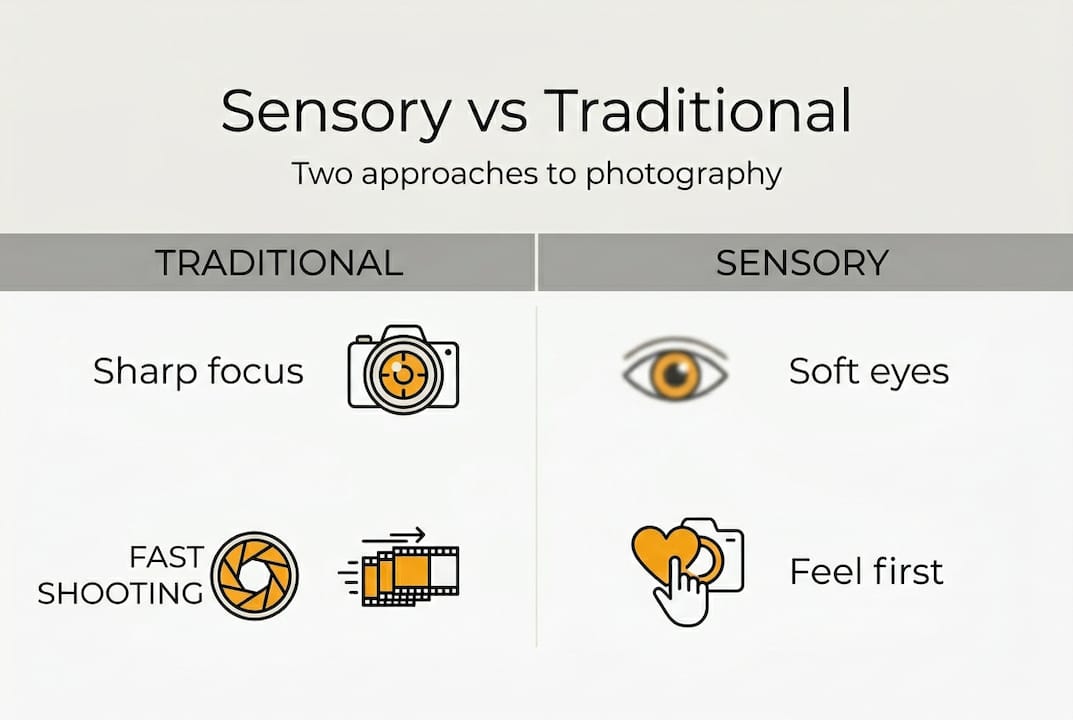
Traditional photography often emphasizes a stare and search approach: locking sharp focus on a subject, isolating it, and ensuring technical perfection. Sensory-emotive photography flips this. It embraces soft eyes, peripheral awareness, and sometimes even intentional blur. Intentional camera movement takes this further by using motion blur and long exposures to convey emotion and atmosphere over literal representation. This edge case technique prioritizes feeling over clarity, challenging the perfectionism that often stifles creativity.
Expert nuances in sensory exploration include:
- Separating observation from capture: Spend significant time absorbing a scene before lifting your camera, allowing subconscious patterns to emerge.
- Deliberate slow film pace: Shooting film forces you to slow down, reflect on each frame, and engage more deeply with sensory input.
- Prioritizing atmosphere over sharpness: Accept that evocative mood often matters more than pixel-level detail or rule-of-thirds composition.
- Embracing imperfection: Allow technical flaws if they serve emotional truth, such as slight motion blur conveying energy or grain adding texture.
- Cultivating empathy: Use sensory awareness to connect emotionally with subjects, whether landscapes or people, resulting in more authentic storytelling.
“Sensory awareness creates images that resonate emotionally because they’re rooted in lived experience, not just visual observation. Technical perfection is secondary to evocative truth.”
The table below contrasts traditional and sensory-emotive photography philosophies:
| Trait | Traditional Photography | Sensory-Emotive Photography |
|---|---|---|
| Priority | Sharpness, rule adherence | Atmosphere, emotional resonance |
| Technique | Stare and isolate subject | Soft eyes, holistic observation |
| Workflow | Shoot high volume, edit heavily | Observe deeply, shoot selectively |
| Outcome goal | Technically flawless image | Evocative, story-rich image |
| Risk tolerance | Avoid blur, noise, imperfection | Embrace imperfection for feeling |
Pro Tip: Try film photography to naturally slow your pace and reflect more deeply on sensory input before each exposure. The deliberate nature of film aligns perfectly with sensory exploration principles.
For amateur photographers, this shift from technical obsession to sensory-emotive storytelling can feel liberating. You’re no longer chasing perfect settings or ideal compositions. Instead, you’re trusting your sensory instincts and emotional responses to guide creative decisions. This approach is especially valuable when photographing Italy’s layered environments, where atmosphere often matters more than crisp detail. To explore how artistic sensory methods apply to travel photography, read our artistic travel photography guide. For scientific backing on why sensory engagement improves photographic outcomes, review the science of better photos to understand the neuroscience behind embodied simulation and empathy in visual storytelling.
Applying sensory exploration in Italy: Practical tips for amateur photographers
Italy’s landscapes and cultural scenes offer ideal environments for practicing sensory exploration. Start by choosing iconic yet accessible paths for your camera-free sensory walks. The rolling hills of Val d’Orcia, narrow village alleys in Cinque Terre, or bustling markets in Florence provide rich sensory input without overwhelming complexity. Amateurs benefit by starting camera-free walks in these locales to build observational habits before adding the camera back into the workflow.
Lifestyle tips to maximize sensory input while photographing Italy:
- Slow your pace deliberately: Walk half as fast as usual to notice details like weathered door handles, moss on stone, or the angle of afternoon light.
- Engage smells actively: Pause near bakeries, gardens, or coastal areas to register scents that anchor emotional memory and inform mood.
- Listen for soundscapes: Identify layers such as distant church bells, nearby conversations, or the rustle of leaves to understand the scene’s auditory texture.
- Touch surfaces intentionally: Feel the coolness of marble, roughness of ancient brick, or warmth of sun-baked stone to translate tactile sensations into visual texture.
- Journal or voice record: Capture sensory observations immediately in notes or audio memos to guide your second photographic walk.
Italy’s atmospheric conditions add emotional depth that sensory exploration helps you recognize and capture. Morning fog rolling through Tuscan valleys softens light and creates mystery. Mist clinging to coastal cliffs in Cinque Terre adds layers and dimension. Late afternoon golden hour in Rome bathes ancient ruins in warm, nostalgic light. By tuning into these conditions through all your senses, you’ll time your shots for maximum emotional impact rather than just technical correctness.
In crowded Italian streets and markets, adapt the soft eyes approach to perceive the scene as a living whole rather than isolated subjects. Instead of hunting for one perfect face or storefront, relax your gaze and notice how light filters through awnings, how colors repeat across vendor stalls, or how movement flows through narrow passages. This holistic perception reveals compositional opportunities that sharp, focused staring misses.
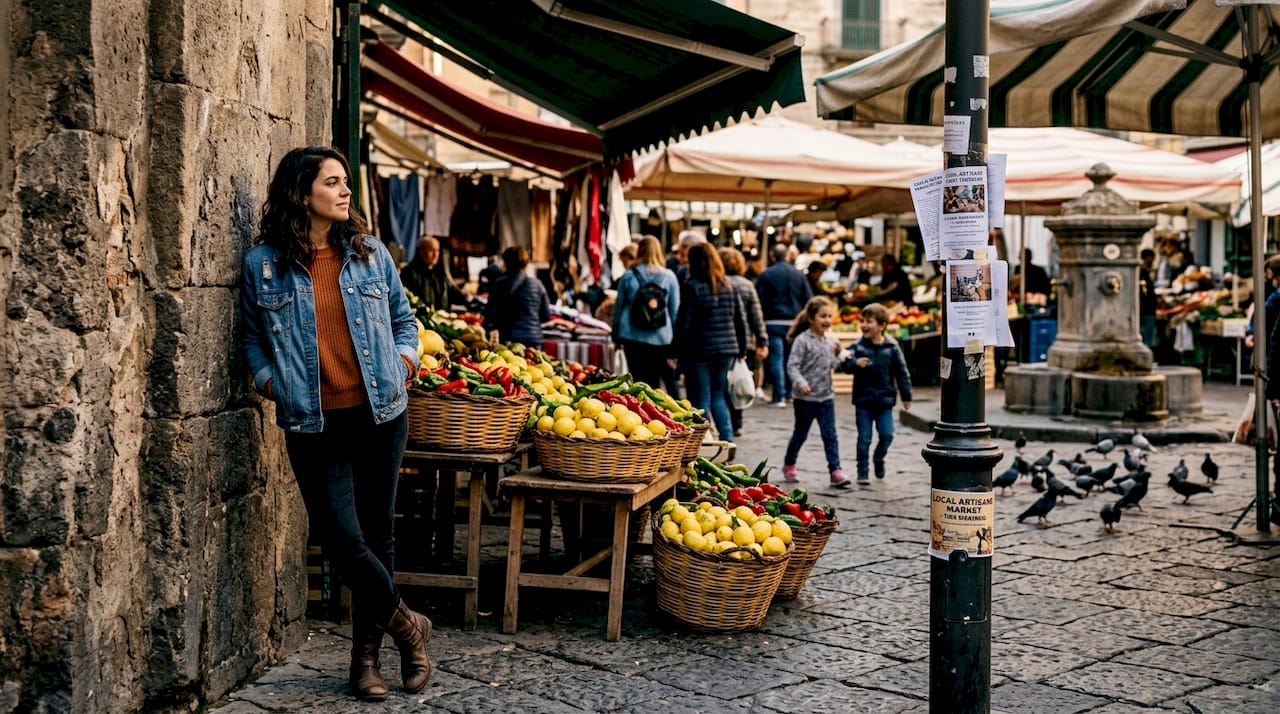
Pro Tip: Use sensory exploration to move beyond standard postcard views. Instead of photographing the Duomo from the usual tourist spot, walk the surrounding streets with your senses open. You might discover a side alley where morning light creates dramatic shadows, or a quiet courtyard where the scent of jasmine and distant footsteps tell a richer story.
Cultivating sensory habits builds creative confidence because you’re trusting your lived experience rather than external rules. You’ll develop an intuitive sense of when light feels right, when a scene resonates emotionally, and when to wait for the perfect sensory alignment. This confidence translates into images that feel authentic and personal, not derivative or formulaic. To enhance your cultural photography skills using sensory methods, explore our guide on cultural photography skills Italy. Learn more about how Italy Photo Tour integrates sensory exploration into immersive experiences by visiting what we do. For foundational exercises to build sensory observation skills, practice the learning to see exercise regularly to strengthen your multi-sensory awareness.
Explore sensory photography on Italy photo tours
Ready to put sensory exploration into practice in Italy’s most evocative settings? Italy Photo Tour offers immersive experiences designed specifically for amateur and enthusiast photographers seeking to deepen their craft through multi-sensory engagement. Our guided tours take you through Tuscany’s rolling hills, Venice’s atmospheric canals, and Cinque Terre’s coastal villages, where every scene invites sensory discovery. We emphasize slow, deliberate observation over rushed shooting, giving you time to absorb atmospheres, engage all your senses, and capture images that resonate with genuine emotion.

Our tailored itineraries focus on authentic cultural hotspots and hidden landscapes where sensory richness runs deep. You’ll learn to separate observation from capture, practice soft eyes techniques in real environments, and receive expert guidance from professional photographer Mino Di Vita. Whether you’re exploring misty morning light in Val d’Orcia or the textured streets of Milan, our tours cultivate the sensory awareness that transforms good photographers into storytellers. Discover our photography tours Italy offerings, learn more about our philosophy at what we do, and explore curated photo tours Italy designed to elevate your sensory photography practice.
Frequently asked questions
What is sensory exploration in photography?
Sensory exploration means engaging all five senses, not just sight, to deepen your photographic observation and presence. It involves noticing sounds, smells, textures, and emotions before lifting your camera, creating a holistic understanding of a scene that translates into more evocative images.
How does the Two-Walk Method work?
The Two-Walk Method separates sensory observation from photo capture. On your first walk, leave your camera behind and immerse yourself in the environment, noting sensory details. On your second walk, use those observations to guide intentional, emotionally grounded photography.
What are the benefits of the soft eyes technique?
The soft eyes technique helps you perceive light, texture, and interconnected visual elements in crowded or complex scenes. Instead of staring hard at one subject, you relax your gaze to see the entire visual field, revealing compositional opportunities you’d otherwise miss.
How can beginners start practicing sensory photography?
Beginners should start with camera-free sensory walks in familiar locations, focusing on one sense at a time. Use meditative prompts like texture hunts or soundscape mapping, and journal your observations. Gradually reintroduce your camera, using sensory notes to guide your shooting decisions.
How does sensory exploration enhance photography in Italy?
Italy’s rich atmospheres, from Tuscan fog to coastal scents and village sounds, provide ideal sensory contexts. Engaging all senses helps you capture emotional depth, move beyond postcard clichés, and create images that reflect lived experience rather than just visual observation. For more on this approach, explore our sensory photography complete guide.