

Every photographer dreams of capturing Italy through a fresh lens, but trusting your instincts alone often means missing hidden stories and local secrets. Myths about what a photo guide actually does can leave amateur photographers overlooking the true value of these experts. A photo guide blends technical skills with deep knowledge of Italian culture, offering mentorship that transforms ordinary tours into dynamic learning experiences filled with authentic, creative opportunities.
Table of Contents
- Photo Guide Defined And Common Myths
- Types Of Photo Guides In Italy Tours
- How A Photo Guide Enhances Creativity
- Essential Responsibilities And Expertise
- Risks, Costs, And Common Mistakes
Key Takeaways
| Point | Details |
|---|---|
| Understanding the Role of Photo Guides | Photo guides combine technical expertise, cultural knowledge, and storytelling to enhance travel photography experiences. They teach skills and provide valuable insights beyond mere sightseeing. |
| Dispelling Common Myths | Many misconceptions about photo guides, such as their function being merely to take photos, overlook their role as educators who promote skill development for photographers of all levels. |
| Choosing the Right Guide Type | Selecting the appropriate guide based on your photography goals—like landscape, street photography, or technical skill enhancement—ensures a more fulfilling learning experience. |
| Preparation for Photo Tours | Proper planning, including checking equipment and understanding weather conditions, is crucial to maximize outcomes from photo tours and avoid common mistakes. |
Photo guide defined and common myths
A photo guide is far more than someone who points a camera at pretty buildings. They’re skilled professionals who combine photography expertise, cultural knowledge, and storytelling to transform how you experience a destination.
Think of them as creative directors for your travel photography journey. Myths about tourism roles often oversimplify what guides actually do, reducing them to casual companions rather than educators who enhance your technical skills and artistic vision.
Who Photo Guides Really Are
Photo guides provide several critical services that casual tour operators cannot:
- Technical mentorship: Teaching composition, lighting, and camera settings specific to each location
- Cultural context: Explaining history and stories behind iconic and hidden scenes
- Access and timing: Knowing exactly when golden hour peaks at Cinque Terre or how morning mist transforms Tuscany’s valleys
- Creative direction: Helping you develop a personal style rather than copying Instagram clichés
- Local connections: Introducing you to people and places that authentic tourists never discover
Professional expertise in guiding transforms a standard tour into an immersive creative experience that develops your skills while deepening cultural appreciation.
Five Myths That Hold Photographers Back
Myth 1: Guides just take photos for you
Reality: They teach you to take better photos. The goal is skill development, not outsourcing your work.
Myth 2: You can get the same experience solo
Reality: Photo guides unlock access to timing, locations, and contexts you’d miss researching alone. They know where light hits cathedral windows at 6:47 AM.
Myth 3: Guides only work with professional photographers
Reality: They specialize in amateur photographers. Your skill level doesn’t matter—your curiosity does.
Myth 4: It’s just sightseeing with cameras
Reality: It’s deliberate practice. Every location becomes a classroom for composition, exposure, and storytelling techniques.
Myth 5: Guides restrict your creative freedom
Reality: They expand it. Expert guidance removes technical confusion so you focus on artistic decisions.
Photo guides aren’t gatekeepers—they’re accelerators who compress years of learning into focused, immersive experiences.
When you work with a guide who understands both photography and storytelling, your trip becomes something entirely different. You’re not just collecting photos. You’re building a visual voice while connecting authentically with Italy’s landscapes and culture.
Pro tip: Ask potential guides how they teach composition and cultural stories, not just which locations they visit—this reveals whether they’re true educators or tour operators with cameras.
Types of photo guides in Italy tours
Not all photo guides work the same way. Italy’s diverse landscapes and cultural richness attract different specialties, each designed to match your photography goals and travel style.
Choosing the right guide type determines whether you’ll master landscape composition in Tuscany or develop street photography instincts in Milan. Understanding these distinctions helps you select an experience aligned with your artistic vision.
The Main Guide Categories
Different photo tour formats serve specific photographer needs. Here are the primary types:
Here’s a quick comparison of the main types of photo guides in Italy and their teaching focus:
| Guide Type | Focus Area | Teaching Approach | Best For |
|---|---|---|---|
| Landscape Specialist | Natural light, vistas | Timing and composition | Scenery enthusiasts |
| Street Photography Expert | Urban life, candid shots | Moment anticipation | Social storytellers |
| Narrative Storyteller | History, cultural context | Story-driven visuals | History lovers |
| Technical Workshop Leader | Techniques, settings | Repetitive practice | Skill builders |
| Casual Walking Guide | Relaxed exploration | Encouragement and feedback | Beginners and explorers |
- Landscape specialists: Focus on golden hour, mountain vistas, and natural light in Tuscany, Dolomites, and Cinque Terre
- Street photography experts: Teach you to capture authentic moments, local life, and urban energy in cities like Milan and Naples
- Narrative storytellers: Blend cultural history with visual composition, showing how light illuminates Italy’s architectural and human stories
- Technical workshop leaders: Provide hands-on instruction in camera settings, exposure, and creative techniques for all skill levels
- Casual walking guides: Combine photography with relaxed exploration, perfect for building confidence without pressure
Matching Your Photography Goals
Your choice depends on what you want to learn and experience during your time in Italy.
Landscape-focused guides are ideal if you’re drawn to sweeping vistas and dramatic lighting. They know exactly when mist rises from valleys and how seasonal changes affect composition throughout the year.
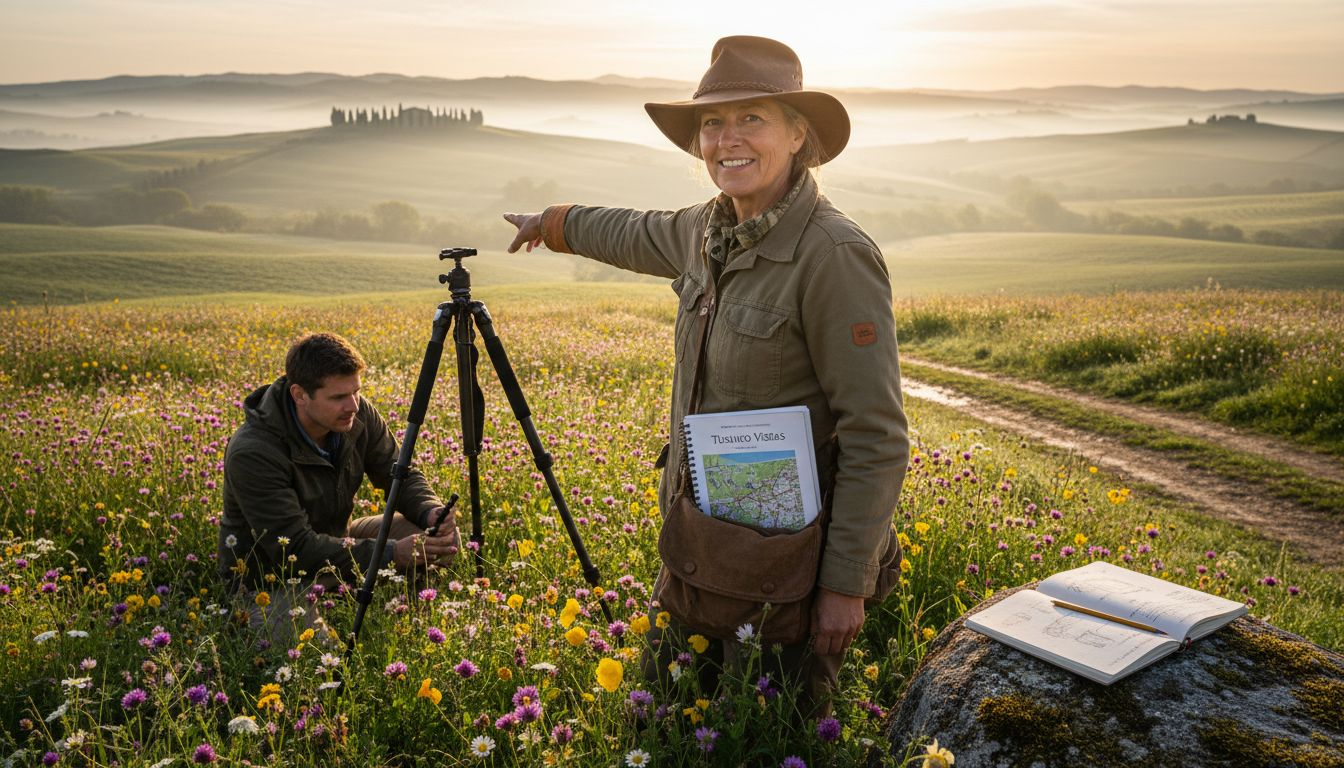
Street photography guides work best if you want to capture candid moments and human stories. They teach you to move confidently through crowds, anticipate decisive moments, and compose naturally within chaotic urban environments.
Cultural storyteller guides appeal to photographers who see images as historical documents. They weave Italian history, architecture, and local traditions into every photograph, deepening your understanding of what you’re shooting.
Technical workshop guides suit you if you’re struggling with camera settings or composition fundamentals. They break down concepts clearly and practice them repeatedly across different locations.
Your guide type should match your current skill level and artistic curiosity—not your Instagram aspirations.
Why Guide Type Matters
A landscape specialist won’t teach you street photography techniques. A street photographer won’t spend time on golden hour positioning. The wrong match wastes your investment and frustrates both you and your guide.
Consider what actually excites you: sweeping mountain light, raw human moments, architectural details, or technical mastery. That answer determines which guide type will transform your trip into genuine skill development.
Pro tip: Ask guides about their teaching style, not just their location expertise—find someone who mentors your specific photography interest, whether that’s landscapes, street scenes, or cultural documentation.
How a photo guide enhances creativity
Creativity isn’t something you’re born with or without. It’s a skill that grows when you’re challenged to see differently, experiment boldly, and receive feedback from someone who understands both art and teaching.
A photo guide accelerates this growth by creating conditions where your creative confidence flourishes. They’re not there to critique your work—they’re there to unlock possibilities you didn’t know existed.
Breaking Through Visual Habits
You probably have comfortable ways of framing scenes. Everyone does. Those habits feel safe because they work. But they also limit your artistic range.
Photo guides push you beyond comfortable patterns by:
- Asking you to photograph the same location three different ways
- Pointing out compositional angles you’d naturally overlook
- Challenging you to shoot in conditions you’d normally avoid
- Showing how light transforms meaning within a single frame
Photography and creative perspective-taking develop together when guided instruction removes technical barriers and encourages artistic risk-taking.
From Technical Mastery to Artistic Confidence
Technical skill matters. Exposure, focus, and composition are foundational. But technical mastery alone doesn’t create compelling images—it just creates technically correct ones.
Guides teach you to move beyond technical correctness into personal expression. They help you understand why certain choices create emotional responses, not just how to make them.
This shift transforms your entire creative process. Suddenly you’re making deliberate choices about light, emotion, and storytelling rather than following rules.
Deepening Visual Literacy
Experiential learning through photography develops visual thinking skills that extend far beyond your Italy trip. You learn to observe details, anticipate moments, and construct narratives through images.
These skills compound. Each location teaches you something. Each photograph becomes a learning experience. By the end of your tour, you’re not just returning home with images—you’re returning with a transformed way of seeing.
The Permission to Experiment
Guides create safe spaces for creative experimentation. You can try unconventional framing, unusual subjects, or risky compositions without feeling self-conscious.
That permission matters more than you might think. When someone you respect validates your creative instincts, you’re more likely to trust them. You experiment more. You take more risks. Those risks lead to your most interesting photographs.
A guide doesn’t make you creative—they remove the obstacles preventing your creativity from emerging.
Feedback That Actually Helps
Most photography feedback falls into two extremes: brutal critique that crushes confidence, or empty praise that teaches nothing. Skilled guides navigate the middle ground.
They identify what’s working in your images, explain specifically why it works, and suggest directions for your next shot. This kind of feedback accelerates your growth because it’s rooted in your actual work, not generic advice.
Pro tip: During your tour, ask your guide why they chose specific locations or lighting conditions—understanding their creative thinking process teaches you more than any composition rule.
Essential responsibilities and expertise
Professional photo guides aren’t improvising. They’re trained professionals balancing multiple complex responsibilities while delivering meaningful creative experiences. Understanding what they actually do reveals why expertise matters.
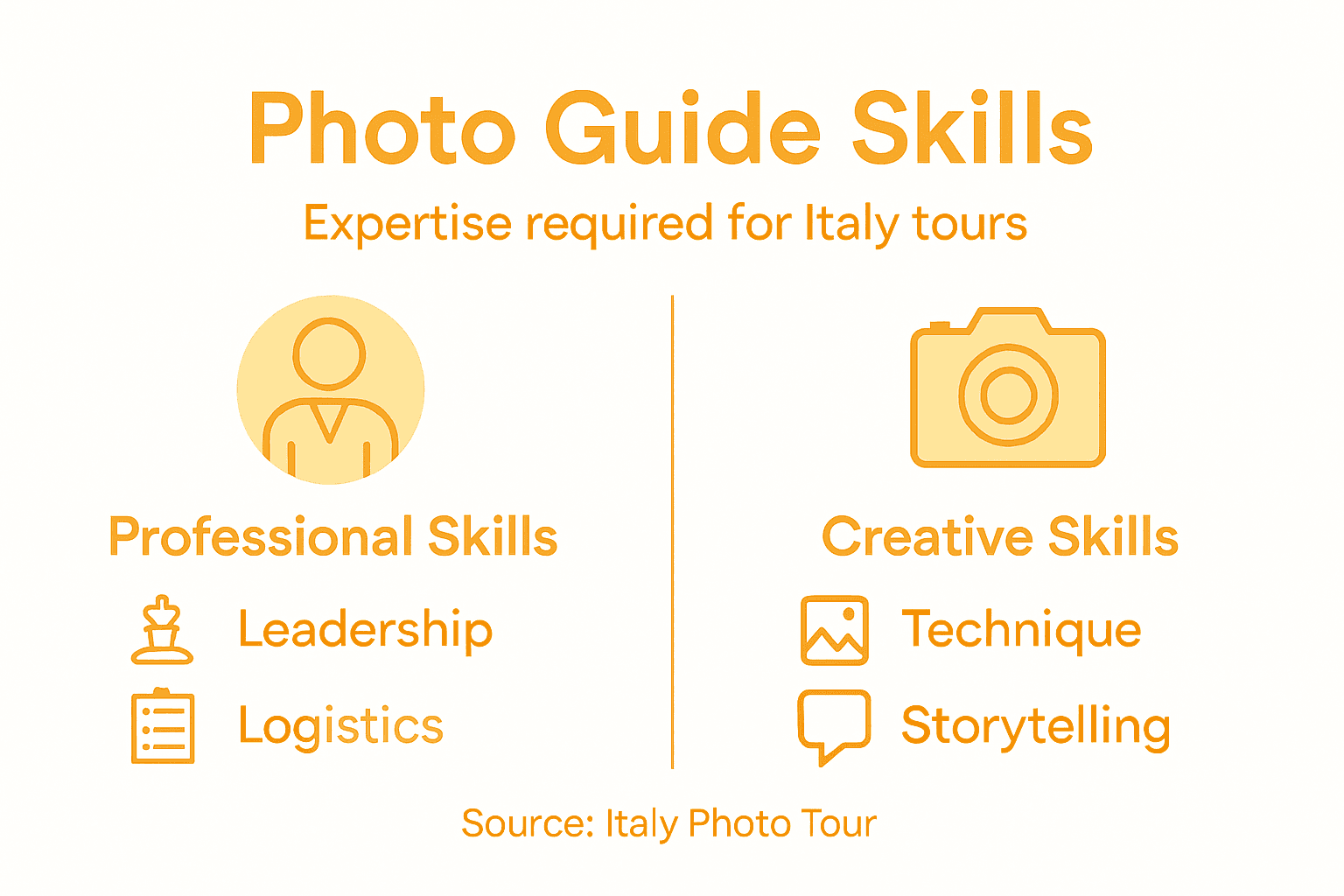
A skilled guide manages logistics, teaches technique, provides cultural context, and adapts in real-time to weather, group dynamics, and unexpected opportunities. That’s a lot happening simultaneously.
Core Responsibilities That Matter
Photo guides carry responsibilities across several interconnected domains:
- Technical instruction: Teaching camera settings, composition principles, and lighting techniques tailored to specific locations
- Cultural education: Explaining historical significance, architectural details, and local stories behind each location
- Group logistics: Managing timing, pacing, safety, and access to optimal photographic spots
- Creative mentorship: Providing feedback, suggesting perspectives, and encouraging artistic risk-taking
- Problem-solving: Adapting plans when weather changes, locations close unexpectedly, or group needs shift
Professional guide qualifications in Italy require comprehensive knowledge of local geography, history, and culture alongside communication skills and safety management.
Technical Photography Expertise
Guides must understand photography deeply. Not just composition theory, but how it applies across changing light conditions, different camera types, and varied skill levels within the same group.
They diagnose common mistakes quickly. A slightly blurred image tells them whether you need faster shutter speed, better stabilization technique, or adjusted focus settings. This diagnostic ability develops through years of teaching.
They also know their locations intimately. They understand seasonal light patterns, crowd dynamics, weather impacts, and alternative spots when primary locations disappoint.
Cultural Knowledge as Creative Foundation
The best photographs tell stories. Stories require context. Guides provide that context—not as dry lectures, but as genuine insight that deepens your emotional connection to what you’re photographing.
When a guide explains why Tuscan farmers built villages on hilltops, suddenly those golden-hour hilltop photographs carry meaning. When they share stories about Venetian architecture, your images transcend pretty postcards and become visual narratives.
Photo guide competencies combine academic knowledge with practical experience across multiple domains.
Adaptive Leadership Skills
Real tours rarely proceed exactly as planned. Weather shifts. Someone struggles with camera settings. A location closes. A group member finds an unexpected gem.
Skilled guides navigate these situations by staying calm, making quick decisions, and keeping the group engaged regardless of obstacles. This adaptive capacity separates competent guides from exceptional ones.
Expertise isn’t about perfection—it’s about knowing how to respond when reality deviates from the plan.
Why Certification and Experience Matter
Licensed guides in Italy meet established standards. They’ve studied. They’ve been tested. They’ve logged significant professional experience.
This matters because you’re trusting them with your time, your creative development, and your safety. That trust is earned through demonstrated competence, not just charm or photography skills.
Pro tip: Before booking, ask guides about their specific training background, how long they’ve been guiding, and which photography concepts they emphasize most—their answers reveal their depth and teaching philosophy.
Risks, costs, and common mistakes
Photo tours aren’t risk-free. Equipment fails. Weather turns unpredictable. Costs can exceed expectations. Understanding potential problems before booking helps you prepare wisely and avoid costly disappointments.
Most issues stem from poor preparation or unrealistic expectations. The good news? Most are preventable with honest planning.
Equipment and Preparation Failures
Common photography tour mistakes include arriving unprepared with inadequate or malfunctioning equipment, which directly impacts your ability to capture quality images and learn effectively.
Here’s what actually happens:
- Dead batteries: You arrive excited, then spend the golden hour charging instead of shooting
- Forgotten memory cards: Suddenly you’re deleting images to make space or skipping shots entirely
- Unfamiliar camera settings: You arrive with a new camera you haven’t practiced with, wasting precious learning time
- Missing filters or lenses: Specialized gear helps but isn’t essential—arriving without it limits creative options
- No weather protection: Rain or intense sun without proper gear means abandoned sessions or damaged equipment
You can’t predict every equipment issue. But you can arrive prepared with backups, charged batteries, and equipment you’ve actually used before.
Weather and Timing Challenges
Light conditions determine everything in photography. You can’t control weather, but many photographers underestimate how drastically it impacts results.
Overcast days eliminate dramatic shadows. Rain cancels outdoor shooting. Unexpected clouds block golden hour. Guides work around these constraints, but you should expect reduced options on suboptimal weather days.
Seasonal timing matters too. Summer brings crowds and harsh midday light. Winter offers soft light but freezing conditions. Spring and fall balance better but require specific research about your chosen locations.
Cost Variations and Hidden Expenses
Guide fees vary significantly based on several factors:
- Guide expertise level: Experienced guides charge more—rightfully so
- Group size: Private tours cost more per person than small group tours
- Duration and intensity: Multi-day workshops cost more than half-day walks
- Location access: Some premium spots require permits or entry fees guides factor into pricing
- Customization: Tailored tours cost more than standard itineraries
Beyond the guide fee, budget for travel, accommodation, meals, and location entry fees. Some photographers spend twice their guide budget on logistics.
To help you prepare for an Italy photo tour, here are important risk factors and tips you should consider:
| Risk/Cost Area | Challenge | Preparation Tip |
|---|---|---|
| Equipment | Battery failure, missing cards | Bring backups and check gear |
| Weather | Unexpected rain or harsh sunlight | Pack weather protection |
| Costs | Hidden fees, permit expenses | Clarify all costs upfront |
| Location | Closed or crowded spots | Research alternative locations |
Location Research Gaps
Arriving without location knowledge wastes time and frustration. Not every famous photo spot remains accessible. Some close for maintenance. Others develop crowds making composition impossible.
Guides handle this, but you still benefit from basic research. Understanding what you’re photographing transforms standard snapshots into intentional images.
Budget for guides as an investment, not an expense—expertise costs less than the lost learning from poor choices.
Realistic Outcome Expectations
You won’t return with professional-quality images after one tour. That’s not failure—that’s reality. Photo tours develop your skills and artistic vision over time, not overnight.
Some photographers expect Instagram-ready results from their first outing. When results disappoint, they blame the guide instead of acknowledging the natural learning curve.
Set realistic expectations: You’ll return with interesting images, genuine technical improvements, and a deeper appreciation for photography. That’s worth the investment.
Pro tip: Research your guide’s cancellation policy and equipment requirements before booking—understanding terms upfront prevents expensive surprises and ensures you arrive genuinely prepared.
Elevate Your Photography Journey with Expert Guidance in Italy
Struggling to break free from common photography myths or unsure how to choose the right approach for your Italy tour? This article highlights the crucial role photo guides play in unlocking your creative potential through personalized technical mentorship, cultural storytelling, and access to hidden gems. Avoid frustrations like poor timing, equipment struggles, or uninspired images by partnering with a guide who understands both your artistic goals and the unique challenges of shooting in Italy.
Discover how Italy Photo Tour offers immersive, customized photo experiences led by professional photographer Mino Di Vita designed precisely to help you master composition, light, and narrative on location. Whether you want landscape mastery in Tuscany or street photography insights in Milan explore our carefully curated options in the Uncategorized Archivi. Don’t miss the chance to transform your trip and visual voice by visiting Italy Photo Tour today and take your photography beyond snapshots into authentic artistic expression.
Frequently Asked Questions
What is the main role of a photo guide?
Photo guides are skilled professionals who teach photography techniques, provide cultural context, and help develop creativity through hands-on mentoring during tours.
How do photo guides enhance my photography skills?
Photo guides offer technical mentorship, creative direction, and local insights that allow you to practice composition, lighting, and storytelling in real-time, significantly improving your skills.
Can anyone benefit from working with a photo guide?
Yes, photo guides specialize in working with photographers of all skill levels, from beginners to advanced amateurs. Your level of curiosity and willingness to learn is more important than your existing skills.
What should I look for in a photo guide?
When selecting a photo guide, consider their teaching approach, expertise in specific photographic techniques, and ability to provide cultural insights that match your photography interests.