

American photographers often feel both inspired and challenged by the breathtaking scenes found across Italy. The magic of natural light can make even the simplest street or countryside view come alive with depth, mood, and color. Mastering the qualities of sunlight—from its direction and intensity to subtle shifts in hue—unlocks a whole new level of creative expression. Light in art shapes perception and emotion, revealing textures and stories that artificial sources simply cannot match.
Table of Contents
- Understanding Light In Artistic Photography
- Types And Qualities Of Light In Photos
- Natural Light’s Impact On Visual Artistry
- Manipulating Light For Creative Expression
- Common Lighting Mistakes And How To Avoid Them
Key Takeaways
| Point | Details |
|---|---|
| The Essence of Light | Light is a crucial tool in photography, influencing emotion and depth. Understanding its properties enhances visual storytelling. |
| Types of Light Sources | Different light sources offer unique creative potentials; Natural Light, Continuous Artificial Light, and Strobe Lights each have distinctive effects. |
| Common Mistakes | Harsh lighting, incorrect color temperature, and improper exposure can diminish an image’s quality. Recognizing these issues is vital for improvement. |
| Mastering Light Manipulation | Effective light manipulation through techniques like Rembrandt and Butterfly lighting transforms ordinary scenes into compelling narratives and enhances emotional impact. |
Understanding Light in Artistic Photography
Light represents the fundamental language of photographic expression, serving as the primary medium through which photographers communicate emotion, depth, and narrative. The interaction between light and shadow dramatically transforms an ordinary scene into a compelling artistic statement, revealing textures, contours, and intricate visual details that might otherwise remain hidden.
Artistic photographers understand that light is not merely an illumination source but a dynamic creative tool with several critical characteristics:
- Directionality: Where light originates determines object definition and mood
- Quality: Soft versus harsh light creates dramatically different visual experiences
- Color Temperature: Warm or cool tones influence emotional perception
- Intensity: Brightness levels shape visual drama and emotional impact
Historically, photographers have developed sophisticated techniques to manipulate light, drawing inspiration from classical art movements. The chiaroscuro technique, originating in Renaissance painting, demonstrates how strategic light placement can create profound visual depth and psychological tension. By understanding these principles, photographers transform simple scenes into powerful visual narratives.
Pro tip: Practice observing light’s behavior in different environments by studying how shadows and highlights interact during various times of day.
Types and Qualities of Light in Photos
Photographic lighting encompasses a rich spectrum of sources and characteristics that fundamentally shape visual storytelling. Photographic lighting comprises diverse techniques that transform ordinary scenes into compelling artistic expressions through strategic illumination and shadow manipulation.
Photographers typically work with three primary light sources, each offering unique creative possibilities:
- Natural Light: Sunlight with its dynamic range and unpredictable qualities
- Continuous Artificial Light: Steady illumination from studio or LED sources
- Strobe Lights: Powerful flash systems providing instantaneous, controlled bursts
Each light source introduces distinct qualities that dramatically influence photographic outcomes. Soft light creates gentle, diffused illumination that minimizes harsh shadows, ideal for portrait photography. Hard light, conversely, generates sharp, defined shadows that add dramatic contrast and emphasize texture and form.
Color temperature plays a crucial role in defining the emotional landscape of an image, with warm tones suggesting intimacy and cool tones evoking distance or melancholy.
Understanding light’s nuanced characteristics requires practiced observation and technical skill. Professional photographers develop an intuitive sense of how light interacts with surfaces, creating depth, revealing textures, and shaping visual narratives through strategic illumination.
Pro tip: Experiment with different light sources at various times of day to develop your understanding of how light transforms visual experiences.
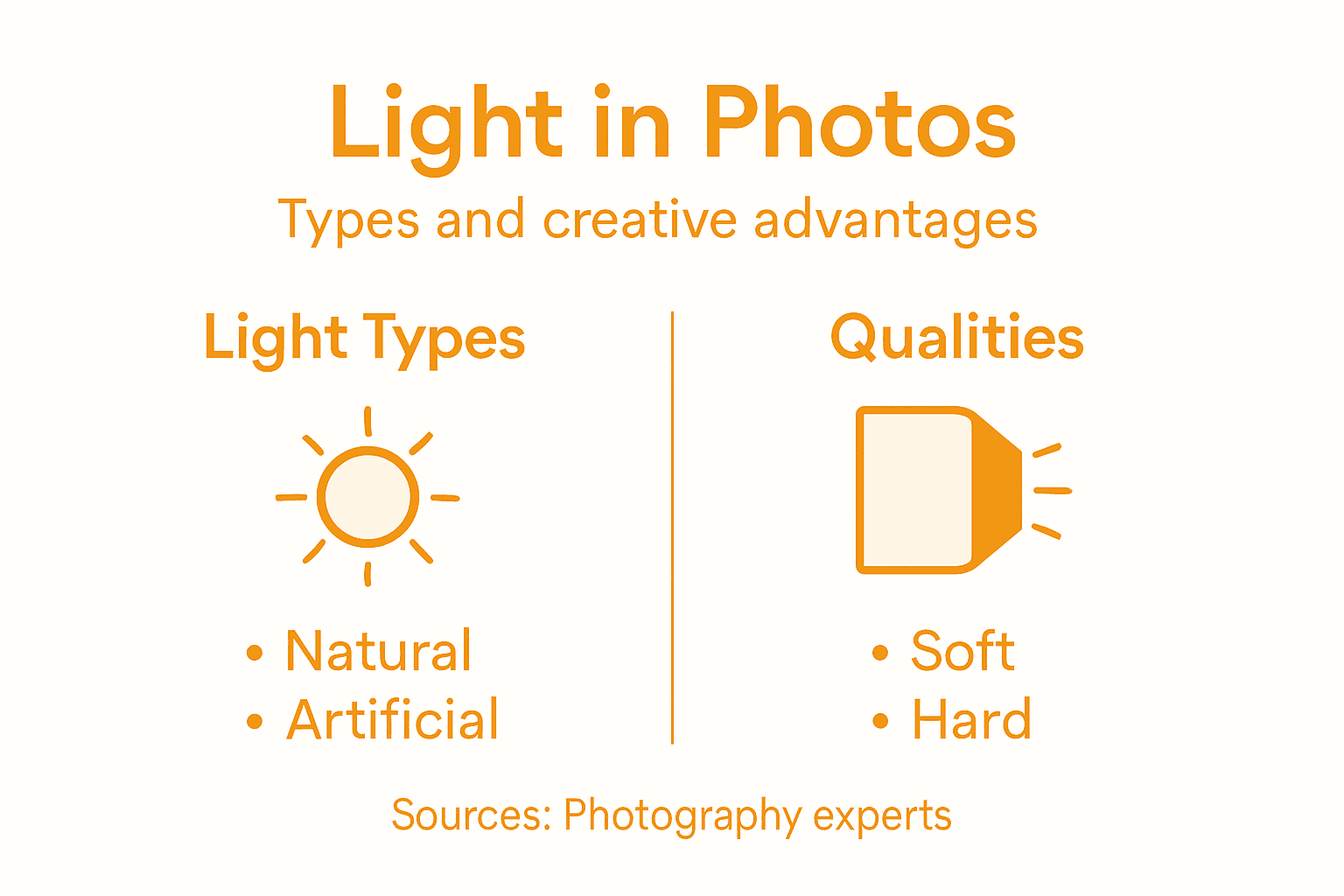
Here’s a quick comparison of primary light sources used in photography:
| Light Source | Creative Advantages | Typical Challenges |
|---|---|---|
| Natural Light | Authentic atmosphere, soft gradients | Unpredictable conditions |
| Continuous Artificial Light | Precise control, consistent output | May require special setup |
| Strobe Lights | Freeze motion, dramatic effects | Complex to balance and sync |
Natural Light’s Impact on Visual Artistry
Natural light fundamentally transforms visual storytelling by creating dynamic interactions between illumination, shadow, and photographic subjects. Its organic, ever-changing qualities make it an irreplaceable tool for photographers seeking to capture authentic emotional landscapes.
Natural light exhibits several distinctive characteristics that profoundly influence artistic composition:
- Directionality: Shifts throughout the day, creating unique angles and intensities
- Color Temperature: Ranges from cool morning blues to warm golden evening hues
- Diffusion: Varies from harsh midday sunlight to soft, gentle morning and evening light
- Atmospheric Interaction: Influenced by weather, humidity, and environmental conditions
Photographers must develop an intuitive understanding of how natural light evolves. Golden hour and blue hour represent particularly magical moments when sunlight creates extraordinary visual dimensions. During these periods, light becomes a transformative medium, softening edges, enhancing textures, and imbuing images with remarkable depth and emotional resonance.
Natural light is not just an illumination source, but a dynamic artistic collaborator that sculpts visual narratives with subtle, profound strokes.
Mastering natural light requires patience, observation, and a willingness to adapt. Professional photographers learn to anticipate light’s behavior, understanding how geographical location, seasonal changes, and time of day dramatically alter visual landscapes.
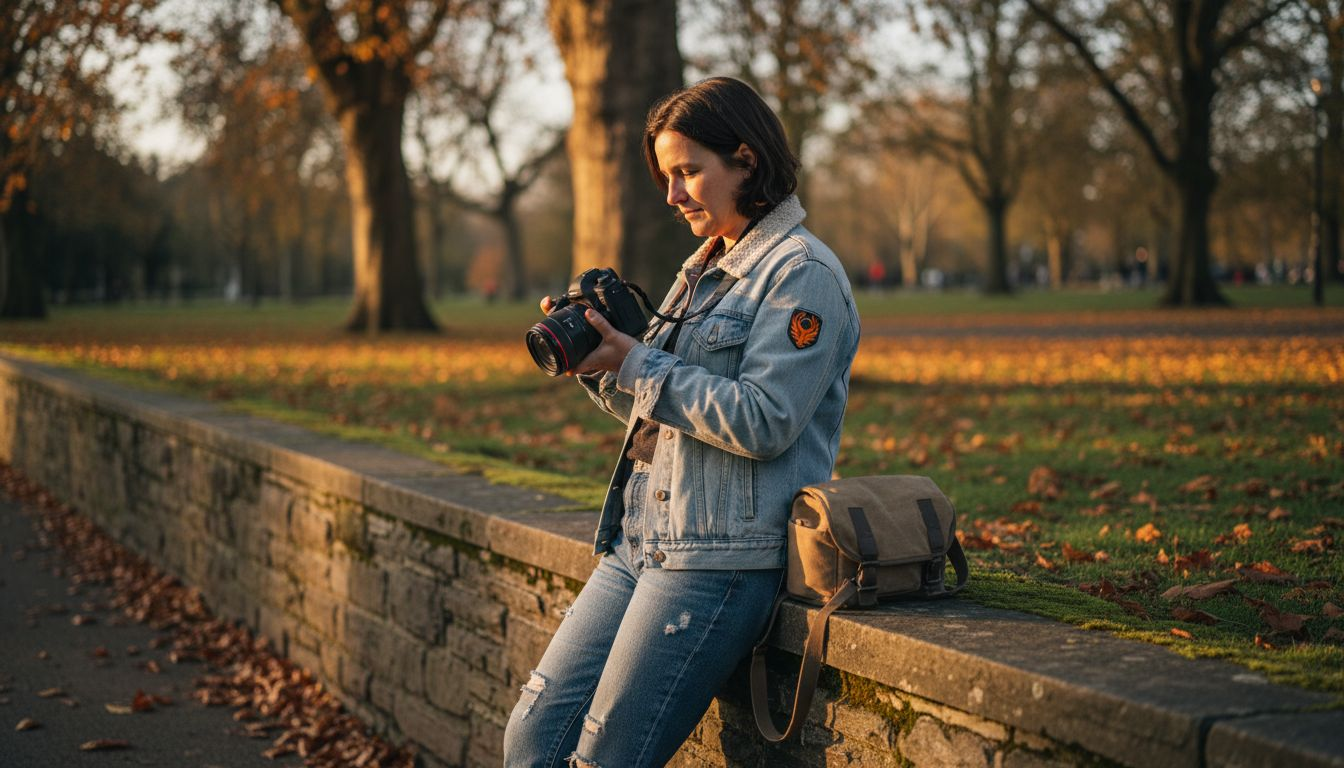
Pro tip: Keep a light journal documenting how natural light changes in your favorite locations, helping you develop a deeper understanding of its nuanced qualities.
Manipulating Light for Creative Expression
Photographers strategically manipulate light as a dynamic artistic medium, transforming ordinary scenes into extraordinary visual narratives. Light becomes more than an illumination source – it emerges as a powerful storytelling tool capable of evoking profound emotional landscapes.
Artistic light manipulation involves several sophisticated techniques:
- Directional Positioning: Controlling light angle to create depth and dimension
- Shadow Sculpting: Using contrast to define form and texture
- Intensity Modulation: Adjusting brightness to guide viewer attention
- Color Temperature Transformation: Shifting emotional tone through light hues
Professional photographers employ specialized lighting techniques that dramatically reshape visual perception. Rembrandt lighting, characterized by its distinctive triangular highlight, creates psychological depth by casting dramatic shadows across subjects. Butterfly lighting produces a symmetrical, ethereal effect ideal for portrait photography, highlighting facial contours with elegant precision.
Light is not merely a technical element but an emotional language that speaks directly to human perception and imagination.
Mastering light manipulation requires understanding its nuanced interactions with environment, subject, and viewer psychology. Each lighting technique represents a deliberate artistic choice, transforming photographic images from mere representations into profound visual experiences.
Pro tip: Practice light manipulation by creating a home studio with adjustable lighting, experimenting with different angles and intensities to develop your artistic vision.
This table summarizes classic lighting techniques and their visual effects:
| Technique | Visual Impact | Best Use Case |
|---|---|---|
| Chiaroscuro | Strong contrast, deep shadows | Dramatic portraits |
| Rembrandt Lighting | Triangular light on the cheek | Artistic, moody imagery |
| Butterfly Lighting | Symmetrical, soft highlights | Flattering headshots |
| Shadow Sculpting | Enhanced texture and depth | Still life, architecture |
Common Lighting Mistakes and How to Avoid Them
Photographers frequently encounter critical lighting errors that can dramatically undermine the quality and emotional impact of their images. Understanding these common pitfalls is the first step toward creating more compelling and professional photographs.
The most prevalent lighting mistakes include:
- Harsh Lighting: Creating unflattering shadows and washing out details
- Incorrect Color Temperature: Producing unnatural skin tones and color casts
- Improper Exposure: Resulting in lost details in highlights or shadows
- Inconsistent Light Positioning: Creating unbalanced or awkward illumination
Overexposure remains one of the most critical technical errors photographers encounter. When light overwhelms the camera’s sensor, intricate details disappear into a wash of white, destroying the nuanced textures and depth that make an image compelling. Conversely, underexposure plunges images into muddy darkness, obscuring important visual information and emotional subtleties.
Mastering light is about understanding its behavior, not just controlling its intensity.
Technical solutions involve developing a sophisticated approach to light management. Professional photographers utilize tools like light meters, histogram analysis, and strategic diffusion techniques to maintain precise control over illumination. Learning to read light’s subtle variations becomes as important as understanding camera settings.
Pro tip: Practice exposure techniques by shooting the same scene at multiple exposure levels, analyzing the results to develop your understanding of light’s complex interactions.
Elevate Your Artistic Photography with Masterful Light Control
Struggling to capture the perfect interplay of light and shadow in your photos? This article highlights how vital understanding light’s directionality, quality, and color temperature is for creating emotional depth and visual storytelling. If you want to move beyond technical basics and embrace light as a creative medium, Italy Photo Tour’s Uncategorized Collection offers inspiring insights and tips from professional photographers who share your passion.

Unlock the full artistic potential of your images by joining specialized guided tours across Italy’s most picturesque locations. Experience firsthand how natural and manipulated light transform iconic scenes in Milan, Tuscany, Venice, and Cinque Terre. Visit Italy Photo Tour and take your photography journey to the next level with expert guidance designed to refine your sensitivity to light and shadow. Don’t wait to start crafting photographs that truly speak to the soul.
Frequently Asked Questions
What are the key characteristics of light in photography?
Light in photography has several critical characteristics, including directionality (where it originates), quality (soft or harsh), color temperature (warm or cool tones), and intensity (brightness levels), all of which shape the emotional perception and visual storytelling in images.
How does natural light influence artistic photography?
Natural light creates dynamic interactions and transforms visual storytelling by affecting directionality, color temperature, diffusion, and atmospheric interaction. Photographers must master these elements to capture authentic emotional landscapes in their images.
What are some common lighting mistakes in photography?
Common lighting mistakes include harsh lighting leading to unflattering shadows, incorrect color temperature causing unnatural skin tones, improper exposure losing details in highlights or shadows, and inconsistent light positioning creating unbalanced illumination.
How can photographers manipulate light for creative expression?
Photographers can manipulate light through techniques like directional positioning to create depth, shadow sculpting for texture, intensity modulation to guide attention, and color temperature transformation to change the emotional tone of an image.