

You might think photography tours are about visiting famous landmarks and snapping postcard-perfect shots. But the most compelling images emerge when you engage deeply with local culture, building trust with communities and capturing stories that transcend scenic beauty. In Italy, where centuries of tradition meet daily life in vibrant streets and quiet villages, cultural immersion travel photography transforms your technical skills into meaningful artistic expression. This guide reveals how culture enriches every frame you capture, turning ordinary tours into transformative creative journeys.
Table of Contents
- Why Culture Matters In Photography Tours In Italy
- How Small, Focused Workshops Enhance Cultural Immersion And Photography Skills
- Balancing Technical Skill With Cultural Respect And Ethical Photography
- Comparing Urban And Nature-Focused Cultural Photo Tours In Italy
- Explore Immersive Cultural Photo Tours In Italy
- Frequently Asked Questions
Key takeaways
| Point | Details |
|---|---|
| Culture shapes narrative | Engaging with local traditions and people creates authentic storytelling opportunities beyond scenic snapshots. |
| Small groups enable depth | Workshops with 7-10 participants provide personalized instruction and intimate access to cultural sites. |
| Ethics matter as much as technique | Balancing technical skills with cultural respect prevents exploitative tourism and produces genuine images. |
| Timing transforms mood | Golden hour shooting and seasonal awareness capture authentic cultural atmosphere rather than harsh midday scenes. |
Why culture matters in photography tours in Italy
Most photographers arrive in Italy chasing iconic views: the Colosseum at sunset, gondolas in Venice, rolling Tuscan hills. These images fill Instagram feeds but rarely tell deeper stories. When you prioritize cultural engagement, your photography shifts from documentation to interpretation.
Building trust with locals allows candid portraits and reveals genuine emotions impossible to capture with rushed interactions. A shopkeeper in Milan’s Navigli district might share stories about his family’s century-old business, giving context that transforms a simple storefront shot into a narrative about tradition surviving modernization. These moments require patience and respect, not just technical prowess.
Venturing beyond tourist hotspots uncovers hidden cultural gems unique to Italy. Small hill towns in Tuscany preserve artisan traditions unchanged for generations. Workshops in these locations let you photograph leather workers, ceramic artists, and cheesemakers practicing crafts passed through families. Your images capture not just hands shaping clay but entire cultural ecosystems at risk of disappearing.
“The interplay between natural light and historic architecture frames cultural context in ways artificial lighting never achieves, revealing textures and moods that define Italian daily life.”
Observing local rhythms slows your photography to match authentic everyday life. Italians structure days around meals, siestas, and evening passeggiata strolls. Shooting during these natural cycles produces images reflecting true cultural patterns rather than manufactured moments. You capture families gathering for Sunday lunch, elderly men playing cards in piazzas, children walking home from school through medieval streets.
Structuring photos as narratives with beginning, middle, and end transforms disconnected shots into cohesive stories. Document a baker’s morning: flour-dusted hands kneading dough at dawn, loaves rising in traditional ovens, customers selecting bread for family dinners. This sequence communicates cultural values around food, craftsmanship, and community far more powerfully than isolated pretty pictures.
Key elements that elevate cultural photography include:
- Engaging subjects in brief conversations before shooting to establish rapport and permission
- Researching local festivals and traditions to anticipate meaningful moments
- Learning basic Italian phrases showing respect for the culture you’re documenting
- Spending multiple days in single locations rather than rushing through itineraries
- Revisiting subjects to build relationships and capture evolving stories
How small, focused workshops enhance cultural immersion and photography skills
Large tour groups create barriers between photographers and local communities. When 30 people descend on a small village, residents retreat or perform for cameras rather than continuing authentic activities. Workshops limiting groups to 7-10 participants enable personalized instruction while maintaining intimate access to cultural sites.
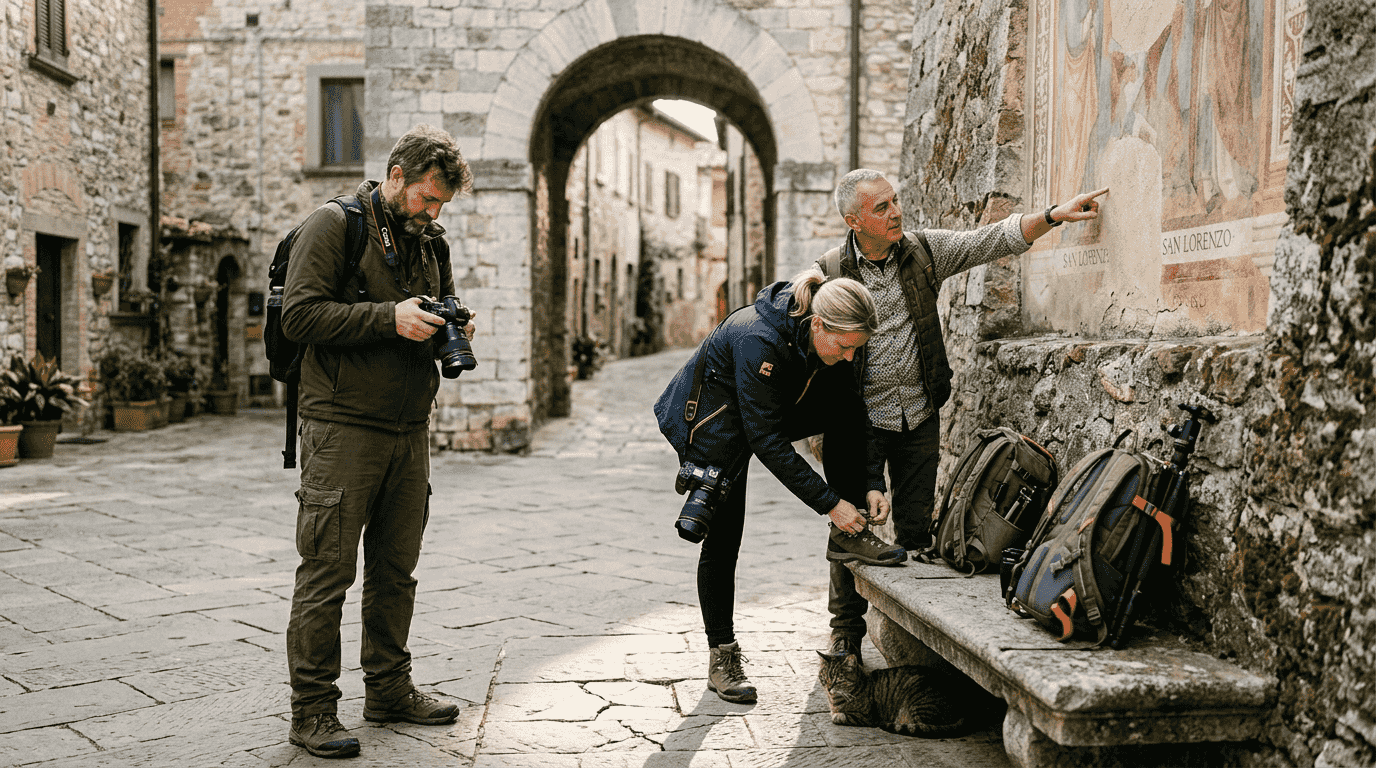
Small group dynamics foster community among participants, creating supportive environments where photographers share techniques and inspire each other. You learn not just from instructors but from peers approaching subjects differently. A landscape specialist might show you composition techniques applicable to street photography. A portrait enthusiast could demonstrate lighting approaches useful for architectural shots.
Limited size enhances access to locals and special cultural sites otherwise closed to large groups. Private workshops in artisan studios, family-run vineyards, or historic homes become possible when you’re not managing crowds. These exclusive experiences let you photograph processes and spaces tourists never see, producing unique images impossible to replicate on standard tours.
Focused instruction improves human storytelling in Italy photos by addressing individual skill gaps. Instructors observe your shooting style, identify technical weaknesses, and provide targeted feedback. If you struggle with composition, they’ll work specifically on framing and perspective. If you nail technical aspects but miss emotional moments, they’ll help you anticipate and capture genuine expressions.
Personal attention helps photographers balance technical and cultural aspects simultaneously. You might master exposure settings but fail to notice when subjects feel uncomfortable. Instructors guide you in reading body language, recognizing cultural boundaries, and adjusting your approach to maintain ethical standards while pursuing compelling images. This dual focus prevents technically perfect photos that feel hollow or exploitative.
Benefits of small workshop formats include:
- Direct feedback on your images from professional photographers familiar with Italian culture
- Opportunities to revisit locations multiple times to refine techniques and build local relationships
- Flexible schedules adapting to weather, light conditions, and spontaneous cultural events
- Shared meals and accommodations fostering deeper discussions about photography and culture
- Post-tour support through online communities where participants continue learning together
Pro Tip: Choose photography tours Italy emphasizing small groups and cultural access over those promising to visit maximum locations in minimum time, as depth always produces better images than breadth.
Balancing technical skill with cultural respect and ethical photography
Technical excellence means nothing if your images exploit subjects or misrepresent cultures. Avoiding midday harsh light by shooting during golden hours improves image quality while respecting the natural rhythms when locals are most comfortable being photographed. Early morning and late afternoon light creates softer, warmer tones that enhance cultural mood rather than flattening scenes with overhead sun.
Ethical photography means respecting subjects and avoiding exploitative images that reduce people to exotic props. Always ask permission before photographing individuals, especially in close-up portraits. Learn to recognize when someone agrees out of politeness versus genuine comfort. If language barriers exist, use gestures showing your camera and waiting for clear consent signals.
Balancing technical skills with awareness of cultural sensitivities prevents offensive mistakes. Some Italian communities have specific beliefs about photography, particularly around religious sites or private family moments. Research local customs before shooting. When uncertain, observe how residents behave and follow their lead rather than assuming tourist privileges.
Adapting shooting plans to weather and seasonal changes produces authentic images rather than generic postcards. Fog rolling through Tuscan valleys, rain glistening on Roman cobblestones, snow dusting medieval towers all communicate genuine Italian experiences. Don’t fight conditions trying to recreate idealized images. Embrace imperfection and spontaneity that reflect real places and moments.
“Slowing your shooting pace to truly observe subjects and environments reveals deeper stories invisible when rushing to capture maximum frames, transforming your role from tourist with camera to visual storyteller.”
Best practices for maintaining ethics and quality in cultural photography:
- Spend time in locations without your camera to understand rhythms and build rapport before shooting
- Show subjects their portraits and offer to send copies, creating reciprocal relationships rather than extractive ones
- Avoid photographing vulnerable populations like homeless individuals or children without explicit guardian permission
- Research cultural taboos around photography in specific regions and religious contexts
- Consider how your images might be perceived by subjects and their communities, not just external audiences
- Compensate subjects fairly when appropriate, especially if photographing work processes or private spaces
- Delete images if subjects express discomfort after shooting, prioritizing their dignity over your portfolio
Pro Tip: Practice urban photography tips Italy by observing street scenes for 15 minutes before raising your camera, allowing you to identify genuine moments and anticipate actions rather than reacting randomly to movement.
Developing cultural photography ideas Italy requires combining technical knowledge with emotional intelligence and cultural awareness, skills developed through practice and guidance from experienced photographers familiar with Italian communities.
Comparing urban and nature-focused cultural photo tours in Italy
Urban tours immerse you in architectural heritage, street life, and cultural landmarks within cities like Milan, Venice, Florence, and Rome. These environments offer dynamic scenes with local vendors, outdoor markets, historic buildings, and diverse populations creating constant visual opportunities. You capture layers of history visible in Renaissance facades, modern street art, and contemporary Italian life unfolding against ancient backdrops.
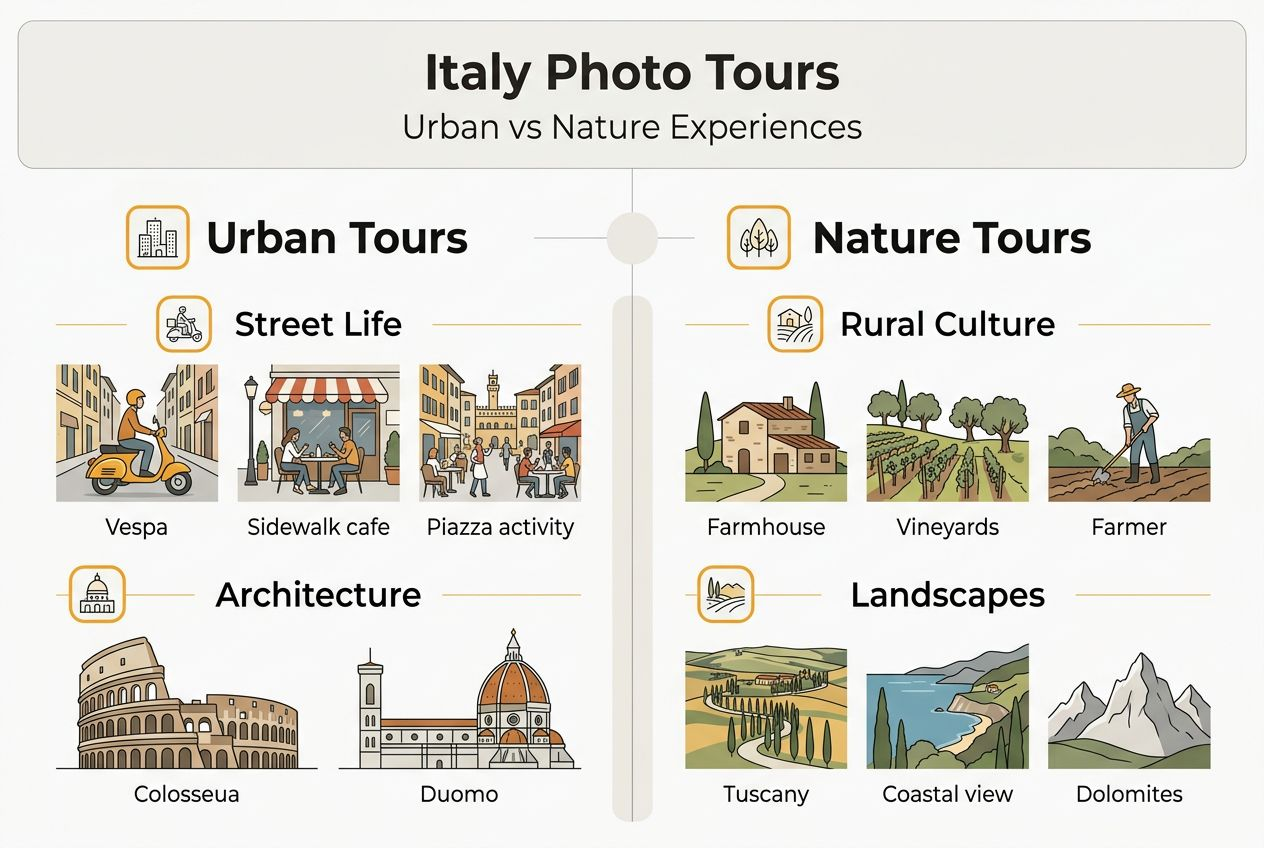
Nature-focused tours highlight rural traditions, agricultural landscapes, and artisan crafts in mountain or countryside areas. Regions like Tuscany preserve traditional farming methods, seasonal harvest rituals, and village festivals maintaining centuries-old customs. These settings emphasize natural rhythms, slower paces, and quieter cultural immersion compared to urban energy.
Nature photography tours in locations like Tuscany contrast sharply with urban cultural experiences but still embed local traditions through agricultural practices, artisan workshops, and village life. Both tour types offer authentic cultural engagement, just in different contexts requiring adjusted photographic approaches.
| Aspect | Urban Tours | Nature-Focused Tours |
|---|---|---|
| Cultural Focus | Architecture, street life, markets, contemporary culture | Rural traditions, agriculture, artisan crafts, village festivals |
| Photographic Opportunities | Dynamic street scenes, diverse subjects, layered history | Landscapes, seasonal changes, traditional practices, quieter moments |
| Typical Group Size | 7-10 for walkable access | 6-8 for remote location logistics |
| Pace and Energy | Fast-paced, high visual stimulation | Slower, contemplative, rhythmic |
| Light Considerations | Golden hour around buildings, shadows in narrow streets | Expansive skies, rolling terrain, dramatic weather |
| Cultural Access | Cafes, shops, public spaces, street performers | Private farms, artisan studios, family homes |
Private tours offer more customization versus group experiences, with tradeoffs in cost and social interaction. Solo or couple bookings allow complete flexibility in schedule, locations, and shooting focus. You might spend an entire day photographing a single subject if inspiration strikes. However, private tours cost significantly more and lack the creative energy and peer learning that group dynamics provide.
Choosing between tour types depends on personal artistic goals and cultural interests:
- Select urban tours if you’re drawn to human interaction, architectural photography, and fast-paced environments
- Choose nature-focused experiences for landscape photography, slower cultural immersion, and seasonal documentation
- Consider Milan photo tour options combining urban culture with nearby countryside for diverse experiences
- Evaluate whether you prefer constant visual stimulation or contemplative shooting with fewer but deeper subjects
- Match tour timing to seasonal events like harvest festivals, religious celebrations, or specific light conditions
Both tour types can suffer from over-commercialization when operators prioritize volume over quality. Research providers emphasizing small groups, local partnerships, and cultural education rather than those promising to visit maximum sites. Authentic experiences require time, access, and relationships that rushed itineraries cannot provide.
Explore immersive cultural photo tours in Italy
Ready to transform your photography through genuine cultural engagement? Italy Photo Tour offers small, curated groups providing personalized and authentic cultural photography experiences across Italy’s most compelling locations. Expert instructors guide artistic and technical skill development aligned with cultural storytelling, helping you capture images that resonate with emotional depth and narrative power.
Our photography tours Italy programs provide access to hidden locations and meaningful local interactions beyond typical tourist spots. You’ll photograph in artisan workshops, family-owned vineyards, historic neighborhoods, and rural villages where traditions thrive unchanged. Tours include accommodations and meals fostering community and immersive learning, creating environments where creativity flourishes through shared experiences and cultural discovery.
“Joining a culturally immersive photo tour doesn’t just improve your technical skills. It fundamentally changes how you see, transforming you from someone who takes pictures into a photographer who tells stories.”
Explore cultural immersion travel photography opportunities designed for amateur and enthusiast photographers seeking authentic artistic growth. Limited group sizes ensure personalized attention while maintaining the intimate access that makes meaningful cultural photography possible.
Frequently asked questions
How can I connect with locals during photo tours?
Start by learning basic Italian greetings and phrases showing respect for the culture. Spend time in locations without your camera first, observing daily rhythms and making eye contact with potential subjects. Always ask permission before photographing people, and show genuine interest in their stories beyond just capturing images.
What group size is best for immersive cultural photography experiences?
Groups of 7-10 participants provide the ideal balance between personalized instruction and community learning. This size allows intimate access to cultural sites and local interactions while maintaining enough diversity for creative inspiration. Larger groups create barriers with communities, while very small groups may lack dynamic peer learning.
When is the best time of day to shoot culturally rich photographs?
Golden hours around sunrise and sunset provide soft, warm light that enhances cultural mood and reveals texture in architecture and landscapes. Early morning captures daily routines as communities wake, while late afternoon shows evening rituals like passeggiata strolls. Avoid harsh midday light that flattens scenes and creates unflattering shadows on subjects.
How do I avoid ethical issues when photographing people and cultures?
Always obtain clear permission before photographing individuals, especially in portraits. Research cultural taboos around photography in specific regions. Show subjects their images and offer to send copies, creating reciprocal relationships. Delete photos if subjects express discomfort, prioritizing their dignity over your portfolio. Compensate subjects fairly when photographing private spaces or work processes.
What are the main differences between urban and nature-focused photo tours in Italy?
Urban tours emphasize architecture, street life, and contemporary culture in fast-paced city environments with constant visual stimulation. Nature-focused tours highlight rural traditions, agricultural landscapes, and artisan crafts in countryside settings with slower, contemplative rhythms. Both offer authentic cultural engagement but require different photographic approaches and appeal to different artistic interests.