

TL;DR:
- Photographic craftsmanship involves technical mastery throughout all photography stages.
- Skillful control of exposure, composition, and timing elevates Italy’s scenic beauty.
- Developing craft frees creativity, enabling more impactful and emotionally resonant images.
Many photographers believe that a great image is born purely from inspiration, a spark of creativity that arrives like morning light over the Venetian lagoon. Yet craftsmanship distinguishes technical mastery from pure artistic vision, and it is this deliberate skill that transforms a fleeting moment into a photograph worth cherishing. Italy, with its kaleidoscope of landscapes, ancient streets, and luminous skies, offers an extraordinary stage for developing that craftsmanship. This guide reveals what photographic craftsmanship truly means, why it matters deeply for anyone photographing Italy’s stories, and how you can cultivate it with intention and joy.
Table of Contents
- Defining photographic craftsmanship
- Key components of craftsmanship in photography
- Craftsmanship in action: Examples from Italy
- Sharpening your craftsmanship: Building skill and feedback loops
- Why technical skill unlocks creativity in Italian photography
- Take your craft further with immersive Italy photo experiences
- Frequently asked questions
Key Takeaways
| Point | Details |
|---|---|
| Craftsmanship defined | Photographic craftsmanship is about technical skill and intentional choices at every step of image-making. |
| Foundation for creativity | Mastering the craft unlocks freedom for creative storytelling, especially in visually rich locations like Italy. |
| Continuous practice matters | Regular practice and feedback strengthen craftsmanship more than talent alone. |
| Application in Italy | Applying craftsmanship to Italian scenes brings out culture, atmosphere, and unique local stories. |
Defining photographic craftsmanship
To move from misconception to understanding, it is important to start by defining exactly what photographic craftsmanship entails. At its heart, photographic craftsmanship is the technical mastery and skill applied in all stages of photography, from the moment you raise the camera to your eye, through the careful choices you make in post-processing, all the way to the final print you hold in your hands.
Think of it this way: craft is the method, the deliberate process, the set of tools you command with confidence. Art, on the other hand, is the vision, the message, the feeling you wish to leave in the viewer’s heart. Both are vital. A photograph with breathtaking artistic vision but poor technical execution will always fall short of its potential. Equally, a technically perfect image without a soul will feel cold and forgettable.
“Craft without vision is empty, and vision without craft is mute. The two must speak together to create something truly memorable.”
This balance is especially relevant for those drawn to landscape photography in Italy, where the sheer beauty of the scenery can tempt photographers to simply point and shoot. Italy’s light is generous, yes, but it rewards those who know how to receive it.
The table below illustrates the distinction clearly:
| Dimension | Craft (technical) | Art (vision) |
|---|---|---|
| Focus | Exposure, focus, composition | Story, emotion, message |
| Tools | Camera settings, lenses, editing | Intuition, observation, creativity |
| Outcome | Technical precision | Emotional resonance |
| Development | Practice and study | Reflection and exploration |
| Role in photography | Foundation | Expression |
Craft builds the house. Art decides what lives inside it. When you photograph the terracotta rooftops of Siena or the shimmering canals of Venice, your craftsmanship is the quiet architecture behind every image that moves someone.
Key components of craftsmanship in photography
Now that the core concept is clear, let’s unpack the essential elements that define real photographic craftsmanship. Craftsmanship covers technical skills in exposure, composition, and post-processing, and each of these deserves genuine attention.
Exposure control is perhaps the most fundamental. Understanding how aperture, shutter speed, and ISO work together allows you to paint with light rather than simply record it. In Italy, where the afternoon sun can bleach a Tuscan hillside into whiteness, knowing how to expose for shadow and highlight simultaneously is a skill that separates a snapshot from a story.
Composition shapes how the viewer’s eye travels through your frame. Structure, balance, and visual rhythm are not rigid rules but flexible tools. The colonnaded streets of Bologna or the layered terraces of Cinque Terre offer natural leading lines and geometric harmony waiting to be discovered.
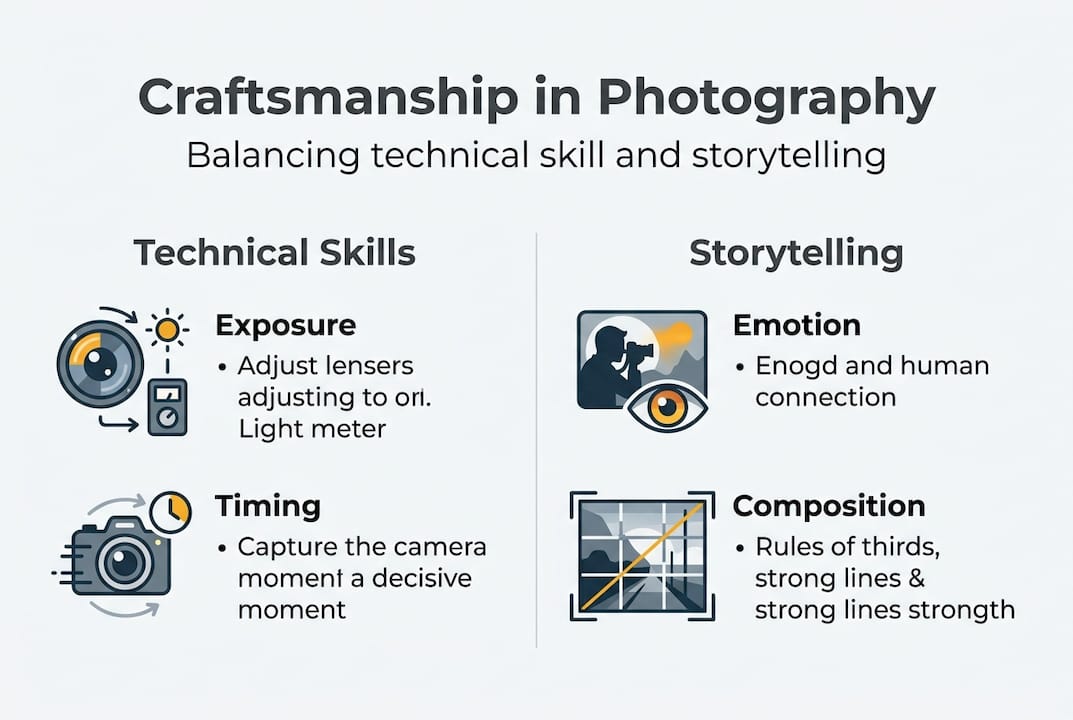
Timing is the element that many amateurs underestimate. Italy’s light shifts with breathtaking speed. The golden warmth that bathes a Florentine piazza at 6 a.m. is gone by 8 a.m. Waiting, watching, and anticipating are craftsmanship skills just as much as any camera setting. Explore Italy landscape photography tips to deepen your understanding of seasonal and daily light patterns.
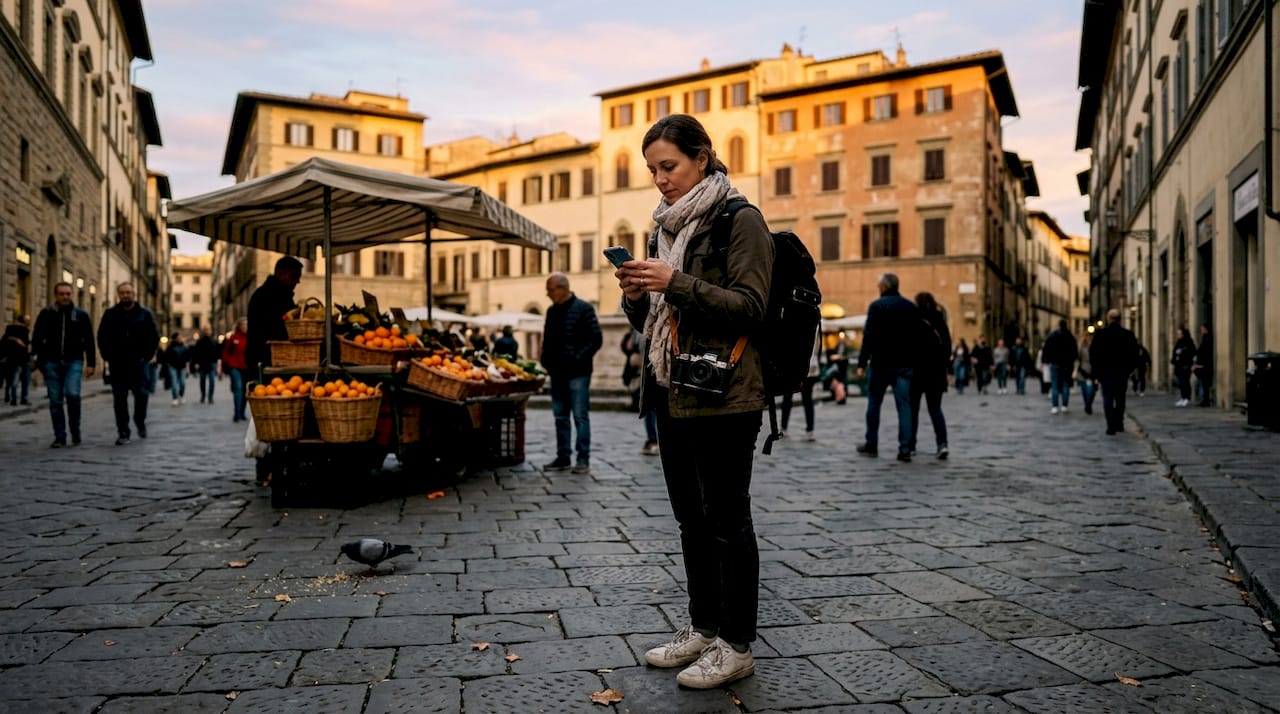
Attention to detail means noticing what is in the background, what distracts the eye, what small gesture from a local vendor completes a scene. And post-processing is the darkroom of the modern photographer, where tonal balance, color harmony, and sharpness are refined. For a wealth of inspiring Italian landscape photo ideas, consider how each of these elements plays a role in every image you admire.
Pro Tip: Spend time studying how Italy’s light changes across seasons and times of day. Build a personal log of locations and lighting conditions, then revisit them with different settings. This kind of deliberate practice sharpens your natural light skills Italy far more effectively than any single workshop.
Craftsmanship in action: Examples from Italy
Understanding the building blocks is vital. Now, see how these concepts come to life in Italian settings. Deliberate technical decisions make images stand out, especially in travel and landscape contexts where the environment is rich but unpredictable.
Consider Venice at sunrise. Here is how craftsmanship shapes each decision:
- Arrive before dawn to assess the light direction and identify reflections on the water.
- Set a low ISO and a slightly slower shutter speed to render the canal’s surface with silky smoothness.
- Choose a wide aperture to separate a gondola from a softly glowing background.
- Frame using the curve of a bridge as a natural leading line into the image.
- In post-processing, gently lift the shadows to reveal detail in the archways without losing the mood.
Each of these steps is a craftsmanship choice. None of them require genius. They require knowledge, patience, and practice. The same logic applies to Italy landmarks photo tips, whether you are photographing the Colosseum at dusk or a shepherd’s path through the Val d’Orcia.
The table below compares what happens when craftsmanship is applied versus when it is skipped:
| Technical area | Snapshot result | Crafted photo result |
|---|---|---|
| Exposure | Blown highlights or muddy shadows | Balanced tonal range with mood |
| Composition | Subject centered, background cluttered | Intentional framing, clean story |
| Timing | Harsh midday light | Soft golden or blue hour glow |
| Post-processing | Flat, unedited file | Refined tones, cohesive atmosphere |
Common pitfalls when skipping craft include relying on auto mode in complex lighting, ignoring distracting backgrounds, and neglecting the editing stage entirely. For a fuller picture of how to photograph Italy with intention, it helps to study both the technical and the cultural context of each location. Understanding Italian photography styles also opens your eye to how local photographers interpret the same scenes you are standing in front of.
Sharpening your craftsmanship: Building skill and feedback loops
With inspiration in mind, here’s how to transform your enthusiasm into consistent improvement. Combining deliberate practice with an understanding of both craft and vision enhances results in ways that inspiration alone never can.
Here are practical steps to build your craftsmanship steadily:
- Study images you admire. Analyze what makes them work technically. Look at the exposure, the light direction, the compositional choices. Ask yourself what you would have done differently.
- Experiment systematically. Change one variable at a time. Shoot the same Venetian doorway at three different exposures and compare the results.
- Seek honest critique. Share your work with fellow photographers or a mentor. Feedback reveals blind spots you cannot see alone.
- Revisit locations. Italy’s diversity rewards return visits. The same Tuscan valley looks entirely different in October fog versus June sunshine.
- Build a personal checklist. Use an Italy landscape photography checklist to ensure you are covering every technical consideration before you press the shutter.
Building practical routines is equally important. Dedicate one session each week to a single technical skill, whether that is mastering manual focus in low light or practicing exposure bracketing in high-contrast scenes.
Pro Tip: Create a mini-project around a single Italian location. Photograph Rome’s alleys at dawn, midday, and dusk over several days. This focused repetition accelerates learning faster than scattered shooting across many locations. It also teaches you to capture Italy’s atmospheric beauty by learning how mood shifts with the light.
Embracing feedback and iteration is not a sign of weakness. It is the mark of a serious photographer. Each critique is a gift that pushes your craft forward.
Why technical skill unlocks creativity in Italian photography
After exploring ways to build your craft, let’s consider why technique is the real secret to unforgettable Italian imagery. Many amateurs worry that focusing on technique will make their photography feel mechanical, as though thinking too hard about settings will drain the joy from the moment. This fear is understandable, but it is also mistaken.
Craftsmanship provides the foundation for artistic expression, not a barrier to it. When your technical decisions become second nature, your mind is freed to focus entirely on the story unfolding before you. You stop worrying about whether the exposure is right and start noticing the way an elderly fisherman’s hands catch the morning light in Chioggia.
Italy’s complexity and beauty reward those who know their craft. The country offers an almost overwhelming richness of visual material, and without technical control, that richness can feel paralyzing. With it, every corner becomes an invitation. The real question is not whether to learn technique, but how quickly you want to feel free within it. Understanding why photograph Italian landscapes for their artistic impact begins with this honest reckoning: technique is not the enemy of creativity. It is the very thing that sets creativity free.
Take your craft further with immersive Italy photo experiences
Ready to apply and build on what you’ve learned? Here’s how to advance your craft in the heart of Italy.
There is no substitute for photographing real places with real guidance beside you. Italy Photo Tour offers hands-on photography tours Italy designed specifically for enthusiasts who want to grow their technical skills while immersing themselves in Italy’s extraordinary visual culture. Led by professional photographer Mino Di Vita, each experience places you in locations where light, story, and craftsmanship converge naturally.
Whether you are drawn to Venice’s shimmering canals, Tuscany’s golden hills, or Milan’s layered urban scenes, these tours offer the kind of experiential learning that no tutorial can replicate. Discover what we do and find the experience that speaks to your creative vision.
Frequently asked questions
What exactly is photographic craftsmanship?
Photographic craftsmanship involves technical mastery from exposure to print, encompassing every intentional decision a photographer makes to shape the final image with skill and control.
How can I practice photographic craftsmanship in Italy?
Craftsmanship means applying deliberate skill in all photography stages, so focus on exposure, composition, timing, and post-processing across Italy’s diverse scenes, and actively seek critique to accelerate your growth.
Is craftsmanship more important than artistic vision?
Both craft and art are vital for memorable photos. Craftsmanship gives your images a strong technical foundation, while artistic vision breathes personal meaning and emotion into every frame.