

Bold declaration. Capturing natural light is what takes photography from ordinary snapshots to unforgettable Italian memories. For American photographers eager to improve their skills, understanding how sunlight transforms everything from Tuscan hills to Roman ruins is key. This guide breaks down the essentials of natural light in photography, offering practical ways to read changing environmental conditions and use sunlight for richer, more expressive images while exploring Italy.
Table of Contents
- Defining Natural Light In Photography
- Types Of Natural Light And Their Qualities
- Impact Of Light Direction And Time Of Day
- Techniques For Harnessing Light In Italy
- Common Challenges And How To Avoid Them
Key Takeaways
| Point | Details |
|---|---|
| Understanding Natural Light | Natural light is essential in photography, transforming scenes into compelling narratives influenced by time of day and environmental conditions. |
| Light Qualities | Key dimensions such as intensity, color temperature, direction, and diffusion affect how light interacts with subjects, impacting image quality. |
| Mastering Light Techniques | Photographers can enhance their work by employing techniques like golden hour positioning and shadow management to optimize light effects. |
| Strategic Planning | Anticipating light changes and preparing for common challenges allows photographers to adapt and capture stunning imagery in varying conditions. |
Defining Natural Light in Photography
Natural light is the foundational element that transforms photography from a technical skill to an art form, especially when capturing the rich visual landscapes of Italy. Understanding light’s dynamic qualities reveals how photographers can harness sunlight to create compelling visual narratives.
At its essence, natural light refers to illumination provided directly by the sun or ambient environmental sources, without artificial intervention. These light sources are constantly changing, influenced by factors like time of day, weather conditions, and geographical location. Professional photographers understand that natural light isn’t static but a living, breathing canvas that shifts moment to moment.
The qualities of natural light can be broken down into several critical components:
- Color Temperature: Ranges from warm golden tones during sunrise/sunset to cool blue hues during midday
- Direction: Determines shadows, highlights, and overall image depth
- Intensity: Impacts image brightness, contrast, and emotional mood
- Diffusion: Affects softness and harshness of light across a scene
Mastering natural light requires keen observation and technical understanding. Photographers must learn to read environmental conditions, anticipate light shifts, and position themselves strategically to capture the most evocative moments.
Natural light transforms ordinary scenes into extraordinary visual stories, revealing the intricate dance between environment and perception.
Pro tip: Practice observing light qualities during different times of day, noting how subtle changes dramatically impact photographic compositions.
Types of Natural Light and Their Qualities
Photographers exploring the rich landscapes of Italy quickly discover that natural light is far more complex than a simple illumination source. Unique qualities of natural light reveal an intricate interplay of environmental factors that can dramatically transform visual storytelling.
Natural light can be categorized into distinct types based on time of day and atmospheric conditions, each offering unique photographic opportunities:
- Morning Light: Soft, gentle illumination with warm golden tones
- Midday Light: Bright, harsh sunlight creating strong, defined shadows
- Evening Light: Warm, dramatic lighting with longer, more pronounced shadows
- Cloudy Conditions: Diffused, even light that minimizes harsh shadows
The qualities of natural light encompass four critical dimensions that photographers must understand and manipulate:
- Intensity: The amount of light available, directly impacting exposure
- Color Temperature: Ranging from warm golden hues to cool blue tones
- Direction: Determining shadow placement and image depth
- Diffusion: Controlling the softness or harshness of light across a scene
Natural light is a dynamic canvas, constantly shifting and revealing new photographic possibilities with each passing moment.
Mastering these light qualities requires patience, observation, and a deep understanding of how environmental conditions interact with visual perception. Italian landscapes, with their diverse terrains and microclimates, offer photographers an extraordinary laboratory for exploring light’s nuanced expressions.
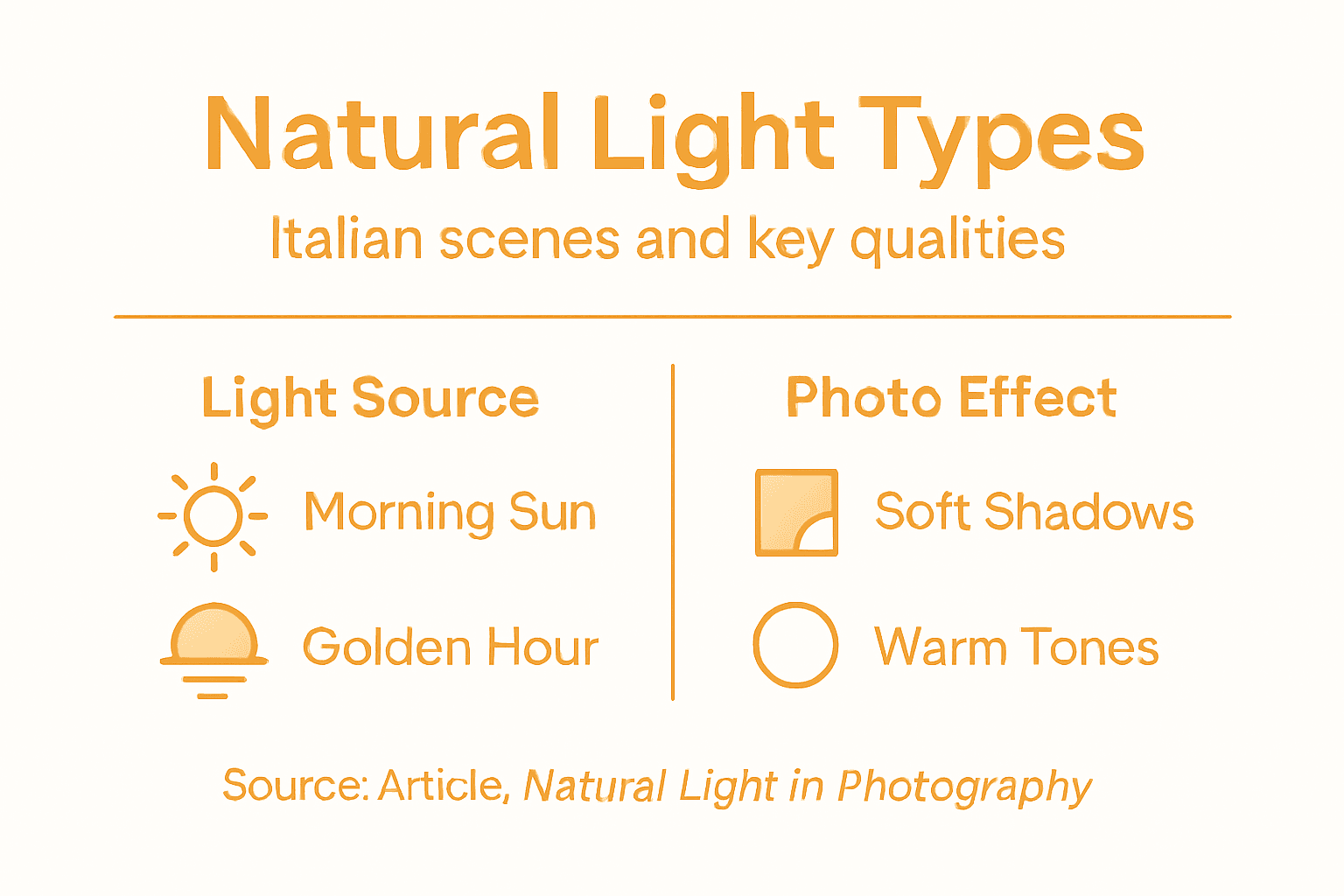
Here’s a reference table summarizing how time of day affects natural light for photographers:
| Time of Day | Typical Light Quality | Common Photographic Effect | Recommended Uses |
|---|---|---|---|
| Morning | Soft, warm, gentle | Subtle colors, flattering tones | Portraits, landscapes |
| Midday | Bright, harsh, intense | Strong shadows, high contrast | Architecture, street scenes |
| Evening | Warm, dramatic, textured | Long shadows, vibrant hues | Scenery, golden hour shots |
| Cloudy | Diffused, even, muted | Minimal contrast, soft details | Macro, portraits |
Pro tip: Experiment with different times of day and weather conditions, tracking how light qualities transform the same landscape into multiple unique visual narratives.
Impact of Light Direction and Time of Day
The magic of photographic storytelling lies in understanding how light direction transforms visual narratives%20(z-lib.org).pdf). In the context of Italian landscapes, light becomes a dynamic painter, sculpting scenes with remarkable precision and emotional depth.
Photographers recognize four primary light directions that dramatically influence image composition:
- Front Lighting: Illuminates subjects directly, minimizing shadows and creating flat, even tones
- Side Lighting: Adds texture and dimension by casting dramatic shadows
- Backlighting: Creates silhouettes and halos, adding mysterious and ethereal qualities
- Overhead Lighting: Produces harsh shadows and high contrast, challenging for most compositions
The timing of light plays an equally crucial role in photographic storytelling. Different times of day offer unique visual characteristics:
- Golden Hour: Soft, warm light occurring just after sunrise and before sunset
- Blue Hour: Cool, subdued light with minimal shadows before sunrise or after sunset
- Midday: Harsh, direct light creating strong shadows and high contrast
- Twilight: Transitional light with soft, muted tones
Light is not just an element of photography; it is the fundamental language through which visual stories are told.
Mastering light direction requires more than technical knowledge. It demands intuition, patience, and a deep connection with the environment. Italian landscapes, with their diverse terrains and microclimates, offer photographers an extraordinary canvas for experimenting with light’s nuanced expressions.
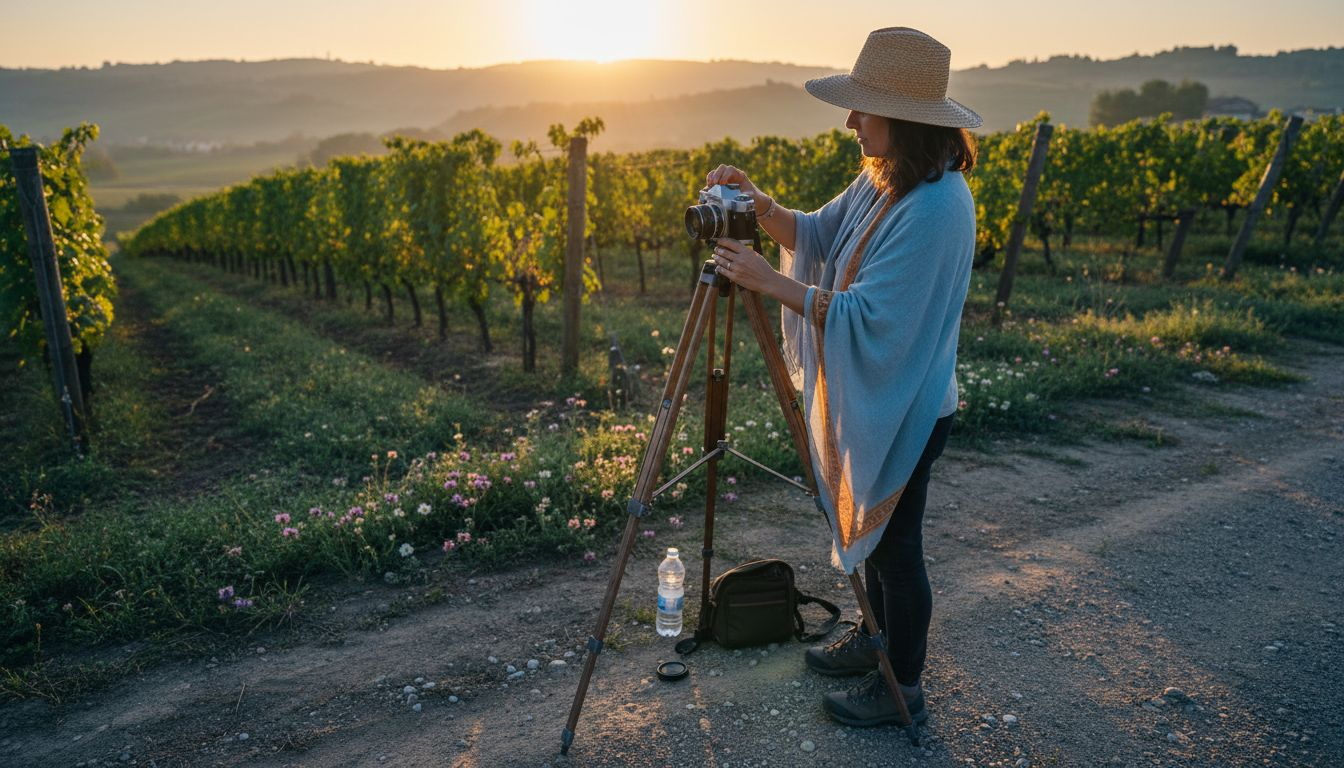
Pro tip: Develop a habit of tracking light movements and experimenting with different angles to understand how subtle shifts can transform an ordinary scene into an extraordinary photograph.
Techniques for Harnessing Light in Italy
Mastering natural light photography in Italy requires more than technical skill—it demands an artistic approach to understanding photographic lighting techniques. The Mediterranean landscape offers photographers an extraordinary canvas for exploring light’s transformative power.
Photographers can leverage several strategic techniques to capture authentic Italian scenes:
- Golden Hour Positioning: Deliberately place subjects to maximize warm, soft illumination
- Environmental Framing: Use architectural elements and landscapes as natural light diffusers
- Shadow Management: Intentionally incorporate shadows to add depth and dimension
- Exposure Bracketing: Capture multiple shots at different exposures to preserve detail
Technical approaches for managing natural light include:
- Reflector Usage: Bounce light to fill shadows and soften harsh illumination
- Manual Exposure Adjustment: Fine-tune camera settings to accommodate changing light conditions
- Angle Manipulation: Constantly reposition to optimize light interaction
- Compositional Awareness: Integrate landscape elements to enhance light quality
Light is the photographer’s most powerful storytelling tool, transforming ordinary scenes into extraordinary visual narratives.
Successful light management in Italian photography requires patience, observation, and a willingness to experiment. Each landscape—from Tuscan hills to Venetian canals—presents unique lighting challenges that demand creative problem-solving and technical adaptability.
The following table compares key tools and techniques for managing natural light in Italian landscape photography:
| Tool/Technique | Purpose | Best Usage Scenario |
|---|---|---|
| Reflector | Bounce light, soften shadows | High contrast or harsh sunlight |
| Diffuser | Spread, soften sunlight | Midday, strong sun, fragile subjects |
| Manual Exposure | Adjust image brightness | Rapidly changing or mixed light |
| Exposure Bracketing | Capture details at all levels | Difficult lighting, complex landscapes |
Pro tip: Develop a habit of scouting locations beforehand and tracking sunlight patterns to anticipate the most compelling photographic moments.
Common Challenges and How to Avoid Them
Natural light photography in Italy presents unique obstacles that challenge even experienced photographers, requiring strategic landscape photography techniques. Understanding these challenges is the first step toward creating compelling visual narratives.
Common challenges photographers encounter include:
- Harsh Midday Sunlight: Creates extreme contrast and washed-out images
- Unpredictable Weather: Rapidly changing light conditions
- Mixed Lighting Scenarios: Complex color temperature variations
- Extreme Shadow Contrast: Deep shadows obscuring critical details
Strategies for mitigating these photographic challenges involve:
- Timing Adjustments: Shoot during golden hour for softer illumination
- Technical Preparation: Use manual exposure settings and RAW format
- Equipment Management: Carry diffusers, reflectors, and neutral density filters
- Compositional Flexibility: Adapt quickly to changing environmental conditions
Mastering natural light is less about perfect technical execution and more about creative adaptation.
The Italian landscape demands a nuanced approach. Photographers must develop an intuitive understanding of light’s dynamic nature, learning to read subtle environmental shifts and transform potential challenges into unique visual opportunities.
Pro tip: Always pack lightweight, versatile light modification tools and maintain flexibility in your shooting strategy to transform unexpected conditions into creative advantages.
Capture the True Essence of Italian Light with Expert Guidance
Mastering natural light is the heart of crafting authentic Italian scenes as highlighted in the article. The challenges of shifting light direction, variable intensity, and capturing the subtle emotional moods of each moment can leave photographers searching for the perfect way to transform these obstacles into art. If you seek to deepen your understanding of natural light qualities and harness them to enhance texture, shadow, and atmosphere, a personalized approach is key.
Discover immersive photography experiences tailored to reveal Italy’s rich light and shadow stories through guided tours led by professional photographer Mino Di Vita. Whether you are drawn to the golden hour in Tuscany or the intricate urban scenes of Milan, Italy Photo Tour offers you a focused space to practice techniques like exposure bracketing and environmental framing. Leap beyond theoretical knowledge by joining us on a journey that nurtures your intuitive grasp of light’s artistry. Explore our curated opportunities today in the Uncategorized Archivi – Italy Photo Tour and see how the magic of Italian landscapes unfolds through your lens. Visit Italy Photo Tour now to secure your place and start capturing the natural light that defines Italy’s unforgettable beauty.
Frequently Asked Questions
What are the main qualities of natural light in photography?
Natural light in photography is characterized by four main qualities: intensity (brightness), color temperature (warm or cool hues), direction (how light affects shadows and highlights), and diffusion (softness or harshness of light). Understanding these qualities helps photographers create compelling images.
How can I effectively use natural light during different times of day?
To harness natural light effectively, photographers should shoot during the golden hour for soft, warm light; avoid harsh midday sunlight which creates strong shadows; and take advantage of cloudy conditions for diffused light that minimizes harsh contrasts.
What techniques can enhance my use of natural light in photography?
Techniques for enhancing natural light include using reflectors to fill shadows, employing diffusers to soften harsh sunlight, and practicing manual exposure adjustments for changing conditions. Additionally, scouting locations ahead of time to track sunlight patterns can improve results.
What challenges might I encounter when photographing in natural light?
Common challenges include harsh midday sunlight causing extreme contrast, unpredictable weather leading to rapid light changes, and deep shadows that obscure details. To mitigate these, consider adjusting your shooting times, preparing technically with appropriate settings, and staying flexible with your composition strategies.