

TL;DR:
- Italy offers endless stunning landscapes and architectural marvels, making choosing landmarks a creative challenge. Selecting locations based on your photographic style, lighting conditions, and accessibility helps craft a purposeful photo adventure. Deep patience and exploration beyond typical views reveal the most memorable images and unique forms of Italy’s timeless beauty.
Italy is a country that seems to have been painted by the gods themselves, each region offering a new canvas of ancient stone, shimmering water, and golden light. For photographers, the challenge is never finding beauty here; it is choosing which beauty to chase first. With thousands of landmark sites competing for your lens, limited time, and the relentless pull of one extraordinary scene after another, deciding where to point your camera can feel overwhelming. This guide cuts through that beautiful chaos, offering a clear framework, a curated landmark list, hidden gem discoveries, and practical comparison tools to help you craft an Italian photo adventure that is truly your own.
Table of Contents
- How to choose Italian landmarks for creative photography
- Icons and essentials: seven must-visit Italian landmarks
- Hidden gems: discovering Italy’s lesser-known photo treasures
- Landmark comparison: find your perfect shot with the right fit
- Our take: how creative photographers can get inspired beyond the famous Italian icons
- Level up your Italian landmark photography experience
- Frequently asked questions
Key Takeaways
| Point | Details |
|---|---|
| Landmark selection matters | Choosing the right Italian landmarks maximizes your creative impact and travel experience. |
| Icons and hidden gems | Both famous sites and lesser-known locations offer fantastic photo opportunities. |
| Timing boosts results | Golden and blue hours offer the most dramatic lighting for landmark photography. |
| Prepare for crowds | Use tips for crowd avoidance to secure unobstructed, memorable shots. |
| Let creativity lead the way | Experimenting with composition and timing creates images that stand out. |
How to choose Italian landmarks for creative photography
With an understanding of the challenge, let’s start with how to make the best choices for your photo adventure.
Not every famous Italian landmark will stir your creative soul in the same way, and that is perfectly fine. The key is identifying what draws your eye instinctively. Some photographers are captivated by chiaroscuro, the interplay of deep shadow and brilliant light on ancient facades. Others hunger for vivid color, human stories unfolding in real time, or the serene geometry of Renaissance architecture. Before you book your flights, take a moment to define your own photographic language.
When evaluating a potential landmark, consider these qualities that tend to produce the most compelling images:
- Architectural character: Does the structure offer texture, scale, repetition, or ornamentation that rewards close study?
- Dynamic light potential: Are there moments of day when the light transforms the scene dramatically?
- Human storytelling: Do locals gather here, creating layers of life and spontaneity within the frame?
- Multiple vantage points: Can you find angles beyond the classic postcard view?
- Accessibility: Can you reach it comfortably with your gear, and does it allow tripods or timed entry?
The difference between a postcard shot and a truly personal photograph often comes down to timing and intention. Shooting a famous piazza at midday under flat, harsh light will rarely reveal its soul. Arriving at dawn, when the cobblestones are damp and the light falls at an oblique, honey-colored angle, transforms the same scene entirely. Reading Italy photo tips before your trip can help you approach each site with a purposeful plan rather than relying on chance.
It is also worth researching practical factors: weather patterns by season, crowd peaks by day and time, and any restrictions on photography equipment. For example, historic landmark photography tips offer sound advice for visiting major Italian sights without losing your creative momentum to logistics.
Pro Tip: Plan your primary shots for the golden hour (the first hour after sunrise or the last hour before sunset) and your secondary explorations for the blue hour (the window of cool, even light just after sunset). Both windows consistently produce images full of atmosphere and mood that midday simply cannot match.
Long exposures at night, street scenes during market days, and rain-soaked reflections on ancient stone are all specific photographic goals worth building your itinerary around. Knowing what you want to create before you arrive makes every landmark feel like a purposeful destination rather than a stop on a checklist. Techniques for approaching famous sites creatively are explored in depth through landmark photo techniques, offering practical methods to elevate your work at every major location.
Icons and essentials: seven must-visit Italian landmarks
Now, let’s dive into the signature spots you simply can’t miss as a photography lover.
Italy’s landmark roster is long, but certain places possess a photographic gravity that draws every serious enthusiast. Here are seven sites that consistently reward creative attention, each one a world unto itself.
The Colosseum, Rome. Shoot from the Palatine Hill or the Parco del Celio for elevated perspectives that include the surrounding Roman Forum. Early morning light from the east strikes the curved travertine arches in a warm, raking glow that renders every groove and ancient scar in brilliant relief. Avoid the direct frontal shot that crowds default to; instead, frame the structure through an archway or alongside a lone cypress tree.
The canals of Venice. Venice rewards the patient photographer endlessly. The Grand Canal at blue hour, with vaporetto lights trailing across still water, is an image that never grows tired. Step beyond the Rialto and San Marco, though, and wander into Dorsoduro or Cannaregio, where laundry hangs between terracotta walls and gondoliers navigate narrow, quiet channels. These quieter calli (the narrow Venetian alleyways) offer reflections, geometry, and human scale that feel entirely fresh.
Florence Cathedral (Duomo). Brunelleschi’s dome is most dramatic when seen from the Piazzale Michelangelo at sunrise, floating above the terracotta rooftops like a copper sun. Up close, the facade’s marble inlays in rose, white, and green create an almost kaleidoscopic pattern that rewards macro-style detail shots as much as wide compositions.
Cinque Terre. The five pastel-colored villages clinging to Ligurian cliffs are among Italy’s most visually distinctive landscapes. Shoot from the hilltop trails between villages for sweeping compositions that layer the sea, the terraced vineyards, and the stacked colorful houses. The village of Manarola at sunset, reflected in the rock pools below, is one of Italy’s most celebrated photographic moments. Discover a wider range of unique Italian photo spots to complement your Cinque Terre journey.
The Leaning Tower of Pisa. Yes, everyone photographs it. The challenge is doing it differently. Shoot it from the far end of the Campo dei Miracoli in the early morning before crowds arrive, using a long lens to compress it against the green lawn and the Baptistery. Or seek the back streets of Pisa behind the tower, where locals cycle past and the structure appears unexpectedly between medieval buildings.
Milan’s Duomo. The Gothic complexity of the Milan Cathedral is a detail photographer’s paradise. Five hundred years of marble spires, gargoyles, and gilded statues cover every surface. Shoot from the rooftop terraces at golden hour for a perspective that few visitors take the time to find, the spires glowing against a rose and violet sky.
The Amalfi Coast. The winding road from Ravello to Positano offers overlooks that compress the shimmering Tyrrhenian Sea against stacked white villas and lemon groves. A polarizing filter here is essential to cut the glare and deepen the blue of the water. The top Italian landmarks to photograph are beautifully diverse, and the Amalfi Coast sits comfortably among the very finest.
“The most memorable image from a famous landmark is rarely the obvious one. It is the shadow of a stone saint falling across a sunlit piazza, or the reflection of an ancient tower in a puddle left by morning rain. Look for what the crowd is not looking at.”
Pro Tip: At crowded landmark sites, use a neutral density (ND) filter for long exposures of 15 to 30 seconds during busier periods. Moving crowds become a ghostly blur, leaving architecture crisp and the image hauntingly quiet.
Hidden gems: discovering Italy’s lesser-known photo treasures
While icons are essential, Italy’s hidden corners offer magic for adventurous photographers.
The most memorable portfolios are rarely built on famous sites alone. Italy harbors extraordinary places that most travelers fly past, places where the light is just as golden, the architecture just as ancient, and the atmosphere far more intimate. These are the locations that set your images apart from thousands of others.
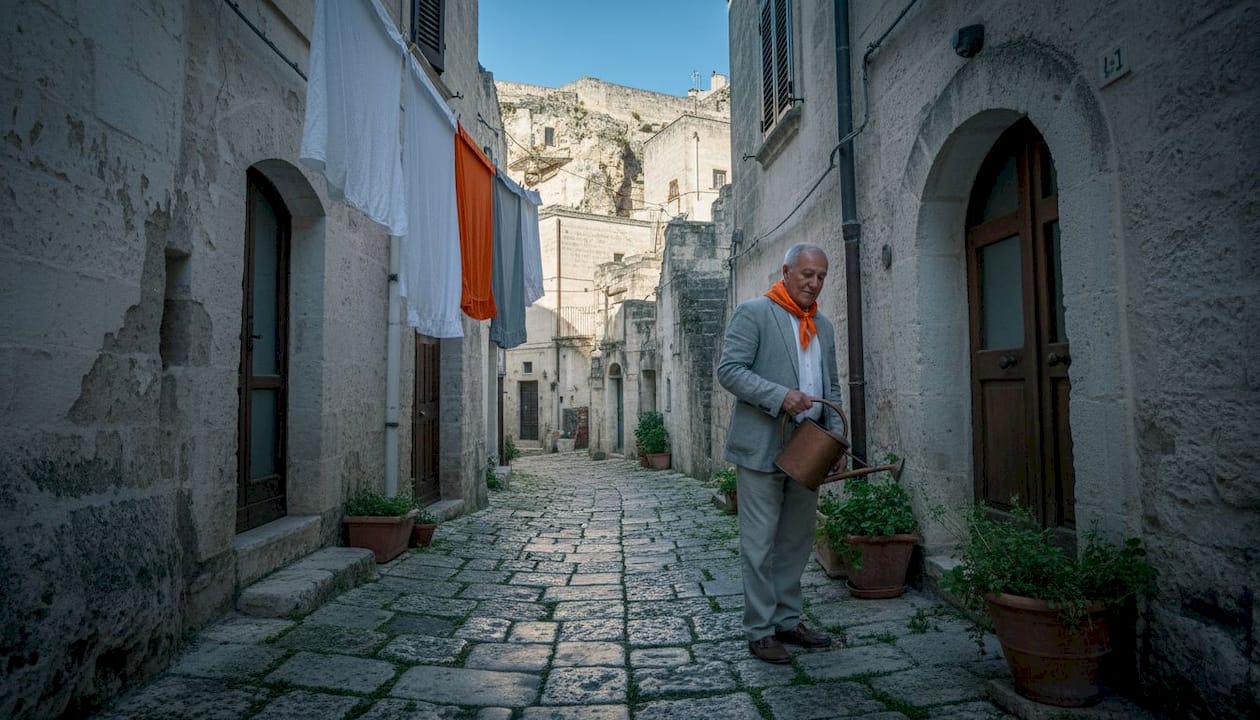
Matera, Basilicata. This ancient cave city, one of the oldest continuously inhabited settlements in the world, cascades down a ravine in layers of golden tufa stone. The Sassi (the cave dwellings) glow with extraordinary warmth at sunrise and sunset, while at night, the entire hillside twinkles with a soft illumination that creates an almost otherworldly atmosphere. Wide-angle compositions from across the ravine capture the full drama of the city’s impossible, organic architecture.
Civita di Bagnoregio, Lazio. Perched on a crumbling volcanic plateau and accessible only by a narrow pedestrian bridge, this tiny medieval village is sometimes called “the dying city” because erosion slowly claims it each year. Photograph it from the valley below for a scene that feels like a painting, the village hovering above morning mist with the surrounding canyon glowing amber.
San Miniato al Monte, Florence. While tourists crowd the Piazzale Michelangelo below, this Romanesque basilica above offers an elevated, quieter vantage point with a slightly different angle over Florence’s rooftops. The geometric green and white marble facade photographs beautifully in the warm late afternoon light.
Alberobello, Puglia. The trulli, those conical whitewashed stone houses, are entirely unique to this region. Wander the narrow lanes of the Rioni Monti district and you will find compositions that layer cone after cone into a rhythmic, almost surreal geometric sequence. How to find hidden photo spots in Italy offers a practical guide for uncovering places like these that most visitors never see.
Orvieto, Umbria. Rising from a volcanic plateau above the surrounding plain, this medieval hill town is dominated by a stunning striped Gothic cathedral. The surrounding Umbrian countryside, visible from the town walls, rolls in soft green and amber waves that pair beautifully with the town’s warm stone architecture.
Pro Tip: In every hidden gem location, look for ways to blend the landmark with local life. A grandmother hanging laundry in front of a Matera cave dwelling or a fisherman mending nets beneath the walls of Civita di Bagnoregio adds layers of human story that transform an architectural image into something truly resonant. This approach to photographic hidden gems consistently produces portfolio-defining work.
Landmark comparison: find your perfect shot with the right fit
With both iconic and hidden options in mind, here’s how to make your final landmark picks.
Choosing the right landmarks for your specific trip depends on your photographic style, the duration of your stay, and your practical constraints. The table below compares key criteria across five major sites to simplify your decision.
| Landmark | Architecture style | Crowd level | Accessibility | Best time to shoot | Unique angle |
|---|---|---|---|---|---|
| Colosseum | Ancient Roman | Very high | Easy, central Rome | Sunrise from Palatine Hill | Frame through Forum arches |
| Venice canals | Gothic, Byzantine | High (seasonal) | Easy on foot | Blue hour, early morning | Side canals in Cannaregio |
| Cinque Terre | Colorful coastal | High in summer | Moderate (trails) | Sunset from hilltop path | Manarola rock pool reflection |
| Matera Sassi | Cave city, tufa | Low to moderate | Easy, south Italy | Sunrise or night illumination | Ravine overview at dawn |
| Milan Duomo | Gothic cathedral | High | Very easy, city center | Golden hour from rooftop | Spire detail from terrace |
Use this comparison alongside the 8 essential steps for your Italy photography checklist to build a practical, creativity-first itinerary. If your trip is short, prioritize high-reward sites like Venice and the Colosseum that deliver stunning results in a single morning session. If you have more time, layer in the hidden gems for images that will feel genuinely rare.
For night owls and long-exposure enthusiasts, Venice’s blue hour and Matera’s nighttime illumination are unmatched. Color chasers should prioritize Cinque Terre and Alberobello. Architecture devotees will lose themselves happily in Milan or Florence for days. The Italian landscape photography ideas section of the Italy Photo Tour site offers further guidance on matching your visual preferences to the ideal location.
Our take: how creative photographers can get inspired beyond the famous Italian icons
Having compared your options, here’s a deeper perspective you won’t often hear.
The greatest photographic mistake in Italy is treating landmarks as trophies. Many photographers arrive with a mental checklist, fire off their shots in the perfect golden hour window, and then move on. The images are beautiful, technically sound, and almost identical to ten thousand others taken from the same spot at the same hour. That is not photography; it is documentation.
Real creative growth happens when you resist the urge to move on. Stay an extra hour in a piazza after the light fades. Watch how the scene changes when the tourists thin and the locals reclaim their city. Follow the sounds of a conversation drifting from an open window, or the smell of bread baking that leads you down an alley you had not planned to enter. These unscripted moments are where the photographs that define your portfolio are waiting.
Italy rewards photographers who linger. Every landmark is not just a subject; it is a launchpad. The Colosseum at 9 in the morning is one story. The Colosseum at midnight, quiet and silver under a full moon, is another entirely. Think of each site as offering not one photograph but dozens, each requiring a different time, perspective, emotional state, and willingness to experiment. When you plan your photo tour with this philosophy in mind, the itinerary becomes a living thing rather than a rigid schedule.
We encourage both first-time visitors and seasoned travel photographers to embrace the idea of serendipity. Leave one morning in your itinerary completely unplanned. Walk without a destination. Italy has a remarkable way of leading the curious photographer to precisely the scene they did not know they were looking for.
Level up your Italian landmark photography experience
Ready to turn new knowledge into showstopping Italian images?
Knowing which landmarks to visit and when to shoot them is a powerful beginning. But nothing accelerates your growth as a photographer faster than being guided through these locations by someone who has spent years reading Italy’s light, culture, and hidden rhythms. At Italy Photo Tour, led by professional photographer Mino Di Vita, every experience is designed to help you see more deeply and shoot more confidently.

Whether you are drawn to the grandeur of iconic sites or the intimate poetry of hidden gems, our curated Italy photography tours place you in exactly the right spot at exactly the right moment. Before your trip, equip yourself with the ideal equipment choices covered in the best camera gear for Italy guide, and explore everything that makes an Italy Photo Tour experience truly transformative. Italy is waiting, and so is the photograph of your life.
Frequently asked questions
What are the best times of year to photograph Italian landmarks?
Spring (April and May) and early fall (September and October) offer the most favorable combination of warm golden light, manageable crowd levels, and pleasant temperatures for extended outdoor shooting sessions.
How can I avoid large crowds at popular Italian landmarks?
Arrive at sunrise for the quietest conditions and most dramatic directional light, and consider traveling in shoulder months outside of July and August. Historic landmark photography tips offer additional practical strategies for navigating busy sites without losing creative focus.
What camera gear is recommended for capturing both wide landscapes and details?
A versatile zoom lens in the 24-105mm range paired with a lightweight carbon-fiber tripod covers the majority of shooting scenarios you will encounter across Italy’s diverse landmark environments.
Are there any restrictions on using tripods at Italian landmarks?
Many high-traffic tourist sites, including parts of the Vatican and the Uffizi Gallery, prohibit tripods for safety and crowd management reasons. Always verify each site’s regulations in advance and carry a compact gorilla-style flexible tripod as a versatile alternative.
How do I find unique compositions at famous sites?
Arrive early, explore beyond the central viewing area, incorporate foreground elements like reflections or architectural frames, and vary your shooting height from ground level to elevated terraces. Elevate your photography at Italy’s landmarks offers a deeper look at creative composition strategies for Italy’s most photographed locations.
Recommended
- Top Italian landmarks to photograph: 6 stunning picks
- Elevate your photography at Italy’s landmarks: key tips
- Discover unique Italian photo spots for stunning shots
- Spectacular Italian landscapes to inspire your photography
- 7 Days in Rome: The Eternal City for Beginners (Skip-the-Line Secrets) | DestList