

Chasing the perfect interplay of light and shadow across Italy’s storied streets and rolling hills demands careful preparation and creative focus. For many American photographers, the challenge is knowing which camera gear and techniques will turn fleeting moments into unforgettable images. This guide highlights versatile travel camera kits and expert location tips so you can capture the dramatic beauty of Italy with mastery and confidence on your next photo tour.
Table of Contents
- Step 1: Prepare Gear For Capturing Light And Shadow
- Step 2: Scout Locations For Optimal Lighting Conditions
- Step 3: Adjust Camera Settings To Control Exposure
- Step 4: Compose Shots To Highlight Light And Shadow Interplay
- Step 5: Review Images And Refine Technique During Your Tour
Quick Summary
| Key Point | Explanation |
|---|---|
| 1. Invest in essential camera gear | Use a mirrorless camera, wide-angle, and prime lenses to handle Italy’s distinct light and shadow conditions effectively. |
| 2. Scout locations for optimal light | Identify shooting spots in advance, focusing on architectural and natural landscapes that enhance light dynamics throughout the day. |
| 3. Master exposure settings | Adjust aperture, shutter speed, and ISO to control light and shadow interactions, enhancing the quality of your photographs. |
| 4. Focus on composition techniques | Utilize silhouette framing and golden hour positioning to emphasize the dramatic interplay of light and shadows in your images. |
| 5. Review and refine your work frequently | Analyze your photos immediately after shooting to improve your skills and adapt to the unique lighting conditions encountered in Italy. |
Step 1: Prepare gear for capturing light and shadow
Capturing the stunning light and shadow interplay in Italy requires strategic gear preparation and thoughtful equipment selection. Your camera kit will be your most critical ally in transforming Italian landscapes into breathtaking photographic narratives.
Professional photographers recommend investing in versatile, lightweight equipment that performs exceptionally in varied lighting conditions. Comprehensive travel camera gear preparation involves selecting the right combination of cameras, lenses, and accessories designed to handle Italy’s dynamic visual environments. Focus on these essential gear categories:
- Mirrorless camera systems offering compact design and superior low-light performance
- Wide-angle lenses for expansive architectural and landscape shots
- Prime lenses with wide apertures for dramatic depth and shadow rendering
- Neutral density filters to manage harsh midday sunlight
- Lightweight tripod for stable long-exposure images during golden hour
Before departing, thoroughly test and familiarize yourself with each piece of equipment. Travel photography packing essentials emphasize practicing with your gear to ensure smooth operation in the field. This preparation transforms potential technical challenges into opportunities for creative expression.
Here’s a summary comparing the impact of different camera gear choices for photographing light and shadow in Italy:
| Gear Type | Strengths in Italian Settings | Key Limitations |
|---|---|---|
| Mirrorless Camera | Excellent low-light, portable | May require extra batteries |
| Wide-Angle Lens | Captures grand architecture and vistas | Can distort at image edges |
| Prime Lens | Strong depth, beautiful bokeh | Fixed focal length reduces flexibility |
| Neutral Density Filter | Enables creative long exposures in sun | Slows down shooting workflow |
| Lightweight Tripod | Stabilizes images for sharp results | May be less stable in wind |
Pro tip: Pack extra memory cards and batteries, and consider a portable backup drive to safeguard your irreplaceable Italian photographic memories.
Step 2: Scout locations for optimal lighting conditions
Discovering the perfect photographic locations in Italy requires strategic planning and an understanding of how light transforms landscapes. Your mission is to identify spots that will showcase dramatic light and shadow interactions across different times of day.
Professional location scouting techniques reveal that successful photography hinges on understanding each location’s unique lighting characteristics. Focus on identifying shooting locations with these key considerations:
- Architectural backgrounds that create interesting shadow patterns
- Elevated vantage points for expansive lighting perspectives
- Historic sites with complex geometric structures
- Coastal and urban landscapes offering dynamic light transitions
- Natural terrain that creates dramatic shadow contrasts
Rome photography scouting guide emphasizes arriving early and remaining flexible. Scout your locations during different hours to understand how sunlight moves and transforms the visual landscape. This approach allows you to anticipate the most compelling lighting conditions and plan your compositions strategically.
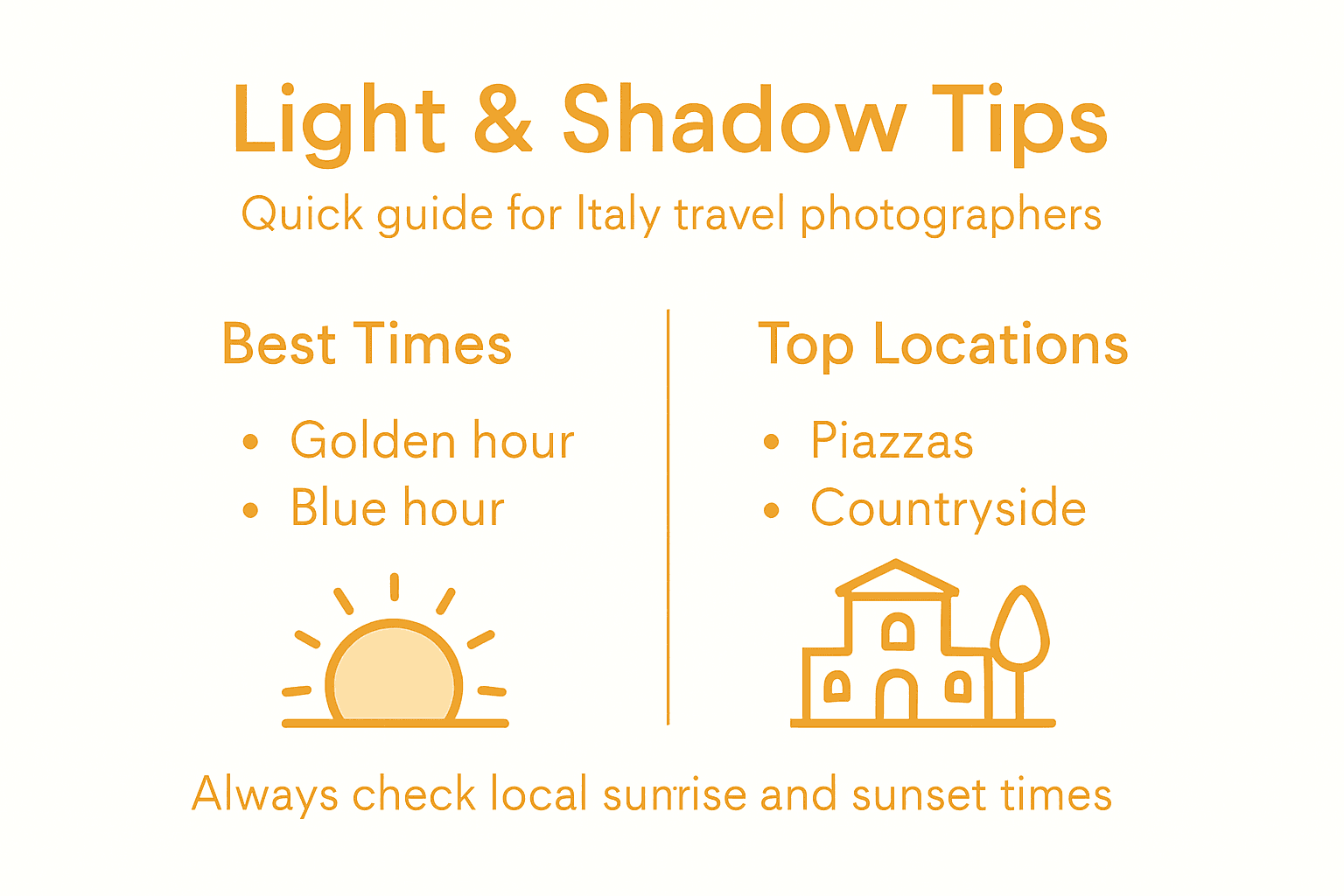
Timing is everything. The golden hour—shortly after sunrise and before sunset—provides the most magical light for capturing Italy’s breathtaking scenery.
Pro tip: Create a digital or physical map marking your scouted locations, noting precise times when lighting conditions are most dramatic for each specific site.
Use this reference to quickly identify how common Italian landscapes interact with light and shadow:
| Location Type | Light Behavior | Photographic Challenge |
|---|---|---|
| Historic Architecture | Dramatic shadow play | Managing high contrast |
| Coastal Scenes | Fast-changing light | Glare in direct sun |
| Urban Alleys | Deep shadow zones | Balancing highlights and shadow |
| Mountain Regions | Moving directional light | Capturing details in both sun and shade |
Step 3: Adjust camera settings to control exposure
Mastering exposure in Italy’s diverse lighting environments requires understanding how your camera captures light and shadow. Your goal is to transform complex lighting scenarios into stunning photographic compositions by precisely manipulating camera settings.
Travel photography exposure techniques recommend using Aperture Priority mode to maintain creative control while adapting to changing light conditions. Focus on these critical camera setting adjustments:
- Aperture settings for depth of field control
- Shutter speed to manage motion and light capture
- ISO sensitivity to balance image clarity and noise
- Exposure compensation for challenging lighting scenarios
- White balance to accurately represent color temperatures
Expert camera setting strategies emphasize understanding the intricate relationship between aperture, shutter speed, and ISO. Practice adjusting these settings quickly to capture Italy’s dynamic lighting—from bright coastal scenes to shadowy medieval streets. Experiment with different configurations to find the perfect balance between technical precision and artistic expression.
The magic of photography lies in your ability to interpret light, not just record it. Each adjustment is a brushstroke in your visual narrative.
Pro tip: Create a custom camera preset for challenging Italian lighting conditions, allowing you to quickly switch between different exposure scenarios without losing precious photographic moments.
Step 4: Compose shots to highlight light and shadow interplay
Transforming Italian landscapes into powerful visual narratives requires understanding how light and shadow dance together in your photographic composition. Your ultimate goal is to create images that reveal depth, emotion, and architectural drama through strategic visual storytelling.
Travel photography light and shadow techniques emphasize the importance of positioning and timing to capture compelling visual contrasts. Consider these strategic composition approaches:
- Silhouette framing to emphasize shape and form
- Golden hour positioning for soft, dramatic lighting
- Architectural shadow play to create visual depth
- Directional light techniques to highlight texture
- Negative space utilization to enhance visual tension
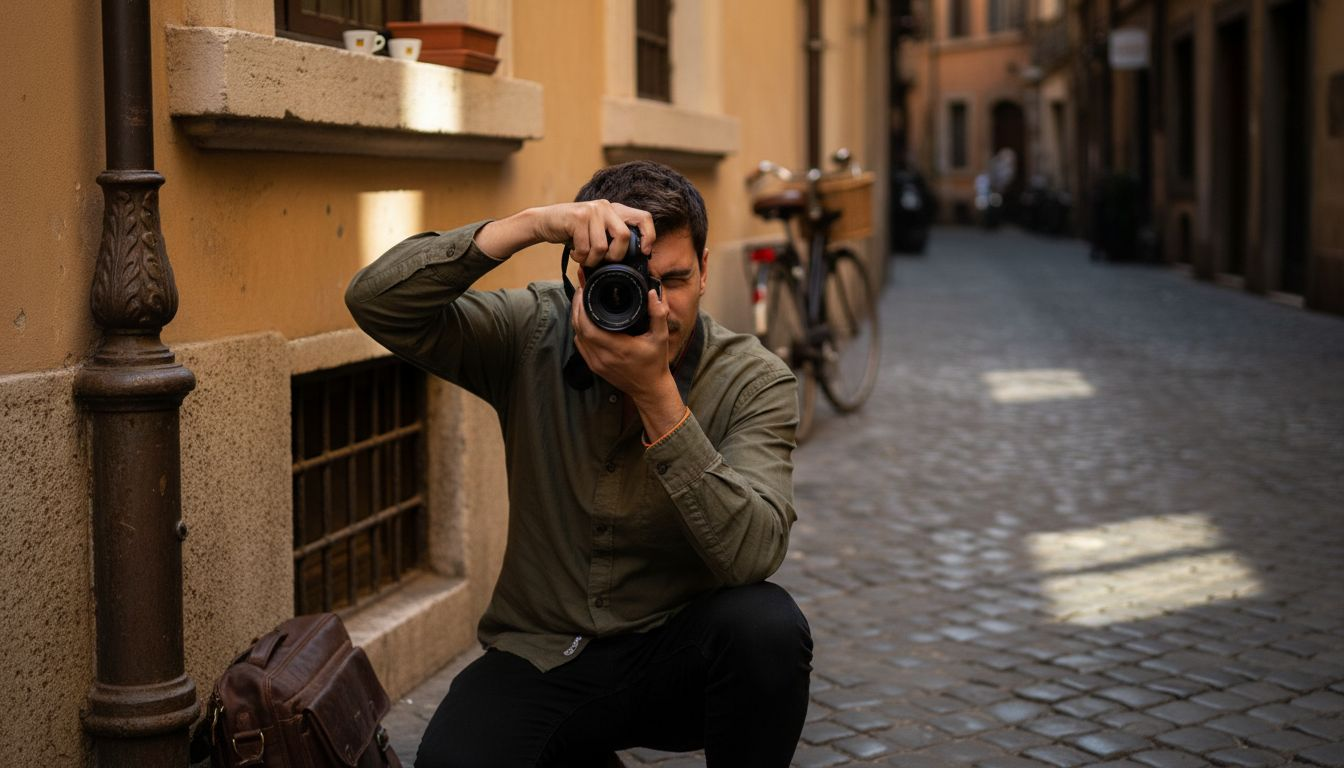
Professional composition strategies recommend experimenting with different angles and perspectives to maximize light and shadow interaction. Look for natural frames like archways, windows, and urban passages that create dramatic shadow patterns. Approach each scene as a canvas where light becomes your primary paintbrush, transforming ordinary landscapes into extraordinary visual experiences.
Shadows are not absence of light—they are the sculptors that give form and meaning to your photographic vision.
Pro tip: Practice shooting the same location at different times of day to understand how shifting light transforms your composition’s emotional landscape.
Step 5: Review images and refine technique during your tour
Photographic mastery in Italy emerges through continuous learning and real-time technique refinement. Your journey involves transforming each captured image into a stepping stone for improved artistic expression, turning every shot into an opportunity for growth.
Travel photography technique refinement emphasizes the critical importance of immediate image assessment and adaptive learning. Develop a systematic approach to reviewing your photographs:
- Immediate image review right after shooting sessions
- Technical analysis of exposure and composition
- Comparative assessment across different lighting conditions
- Experimental bracketing of camera settings
- Detailed metadata examination for performance insights
Iterative photography improvement strategies recommend creating a disciplined review process. Analyze each image critically, paying special attention to how light and shadow interact within your frames. Consider the subtle nuances that transform a good photograph into an extraordinary visual narrative.
Your camera is a learning tool—every image tells a story, and every review is a conversation with your evolving artistic vision.
Pro tip: Create a daily ritual of reviewing your images, selecting three photographs that inspire you and three that challenge your current skill level to accelerate your photographic growth.
Elevate Your Mastery of Light and Shadow with Italy Photo Tour
Struggling to capture the perfect interplay of light and shadow in Italy’s enchanting landscapes is a challenge many photographers face. From understanding exposure settings to composing shots that reveal architectural drama and natural textures, the journey demands both technical skill and artistic vision. If you want to move beyond theory and practice your craft in Italy’s most inspiring locations join a community dedicated to transforming photographic knowledge into breathtaking imagery. Explore expert guidance on Uncategorized Archivi – Italy Photo Tour for insights that complement this comprehensive article.

Take your photography further by experiencing Italy firsthand with our personalized photo tours led by professional photographer Mino Di Vita. Discover the magic of golden hour in Tuscany or the urban shadow plays of Milan while receiving expert coaching designed to refine your exposure control and compositional techniques. Visit Italy Photo Tour now for immersive experiences that inspire creativity and deepen your artistic journey. Begin shaping your photographic story today.
Frequently Asked Questions
How can I prepare my camera gear for capturing light and shadow in Italy?
Start by selecting a versatile camera kit that includes a mirrorless camera, wide-angle lenses, and neutral density filters to manage strong sunlight. Familiarize yourself with each piece of equipment and practice handling it before your trip to ensure smooth operation during your photography sessions.
What are the best times of day to photograph landscapes for light and shadow effects?
The golden hour, shortly after sunrise and before sunset, offers the most dramatic lighting for capturing Italy’s scenery. Plan to be at your chosen locations during these times to maximize your shots of stunning light and shadow interplay.
What camera settings should I use to control exposure in varied lighting conditions?
Use Aperture Priority mode to maintain creative control over depth of field, and adjust your shutter speed and ISO sensitivity to adapt to changing light. Practicing these adjustments quickly will help you capture the best moments without delay.
How can I effectively compose my shots to highlight light and shadow?
Experiment with framing techniques like silhouette framing, negative space utilization, and architectural shadow play. Position yourself to take advantage of natural light patterns and varying angles to enhance the drama in your compositions.
What should I do after capturing images to improve my photography skills?
Immediately review your images after each shooting session to analyze exposure and composition. Make it a habit to reflect on your work daily, selecting photos that inspire you and identifying areas for improvement to foster continuous growth as a photographer.