

Many photographers believe that technically perfect images automatically tell compelling stories. A sharp focus, balanced exposure, and beautiful composition certainly matter, but they don’t guarantee emotional impact. True storytelling in photography requires deliberate techniques that transform simple captures into narratives that resonate with viewers. This guide reveals how to use storytelling to enhance images, focusing on Italy’s inspiring culture and landscapes as your creative canvas. You’ll discover practical methods to infuse your photos with meaning, emotion, and connection that elevate your work from documentation to art.
Table of Contents
- Why Storytelling Is Essential In Photography
- Techniques To Tell Stories Through Your Images
- Storytelling With Italy’s Landscapes And Culture
- How To Practice And Develop Your Storytelling Skills In Photography
- Enhance Your Storytelling With Italy Photo Tour Experiences
- Frequently Asked Questions
Key takeaways
| Point | Details |
|---|---|
| Storytelling creates emotional impact | Narrative techniques transform photos from beautiful captures into experiences that viewers remember and feel |
| Composition and context drive stories | Strategic use of layers, subjects, and cultural symbols builds compelling visual narratives |
| Italy offers rich narrative opportunities | Diverse landscapes, historical sites, and vibrant traditions provide endless storytelling material |
| Practice develops storytelling skills | Regular experimentation, critique, and immersive experiences strengthen your narrative voice |
| Sequencing enhances narrative depth | Combining images into series creates more powerful stories than single frames alone |
Why storytelling is essential in photography
Good photos capture beauty, but great photos tell a story that lingers in viewers’ minds long after they look away. Storytelling in images increases viewer engagement by creating emotional bridges between the photographer’s vision and the audience’s experience. When you master narrative techniques, your work transcends mere documentation and becomes a conversation with everyone who sees it.
Storytelling helps viewers connect emotionally with your images by providing context, mood, and meaning. A sunset over the Tuscan hills becomes more powerful when you capture a farmer returning home, silhouetted against the golden light. The human element transforms a landscape into a story about daily life, tradition, and connection to the land. These narrative layers invite interpretation and emotional response that technical excellence alone cannot achieve.
Elements like mood, facial expression, body language, and environmental context all support your narrative intent. Consider photographing Venice during acqua alta: the flooded streets become more than a weather event when you include a shopkeeper calmly setting up wooden walkways, embodying resilience and adaptation. This contextual storytelling reveals character and culture in ways that isolated architectural shots never could.
Stories invite viewers to interpret and feel the photo’s message rather than simply observe it. When you photograph a street market in Milan, including the exchange between vendor and customer, the gesture of selecting produce, or the display of regional specialties tells stories about community, tradition, and human connection. These moments create entry points for viewers to project their own experiences and emotions onto your work.
Effective storytelling elements include:
- Emotional resonance through human subjects and expressions
- Cultural context that reveals traditions and values
- Environmental details that establish mood and atmosphere
- Compositional flow that guides the viewer’s eye through the narrative
- Symbolic objects or gestures that carry deeper meaning
Italy’s landscapes and culture naturally inspire storytelling in photography because every corner holds layers of history, tradition, and human experience. The weathered facades of Roman buildings, the carefully tended vineyards of Chianti, and the animated conversations in Neapolitan cafes all offer narrative gold for photographers willing to look beyond surface beauty. Join immersive photography experiences that help you recognize and capture these story-rich moments.
“A photograph without a story is just a record. A photograph with a story becomes a memory, an emotion, a conversation that continues long after the shutter closes.”
Techniques to tell stories through your images
Subject focus serves as your primary storytelling tool by directing viewer attention to the narrative’s central element. When photographing the Cinque Terre, you might focus on a fisherman mending nets in the foreground while the colorful village rises behind him. This deliberate focus choice tells a story about livelihood and place rather than simply documenting scenic beauty. Your focal point becomes the anchor for the entire narrative.
Sequencing photos creates visual stories that unfold over time, building narrative depth impossible in single frames. Document a pasta-making tradition by capturing the flour being measured, hands kneading dough, sheets being cut, and finally the finished dish being shared. This sequence builds human storytelling that reveals process, tradition, and community in ways a single image cannot convey.
Including human subjects or cultural symbols adds authenticity and emotional resonance to your narratives. A photograph of a Tuscan chapel gains story power when you include a grandmother lighting a candle, her weathered hands and focused expression revealing devotion and continuity. These human elements transform architectural documentation into stories about faith, tradition, and personal meaning.
Practical storytelling techniques:
- Establish context by showing environment before focusing on details
- Capture decisive moments when action reveals character or emotion
- Use leading lines to guide viewers through your narrative sequence
- Include foreground elements that frame and contextualize your main subject
- Wait for gestures or expressions that communicate emotion or intent
- Photograph interactions between people or between people and their environment
Capturing moments that evoke emotion and atmosphere requires patience and observation. Instead of photographing an empty Venetian canal at dawn, wait for a gondolier to appear, his silhouette cutting through the morning mist. The human presence transforms a pretty scene into a story about solitude, tradition, and the quiet moments before the city awakens. These atmospheric choices shape how viewers experience your narrative.
Compose with foreground, middle ground, and background layers to deepen story complexity and visual interest. When photographing Florence from Piazzale Michelangelo, include tourists in the foreground studying maps, the Duomo dominating the middle ground, and the Tuscan hills fading into the background. This layered composition tells simultaneous stories about tourism, architectural grandeur, and the landscape that cradles the city.
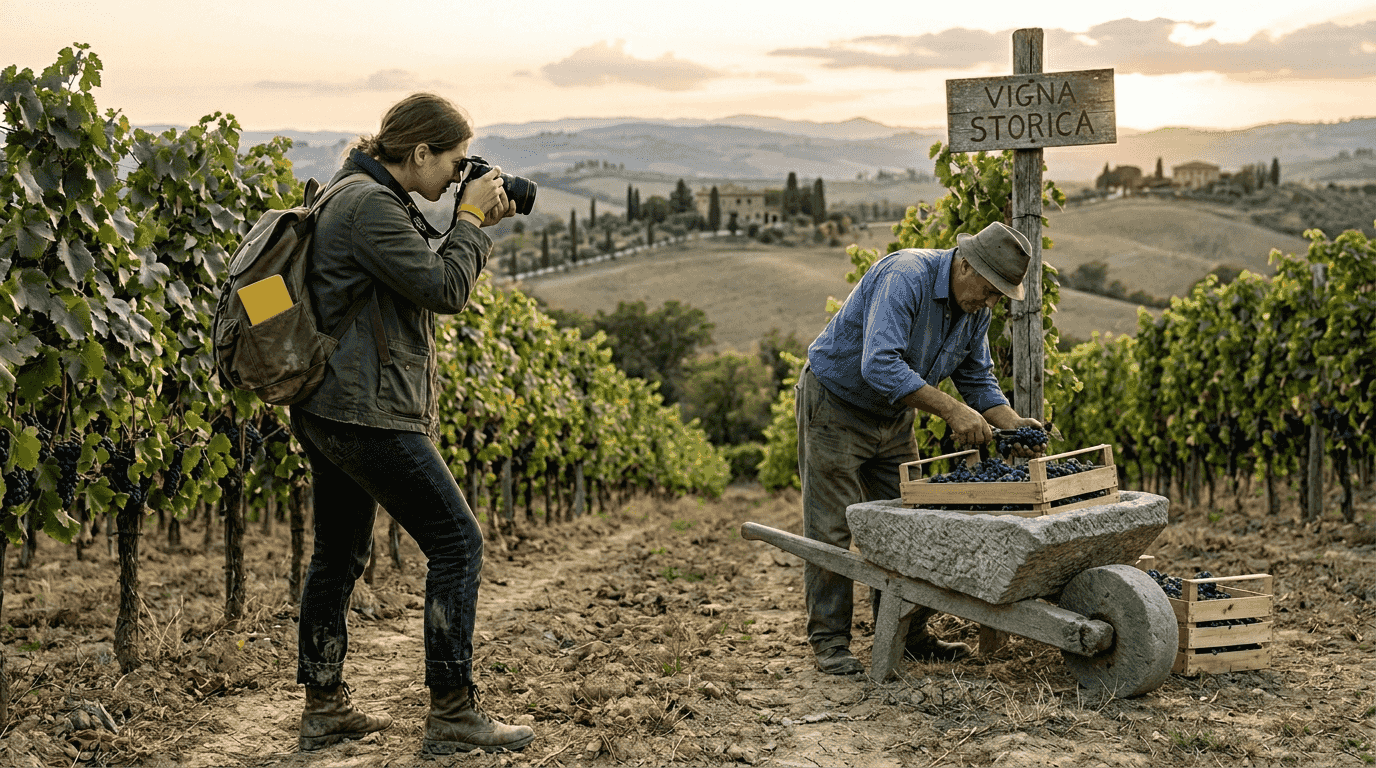
Pro Tip: Shoot in aperture priority mode with a moderate aperture like f/8 to maintain sharpness across multiple layers while still achieving some background separation. This technical choice supports storytelling by keeping contextual elements recognizable while maintaining focus on your primary subject.
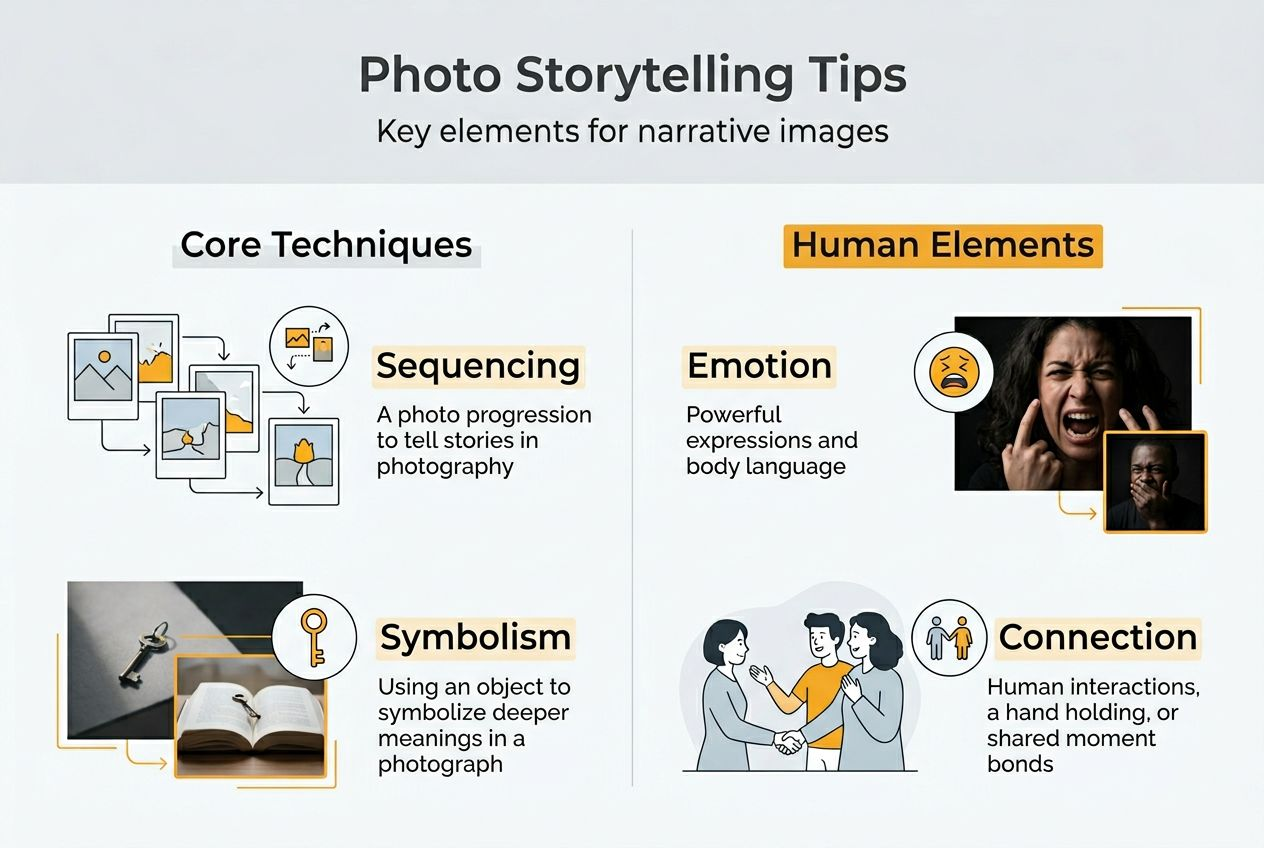
Key storytelling techniques include sequencing, symbolism, and capturing human elements that transform documentation into narrative. Practice these methods deliberately until they become intuitive parts of your creative process. The more consciously you apply storytelling principles, the more naturally they’ll flow into your photographic vision.
Storytelling with Italy’s landscapes and culture
Italian coastal versus urban landscapes offer dramatically different storytelling moods and opportunities. The Amalfi Coast provides narratives of dramatic beauty, human adaptation to challenging terrain, and the relationship between sea and settlement. Photograph terraced lemon groves clinging to cliffs to tell stories about perseverance and agricultural tradition. Urban landscapes like Rome or Bologna offer stories of layered history, contemporary life unfolding amid ancient architecture, and the collision of past and present in daily routines.
Historical sites tell stories of heritage and time through architectural details, weathering patterns, and how people interact with these spaces today. Photograph tourists touching the worn bronze foot of St. Peter’s statue in Vatican City to reveal how centuries of devotion have literally shaped the sculpture. This detail tells stories about continuity, faith, and the physical manifestation of collective human experience across generations.
Local festivals and traditions provide narrative-rich scenes bursting with color, emotion, and cultural authenticity. During Siena’s Palio, photograph not just the horse race but the contrada members in medieval costume, their faces tense with competitive passion. Capture the blessing of the horses in neighborhood churches, revealing how this event intertwines sport, faith, and community identity. These cultural photography opportunities offer ready-made narratives waiting to be captured.
| Landscape Type | Story Potential | Photographic Tips |
| — | — |
| Coastal regions | Human adaptation, maritime traditions, dramatic natural beauty | Include fishing boats, terraced agriculture, or coastal villages to show human presence |
| Historic cities | Layered time, architectural evolution, contemporary life amid antiquity | Juxtapose ancient and modern elements, capture daily routines in historic settings |
| Rural countryside | Agricultural traditions, seasonal rhythms, connection to land | Photograph farmers at work, seasonal harvests, traditional cultivation methods |
| Mountain villages | Isolation, preservation of traditions, resilience | Show steep terrain, traditional architecture, daily life adapted to challenging geography |
Storytelling opportunities in Italian settings:
- Market scenes revealing regional food cultures and social interaction
- Artisan workshops showing traditional crafts and generational knowledge transfer
- Religious processions demonstrating community faith and cultural continuity
- Family gatherings in piazzas illustrating social traditions and daily rhythms
- Seasonal landscapes showing agricultural cycles and environmental relationships
Pro Tip: Scout locations during golden hour for evocative storytelling light that adds mood and atmosphere to your narratives. The warm, directional light of early morning or late afternoon naturally enhances emotional impact and reveals texture in ways that harsh midday sun cannot match. This timing choice becomes part of your storytelling toolkit.
The artistic impact of Italian landscapes stems from their inherent narrative richness combined with extraordinary visual beauty. Every region offers distinct stories waiting for photographers who approach their work with narrative intent. From the volcanic drama of Sicily to the alpine beauty of the Dolomites, Italy provides endless opportunities to practice and refine your storytelling skills in settings that naturally inspire creative vision.
How to practice and develop your storytelling skills in photography
Engage in photo tours that emphasize narrative techniques rather than simply visiting scenic locations. Workshops focused on storytelling teach you to recognize narrative opportunities, compose for emotional impact, and sequence images for maximum effect. Learning alongside other photographers committed to narrative development accelerates your growth through shared critique, diverse perspectives, and collaborative exploration of storytelling principles.
Review and critique your images with specific storytelling criteria rather than just technical quality. Ask whether each photo communicates a clear narrative, evokes emotion, or invites viewer interpretation. Identify which elements support your story and which distract from it. This analytical approach helps you recognize patterns in your successful storytelling and understand where your narratives fall short.
Storytelling development strategies:
- Create photo essays on single themes to build narrative coherence
- Study master photographers known for storytelling to understand their techniques
- Write captions that articulate your intended narrative, then assess if the image conveys it independently
- Share work with photography communities for feedback on narrative clarity
- Revisit locations multiple times to discover deeper story layers
Experiment with different storytelling styles and subjects to discover your authentic narrative voice. Try documentary approaches that capture unfolding events, conceptual methods that use symbolism and metaphor, or portrait-based storytelling that reveals character through expression and environment. Each style develops different aspects of your storytelling ability and helps you understand which approaches resonate most strongly with your creative vision.
- Choose a specific story you want to tell before you start shooting
- Identify the key emotional tone you want to convey
- Plan shots that will support your narrative arc
- Shoot more material than you think you need
- Edit ruthlessly, keeping only images that advance your story
- Sequence your final images to build narrative momentum
- Test your story on viewers and gather feedback
Use sequencing and thematic projects to build narrative skills that single images cannot develop. Create a series documenting a day in a Tuscan vineyard, from dawn pruning through afternoon harvest to evening celebration. This project-based approach forces you to think beyond isolated moments and consider how images work together to create comprehensive narratives. The discipline of maintaining thematic coherence across multiple images strengthens your storytelling abilities.
Immerse yourself in Italy’s culture to enrich your image stories with authentic understanding and emotional connection. Spend time in local cafes observing daily rituals, attend community festivals, visit family-run businesses, and engage with residents who can share stories about their traditions and places. This cultural immersion provides the contextual knowledge that transforms tourist snapshots into informed narratives that respect and reveal the depth of Italian life.
Regular practice and reflection enhance storytelling skills more effectively than sporadic shooting sessions. Commit to weekly storytelling exercises, monthly thematic projects, or seasonal documentation of changing landscapes. Consistency builds the observational habits and technical fluency that allow storytelling to become instinctive rather than forced. Join photo tours for creative travel that provide structured opportunities for intensive practice and expert guidance.
Advanced storytelling practice methods:
- Limit yourself to shooting only three frames per scene to force deliberate storytelling choices
- Create stories using only environmental portraits without showing faces
- Document a single location across different times of day or seasons
- Collaborate with writers to create multimedia narratives
- Challenge yourself to tell stories using unconventional perspectives or compositions
Developing storytelling skills requires the same commitment as mastering technical photography, but the rewards transform your entire creative practice. When narrative becomes central to your vision, you’ll find yourself seeing differently, anticipating moments with story potential, and creating work that resonates far beyond technical competence. Explore artistic exploration photo tours designed specifically to develop these narrative capabilities in inspiring Italian settings.
Enhance your storytelling with Italy Photo Tour experiences
Transform your photography by joining experiences designed specifically to develop storytelling skills amid Italy’s most inspiring locations. Our guided photography tours Italy combine expert instruction with immersive cultural exploration, helping you recognize and capture narrative moments you might otherwise miss. Professional photographer Mino Di Vita leads workshops that teach storytelling techniques through hands-on practice in settings bursting with visual and cultural richness.

Learn how composition, timing, and cultural context combine to create powerful photo narratives. Explore iconic Italian landscapes and cities while developing the observational skills that separate documentary snapshots from compelling stories. Our small group format ensures personalized attention and collaborative learning that accelerates your storytelling development. Discover what we do to help photographers at every level enhance their narrative vision and technical execution.
Experience Italy’s culture through photography that goes beyond tourist attractions to reveal authentic moments and genuine human connections. Our Italy Photo Tour packages focus on creating opportunities for meaningful storytelling rather than simply checking off famous locations. Join us to develop skills that will transform not just your Italy photos, but your entire approach to photographic storytelling.
Frequently asked questions
What is storytelling in photography?
Storytelling in photography means using visual elements to convey a narrative, emotion, or message that extends beyond simple documentation. It connects viewers emotionally to your images by providing context, meaning, and human resonance that makes photos memorable and impactful.
How can I use Italy’s culture to improve my photo stories?
Focus on local traditions, festivals, artisan crafts, and daily rituals that reveal authentic Italian life and values. Capture genuine moments showing people interacting with their environment, practicing traditional skills, or celebrating cultural events that demonstrate heritage and community identity.
What are simple storytelling techniques for beginners?
Use composition to guide viewers’ eyes toward your narrative focus, include human subjects or symbolic objects that add meaning, and shoot sequences showing progression or change over time. Start by asking what story you want each image to tell before pressing the shutter.
Why is storytelling important for amateur photographers?
Storytelling makes your photos more impactful and emotionally engaging by giving viewers reasons to care about what they see. It helps you develop a distinctive visual voice, creates deeper connections with your audience, and transforms competent photography into memorable art that resonates beyond technical skill.