

Capturing Italy’s artistic beauty through photography demands more than expensive gear. 68% of professional landscape photographers rank composition as the key factor in creating great images. This guide reveals proven composition techniques that transform ordinary Italy snapshots into compelling visual stories, helping you master the craft on your next photo tour.
Table of Contents
- How To Choose The Right Composition Techniques For Italy Photography
- Basic Composition Techniques Perfect For Italy Scenes
- Advanced Composition Techniques For Iconic Italian Locations
- Overcoming Common Composition Challenges On Italy Photo Tours
- Summary Comparison And Practical Recommendations For Italy Photography Composition
- Explore Italy Photo Tours Designed To Enhance Your Composition Skills
Key takeaways
| Point | Details |
|---|---|
| Composition beats equipment | Mastering composition techniques matters more than camera specs for stunning Italy photos. |
| Foundation techniques work best | Rule of thirds, leading lines, and natural framing excel across Italy’s diverse environments. |
| Advanced methods deepen storytelling | Symmetry, layering, and human elements create richer narratives at iconic locations. |
| Overcome tour challenges | Simplification and perspective shifts solve crowd and clutter problems effectively. |
| Match techniques to goals | Tailor composition choices to your subject, location, and artistic vision. |
How to choose the right composition techniques for Italy photography
Selecting the right composition approach starts with understanding Italy’s photographic diversity. The rolling hills of Tuscany demand different techniques than Venice’s reflective canals or Milan’s modern architecture.
Understanding location, subject matter, and lighting guides effective composition choices. Mediterranean light shifts dramatically throughout the day, creating opportunities for varied approaches. Morning golden hour suits soft landscape compositions, while harsh midday shadows work for dramatic architectural shots.
Consider these essential factors:
- Your experience level determines technique complexity
- Subject type drives composition method selection
- Available time influences experimental possibilities
- Lighting conditions shape technical approach
- Storytelling goals direct creative choices
Beginners benefit from mastering foundational techniques before advancing. Start with rule of thirds and leading lines, then progress to layering and symmetry as confidence grows. The expert guide to capturing natural light provides deeper insights into working with Italy’s unique illumination.
Urban scenes require different approaches than rural landscapes. Crowded markets need simplification techniques, while empty countryside allows complex layering. Your artistic vision should balance with technical rules to create authentic stories rather than rigid compositions.
Pro Tip: Scout locations during different times to understand how light and crowds affect composition possibilities before committing to specific techniques.
The natural light photography italy resource explores how Mediterranean conditions influence composition decisions. Understanding the role of light and shadow helps you anticipate which techniques will work best in specific Italian settings. This landscape photography composition guide offers additional framework considerations.
Basic composition techniques perfect for Italy scenes
Foundational composition methods provide the building blocks for capturing Italy’s visual richness. These techniques work across diverse settings from Cinque Terre’s coastal cliffs to Rome’s ancient forums.
The Rule of Thirds technique creates balanced photos by positioning key elements along imagined grid lines. Place Tuscan cypress trees at intersection points rather than dead center. Position Venice’s Rialto Bridge along vertical thirds for natural eye flow. This simple grid transforms static shots into dynamic compositions.
Leading lines such as canals and bridges guide viewer attention through Italian scenes. Cobblestone streets in medieval towns create natural pathways toward distant churches. Vineyard rows in Chianti direct eyes toward hillside villas. Canal edges in Venice lead to iconic bridges and gondolas.
Key basic techniques include:
- Position horizons along upper or lower thirds, not center
- Use pathways and roads to create depth
- Frame subjects with doorways and archways
- Balance heavy elements with empty space
- Eliminate distracting background clutter
Natural frames like window arches and doorways highlight Italian architectural beauty. Ancient Roman arches frame distant monuments perfectly. Church doorways create vignettes of interior light. Renaissance windows provide elegant borders for street scenes below.
Balance and symmetry suit Italy’s classical architecture. Center fountains in piazzas for mirror compositions. Align palace facades symmetrically for formal portraits. Match left and right elements in gardens and courtyards.
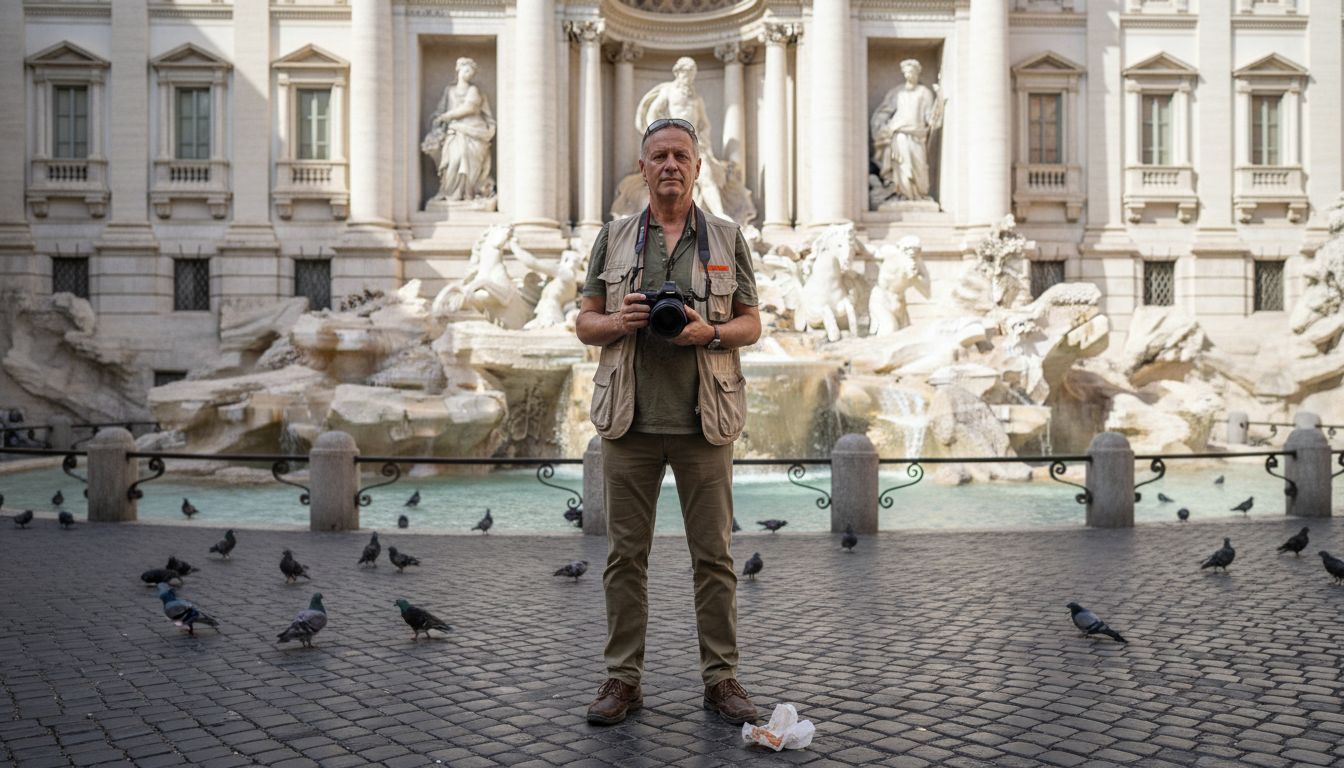
Pro Tip: Carry a small viewfinder or use your hands to frame scenes before raising your camera, helping visualize composition quickly in busy locations.
Simplification reduces visual chaos in crowded Italian markets and festivals. Focus tightly on single subjects like fruit vendors or street performers. Use shallow depth of field to blur distracting backgrounds. The urban photography tips italy guide demonstrates simplification in complex city environments.
Apply these basics across Italy’s varied landscapes with the landscape photography tips italy resource. The urban photography workflow italy shows how to combine multiple foundational techniques efficiently. This complete guide to photography composition and these photography composition tips for beginners offer extended learning, while this composition techniques guide provides visual examples.
Advanced composition techniques for iconic Italian locations
Sophisticated composition methods elevate photos from documentary snapshots to artistic statements. These approaches work especially well at Italy’s celebrated destinations where basic techniques feel overused.
Symmetry and balance excel at capturing Venice’s canal reflections and Renaissance architecture. Position your camera to mirror buildings in still water during calm mornings. Align classical columns symmetrically within your frame. Center ornate church facades for formal, powerful compositions.
Layering creates depth by stacking foreground, middle ground, and background elements. In Tuscany, place wild poppies in front, cypress trees in middle distance, and rolling hills beyond. Milan’s Duomo works beautifully with street lamps foreground, piazza middle, and cathedral background. This technique transforms flat images into three dimensional scenes.
Advanced techniques for Italy:
- Use reflections to double visual impact
- Stack multiple depth layers for richness
- Position horizons strategically for drama
- Integrate people for scale and story
- Combine framing with leading lines
Strategic horizon placement shapes mood in cityscapes and seascapes. Lower horizons emphasize dramatic skies over Florence’s Duomo. Higher horizons showcase intricate piazza patterns in Siena. Experiment with unconventional placements for unique perspectives.
Combining multiple compositional elements adds complexity and depth. Frame a Venetian bridge through an archway while using canal edges as leading lines. Layer foreground flowers, middle distance villas, and background mountains in Como. Stack techniques deliberately for sophisticated narratives.
Comparison of advanced techniques:
| Technique | Best For | Italy Application | Difficulty |
|---|---|---|---|
| Symmetry | Classical architecture | Venice canals, Renaissance palaces | Medium |
| Layering | Landscapes | Tuscany hills, coastal scenes | Medium |
| Horizon placement | Cityscapes | Milan skylines, Amalfi views | Easy |
| Human integration | Cultural stories | Markets, festivals, daily life | Hard |
| Combined methods | Complex narratives | Iconic multi element locations | Hard |
Incorporating human elements deepens cultural storytelling beyond empty landscapes. Capture vendors arranging produce in morning markets. Include couples walking through Venetian alleyways. Show artisans working in Florence’s leather studios. People provide scale, emotion, and authentic narrative.
Pro Tip: Visit the same location multiple times during your tour to experiment with different advanced techniques, comparing results to develop your signature style.
The italian photography styles 2026 article explores current trends in combining techniques. These photography composition rules creative photos, landscape photography composition tips, and composition techniques travel photos resources provide additional advanced methods.
Overcoming common composition challenges on Italy photo tours
Real world obstacles test even experienced photographers on guided Italy tours. Crowds, difficult lighting, and visual clutter demand adaptive strategies beyond textbook techniques.
Managing tourist masses requires timing and positioning adjustments. Arrive at popular sites like Trevi Fountain before 7 AM for empty frames. Seek elevated viewpoints above street level crowds at Piazzale Michelangelo in Florence. Use longer exposures to blur moving people into ghostly traces, isolating static architecture.
Challenges and solutions:
- Crowds blocking views: Change elevation or shoot tight details
- Harsh midday light: Embrace shadows creatively or wait for golden hour
- Visual clutter: Simplify ruthlessly or use selective focus
- Cliché angles: Move constantly to find fresh perspectives
- Limited time: Prioritize storytelling over technical perfection
Changing perspective by moving around reveals unique angles beyond postcard clichés. Crouch low to emphasize foreground cobblestones leading to Roman ruins. Climb stairs for overhead market patterns. Shoot through crowds rather than over them for intimate street scenes.
Simplifying compositions reduces clutter in busy Italian settings. Zoom tight on single architectural details rather than entire chaotic facades. Use wide apertures to blur distracting backgrounds behind street food vendors. Frame tightly around essential story elements, eliminating peripheral noise.
Difficult lighting challenges resolve with patience and creativity. Harsh sun creates dramatic shadows on ancient stone walls worth emphasizing. Overcast days provide even light perfect for colorful building facades. Backlit scenes silhouette subjects against bright piazzas for graphic compositions.
Pro Tip: Shoot the same scene with three different composition approaches quickly, then compare results later to train your eye for what works in challenging conditions.
The urban photography tips italy guide addresses city specific obstacles. Browse the Italy photography blog for real tour examples of solving composition problems. These external guides on composition techniques improvements and ultimate guide to composition in photography offer additional problem solving strategies.
Summary comparison and practical recommendations for Italy photography composition
Synthesizing composition techniques into actionable guidance helps you make quick decisions during fast paced photo tours. Different Italy contexts demand tailored approaches matched to your goals and skill level.
Comparison of key techniques:
| Technique | Complexity | Best Italy Settings | Primary Benefit | When to Use |
|---|---|---|---|---|
| Rule of thirds | Beginner | All locations | Quick balanced framing | Always as foundation |
| Leading lines | Beginner | Streets, canals, paths | Guides viewer attention | Urban and landscape |
| Natural framing | Beginner | Architecture, doorways | Highlights focal points | Historic sites |
| Symmetry | Medium | Classical buildings, water | Formal powerful impact | Reflective calm scenes |
| Layering | Medium | Landscapes, vistas | Creates depth dimension | Open countryside |
| Human integration | Advanced | Markets, streets, culture | Authentic storytelling | Cultural documentation |
Situational recommendations:
- Urban architecture: Combine symmetry with leading lines from streets
- Rural landscapes: Layer foreground details with distant hills using thirds
- Cultural storytelling: Integrate candid people within natural frames
- Beginner practice: Master rule of thirds and simplification first
- Time constrained tours: Rely on natural framing for quick compelling shots
Essential principles unite all techniques. Balance heavy visual elements with negative space. Focus attention deliberately through framing and lines. Simplify scenes to strengthen core messages. Experiment constantly while maintaining compositional awareness.
Integrating multiple methods creates richer narratives than single technique reliance. Frame a vineyard worker through doorway while using rows as leading lines and thirds for placement. This layered approach produces sophisticated results matching Italy’s complexity.
Pro Tip: Create a personal composition checklist matching your style and review it before each shoot, ensuring consistent application of preferred techniques.
Explore diverse Italy locations offering varied composition practice through photography tours italy. Each setting teaches different skills, building comprehensive mastery across techniques.
Explore Italy photo tours designed to enhance your composition skills
Applying these composition techniques in Italy’s inspiring environments accelerates your photographic growth beyond isolated practice. Guided photo tours provide structured opportunities to master methods under expert direction.
You’ve learned the frameworks, now experience them firsthand. Professional guidance helps you recognize composition opportunities you’d miss alone, from perfect lighting moments to hidden architectural gems. Personalized feedback refines your approach in real time, building skills that translate to all future photography.

Our photography tours italy immerse you in diverse locations from Venice’s canals to Tuscany’s vineyards, each offering unique composition challenges. Discover what we do to understand how tailored experiences match your skill level and goals. These Italy photo tours immersive experiences combine education with artistic exploration, transforming techniques into instinctive creative choices that elevate your entire portfolio.
Frequently asked questions
What are the best composition techniques for beginners photographing Italy?
Start with the rule of thirds by positioning key subjects along imaginary grid lines rather than centering everything. Use leading lines like roads, canals, and pathways to guide viewer attention through your frames. Natural framing with arches, doorways, and windows highlights subjects while adding Italian architectural context. Simplify busy scenes by eliminating distractions and focusing tightly on single compelling elements.
How can I incorporate Italy’s culture into my photos through composition?
Include candid human subjects showing authentic daily activities like market shopping, cafe conversations, or artisan work. Frame shots to feature cultural elements such as festival decorations, traditional food preparation, or historic architectural details. Use perspective and layering to create context, placing people within environments that tell broader stories about Italian life and traditions.
What are effective ways to handle crowds when composing photos in busy Italian cities?
Arrive at popular locations during early morning or late evening hours when tourist numbers decrease dramatically. Change your shooting angle frequently by moving around subjects, finding elevated positions, or crouching low for unique perspectives. Use tight framing and selective focus to isolate subjects from crowded backgrounds, or embrace longer exposures that blur moving people into atmospheric elements rather than distractions.
Should I use symmetry or asymmetry for Italian architecture photography?
Symmetry works beautifully for classical Renaissance and Baroque buildings, centering ornate facades and using reflections in canals or fountains. Asymmetry suits more dynamic modern architecture or when you want to emphasize specific architectural details over formal balance. Experiment with both approaches at the same location, then compare which better serves your artistic vision and the building’s character.
How do I create depth in flat Italian landscape photos?
Layer foreground, middle ground, and background elements by including close details like flowers or rocks, middle distance features like trees or buildings, and distant hills or mountains. Use leading lines from paths or vineyard rows to pull eyes into the scene. Position your camera lower to emphasize foreground texture and scale, creating stronger three dimensional perception in rolling Tuscan or Umbrian countryside.