

For many American photographers eager to evolve their artistic voice, classic snapshots often leave a lingering sense that something is missing. The vibrant energy of Italy, with its ancient streets and luminous landscapes, calls for creative approaches that do more than just document what is visible. By exploring the world of immersive photography, you can transform storytelling into an interactive journey, blending technology and artistry to spark deep emotional impact and real viewer engagement.
Table of Contents
- Defining Immersive Photography And Its Essence
- Key Techniques And Technologies Used Today
- Types Of Immersive Photography Experiences
- Emotional Impact And Storytelling Power
- Challenges And Pitfalls In Immersive Practice
Key Takeaways
| Point | Details |
|---|---|
| Immersive Photography Redefines Engagement | This approach fosters active viewer participation, markedly contrasting with the passive observation typical of traditional photography. |
| Technological Integration Enhances Experience | The use of advanced technologies such as VR and AR creates rich, multi-sensory environments, offering deeper storytelling opportunities. |
| Emotional Connection is Key | Immersive photography focuses on creating profound emotional connections, transforming visual narratives into intimate experiences for viewers. |
| Challenges in Implementation Persist | High costs and ethical considerations associated with technology pose significant barriers to widespread adoption in immersive photography. |
Defining Immersive Photography and Its Essence
Immersive photography represents a transformative approach to visual storytelling that transcends traditional photographic boundaries. Unlike conventional images that merely capture a moment, immersive photography aims to transport viewers into a multisensory experience that engages them beyond passive observation.
At its core, immersive photography blends artistic vision with technological innovation, creating visual narratives that merge physical and digital realities. This approach draws inspiration from historical art forms like panoramic wall paintings, expanding the visual storytelling potential by integrating sound, light, and electronic elements into a comprehensive sensory experience.
Key characteristics of immersive photography include:
- Breaking traditional two-dimensional constraints
- Encouraging active viewer participation
- Creating layered, contextual visual narratives
- Utilizing advanced technological integrations
- Stimulating multiple sensory perceptions simultaneously
The essence of immersive photography lies in its ability to create profound emotional connections. By designing environments that blur the lines between observer and observed, photographers can craft experiences that resonate deeply with viewers, transforming simple visual documentation into rich, interactive storytelling.
Pro tip: Experiment with multiple perspectives and multimedia elements to create truly engaging immersive photographic experiences that go beyond traditional framing techniques.
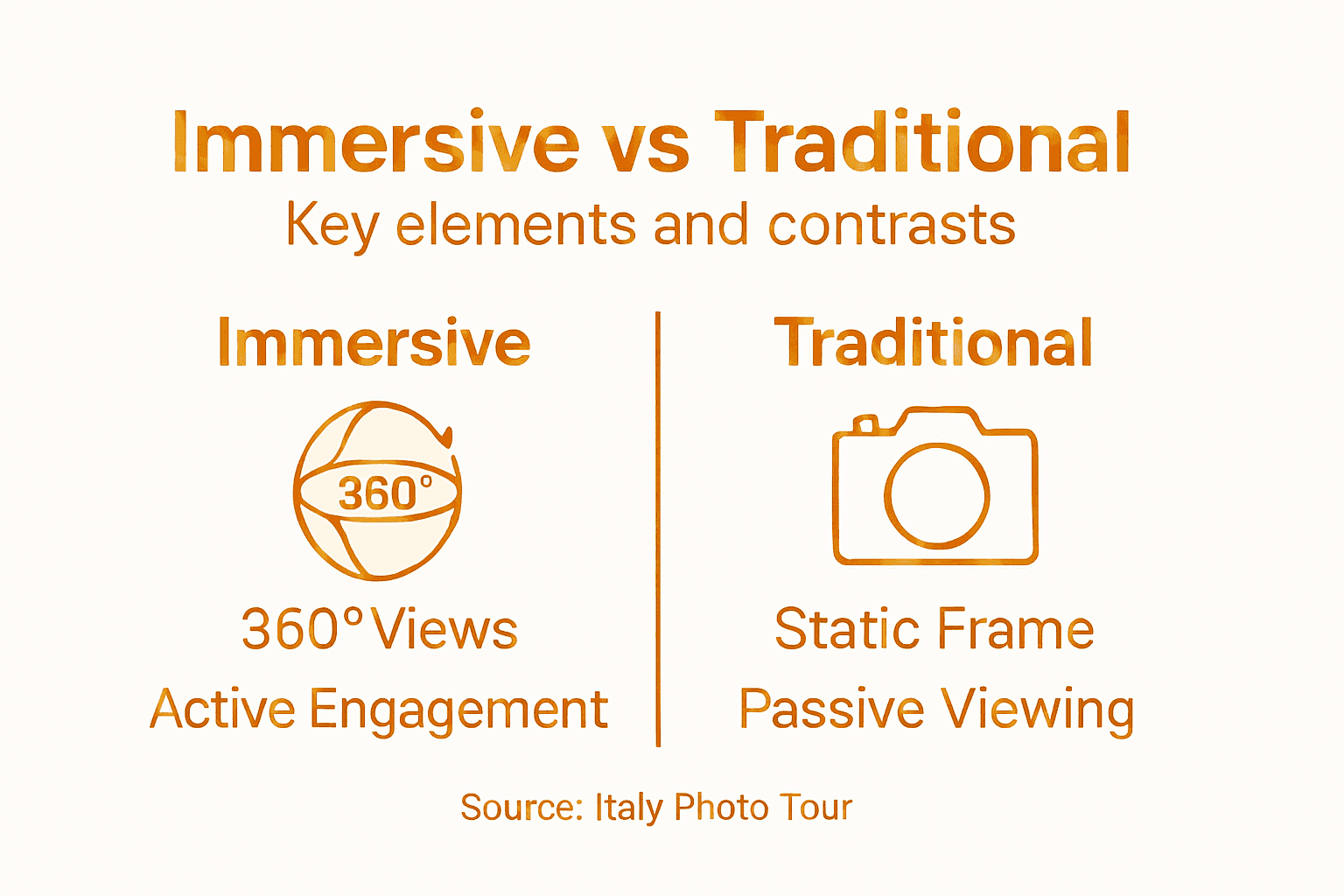
The following table contrasts immersive photography with traditional photography, highlighting their impacts and viewer experiences:
| Aspect | Immersive Photography | Traditional Photography |
|---|---|---|
| Viewer Engagement | Active participation | Passive observation |
| Sensory Involvement | Multisensory (sight, sound) | Primarily visual |
| Storytelling Depth | Layered, interactive narratives | Static, linear stories |
| Technology Use | Advanced (VR, AR, 360°) | Basic camera techniques |
| Emotional Connection | Strong, interactive experiences | Limited, indirect impact |
Key Techniques and Technologies Used Today
Immersive photography has evolved dramatically with technological advancements, introducing sophisticated methods that transform how photographers capture and present visual narratives. Virtual and augmented reality technologies have become pivotal in creating multidimensional experiences that transcend traditional photographic boundaries.
Panoramic imaging techniques represent a cornerstone of modern immersive photography. These advanced approaches allow photographers to generate comprehensive 360-degree visual environments that enable viewers to explore scenes from multiple perspectives. By decomposing images into intricate layers, photographers can now create hyper-realistic representations that reveal previously unseen spatial details.
Key technological approaches in immersive photography include:
- 360-degree camera systems
- Virtual reality (VR) integration
- Augmented reality (AR) overlays
- Advanced image stitching algorithms
- Multi-perspective capture techniques
The most cutting-edge techniques involve 3D Gaussian representation frameworks, which enable photographers to reconstruct complex scenes with unprecedented depth and detail. These technologies allow for free exploration of photographic environments, breaking down the traditional constraints of static imagery.
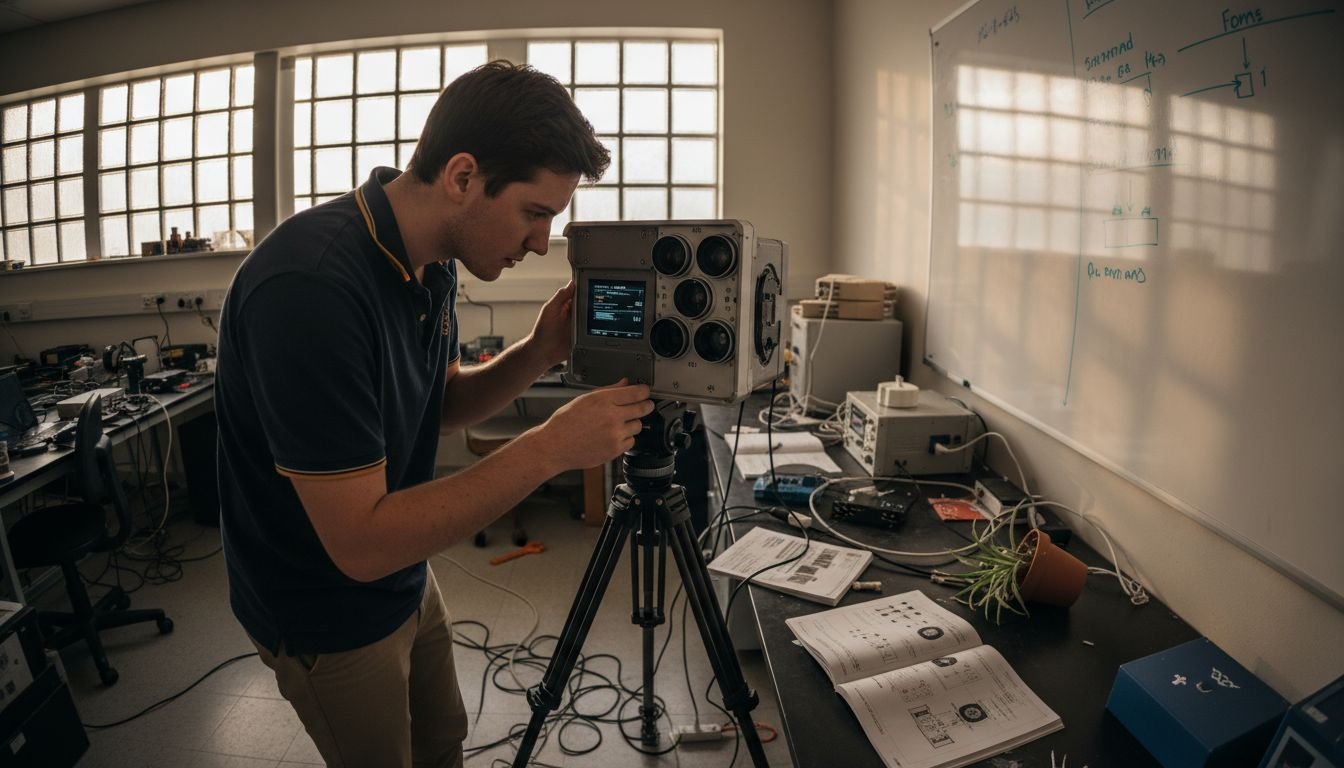
Pro tip: Invest in versatile camera equipment that supports multiple capture modes and explore post-processing software capable of generating immersive panoramic experiences.
Here is a summary of immersive photography technologies and their primary benefits:
| Technology | Core Benefit | Ideal Use Case |
|---|---|---|
| 360° Cameras | Complete scene capture | Architectural tours |
| VR Platforms | Full environment immersion | Virtual museums |
| AR Overlays | Added contextual layers | Cultural storytelling |
| Image Stitching | Seamless panoramic visuals | Landscape documentation |
| 3D Scene Reconstruction | Realistic depth perception | Heritage site exploration |
Types of Immersive Photography Experiences
Immersive photography has dramatically expanded beyond traditional visual capture, offering diverse experiences that engage viewers through multiple sensory channels. Immersive experiences span physical, digital, and hybrid categories, each providing unique ways of storytelling and audience interaction.
The digital realm offers particularly innovative approaches to immersive photography. Virtual reality (VR) and augmented reality (AR) technologies enable photographers to create entire worlds where viewers can explore environments with unprecedented depth and interactivity. These technologies transform passive observation into active exploration, allowing individuals to move through photographic spaces as if physically present.
Key types of immersive photography experiences include:
- Heritage tourism photography
- Virtual museum exhibitions
- Interactive digital art experiences
- Architectural visualization
- Cultural storytelling environments
Cultural heritage and tourism applications represent particularly compelling forms of immersive photography. By combining technological innovation with narrative depth, photographers can transport viewers into historically significant locations, archaeological sites, and culturally rich environments that would otherwise remain inaccessible.
Pro tip: Experiment with different immersive technologies and platforms to understand how each medium uniquely transforms visual storytelling and audience engagement.
Emotional Impact and Storytelling Power
Immersive photography transcends traditional visual documentation by creating profound emotional connections that transform viewer experiences. Immersive storytelling platforms leverage advanced technologies to craft hyper-realistic environments that evoke deep, multi-sensory emotional responses, turning passive observation into an intimate narrative journey.
Emotional engagement emerges through the intricate interplay of visual, auditory, and interactive elements. By breaking down the traditional barriers between viewer and subject, immersive photography allows individuals to not just see a story, but to feel and inhabit it. The photographer becomes less of a documentarian and more of an experience architect, carefully designing sensory pathways that guide emotional exploration.
Key emotional storytelling strategies include:
- Creating narrative depth through layered visual experiences
- Integrating sound and interactive elements
- Providing multiple perspective points
- Designing sensory-rich environments
- Enabling personal connection and interpretation
Digital immersive art experiences revolutionize audience interaction by narrowing the gap between spectator and artwork. These experiences trigger emotional resonance by inviting active participation, transforming storytelling from a linear narrative to a dynamic, personal exploration that reflects individual perceptions and memories.
Pro tip: Focus on creating emotional landscapes that invite viewers to project their own stories and experiences onto the visual narrative.
Challenges and Pitfalls in Immersive Practice
Immersive photography, while revolutionary, confronts significant technological and ethical challenges that require careful navigation. Technological limitations and access barriers represent complex obstacles that can undermine the transformative potential of immersive visual storytelling, demanding nuanced strategies for inclusive and responsible implementation.
Technical constraints emerge as a primary challenge in immersive photography. High-end equipment costs, complex software requirements, and rapidly evolving technological standards create substantial entry barriers for photographers and institutions. These financial and technical hurdles can limit creative exploration and prevent widespread adoption of cutting-edge immersive techniques.
Key challenges in immersive practice include:
- Expensive hardware investments
- Complex technical learning curves
- Data privacy and security risks
- Limited mainstream technological adoption
- Potential cultural misrepresentation
- Ethical considerations in digital storytelling
Market disruption and monetization challenges further complicate the landscape of immersive photography. Professionals must balance technological innovation with practical considerations, ensuring that advanced techniques provide genuine value beyond mere novelty. Navigating these complexities requires a strategic approach that prioritizes meaningful storytelling over technological spectacle.
Pro tip: Invest incrementally in immersive technologies, focusing on versatile tools that offer scalable learning opportunities and practical applications.
Elevate Your Storytelling Through Immersive Photography in Italy
Immersive photography challenges you to move beyond traditional framing and passive observation. If you are searching for ways to engage viewers with multisensory narratives or eager to experiment with perspectives and rich visual layers, consider how Italy’s diverse landscapes and historic landmarks provide the perfect canvas. Our guided tours focus on crafting emotional connections through light, shadow, and authentic local stories, helping you become an experience architect rather than just a photographer.

Discover tailored photography experiences with Italy Photo Tour that inspire creativity and deepen your understanding of immersive storytelling. Explore our curated opportunities in stunning settings and join a community passionate about capturing powerful narratives. Start your journey today by visiting our Uncategorized Archivi – Italy Photo Tour to see how immersive techniques meet authentic cultural exploration.
Frequently Asked Questions
What is immersive photography?
Immersive photography is a transformative approach to visual storytelling that engages viewers through a multisensory experience, merging physical and digital realities to create interactive narratives.
How does immersive photography differ from traditional photography?
Immersive photography encourages active viewer participation and incorporates multisensory elements, while traditional photography typically offers passive observation and static, linear storytelling.
What technologies are essential for creating immersive photography?
Key technologies include 360-degree camera systems, virtual reality (VR) platforms, augmented reality (AR) overlays, and advanced image stitching algorithms, all of which enhance the viewer’s experience by providing depth and interactivity.
What are some common applications of immersive photography?
Immersive photography is utilized in various fields, including heritage tourism, virtual museum exhibitions, interactive digital art experiences, architectural visualization, and cultural storytelling environments.