

TL;DR:
- Truly hidden gems offer authentic atmosphere, unique lighting, and storytelling depth, beyond popularity.
- Discovering hidden spots requires deep research, curious exploration, local insights, and evaluating story potential.
- Photographing lesser-known locations develops patience, personal style, and deeper cultural connections.
The world’s most photographed locations are beautiful, no question. But the most interesting frames often belong to places nobody is racing to photograph. When every traveler carries a camera and iconic views are endlessly replicated, the real creative opportunity lies in the overlooked corner, the quiet courtyard, the canal at dawn with no one else around. Italy, with its extraordinary depth of landscape, culture, and architecture, rewards those who look beyond the obvious. This guide is for photographers who are ready to move past the postcard and find the images that are truly their own.
Table of Contents
- What defines a photographic hidden gem
- How to discover and evaluate hidden photographic gems
- Elements to capture: Bringing out the story in hidden gems
- Mistakes and pitfalls: What hidden gems are not
- Why hidden gem hunting will transform your photography
- Discover Italy’s hidden gems with a guided photo tour
- Frequently asked questions
Key Takeaways
| Point | Details |
|---|---|
| Look beyond the obvious | Hidden photographic gems excel by offering fresh perspectives distinct from crowded tourist spots. |
| Evaluate for story potential | A location’s narrative and authenticity matter more than obscurity alone. |
| Use disciplined discovery | Combine research, local insight, and timing for the best chance of finding photographic treasures. |
| Avoid common pitfalls | Don’t waste time on visually dull or inaccessible spots just because they’re less known. |
What defines a photographic hidden gem
Not every overlooked place earns the title of hidden gem. That phrase gets applied loosely, and it can mislead photographers into chasing obscurity without a real creative purpose. A true photographic hidden gem is not simply a location few people visit. It is a place that rewards your eye, your patience, and your imagination in ways that more famous sites rarely can.
Think of it this way: a crowded square can produce stunning images, and a remote farmhouse might deliver nothing of visual interest whatsoever. Location popularity and photographic value are not the same thing. What actually matters is a specific cluster of qualities that, together, make a place sing through your lens.
These are the core attributes that distinguish a genuine photographic hidden gem:
- Authentic atmosphere: The place has a lived-in quality, a real identity that doesn’t perform for cameras. You feel it when you arrive.
- Distinctive light: Whether it’s the way afternoon gold slips between old stone walls or the soft diffusion of morning mist, light behaves memorably here.
- Minimal visual competition: Fewer crowds mean longer exposure to the scene, more freedom to compose, and images that don’t look like everyone else’s.
- Storytelling depth: The location carries history, mood, or human character. There is something to say beyond “this is beautiful.”
- Unique subject matter: Something about the scene, its textures, scale, geometry, or cultural layer, is not easily replicated elsewhere.
As the team at Italy Photo Tour expresses it: hidden gems combine unique atmosphere, untold stories, and minimal crowds. That combination is the real definition.
“The most compelling photographic locations are rarely the most famous ones. They are the ones that ask something of you as an artist.”
One more myth worth correcting: hidden gems are not necessarily remote or difficult to reach. A narrow alley two streets from a major tourist site can be just as rewarding as a mountain village that takes three hours to reach. The secret is in knowing what to look for, not how far you travel.
How to discover and evaluate hidden photographic gems
Once you understand what makes a location a hidden gem, the next challenge is actually finding one. This takes a mix of preparation, curiosity, and a willingness to wander. Here is a four-step method that works consistently for photographers exploring Italy.
- Research deeply, not just broadly. Go beyond the first pages of Google Image search. Explore photography forums, local Instagram hashtags in Italian, and niche travel blogs. Look for images that feel different, then trace their location.
- Explore on foot with no agenda. Some of the best discoveries happen when you put the map away and follow your curiosity. A street that catches light in an unusual way, a doorway framed in climbing vines, a small piazza that seems frozen in time. These places reward wanderers.
- Tap local knowledge. Baristas, market vendors, elderly residents sitting outside in the morning. Locals often know places that never appear in any guide. Ask with genuine interest and you’ll be surprised what you find.
- Evaluate story potential before you shoot. Before committing to a spot, ask yourself: what is this place saying? If you can’t articulate even a simple emotional response to being there, reconsider.
For those serious about discovering unique Italian photo spots, the investment in ground-level research pays off visually. Local knowledge, timing, and patient exploration to locate unique scenes are tools that no app can fully replace.
Pro Tip: Visit your chosen location at least twice: once to observe, and once to photograph. Your first visit teaches you the light, the movement of people, and the best angles. Your second visit is where the real images happen.
Here is a practical comparison of what you can expect from each type of location:
| Feature | Typical tourist hotspot | Hidden gem |
|---|---|---|
| Crowd level | High, especially midday | Low to minimal |
| Compositional freedom | Limited | Broad |
| Image uniqueness | Low | High |
| Emotional atmosphere | Often staged or transactional | Authentic, layered |
| Discovery effort | None | Moderate to high |
| Photographic storytelling | Surface-level | Deep and personal |
Not every quiet or lesser-known place deserves your time. Read the scene honestly. If the light is flat, the subject is generic, and the atmosphere is unremarkable, move on. For those who want to grow their artistic travel photography instincts, selective judgment is as important as open curiosity.

Elements to capture: Bringing out the story in hidden gems
Finding the location is only the beginning. What separates a memorable photograph from a record of a place is the ability to translate the soul of that location into a single frame. Italian settings, in particular, offer an extraordinary range of narrative threads to pull.
The elements that carry the most storytelling weight are:
- Natural light and its behavior: Golden hour in a Sicilian courtyard is different from the pale morning light of a Venetian fondamenta. Each has its own emotional register. Chase the quality of light that matches the mood you want to express.
- Characterful details: A worn doorstep, a faded fresco, laundry strung between windows. These details ground the image in reality and give it a human pulse.
- Sense of place and scale: Use the architecture, landscape, or urban texture around you to establish where you are in the world. Context deepens meaning.
- Human presence: A passing figure, a fisherman repairing nets, an old woman reading on a bench. Human life transforms a scene from beautiful to profound.
- Weather and atmosphere: Rain-soaked cobblestones reflect light in extraordinary ways. Fog softens and mystifies. Don’t wait for perfect conditions. Imperfect weather is often ideal for storytelling.
Italian landscapes and urban scenes reveal distinct narratives through light, weather, and human presence. That layering of elements is what makes a photograph feel alive rather than merely accurate.
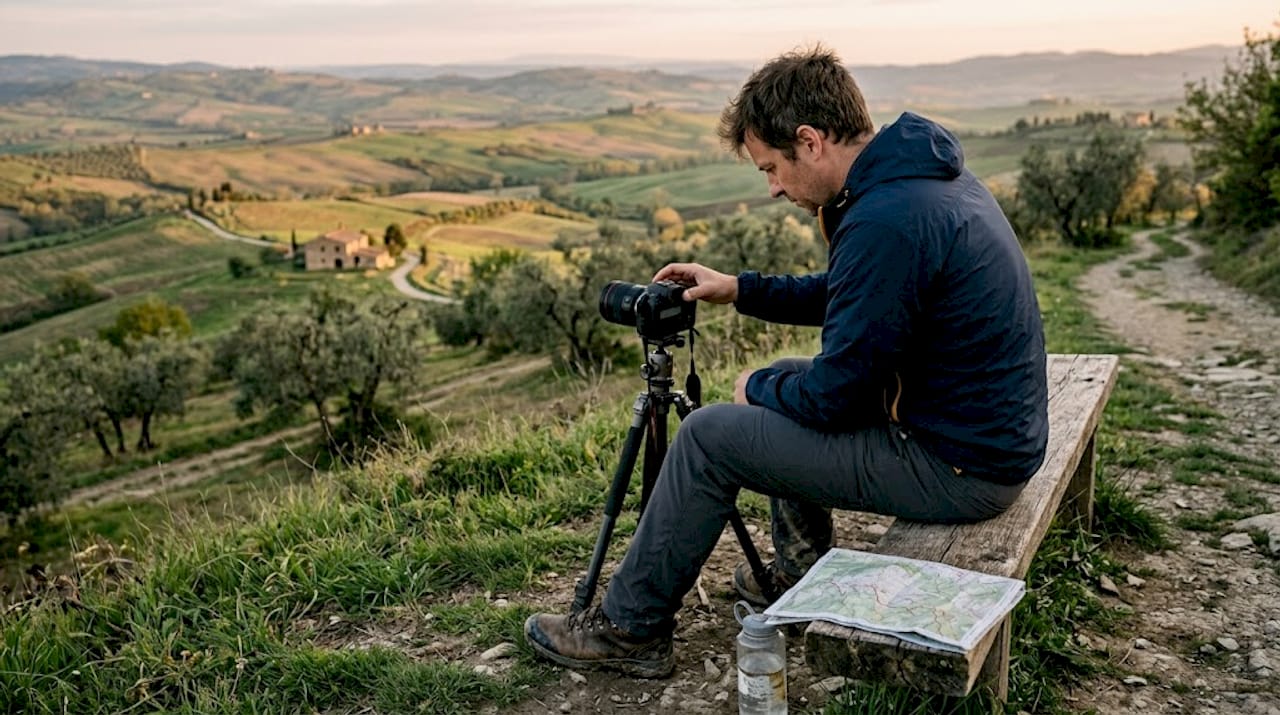
Pro Tip: Before you raise the camera, close your eyes for thirty seconds and absorb the sounds, smells, and physical sensation of the place. Then ask yourself: what is the single strongest feeling I have right now? Let that guide your composition. Pre-visualization rooted in sensory experience produces more intentional, resonant images.
In terms of composition, Italy rewards patience with geometry. Look for leading lines in ancient cobblestone paths, natural frames created by archways, and the interplay of light and shadow, what painters have long called chiaroscuro, playing out between narrow walls.
Mistakes and pitfalls: What hidden gems are not
Understanding the positive traits of hidden gems is essential, but awareness of common missteps can protect your time and your creative momentum. Many photographers, excited by the idea of discovery, fall into predictable traps.
Here are the most frequent mistakes to avoid:
- Chasing rarity over visual value. Just because a place is unknown doesn’t make it worth photographing. Obscurity for its own sake leads to disappointing results when the spot lacks story or compelling subject matter.
- Ignoring safety and access. Some seemingly atmospheric locations involve real risks: unstable structures, restricted property, or areas that are genuinely unsafe. Atmospheric images are never worth compromising your wellbeing.
- Poor light planning. Visiting a location at the wrong time of day can render even a magical place dull. Every location has a peak light window. Missing it means missing the photograph.
- Neglecting context and meaning. Capturing a place without understanding anything about it produces technically competent but emotionally empty images. Read about the place before you go.
The table below contrasts what typically distinguishes a successful hidden gem photograph from an unsuccessful one:
| Element | Successful hidden gem photo | Unsuccessful attempt |
|---|---|---|
| Light quality | Rich, directional, purposeful | Flat or harsh |
| Subject matter | Clear, compelling, layered | Vague or generic |
| Composition | Intentional framing and depth | Random, cluttered |
| Emotional resonance | Present and felt | Absent |
| Storytelling | Clear narrative thread | Unclear or missing |
It’s also worth remembering that uniqueness alone is not photographic value. A rusting gate in a forgotten alley might be singular in the world, but if it communicates nothing, it adds nothing to your portfolio. The test is always: does this image make someone feel something? Great landscape photography tips consistently return to this standard.
Why hidden gem hunting will transform your photography
Most photography guides focus on techniques and gear. Very few address what consistently photographing hidden gems actually does to your artistic identity over time. In our experience, it is one of the most transformative practices a photographer can adopt.
Famous landmarks are generous. They offer ready-made compositions, reliable light windows documented by thousands before you, and the reassurance of collective validation. Hidden gems offer none of that. They are unpredictable, often challenging, and frequently humbling. And that is precisely why they are so valuable.
When you cannot rely on the scene to do the work for you, you develop real skills: patience, adaptability, the ability to see possibility in apparent ordinariness. You learn to read light rather than chase it. You develop a personal visual language rather than repeating what has already been made.
Beyond technical growth, there is something deeper at play. Photographing less-traveled places in Italy builds a genuine connection to the country’s living culture, not its museum version. Those connections shape your storytelling instincts in lasting ways. For photographers thinking about planning photo tours in Italy with intention, this mindset shift is the true starting point.
Discover Italy’s hidden gems with a guided photo tour
The pursuit of hidden gems becomes far more rewarding when you have an insider by your side. Italy Photo Tour offers guided photography experiences designed for exactly this kind of discovery, moving past postcard views and into the authentic, visually rich corners of Italian life.

Led by professional photographer Mino Di Vita, what we do is connect curious photographers with places and moments that tell real stories. Our Italy photography tours are curated to provide the light, atmosphere, and narrative depth you’ve been reading about here. If you are ready to stop replicating images you’ve already seen and start creating ones only you could make, explore Italy photo tours and take the next step toward a more intentional, inspired photography practice.
Frequently asked questions
How do I spot a true photographic hidden gem in Italy?
Seek locations with compelling light, authentic atmosphere, and minimal crowds, and listen for untold local stories. These qualities together signal a true gem because, as research confirms, hidden gems combine unique atmosphere, untold stories, and minimal crowds.
What is the biggest mistake in searching for hidden gems?
The most common mistake is selecting a place simply because it is unknown, without considering its visual or storytelling value. Chasing obscurity for its own sake consistently leads to unsatisfying results when the spot lacks a compelling subject.
Can guidebooks or blogs still lead to unique images?
Absolutely. Even a semi-discovered location can yield a distinctive image because your creative approach, timing, and perspective are yours alone. Local knowledge, timing, and exploration still play a decisive role in making any location feel fresh.
Do I need expensive gear to capture great hidden gem photos?
Not at all. Storytelling, composition, and timing carry far more weight than the camera body or lens you bring. The most powerful hidden gem images are driven by vision, not by equipment specifications.