

Most travelers return from Italy with stunning landscapes, yet their photos lack emotional impact. The missing ingredient isn’t better light or sharper lenses. It’s the human stories woven into those landscapes. When you capture people interacting with Italy’s piazzas, markets, and coastlines, you transform static scenes into emotional narratives that resonate deeply with viewers. This guide reveals practical techniques to incorporate authentic human elements into your Italy travel photography, helping you create images that connect, engage, and tell compelling stories.
Table of Contents
- Key takeaways
- Why human stories matter in travel photography
- Techniques for capturing authentic human stories in Italy
- Exploring Italy’s culture through human stories in travel photos
- The impact of human elements on viewer engagement and narrative depth
- Join immersive Italy photography tours to tell your story
- Frequently asked questions
Key Takeaways
| Point | Details |
|---|---|
| Human stories matter | Incorporating people and their interactions transforms landscapes into emotionally resonant narratives that engage viewers. |
| Balance people and landscapes | Aiming for a harmonious mix adds depth by pairing environment with human context. |
| Wait and observe | Spending 30 to 60 seconds watching activity helps subjects relax and reveals decisive moments. |
| Ethical engagement with subjects | Respectful behavior invites natural reactions and preserves trust while photographing people. |
| Italian cultural contexts | Seek local moments like markets, festivals, and everyday life to enrich your travel stories. |
Why human stories matter in travel photography
Great travel photos tell stories, and stories need characters. When you photograph Italy’s landscapes without people, you capture beautiful settings but miss the narrative elements that create emotional connection. Human stories elevate photos from static scenes by introducing characters, conflict, and universal emotions that viewers recognize in their own lives.
Think about the classic narrative structure. Every compelling story contains a protagonist facing challenges within a specific setting, moving toward some resolution. Your travel photos can mirror this structure. A fisherman mending nets in Cinque Terre becomes your protagonist. The weathered hands and focused expression show the conflict of daily labor. The harbor setting provides context. The careful repair work suggests resolution and continuity of tradition. This single image contains all the elements that make stories memorable.
Emotional narratives work because they trigger empathy and activate memory centers in the brain. When viewers see a grandmother rolling pasta in a Roman kitchen, they don’t just observe a technique. They recall their own family meals, connect with universal themes of nourishment and tradition, and feel transported into that moment. This emotional engagement makes your photos memorable long after someone scrolls past a beautiful but empty landscape.
The storytelling elements you can capture include:
- Facial expressions revealing emotion and personality
- Body language showing relationships and interactions
- Activities demonstrating cultural practices and daily rhythms
- Gestures that communicate without words across language barriers
- Eye contact creating direct connection with viewers
Consider how you can enhance your Italy photos with human storytelling by seeking these elements during your travels. The goal isn’t to photograph every person you see, but to recognize moments where human presence adds narrative depth to your environmental context.
“The most powerful travel images show not just where you’ve been, but who you met and what you learned about the human experience in that place.”
When you master visual storytelling with human stories, your photography portfolio becomes a collection of meaningful narratives rather than a catalog of locations. Each image invites viewers to step into a moment, understand a culture, and connect with experiences beyond their own.
Techniques for capturing authentic human stories in Italy
Authentic moments rarely happen when you first raise your camera. The secret to capturing genuine human stories lies in patience and observation. When you arrive at a promising location, resist the urge to shoot immediately. Instead, spend 30 to 60 seconds watching how people move through the space, where light falls, and what natural interactions unfold.
This waiting period serves multiple purposes. First, people become accustomed to your presence and return to natural behavior. Second, you identify patterns in activity and anticipate decisive moments. Third, you discover compositional opportunities that weren’t obvious at first glance. A market vendor in Rome’s Campo de’ Fiori might arrange produce, greet customers, and pause for reflection, all within a minute. Each action offers different storytelling potential.
Capturing authentic moments and environmental portraits requires focusing on candid gestures rather than posed smiles. Watch for hands at work, concentrated expressions, spontaneous laughter, or quiet contemplation. These unguarded moments reveal character and emotion far more effectively than someone staring at your lens.
Follow this sequence for incorporating human stories into your Italy photography:
- Identify a location with strong environmental context, like a historic piazza or coastal harbor
- Observe the flow of human activity for several minutes without shooting
- Position yourself where light and background support your narrative
- Wait for a person to enter the frame naturally, creating scale and story
- Capture a series showing the person, their activity, and the surrounding context
- Review your sequence to ensure you’ve told a complete story
Pro Tip: Create photo series that show progression. Start with a wide environmental shot establishing place, move to a medium shot showing the person’s activity, then capture a detail shot of hands, tools, or facial expression. This three-image sequence tells a fuller story than any single frame.
Ethical engagement matters deeply, especially in Italy’s sacred sites and intimate cultural moments. Always approach photography as a guest, not an entitled observer. In churches, during religious processions, or at family gatherings, ask permission through gesture or simple Italian phrases. “Posso fare una foto?” (May I take a photo?) shows respect and often opens doors to better access.
When someone declines, accept gracefully and move on. Some moments aren’t meant for cameras, and respecting boundaries builds trust with communities you photograph. You’ll find that genuine interest in people’s stories, rather than just their image, creates opportunities for cultural photography ideas in Italy that purely opportunistic shooting never will.
Environmental portraits work beautifully in Italy because the settings themselves tell stories. Frame your subject within context that reveals their relationship to place. A chef photographed in their kitchen surrounded by copper pots and fresh ingredients tells a richer story than the same person against a blank wall. The environment becomes a supporting character in your narrative.
Exploring Italy’s culture through human stories in travel photos
Italy’s regional diversity offers endless opportunities to capture human stories that reveal cultural depth. Each region maintains distinct traditions, festivals, and daily rhythms that shape how people interact with their environment. Understanding these cultural contexts helps you anticipate meaningful moments and compose images that resonate with authenticity.
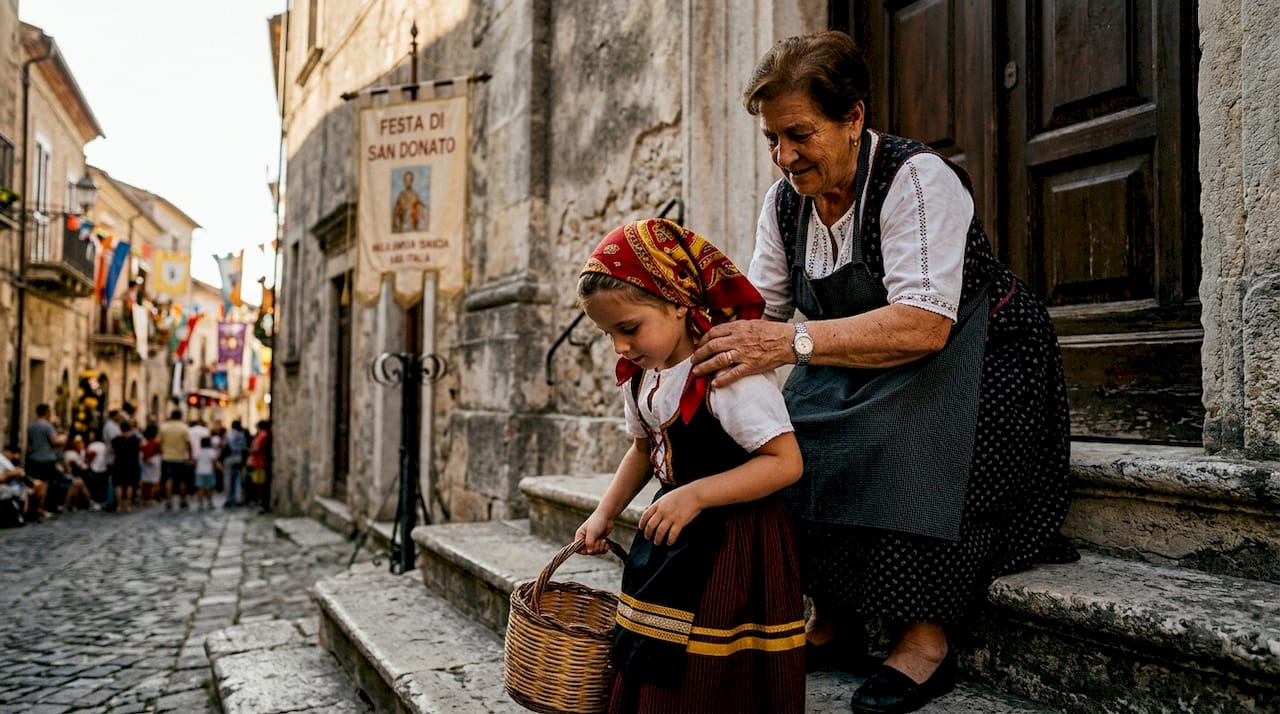
Calabria’s festivals showcase vibrant religious and seasonal celebrations where entire communities participate in centuries-old rituals. During Easter week, processions wind through hill towns with participants carrying elaborate floats, their faces showing devotion and concentration. These moments capture both individual emotion and collective tradition. Summer harvest festivals bring families into fields and piazzas, working together to process crops using methods passed through generations.
Rome’s Trastevere neighborhood pulses with street life that embodies urban Italian culture. Morning markets transform narrow streets into theaters of commerce and conversation. Vendors arrange produce with artistic precision, their practiced hands moving swiftly while maintaining constant banter with customers. Elderly residents pause at favorite cafes for espresso and gossip. Children navigate cobblestones on their way to school. Each scene offers glimpses into daily rhythms that define Roman life.
Cinque Terre’s harbors present intimate community scenes where fishing traditions continue despite tourism’s encroachment. Early morning brings fishermen preparing boats and mending nets, their weathered faces and capable hands telling stories of maritime heritage. Late afternoon sees families gathering on harbor walls, children playing while adults watch the sea. These moments capture the tension between preservation and change that defines many Italian coastal communities.
Key locations for capturing Italy’s human stories include:
- Weekly markets in every region, where commerce and community intersect
- Artisan workshops preserving traditional crafts like pottery, weaving, or metalwork
- Piazzas during evening passeggiata, when entire towns stroll and socialize
- Family-run trattorias where cooking traditions pass between generations
- Religious sites during festivals, revealing devotion and cultural continuity
| Region | Cultural moment | Storytelling opportunity |
|---|---|---|
| Calabria | Harvest festivals | Families working together in fields and piazzas |
| Rome | Market days | Vendor-customer interactions revealing urban rhythms |
| Cinque Terre | Harbor mornings | Fishermen maintaining maritime traditions |
| Tuscany | Vineyard harvest | Seasonal labor connecting people to land |
| Sicily | Street festivals | Multi-generational celebration and religious devotion |
Italy’s cultural traditions and festivals provide photographers with rich material for storytelling because they concentrate human emotion and activity into specific times and places. Planning your photography around these events ensures access to authentic moments where cultural identity expresses itself most vividly.
Document personal experiences within these cultural contexts to create unique narratives. Rather than photographing festivals as an outside observer, look for individual stories within the larger event. A child’s wonder at their first procession, an elderly participant’s practiced movements, a family’s preparation before joining the celebration. These intimate moments within public events create emotional connection that generic crowd shots never achieve.
When you explore photographic storytelling during Italy travel, you discover that the most compelling images often come from patient observation of ordinary moments rather than spectacular events. A grandmother teaching her granddaughter to make pasta, a craftsman absorbed in his work, neighbors chatting across balconies. These everyday interactions reveal cultural values and human connections that define Italian life beyond tourist attractions.
The impact of human elements on viewer engagement and narrative depth
The difference between a photo that gets scrolled past and one that stops viewers isn’t just technical quality. Research reveals that human presence boosts engagement and memorability significantly compared to landscapes alone. Photos including people generate over 80% higher engagement on social media platforms, receive more comments, and get shared more frequently than equivalent scenes without human elements.
Eye-tracking studies show viewers instinctively focus on human figures within images. When presented with a landscape containing a person, viewers’ eyes move first to the human face or figure, then explore the surrounding environment. This natural attention pattern means including people in your compositions guides viewer focus and creates a clear entry point into your image. Without this anchor, viewers may appreciate your photo’s beauty but struggle to find emotional connection.
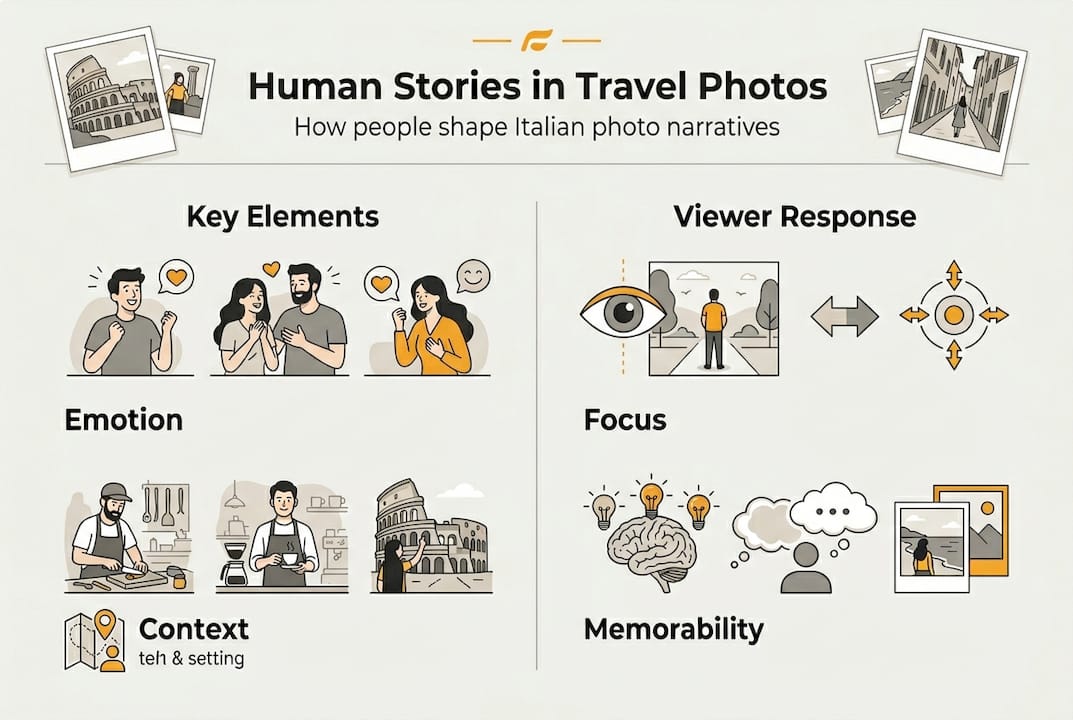
Memorability increases dramatically when images contain human stories. Cognitive research demonstrates that people remember narrative-based visual information far better than purely scenic content. A week after viewing photos, test subjects recalled images with human elements at nearly twice the rate of landscapes alone. This memory advantage comes from the brain’s preference for processing social information and constructing stories around human activity.
The balance between human presence and environmental context determines your photo’s emotional impact. Too much emphasis on people can reduce your image to a portrait that could exist anywhere. Too little human presence and you lose the narrative anchor that creates engagement. The sweet spot varies by composition, but generally aim for human elements that occupy 10 to 30% of your frame, allowing environment to provide context while people provide story.
| Element emphasis | Viewer response | Best use case |
|---|---|---|
| 80% environment, 20% human | Atmospheric with subtle narrative | Establishing sense of place with human scale |
| 60% environment, 40% human | Balanced storytelling | Showing interaction between people and place |
| 40% environment, 60% human | Character-driven narrative | Focusing on individual stories within context |
| 20% environment, 80% human | Portrait with context | Highlighting personal expression and emotion |
Pro Tip: Review your Italy photos by covering the human elements with your thumb. If the image still works compositionally but loses emotional impact, you’ve achieved good balance. If covering the person makes the photo stronger, you may have included them unnecessarily or placed them poorly within the composition.
Overusing human elements creates its own problems. Cliché shots of tourists posing at landmarks or obviously staged interactions feel inauthentic and reduce viewer trust. The goal isn’t to photograph every person you encounter, but to recognize moments where human presence adds genuine narrative value. Quality matters far more than quantity when incorporating people into your travel photography.
Thoughtful composition integrates human figures as organic elements within your frame rather than afterthoughts. Use leading lines to guide viewers from environmental context toward your human subject. Position people where light emphasizes their activity. Frame them within architectural or natural elements that reinforce your story. These compositional choices create cohesive images where every element supports your narrative.
When you enhance your Italy photos with human storytelling, you’re not just adding people to landscapes. You’re creating layered narratives that invite viewers to imagine themselves within the scene, understand cultural contexts, and connect emotionally with moments beyond their own experience. This depth transforms your photography from documentation into art that resonates and endures.
Join immersive Italy photography tours to tell your story
Learning to capture authentic human stories in your travel photography requires more than technical knowledge. It demands cultural sensitivity, patience, and guidance from experienced photographers who understand both the craft and the communities you’ll photograph.

Our photography tours in Italy immerse you in locations rich with human stories, from Rome’s vibrant street life to coastal communities maintaining centuries-old traditions. You’ll learn to recognize meaningful moments, approach subjects ethically, and compose images that balance environmental beauty with human narrative. Expert instruction helps you enhance your travel photography skills in Italy while experiencing the country’s culture firsthand. Join photographers who share your passion for photographic storytelling during Italy travel and return home with images that truly resonate.
Frequently asked questions
What is the role of human stories in travel photos?
Human stories transform travel photos from scenic documentation into emotional narratives by introducing characters, conflict, and universal themes viewers recognize. They create entry points for viewer engagement and activate empathy responses that make images memorable. Including people helps communicate cultural context and personal experiences that landscapes alone cannot convey.
How can I respectfully photograph people in Italy’s cultural settings?
Always ask permission when photographing individuals, using gestures or simple Italian phrases like “Posso fare una foto?” Avoid disrupting religious ceremonies, private family moments, or sacred rituals. Observe first to understand appropriate timing and approach as a respectful guest rather than entitled observer. Accept gracefully when someone declines and move on to other opportunities.
What techniques help capture authentic human moments in travel photos?
Wait 30 to 60 seconds for people to become comfortable with your presence and return to natural behavior. Focus on candid gestures and activities rather than posed smiles. Create photo sequences showing person, activity, and context together to tell fuller stories. Position yourself where light and background support your narrative before the decisive moment occurs.
Where in Italy are human stories most vivid for photographers?
Calabria’s festivals capture vibrant rituals and community celebrations rich with emotion and tradition. Rome’s Trastevere neighborhood shows daily urban life through markets, cafes, and street interactions. Cinque Terre harbors present intimate scenes of fishing communities maintaining maritime heritage. Weekly markets throughout every region offer concentrated human activity and cultural exchange.
How do human elements improve viewer engagement with travel photos?
Photos including people generate over 80% higher social media engagement through likes, comments, and shares compared to landscapes alone. Eye-tracking studies reveal viewers naturally focus first on human figures, creating clear entry points into images. Human stories trigger empathy responses and activate memory centers, making photos more memorable and emotionally impactful than purely scenic content.