

TL;DR:
- Minimalist photography in Italy emphasizes simple compositions that highlight architecture, landscapes, and negative space. Using lightweight gear like a mirrorless camera, a few lenses, and filters helps achieve clear, balanced images with control over light and framing. Patience and careful observation are essential for capturing quiet, timeless scenes amid Italy’s abundant visual richness.
Minimalist photography is the art of stripping a scene to its most essential elements, and Italy is one of the world’s most generous canvases for that discipline. From the geometric facades of Venice to the rolling ochre hills of Tuscany, the country offers a natural abundance of clean lines, open skies, and quiet corners that reward a restrained eye. Knowing how to compose minimalist shots in Italy means learning to see what to leave out, not just what to include. This guide covers gear, composition, light, and location strategy so you can return home with images that breathe.
What gear do you need for minimalist shots in Italy?
The right kit makes minimalist photography in Italy both practical and creatively freeing. Packing a compact gear kit improves mobility on cobbled streets and steep village paths, where overpacking leads to fatigue without any creative benefit. Traveling light is not a compromise. It is a deliberate choice that keeps you agile and present.
A mirrorless camera body is the preferred starting point. It is lighter than a DSLR, quieter in sacred or intimate spaces, and capable of exceptional image quality. For lenses, a 24–70mm covers architecture and wide scenes, while a 70–200mm lets you isolate a single window, a lone cypress tree, or a distant bell tower against an empty sky.
Beyond the camera body and lenses, a few accessories define the minimalist photographer’s kit:
- Tripod: Steady shots at blue hour or in low light without raising ISO.
- Polarizing filter: Cuts reflections on water and glass, deepening sky tones naturally.
- ND filters: Allow long exposures in bright conditions, smoothing water and erasing crowds.
- Remote shutter release: Eliminates camera shake during long exposures.
- Cleaning supplies: Dust and humidity are constant companions in Italian cities and coastal areas.
Recommended gear for Italian landscape and architectural work includes exactly this combination, balancing portability with the technical range needed for varied conditions. The goal is a kit you can carry all day without thinking about it.
Pro Tip: Bring a small, foldable reflector card. In narrow Italian alleys, it redirects ambient light onto your subject without adding gear weight.
How to use composition techniques for minimalist Italy photography
Minimalist photography relies on negative space, simple geometric forms, and isolated subjects to draw the viewer’s focus and create a calm visual narrative. Italy’s architecture and landscapes offer all three in abundance. The discipline is knowing when to stop adding and start subtracting.
Negative space and visual balance
Negative space is the area around your subject that contains nothing of visual weight. In Italy, this appears as a pale winter sky above a lone Venetian chimney, or a vast wheat field with a single farmhouse at the edge of the frame. The emptiness is not wasted. It gives the subject room to breathe and the viewer room to feel.
Visual balance does not require symmetry. A small, dark doorway placed at the far left of a bright, sun-washed wall creates tension and calm simultaneously. That tension is what makes a minimalist image memorable rather than merely empty.
Geometric precision in architectural shots
Shooting architectural minimalism at 90-degree angles to facades produces geometric precision and clarity. This technique avoids the distortion of angled perspectives and removes competing shadows that pull the eye away from the structure itself. Stand directly in front of a Venetian palazzo or a Tuscan farmhouse wall and let the geometry speak without interference.
Patterns and repetition are equally powerful. A row of identical shutters, a colonnade of arches, or a staircase of terracotta steps all carry visual rhythm. Isolate a section of that pattern and fill the frame. The result reads as both abstract and deeply Italian.
Color as a compositional tool
Color theory in minimalist photography enhances emotional impact in ways that composition alone cannot. Soft, muted hues create calmness, while complementary colors like orange and blue generate dynamic tension within a sparse frame. Italy’s color palette is generous: terracotta against cobalt sky, pale limestone against deep shadow, sun-bleached linen against a green shutter. Choose one color relationship per frame and commit to it.
The table below shows how composition choices affect the emotional tone of a minimalist image:
| Composition element | Effect on the viewer |
|---|---|
| Wide negative space | Calm, meditative, contemplative |
| Geometric symmetry | Order, timelessness, architectural authority |
| Single complementary color pair | Visual tension, energy within stillness |
| Isolated repeating pattern | Rhythm, abstraction, depth |
| Low horizon line | Expansiveness, freedom, open sky |
How does light shape minimalist photography in Italy?
Light is the single most powerful variable in minimalist photography, and Italy offers a remarkable range of it across seasons and times of day. Understanding which light serves simplicity and which destroys it separates good shots from great ones.
Overcast conditions are superior for minimalist architectural shots because they diffuse light, create delicate tonal transitions, and remove the harsh contrasts that direct sunlight produces. That even, shadowless quality reveals texture in stone, plaster, and terracotta without the drama of a spotlight. Many photographers dismiss gray days. Minimalist photographers seek them out.
Shooting at midday in Italy’s summer produces harsh shadows that fracture clean compositions and compete with the subject. Golden hour and blue hour provide softer, more cinematic lighting that enhances mood and composition clarity. The difference is not subtle. Midday light in July can make even a beautiful Florentine courtyard look flat and chaotic.
The optimal times to shoot minimalist scenes in Italy follow a clear sequence:
- Blue hour (before sunrise): The sky holds an even, cool luminosity. Streets are empty. Reflections on wet cobblestones create natural symmetry.
- Golden hour (after sunrise): Warm, raking light sculpts surfaces gently. Spring golden hour lasts about 90 minutes, giving you generous time to work a scene without rushing.
- Overcast midday: Flat light removes shadows entirely. Ideal for white walls, pale stone, and color-focused minimalist frames.
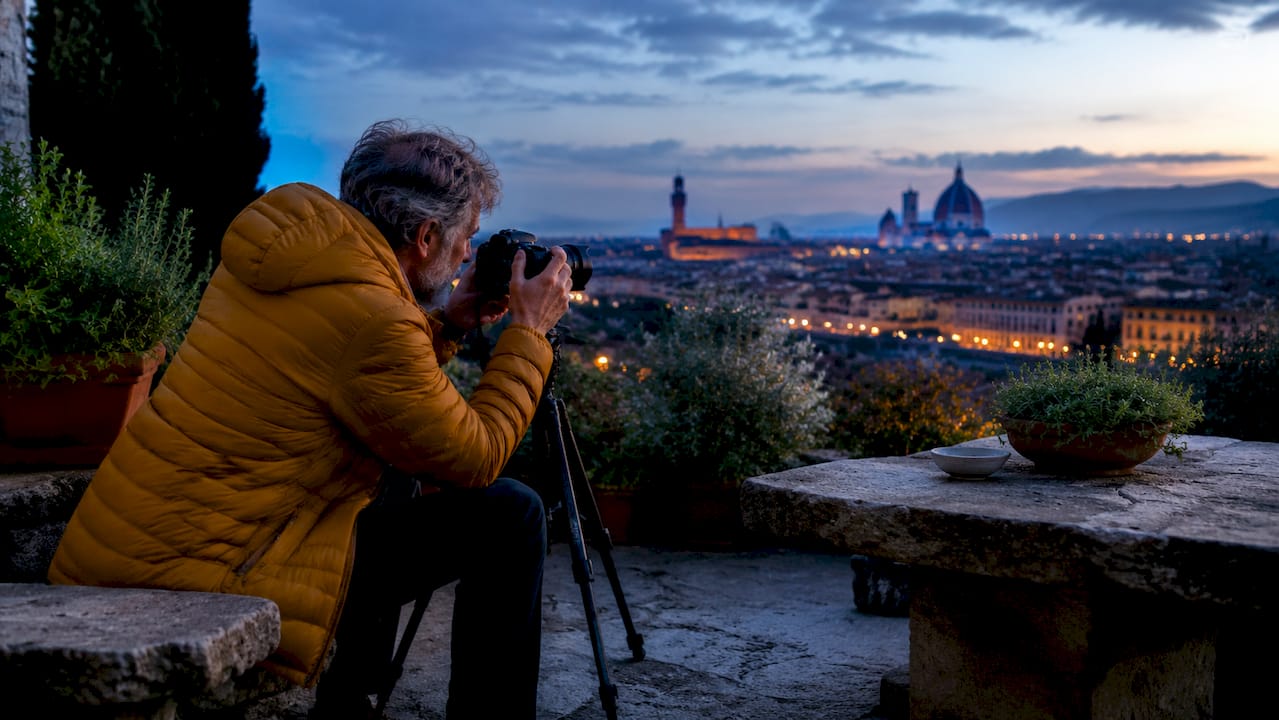
- Blue hour (after sunset): The sky turns a deep, saturated blue. Artificial light from windows and street lamps adds warmth without overwhelming the frame.
Pro Tip: Shoot in RAW format at all times. Italy’s light shifts quickly, and RAW files give you full control over white balance and exposure in post-processing without degrading image quality.
For deeper guidance on reading Italy’s natural light, Italyphototour’s expert guide to natural light covers the nuances of diffused and directional light across different Italian regions.
Step-by-step guide to composing minimalist shots at iconic Italian locations
Applying minimalist principles to specific Italian locations requires both preparation and patience. The steps below work across Rome, Venice, Tuscany, and Cinque Terre, adapting to each setting’s character.
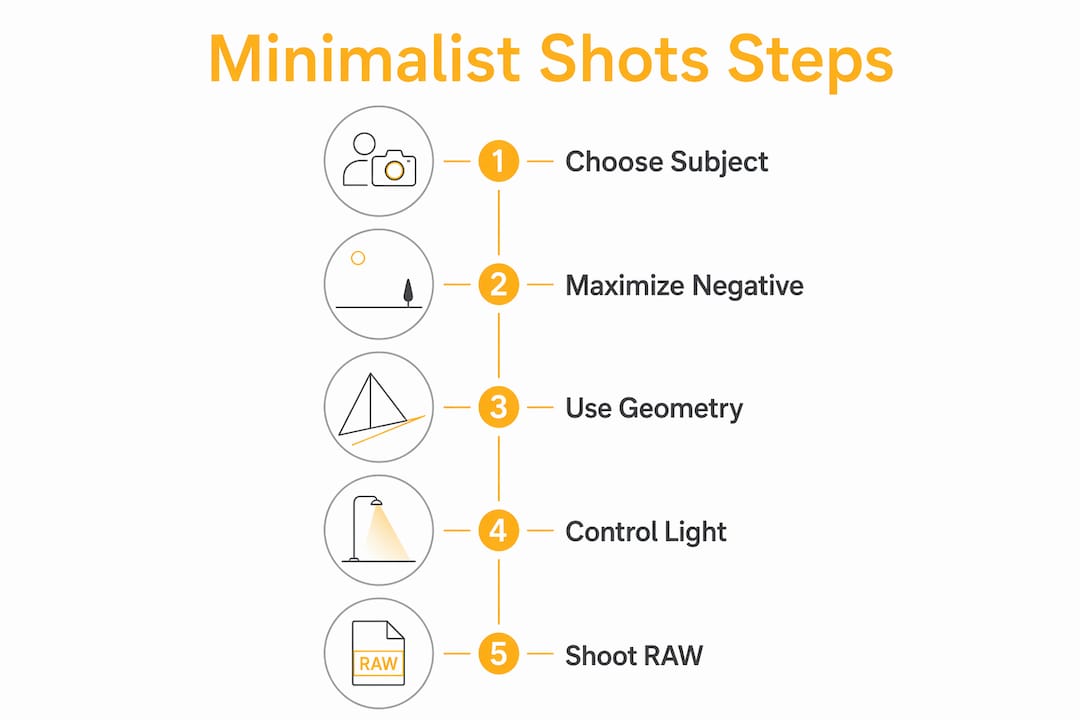
- Choose one subject. Before raising the camera, identify the single element that earns the frame. A lone gondola mooring post. A single arched window. One cypress against a pale sky. Everything else is a distraction.
- Find the negative space. Walk around the subject and look for angles where the background simplifies. A step to the left might replace a cluttered canal bank with open water. A lower angle might replace a busy roofline with clear sky.
- Apply the 90-degree rule for architecture. Stand directly in front of facades in Venice or Rome. Perpendicular alignment preserves geometry and removes converging lines that add visual noise.
- Choose your focal length deliberately. A wide angle (24mm) emphasizes the space around the subject. A telephoto (135mm or 200mm) compresses distance and isolates the subject against a softened background. Both serve minimalism differently.
- Lock your exposure for the dominant tone. Meter for the brightest area of the frame that holds detail. This keeps highlights clean and preserves the airy quality that defines minimalist images.
- Post-process with restraint. Post-processing minimalist photos should focus on dynamic range, contrast, and color temperature adjustments in the 5,500–6,000K range. Edit highlights and shadows carefully. Avoid over-sharpening, which reintroduces texture and complexity that minimalism works to remove.
For location ideas across Italy’s most photogenic corners, unique Italian photo spots offers curated recommendations suited to clean, minimalist compositions.
What are the most common mistakes in minimalist Italy photography?
Minimalism fails when photographers remove the wrong things or keep too many of the right ones. The most frequent mistakes share a common root: not looking carefully enough before pressing the shutter.
- Cluttered backgrounds: A beautiful subject loses all power when a tourist, a parked scooter, or a signpost appears behind it. Move your feet before you move your settings.
- Harsh midday shadows: Strong shadows create competing shapes that fracture the frame. Shoot early, shoot late, or wait for clouds.
- Over-saturated color: Boosting saturation in post-processing contradicts the calm emotional tone that minimalism creates. Italy’s colors are already rich. Trust them.
- Too many subjects: Two interesting elements do not make a stronger image than one. They make a weaker one. Choose and commit.
- Aggressive sharpening in editing: Over-sharpening adds visual noise and texture that pulls the eye away from the subject. Keep sharpening subtle.
Pro Tip: Before shooting, spend five minutes simply standing and observing the scene. Notice where your eye goes naturally. That instinct is your composition.
“Minimalism is not about making images empty. It is about making them honest.”
The urban photography tips for Italy resource from Italyphototour addresses many of these pitfalls in the context of Italian city scenes, where distractions are constant and discipline is everything.
Key takeaways
Minimalist photography in Italy succeeds when you commit to one subject, control your light, and resist the temptation to include everything the country so generously offers.
| Point | Details |
|---|---|
| Gear stays compact | A mirrorless body, two lenses, a tripod, and filters cover every Italian minimalist scenario. |
| Negative space is the subject | Empty sky, open water, and bare walls carry as much weight as the focal point itself. |
| Overcast light is an asset | Diffused light removes harsh shadows and reveals architectural texture without distraction. |
| 90-degree angles preserve geometry | Shooting perpendicular to facades keeps lines clean and eliminates converging distortion. |
| Post-processing should be restrained | Adjust dynamic range and color temperature at 5,500–6,000K; avoid over-sharpening. |
What I have learned shooting minimalism across Italy
After years of photographing Italy’s streets, coastlines, and hill towns, the lesson that took longest to absorb was this: the country’s beauty is so abundant that restraint feels almost rude. Every alley in Venice offers ten compositions. Every Tuscan hillside offers twenty. The instinct is to capture all of it.
Minimalism taught me to refuse that instinct. The images I return to most often are the ones where I waited, eliminated, and committed to a single quiet truth in the frame. A pale wall with one green shutter in Matera. A single fishing boat on a silver sea at Cinque Terre. A lone figure crossing a rain-wet piazza in Milan at blue hour.
What I tell photographers who join Italyphototour’s guided experiences is this: patience is the most important piece of gear you own. Italy will always offer more. Your job is to want less. The minimalist photography guide for beginners on the Italyphototour site is a good place to build that visual discipline before you arrive.
Experiment with color relationships. Shoot on overcast days when others stay inside. Stand in front of a wall for twenty minutes and watch how the light changes. Italy rewards that kind of attention with images that feel timeless rather than merely pretty.
— Mino
Guided photography tours that bring minimalism to life in Italy
Italyphototour designs its experiences around exactly the kind of seeing this article describes. Each tour places you in locations chosen for their light, geometry, and quiet beauty, guided by a photographer who has spent years learning where Italy simplifies itself most generously.

Whether you want to photograph the reflections of Venice at blue hour, the spare geometry of a Tuscan farmstead, or the graphic shadows of a Milan courtyard, Italyphototour’s photography tours in Italy are built for photographers who want to slow down and see more deeply. Each experience is led by Mino Di Vita, whose approach to light, composition, and storytelling shapes every session. If you are ready to put these minimalist principles into practice on location, the Italy photo tour experiences page is the natural next step.
FAQ
What is minimalist photography in the context of Italy?
Minimalist photography is the practice of composing images around a single subject, negative space, and simple geometric forms. In Italy, this approach suits the country’s architecture, open landscapes, and rich but controlled color palettes.
When is the best time to shoot minimalist photos in Italy?
Blue hour before sunrise and golden hour after sunrise offer the softest, most cinematic light for minimalist shots. Overcast days are equally valuable because diffused light removes harsh shadows and reveals clean architectural texture.
What camera settings work best for minimalist shots in Italy?
Shoot in RAW format, meter for the brightest area holding detail, and set color temperature between 5,500K and 6,000K in post-processing. Keep sharpening subtle to preserve the clean, airy quality that defines minimalist images.
Which Italian locations are best for minimalist photography?
Venice, Tuscany, Cinque Terre, and Rome each offer strong minimalist opportunities. Venice rewards perpendicular architectural shots and water reflections; Tuscany offers open skies and isolated farmhouses; Cinque Terre provides bold color against sea and stone.
How do I avoid clutter in minimalist shots in busy Italian locations?
Shoot early in the morning before crowds arrive, use a telephoto lens to isolate your subject from the background, and spend time observing the scene before raising the camera. Moving your position by even a few steps often eliminates the most distracting elements entirely.