

TL;DR:
- Mentorship significantly enhances travel photography by providing personalized feedback that accelerates skill development and builds confidence. It teaches photographers to see Italy’s landscapes and culture with a deeper understanding, leading to more authentic and compelling images. Even informal or peer-based guidance can offer valuable growth opportunities, transforming how photographers approach their craft.
Most photographers assume that more hours shooting means better photos. They invest in gear, study composition rules, and practice endlessly on solo trips, yet something remains just out of reach. That elusive quality, the kind of image that stops a viewer mid-scroll and pulls them into a story, rarely emerges from isolation alone. Mentorship is the quiet catalyst that most travel photography guides never mention. Across Italy’s rolling Tuscan hills, Venice’s luminous canals, and the cinematic coastline of Cinque Terre, the difference between a snapshot and a soul-stirring photograph often comes down to one thing: having someone skilled walk beside you.
Table of Contents
- Why mentorship matters in travel photography
- What mentorship looks like on the road in Italy
- How amateur photographers benefit from mentorship
- Alternatives and realities: Beyond formal mentorship
- Our perspective: What most Italy-focused photography guides miss about mentorship
- Ready to grow? Find your mentorship path in Italy
- Frequently asked questions
Key Takeaways
| Point | Details |
|---|---|
| Mentorship accelerates growth | Guided learning helps photographers gain skills and confidence much faster than solo practice. |
| Real-world feedback matters | On-location guidance in Italy provides practical, context-specific improvement for your travel photography. |
| Creative vision is shaped | Mentors help connect technical skills to artistic storytelling, especially in capturing Italian culture and landscapes. |
| Alternatives exist | If formal mentorship isn’t accessible, peer reviews and group feedback can still foster growth and learning. |
Why mentorship matters in travel photography
With myths about self-directed learning addressed, let’s pinpoint why mentorship has such an outsized impact in travel photography.
Self-study is a valuable foundation, but it has a ceiling. You can read every tutorial, watch hundreds of online videos, and still repeat the same compositional mistakes trip after trip. The reason is simple: without personalized feedback, blind spots become invisible habits. Mentorship accelerates skill development by compressing years of trial-and-error into focused, intentional sessions that target exactly what holds you back. A mentor doesn’t just tell you what to do. They show you why your light reading was off at that specific piazza, why the story in your frame feels incomplete, and how to fix it before the golden hour disappears.
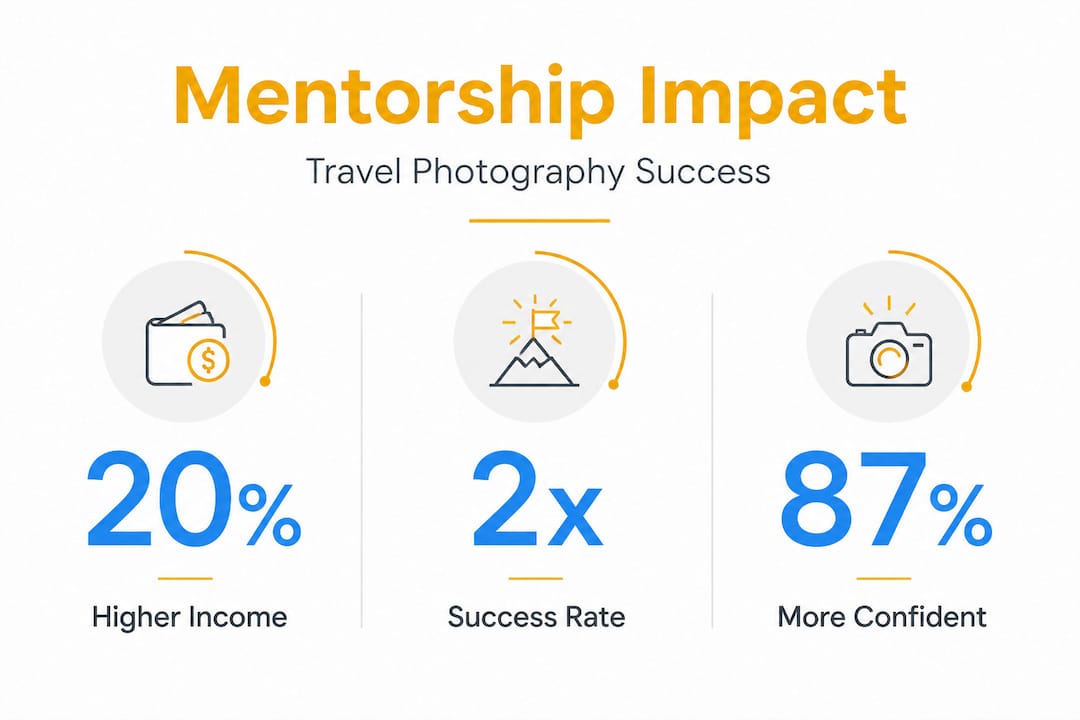
The data behind this is striking. Photographers with mentors earn 20% more, are twice as likely to succeed long-term, and 87% report significantly higher confidence after mentored experiences. Guided learning environments also accelerate skill acquisition by up to 30% compared to self-study alone. These aren’t abstract numbers. They reflect real creative breakthroughs that happen when someone finally sees their work through an experienced eye.
| Outcome | Self-study | With mentorship |
|---|---|---|
| Skill progression speed | Slow, inconsistent | Up to 30% faster |
| Long-term success rate | Baseline | 2x more likely |
| Confidence levels | Variable | 87% report improvement |
| Earnings potential | Baseline | Up to 20% higher |
Italy, more than perhaps any other destination, amplifies every reason mentorship matters. Its landscapes shift from misty medieval hill towns to sun-bleached coastal villages within a few hours’ drive. Its light behaves differently in the Venetian lagoon than it does across the wheat fields of Val d’Orcia. Having a mentor who understands these nuances, and who can explain how to adapt your settings and perspective in real time, transforms a beautiful but bewildering country into a legible, magnificent visual language. For those beginning to explore this world, a travel photography guide for Italy offers an excellent structural starting point before a mentored experience deepens that foundation.
“The photographer who receives thoughtful, specific feedback in the field grows in ways that no amount of solo practice can replicate. Italy rewards those who know how to listen to a place.”
When you plan a Tuscany photo tour, the temptation is to pack an itinerary with iconic locations and hope for perfect light. Mentorship changes that approach entirely. You begin to move more slowly, observe more deeply, and photograph with intention rather than impulse.
What mentorship looks like on the road in Italy
Now that we’ve established mentorship’s value, how does it actually play out on the streets and in the countryside of Italy?
Mentorship on the road is far more dynamic and responsive than a classroom course. In travel photography, mentors provide real-world workflows for shooting on the move, offer portfolio refinement for editorial ambitions, and guide students in capturing authentic cultural stories rather than tourist clichés. In practice, this might mean your mentor pulls you aside at the edge of a Florentine market to discuss how the direction of morning light is flattening your subject, then shows you three steps forward where shadow and warmth collide in precisely the right way.
Here is what effective field mentorship typically involves during an Italy-based photography experience:
- On-location feedback sessions: Real-time critique as you shoot, addressing exposure decisions, compositional choices, and storytelling instincts while the scene is still in front of you.
- Mid-trip editing reviews: Evening sessions reviewing the day’s images together, identifying patterns in your work and building on strengths while refining weaknesses.
- Impromptu assignments: Targeted exercises designed to break habitual shooting patterns, such as spending one morning photographing only shadows, or one afternoon capturing only human expressions.
- Cultural storytelling guidance: Learning how to integrate local rituals, human faces, and social textures into landscapes rather than treating them as separate subjects.
- Reflective conversation: Discussing what drew you to a particular frame and why, nurturing the personal vision that makes your photography unmistakably yours.
| Solo shooting | Guided field mentorship |
|---|---|
| Trial-and-error feedback loop | Immediate, specific correction |
| Reliant on post-trip self-analysis | Real-time insight during the shoot |
| Limited cultural context | Mentor shares local knowledge and stories |
| Inconsistent lighting decisions | Guided light reading and adaptive technique |
| Personal vision may stagnate | Creative identity encouraged and shaped |
Italy’s light is generous but demanding. The way golden hour settles over the terracotta rooftops of Siena differs entirely from the silver shimmer it casts across the Venetian lagoon. Mastering light and shadow is one of the most transferable skills a mentor can help you develop, and Italy provides an incomparable classroom. A well-structured Tuscany photo tour led by an experienced photographer offers exactly the kind of layered, responsive guidance that accelerates this learning in the field.
Pro Tip: When working with a mentor on location, always ask them to explain not just what to change, but why. Understanding the reasoning behind every adjustment builds intuition that you can carry into any destination, long after the tour ends.
How amateur photographers benefit from mentorship
Understanding the “what” is only part of the story. Let’s see how mentorship specifically transforms skills for those starting out or aiming to grow.
Amateur and enthusiast photographers often carry a quiet fear into the field: the worry that they will miss the moment, set the wrong exposure, or fail to find the composition that does justice to what they see. Mentorship addresses this anxiety directly by providing a safety net that encourages experimentation. Amateur photographers benefit from structured assignments, portfolio reviews, and field instruction, improving not only technical skills like composition and exposure, but also the more nuanced art of cultural storytelling.
Consider what happens when an amateur photographer stands in the narrow streets of a Venetian calle with no guidance. They point and shoot, capturing what everyone else captures. Add a mentor to that moment, and the experience transforms. The mentor might say: look at the way the laundry line above you creates a natural frame. Step back two meters. Wait for that woman with the red coat to cross the canal bridge. Suddenly, the amateur is making intentional decisions, and the photograph carries weight.
The benefits accumulate in several meaningful ways:
- Elevated compositional awareness: A mentor trains your eye to read a scene before lifting the camera, noticing foreground interest, leading lines, and tonal contrast intuitively over time.
- Confidence in approaching subjects: Many amateurs feel hesitant to photograph people in public spaces. Guided experience builds the social ease and visual preparation needed to capture authentic human moments respectfully.
- Technical fluency under pressure: Italy’s light changes fast. Learning to adjust exposure, select depth of field, and choose focal length quickly becomes second nature under expert guidance.
- A more personal photographic voice: Mentors guide you through real-world workflows while also encouraging you to express your unique perspective, moving you beyond imitation and toward genuine artistic identity.
87% of photographers who receive mentored instruction report significant improvements in their confidence levels, according to recent industry data. Confidence, in photography, is not vanity. It is the quality that allows you to wait patiently for the right light, approach a stranger for a portrait, or choose the unconventional angle that makes a familiar landmark look entirely new.
For those wanting to understand how artistic intention can shape every creative decision, this artistic travel photography guide for Italy provides a thoughtful framework. And if you’re still evaluating your equipment for the journey, exploring the best camera gear for Italy can help ensure your tools match your creative ambitions.
Pro Tip: Don’t wait until you feel “ready” before seeking mentorship. The most powerful breakthroughs happen precisely at the edge of your comfort zone, when you’re slightly unsure but guided by someone who has stood in that uncertainty before.
Alternatives and realities: Beyond formal mentorship
No article is complete without acknowledging practical realities and workarounds for those who can’t access, or don’t want, formal mentorship.
Traditional mentorship programs can be costly, competitive, or simply difficult to access depending on where you live and what your schedule allows. The good news is that not all mentorship needs to be formal or require famous mentors. Peer reviews, online portfolio critique sessions, and enthusiast-to-enthusiast self-mentorship are all genuine pathways to growth. They may be less structured, but they carry their own unique warmth and creative energy.
The landscape of accessible mentorship alternatives is broad. You might attend a regional photography festival and submit work for portfolio review, join an active online community where experienced members critique images with care, or organize a small local group of fellow photographers who travel and review work together. These options lack the real-time field instruction of a guided tour, but they build exactly the habits of observation and self-critique that accelerate long-term development.
There are also important cautions worth raising. Some paid mentorship programs promise transformation but deliver generic, impersonal feedback that could apply to anyone’s work. The most meaningful guidance is specific, responsive, and rooted in genuine knowledge of place and craft. Before investing in any paid program, look for evidence of personal engagement, a clear educational philosophy, and ideally, real testimonials from photographers at your level.
“Growth in photography doesn’t require a famous name behind you. It requires honest eyes, genuine feedback, and the humility to keep learning, whether the feedback comes from a master or a fellow enthusiast.”
The Italy Photo Tour blog offers a steady stream of thoughtful resources, creative insights, and practical guidance for photographers at every stage. It functions as a kind of open, ongoing mentorship in written form, helping you refine your creative approach even between guided experiences.
Our perspective: What most Italy-focused photography guides miss about mentorship
Now, stepping back, here’s what conventional wisdom misses when it comes to mentorship and travel photography in Italy.
Most online guides about photographing Italy focus almost exclusively on gear recommendations, golden hour timing charts, and lists of “must-visit” viewpoints. They treat photography as a technical challenge to be solved with the right settings and the right location. What they consistently overlook is the relational dimension of creative growth. Mentorship bridges technical skill and creative vision in ways that no gear list or settings guide ever can, and this is especially true when photographing a country as layered and living as Italy.
Italy is not simply a collection of beautiful backgrounds. It is a place where light carries memory, where a fisherman’s gesture echoes centuries of maritime tradition, and where the color of a faded wall in Burano tells a quiet story about time and community. Accessing those stories requires more than a wide-angle lens and a sturdy tripod. It requires the cultivation of a personal vision, the willingness to be present in a place rather than merely passing through it, and often, the guidance of someone who has spent years learning to listen to what Italy whispers to the patient photographer.
We believe that the most transformative aspect of mentorship is not the technical correction. It is the moment when a mentor helps you recognize your own creative instincts as valid, worthy, and worth developing. Many amateur photographers carry the quiet assumption that real photography belongs to professionals. A great mentor dismantles that assumption gently and permanently. They teach you not just to capture Italy, but to see it in a way that is genuinely and irreversibly yours. For those ready to experience that transformation firsthand, immersive photography experiences across Italy offer exactly that kind of guided, personal, and artistically rich journey.
Ready to grow? Find your mentorship path in Italy
If you’re motivated to unlock the next level of your photography journey, here’s where to start.
Italy Photo Tour offers something rare in the world of travel photography: genuine mentorship woven into the fabric of every experience. Led by professional photographer Mino Di Vita, our photography tours across Italy are designed not as sightseeing itineraries dressed in camera straps, but as focused, immersive learning journeys through some of the world’s most visually extraordinary places.

Whether you’re drawn to the soft mist of a Tuscan dawn, the reflective drama of Venice at dusk, or the jewel-bright villages of Cinque Terre, every tour is built around the principle that photography grows best in the company of thoughtful guidance. Discover more about what we do and how our approach is designed to help you enhance your travel photography skills in Italy at every level. Your most meaningful photographs are still ahead of you.
Frequently asked questions
Can I benefit from mentorship even if I’m a beginner at travel photography?
Yes, mentorship accelerates learning regardless of experience level, offering personalized feedback and structured assignments that help beginners build strong foundations quickly while avoiding common self-study blind spots.
How does mentorship specifically help with photographing Italy’s unique landscapes and culture?
Mentors guide you in adapting your technique to Italy’s diverse light and locations, and they help you develop the cultural sensitivity needed to capture authentic stories through your images rather than surface-level tourist shots.
Are all mentorships expensive or formal, or are there alternatives?
You don’t need formal paid programs to grow. Peer reviews, online critique sessions, and enthusiast-led group feedback are all genuinely effective alternatives to traditional structured mentorship.
How much faster will I improve with a mentor compared to going solo?
Guided mentorship accelerates learning by 30% compared to self-study, meaning you can reach a level of creative fluency and technical confidence in months that might otherwise take years of solo practice.