

Packing for a street photography trip to Venice can overwhelm even the most prepared American traveler. The city’s narrow calli, pedestrian-only areas, and crowded water entry points mean heavy gear and vague plans quickly turn exciting adventures into frustrating obstacles. Balancing creativity with comfort becomes everything in Venice, shaping every image you create. This guide highlights how thoughtful planning can help you capture authentic Venetian moments and create images with real depth and narrative that stand out from typical tourist snapshots.
Table of Contents
- Step 1: Plan Your Equipment And Travel Route
- Step 2: Scout Authentic Venetian Locations
- Step 3: Engage Locals And Capture Candid Moments
- Step 4: Harness Natural Light And Shadows Creatively
- Step 5: Review And Refine Your Photo Selections
Quick Summary
| Key Insight | Explanation |
|---|---|
| 1. Choose Lightweight Gear | Use a mirrorless camera with 1-2 lightweight lenses to navigate Venice easily. |
| 2. Plan Your District Visits | Focus on two or three districts to capture deeper stories and avoid fatigue. |
| 3. Engage with Locals | Approach locals genuinely for candid moments that bring authenticity to your photography. |
| 4. Master Natural Light | Observe how Venice’s unique light and shadows change throughout the day to enhance your images. |
| 5. Curate Your Selections | Review your photos with fresh eyes and focus on quality over quantity for impactful storytelling. |
Step 1: Plan your equipment and travel route
Before you board a vaporetto heading to Venice, take time to think through what you are bringing and where you want to go. This step shapes everything that follows—your comfort, your creative possibilities, and your ability to capture authentic street moments without frustration. Venice presents unique challenges that American photographers often underestimate, so getting this right pays dividends once you arrive.
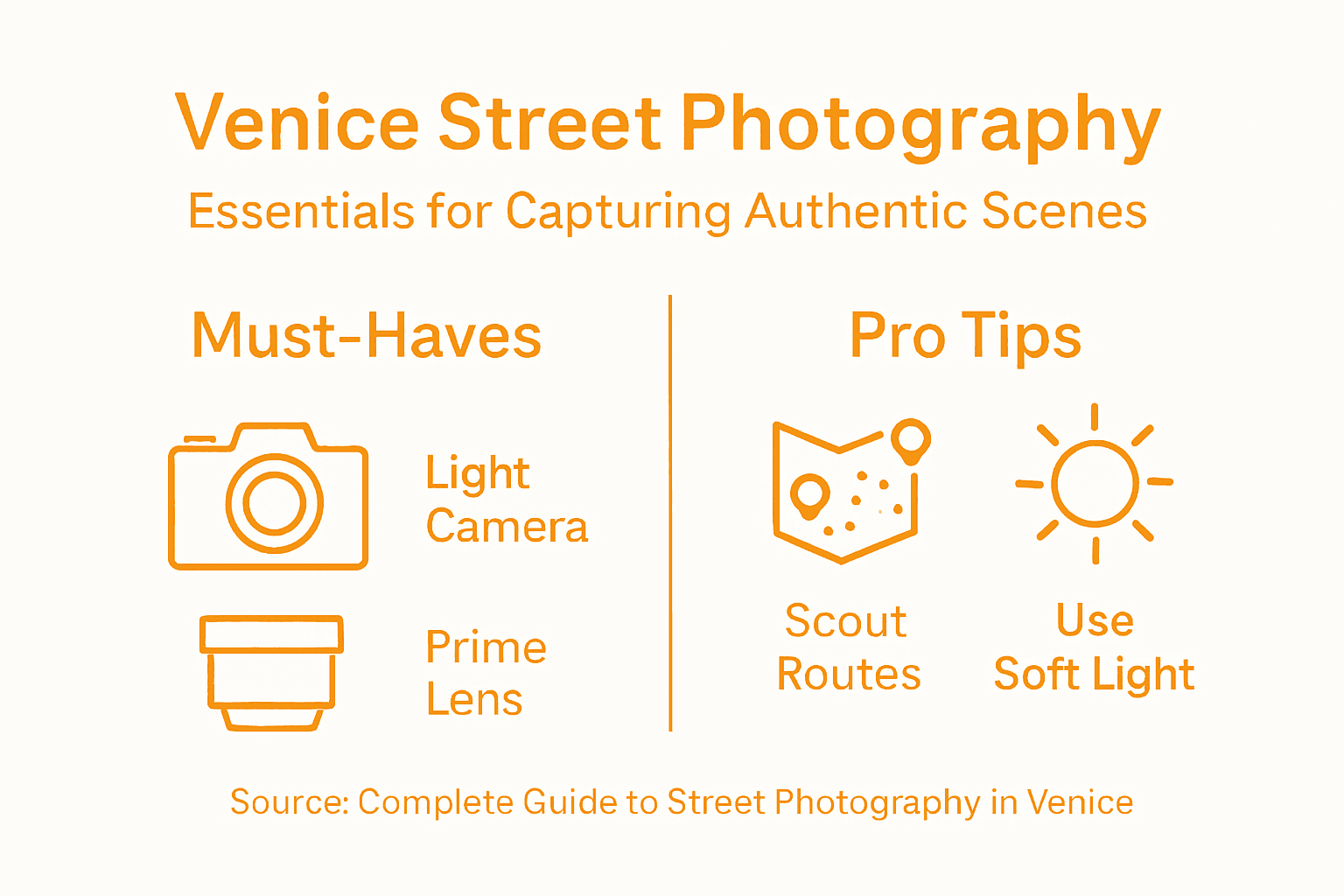
Start with your gear. Venice demands a different approach than photographing in New York or San Francisco. The city’s narrow streets, crowded bridges, and pedestrian-only zones mean you cannot haul heavy equipment bags through winding passages. A single mirrorless camera paired with one or two lightweight lenses beats a full kit every time. Consider a 35mm or 50mm prime lens as your workhorse—these focal lengths force you to move closer to subjects, creating more intimate compositions and genuine connections with locals. Add a smaller zoom lens for tight alleyways where you cannot step back. Weatherproofing matters too. Venice is built on water, and sea spray reaches farther than you expect. Bring a protective camera bag with quick-access panels, not a traditional backpack that forces you to dig for your gear while missing moments. Pack extra batteries and memory cards in waterproof pouches, then pack more than that. The humidity and constant moisture drain batteries faster than your home climate.
Now consider your route strategically. Venice’s six historic districts each offer distinct photographic character, and planning which areas to explore prevents aimless wandering that wastes energy and drains your creative eye. San Marco draws crowds constantly, yet early morning light transforms it into something magical before tour groups descend. Cannaregio reveals authentic Venetian life in its residential streets and local markets. Dorsoduro attracts artists and students, offering younger energy and different color palettes. Rather than trying to photograph everything, choose two or three districts and spend real time there. This depth creates stronger stories than surface-level coverage of the entire city. Think about access too. You arrive by water, which means your entry points matter. The Piazza San Marco is accessible but overwhelmed. Consider arriving through less-known entry points that put you in quieter neighborhoods first, giving you time to acclimate before facing peak crowds.
Timing transforms your entire experience. Planning travel routes to include major districts helps maximize photographic opportunities by considering off-peak seasons, and shooting during dawn or late afternoon captures softer light and fewer competitors for composition space. A 6 AM start puts you on Venice’s streets when residents move through their day and light rakes across ancient facades at angles you cannot find at noon. Evening light, while challenging with longer exposures, creates dramatic shadows and brings out the warmth in terracotta and aged stone. Winter and shoulder seasons bring fewer tourists, though cooler temperatures and occasional rain add planning complexity. Summer offers reliability but guarantees massive crowds that complicate street photography ethics.
Here’s a quick overview of Venice’s main districts and their photographic appeal:
| District | Atmosphere | Best Subjects | Photographic Challenge |
|---|---|---|---|
| San Marco | Historic & crowded | Architecture, early life | Heavy tourist crowds |
| Cannaregio | Local everyday | Markets, daily routines | Narrow, changing light |
| Dorsoduro | Artistic & youthful | Students, vibrant art scene | Mixed colors, less predictable |
| Castello | Traditional & quiet | Old houses, community life | Less obvious photo spots |
| Santa Croce | Lively transit hub | Canals, travel scenes | Fast-paced environment |
| San Polo | Markets & history | Food sellers, bridges | Tight spaces, busy markets |
Professional advice Shoot the districts in order of their distance from your arrival point, then work backward toward your exit. This flow prevents retracing steps and keeps your energy fresh for the final shoot of the day when light turns golden.
Step 2: Scout authentic Venetian locations
Now that you have your equipment planned and a general route in mind, it’s time to find the real Venice that exists beyond the postcard locations. Scouting means walking with intention, discovering places where local life actually unfolds rather than where tour groups cluster. This is where your photography transforms from competent to compelling.
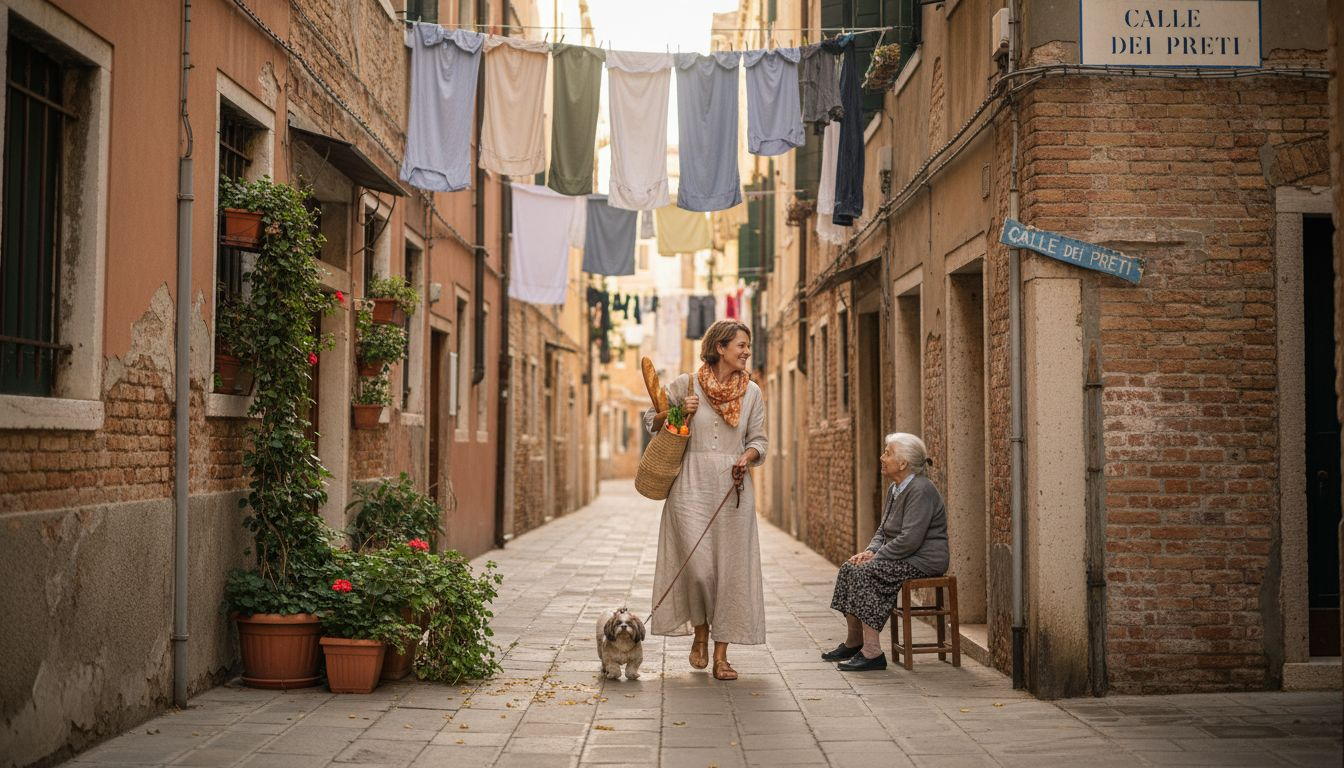
Start by understanding Venice’s street geography. The city’s residential calli and fondamenta) vary dramatically in character and width, offering authentic backdrops that tell stories of everyday Venetian life. These are not the grand piazzas or famous bridges but the narrow passages where residents do their shopping, children play, and elderly neighbors chat from windowsills. Walk beyond San Marco and Rialto. Head into Cannaregio where laundry hangs between weathered buildings and local bars serve espresso to workers rather than tourists. Explore Dorsoduro’s quieter squares where students gather and artists maintain studios. These neighborhoods reveal genuine Venice, where your camera becomes a tool for documenting real moments rather than recreating images you have already seen online. Pay attention to light patterns too. Watch how morning sun transforms narrow streets into dramatic passages of brightness and shadow. Notice how afternoon light bounces off water and reflected light fills shadowed calli with unexpected warmth. The same location photographed at 7 AM looks completely different at 3 PM.
Use historical resources to guide your exploration strategically. Historical and contemporary maps help you identify quarters that preserve traditional atmosphere and reveal how Venice has evolved, giving you context for the places you discover. Rather than wandering randomly, look at where residential areas cluster, where markets operate, where locals gather at bridges between neighborhoods. This research transforms scouting from aimless walking into strategic exploration. You will notice patterns. Certain bridges become natural gathering points. Specific corners catch morning light beautifully. Some alleys remain quiet even during peak season because they lead nowhere tourists want to go. These are your locations. Take notes on your phone, mark them on maps, and return at different times. A quiet alley at noon might host neighborhood residents in early evening. The same corner might look completely different under dawn light versus golden hour.
Authenticity comes from repetition and observation. Return to locations you like. Notice how they change with weather, time of day, and season. A location you scout in summer might offer completely different photographic possibilities in winter when locals move through streets differently and light angles shift. Talk to people when you can. Locals appreciate photographers who show genuine interest in their community rather than those who treat Venice as a theme park backdrop. These conversations often lead to unexpected locations and permission to photograph in places you might otherwise skip. Most importantly, let yourself get lost intentionally. Some of your best discoveries come from taking wrong turns in neighborhoods where you have no preset expectations. These moments of accidental discovery often produce your most authentic work because you are responding to what you genuinely encounter rather than what you came to photograph.
Professional advice Scout the same location three times on different days and times, then shoot it on the fourth visit when you fully understand its light, rhythm, and character.
Step 3: Engage locals and capture candid moments
The difference between ordinary Venice photographs and extraordinary ones often comes down to people. Engaging with locals transforms your work from picturesque postcards into genuine documentation of living culture. This step teaches you how to build trust and capture authentic moments that reveal the real heartbeat of the city.
Start by approaching people with genuine curiosity rather than as subjects to photograph. Smile before you raise your camera. Say hello in Italian if you can, even if your pronunciation is rough. Venetians appreciate the effort far more than perfect language skills. When you see something worth photographing, pause. Look at the person. Make eye contact. This simple act of acknowledgment shifts the dynamic from you stealing a moment to you sharing an experience. Many photographers work with cameras raised like shields, never actually connecting with their subjects. You are aiming for the opposite. Spend time in one location. Sit at a bar. Buy an espresso. Watch how people move through space, how light catches their faces, what moments precede interesting interactions. Candid photography relies on strategic positioning and patience to capture unposed moments that reveal authentic expressions and genuine interactions. This patience pays dividends. A person who notices you watching them becomes less guarded when you have simply been present, observing respectfully rather than hunting aggressively.
When you do raise your camera, make it transparent. Show people your images afterward if they express curiosity. This builds goodwill that extends to future photographs. Share your images with them if they ask. Many Venetians have watched tourists photograph them for decades. Your willingness to show what you created demonstrates respect for them as more than just photographic subjects. Understand the ethics of your work. Street photography captures candid moments in public spaces, revealing daily life and human behavior, but this comes with responsibility regarding privacy and consent. Know local laws about photography. While Venice allows street photography in public spaces, always be aware of individuals who do not wish to be photographed. If someone objects, delete the image and move on. This is not a weakness. It is respect, and it opens doors for future opportunities.
Use your equipment strategically to remain unobtrusive. Preset your exposure settings before you need them so you are not fumbling with controls when a moment emerges. A 35mm or 50mm prime lens keeps you engaged with your surroundings rather than hiding behind a telephoto lens. Prime lenses force you closer to your subjects, which ironically makes your presence less threatening than shooting from distance. Wider apertures and faster shutter speeds help you work discreetly in changing light without drawing attention through flash or obvious camera adjustments. The goal is to become part of the street scene rather than an intrusion in it. Watch for patterns and anticipate moments. Notice when light hits a doorway and wait for someone to pass through it. See a vendor arranging produce and wait for a customer to approach. These small moments of observation create the foundation for genuine candid work. Your camera becomes a tool for responding to what unfolds naturally rather than forcing situations that feel staged.
Professional advice Spend your first hour each day observing without photographing, learning how light and people move through your chosen location before you begin actually shooting.
Step 4: Harness natural light and shadows creatively
Light is the foundation of all photography, and Venice offers one of the world’s most dramatic natural light environments. Water reflects sunlight into shadowed spaces, narrow alleys create chiaroscuro effects that painters have exploited for centuries, and the quality of light changes dramatically throughout the day. Learning to see these light patterns and use them intentionally elevates your street photography from competent to masterful.
Start by understanding how Venice’s unique geography shapes its light. Water surfaces act as mirrors, bouncing reflected light into spaces where direct sunlight cannot reach. This means shadowed alleyways often contain beautiful warm light bouncing up from canals below. Stand in a narrow calle during midday and look down at the ground. You will see light reflected from water creating patterns that do not exist elsewhere. Venetian artists throughout history recognized this quality of light, understanding that the play of natural light and shadow creates depth and vibrancy in compositions. You can apply this same principle to your street photography. Rather than avoiding shadows, use them as compositional elements. A person walking through bright sunlight into shadow becomes a more interesting subject than someone evenly lit in flat daylight. The transition between light and dark creates drama that viewers instinctively respond to emotionally.
Timing your shoots around light quality transforms ordinary locations into visually compelling spaces. Early morning light arrives at a low angle, raking across surfaces and creating long shadows that add texture and dimension to scenes. This warm, soft light flatters architecture and human faces alike. Golden hour in late afternoon offers similar quality but from the opposite direction. Between these golden periods, midday light becomes harsh and flat, creating strong shadows that can work creatively if you position yourself strategically. Rather than avoiding midday, embrace it by using deep shadows as compositional contrast against bright highlights. Find locations where buildings create dramatic shadow patterns on streets or walls. Wait for subjects to move into these patterns. The visual impact becomes immediately stronger. Venice’s reflective water surfaces provide additional creative opportunities. Understanding light angle and quality helps photographers use shadows to add texture and dimension, and water reflections amplify this effect. A person walking along a canal creates both a direct image and a reflected image in the water below. This doubling of visual information creates compositional richness that you cannot achieve in landlocked cities.
Experiment with backlighting, where light comes from behind your subject. This technique creates rim lighting that separates your subject from the background, giving them dimensional quality. Backlighting also creates silhouettes, which can be graphically powerful when composed thoughtfully. In Venice, backlighting becomes even more impactful because water reflections fill shadow areas with secondary light sources. Position yourself so the sun is behind your subject, with water or bright surfaces visible in your frame. The resulting images contain multiple layers of light and shadow working together. Practice reading light before you raise your camera. Spend five minutes in a location simply observing how light moves, changes, and creates visual patterns. Notice which directions create the most interesting light for your subjects. Observe how shadows fall and where reflected light fills darker spaces. This observation transforms you from someone who waits for lucky light to someone who actively positions themselves in light that you understand and can predict.
Professional advice Shoot the same subject at 7 AM, noon, and 5 PM to understand how different light angles transform the same location, then choose your shooting times based on what light quality serves your visual story.
Use this table for a rapid comparison of optimal shooting times in Venice:
| Time of Day | Light Quality | Typical Activity Level | Best For |
|---|---|---|---|
| Dawn (6–7 AM) | Soft, angled, warm | Quiet, locals commuting | Candid moments, architecture |
| Noon | Harsh, direct, strong | Bustling, busy streets | Shadows, dynamic contrast |
| Late Afternoon | Golden, directional | Moderately crowded | Portraits, warm light scenes |
| Evening | Low, dramatic, colorful | Crowds thinning | Shadows, reflections |
Step 5: Review and refine your photo selections
You have walked Venice’s streets, engaged with locals, captured moments in beautiful light, and now you face a challenge that separates competent photographers from great ones. Reviewing hundreds of images and deciding which ones truly matter requires honesty, clarity, and a systematic approach. This step teaches you how to curate your work into a cohesive body of images that tells a compelling story rather than simply documenting everything you shot.
Start your review process with fresh eyes. Do not look at your images immediately after your shoot. Wait at least a day, ideally several days. This distance allows you to see your photographs more objectively rather than being emotionally attached to moments you lived through. When you sit down to review, create a quiet space without distractions. Open your images on a calibrated monitor if possible. Assess each photograph honestly. Reviewing street photography involves assessing spontaneity, composition, and emotional impact to build a stronger series. Ask yourself specific questions about each image. Does it tell a story, or does it simply document a scene? Is the composition intentional, or did you simply point and shoot? Does it show genuine human emotion or authentic cultural moments, or does it feel staged? Is the technical execution solid, or are there issues with focus, exposure, or framing that distract from the content? Be willing to discard images that do not meet these standards. A mediocre photograph weakens your entire body of work. One exceptional image combined with four strong supporting photographs creates impact. Ten mediocre images create confusion.
Look for patterns in what you are keeping. You will likely find that certain compositional approaches or subject matter naturally appeals to your eye. Notice these patterns. They reveal your artistic voice. Some photographers gravitate toward intimate portraits and human interaction. Others prefer architectural detail and abstract compositions. Some find their strength in capturing light and shadow play. Rather than fighting these preferences, lean into them. Build your selections around what you do best rather than trying to include a little bit of everything. Refining a portfolio involves eliminating repetitive shots and focusing on diverse compositions while maintaining thematic coherence. If you shot the same scene five times, keep only your strongest interpretation. If you have three similar compositions of different subjects, choose the one with the most compelling subject matter or light quality. This curation creates narrative flow that resonates with viewers far more powerfully than quantity.
Consider the sequence of your images as you narrow your selections. How does one photograph lead to the next? Does your selection create a journey for the viewer, or does it jump around without connection? A successful Venice street photography series might begin with establishing shots that show the city’s unique geography, transition into intimate portraits of locals, explore architectural detail and light, then conclude with reflective moments that capture the city’s essence. This arc keeps viewers engaged. Group your images thematically or chronologically. Notice which ones work together to tell a larger story about the city, its people, and the experience of being there. Your final selection should feel inevitable. When someone views your work, they should understand why each image is there and what connects them. Remove anything that feels like it exists only because it was technically competent or because you simply liked the subject matter. Every image should earn its place through either its storytelling power, artistic quality, or contribution to your overall narrative. This discipline transforms a collection of photographs into a portfolio.
Professional advice Create a rough edit by marking your strongest 20 percent of images, then wait another week before doing a final edit where you narrow to your best 10 percent, allowing time and distance to improve your judgment with each pass.
Master Venice Street Photography with Guided Expertise
Venice’s enchanting streets offer endless photographic possibilities but also unique challenges such as navigating narrow calli, mastering natural light reflections off canals, and connecting authentically with locals. The Complete Guide to Street Photography in Venice highlights critical steps including planning your equipment and route, scouting genuine locations, engaging candid subjects, and harnessing dramatic light and shadow. These complexities can overwhelm even passionate photographers striving to capture genuine Venetian life and powerful storytelling.
Unlock the true potential of Venice through immersive, expertly guided photographic experiences from Italy Photo Tour. Our curated tours focus on atmosphere, natural light mastery, and authentic local engagement to help you go beyond typical snapshots and create compelling visual narratives. Don’t just wander the streets — let professional photographer Mino Di Vita inspire your creativity while providing personalized instruction tailored to these exact challenges outlined in the guide. Elevate your skills, deepen your connection to Venice, and transform your photography today by exploring our Venice photography tour offerings. Secure your place now to capture Venice’s magic with confidence and artistry.
Frequently Asked Questions
What equipment should I bring for street photography in Venice?
Start with a lightweight mirrorless camera and one or two prime lenses, like a 35mm or 50mm, to allow for easier movement through narrow streets. Keep your gear minimal and consider weatherproofing, as moisture can affect your equipment.
How do I choose the best time to shoot in Venice?
Aim to shoot during dawn or late afternoon for softer, more dynamic light. Plan your schedule around these times to capture authentic moments and reduce the impact of heavy tourist crowds.
What are the best districts in Venice for street photography?
Focus on two or three districts like Cannaregio for local life, Dorsoduro for artistic energy, and San Marco for architectural beauty. Spending time in these areas will allow you to tell richer stories through your images.
How can I engage with locals while photographing in Venice?
Approach locals with genuine curiosity by greeting them and making eye contact before raising your camera. This connection fosters trust and often leads to candid moments that can enrich your photography.
How can I effectively utilize natural light in my street photography?
Observe how light and shadows interact in Venice’s unique geography to create depth in your images. Experiment with different times of day to capture the best light quality, such as using golden hour for warm tones and reflections.
What steps should I take to review and refine my photo selections?
Wait at least a day after shooting to review your images with fresh eyes, focusing on storytelling and emotional impact. Narrow your selections by keeping only the strongest images that contribute to a cohesive narrative.