

TL;DR:
- Artistic photography emphasizes emotion, intention, and personal perception over technical perfection.
- Techniques like deliberate composition, lighting, and series help convey specific feelings or ideas.
- Developing a unique style involves studying masters, consistent practice, and thoughtful editing.
Many photographers assume that mastering settings, sharpness, and exposure is the gateway to creating truly artistic images. It’s a reasonable belief, but it misses something essential. Artistic photography lives in a different territory entirely, one shaped by intention, emotional resonance, and a willingness to see the world through your own particular lens. Whether you’re wandering the sun-soaked streets of Florence or framing a misty canal in Venice, the difference between a technically correct shot and a genuinely moving one often comes down to what you felt before you pressed the shutter. This article unpacks what artistic photography really means, the methods behind it, and how you can begin cultivating your own creative vision.
Table of Contents
- Defining artistic photography
- Core methods and artistic techniques
- Expert nuances and common misconceptions
- Building your artistic vision: Practical steps for enthusiasts
- Why true artistry begins with intention, not gear or settings
- Take your artistic photography further in Italy
- Frequently asked questions
Key Takeaways
| Point | Details |
|---|---|
| Expression over appearance | Artistic photography centers on communicating emotion or ideas, not just technical achievement. |
| Intentional techniques | Techniques like creative composition, lighting, and abstraction serve expression rather than following standard rules. |
| Practical growth steps | Amateurs can build artistry by starting small, learning from masters, and focusing on consistent projects. |
| Nuance of artistic vision | True artistry accepts imperfection and prioritizes the ‘why’ behind every image. |
Defining artistic photography
Having set the stage, let’s clarify what artistic photography really means and what it doesn’t.
Artistic photography refers to photography created with an artistic intent, aiming to express the photographer’s perceptions, emotions, or ideas rather than merely documenting reality. That distinction matters enormously. A documentary photographer captures what exists. An artistic photographer captures what they feel about what exists. The subject is almost secondary to the interpretation.
It’s worth separating a few related terms that often blur together. Fine art photography and artistic photography are frequently used as synonyms, and for most practical purposes, they are. Both center on the photographer’s inner vision rather than external demands. Commercial photography, by contrast, serves a client’s message. Documentary photography serves historical or journalistic truth. Artistic photography serves the creator’s perception.
| Type | Primary goal | Driven by |
|---|---|---|
| Artistic / fine art | Express emotion or idea | Photographer’s vision |
| Documentary | Record reality | Subject or event |
| Commercial | Sell or promote | Client’s brief |
| Photojournalism | Inform or report | News value |
This table isn’t a rigid hierarchy. Many images cross categories. But understanding where artistic photography sits helps you approach the craft with clarity.
As the fine art photography glossary at Skylum describes it, fine art photography is ultimately about the photographer’s voice, not the camera’s capability. That voice is what separates a snapshot of the Amalfi Coast from a photograph that makes someone feel the weight of afternoon light on ancient stone.
“The camera is an instrument that teaches people how to see without a camera.” — Dorothea Lange
Exploring artistic photo tours in places like Italy offers a living classroom for this kind of seeing. The country’s layered history, warm light, and vivid textures make it especially fertile ground for expressive work. Understanding Italian photography styles can also reveal how regional culture shapes visual storytelling in ways that feel deeply human.
Core methods and artistic techniques
Now that we understand the foundations, how do you actually practice artistry with your camera?
Deliberate composition, lighting choices, intentional camera movement, and shooting in series are core methodologies in artistic photography. Each of these is a tool, not a rule. The goal is to use them in service of an idea or feeling, not simply to produce a pleasing image.
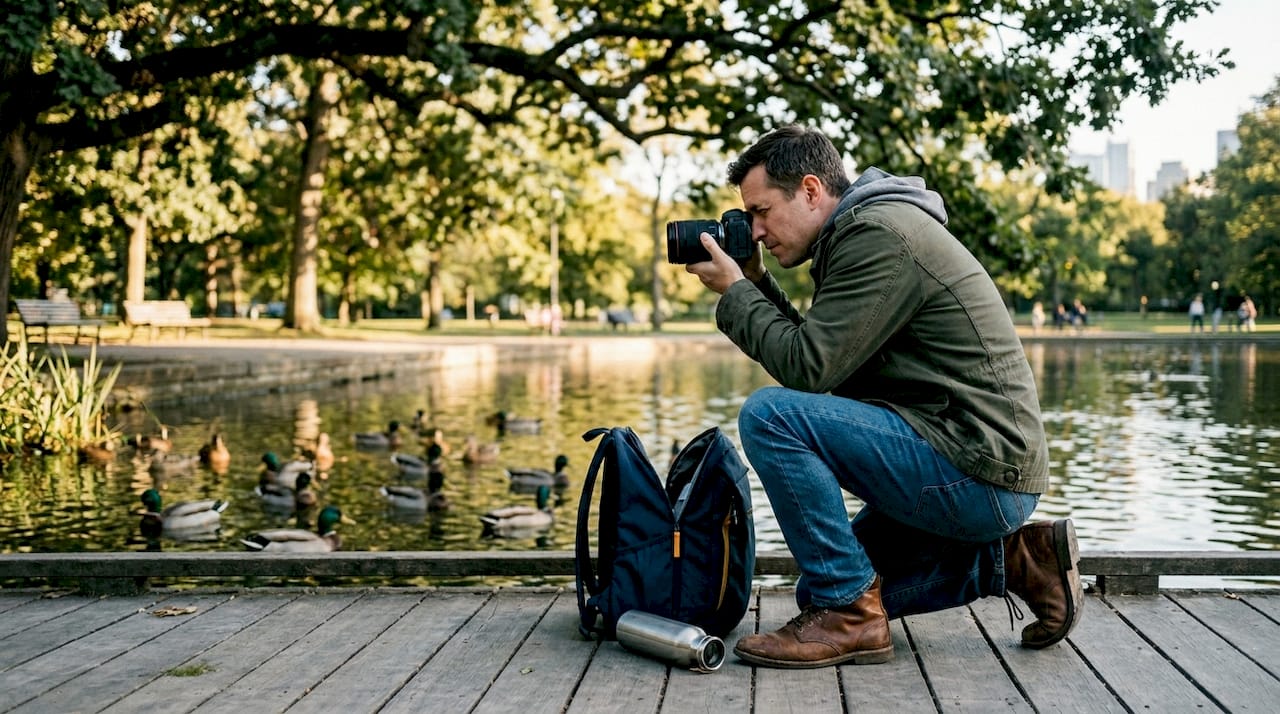
Start before you lift the camera. Ask yourself what you want the viewer to feel. Melancholy? Wonder? Intimacy? That emotional anchor shapes every decision that follows, from where you stand to how long you expose the frame.
Here are some of the most expressive techniques to explore:
- Negative space: Leaving large areas of your frame empty creates breathing room and draws attention to your subject with quiet power.
- Intentional blur: Motion blur or selective focus can suggest movement, time, or emotion far more evocatively than a sharp image.
- Long exposure: Silky water, light trails, and ghostly figures transform familiar scenes into something almost dreamlike.
- Chiaroscuro lighting: Borrowing from Renaissance painting, this dramatic interplay of light and shadow adds depth and mood to any subject.
- Shooting in series: A single image tells one story. A series of ten images around a theme builds a world.
Pro Tip: Before your next shoot, write one sentence describing the feeling you want to create. Keep it in your pocket. Every compositional choice you make should serve that sentence.
The artistic travel photography guide for Italy offers a wonderful reference for applying these ideas in real locations. You’ll also find that urban photography tips can translate beautifully into more expressive, artistic work when you shift your focus from documenting a city to interpreting its soul.
For deeper reading, the tips for artistic photos resource at Digital Photography School is a practical companion to these ideas.
Expert nuances and common misconceptions
But artistry isn’t always what you expect. In fact, much of it depends on knowing when and how to let go of technical perfection.
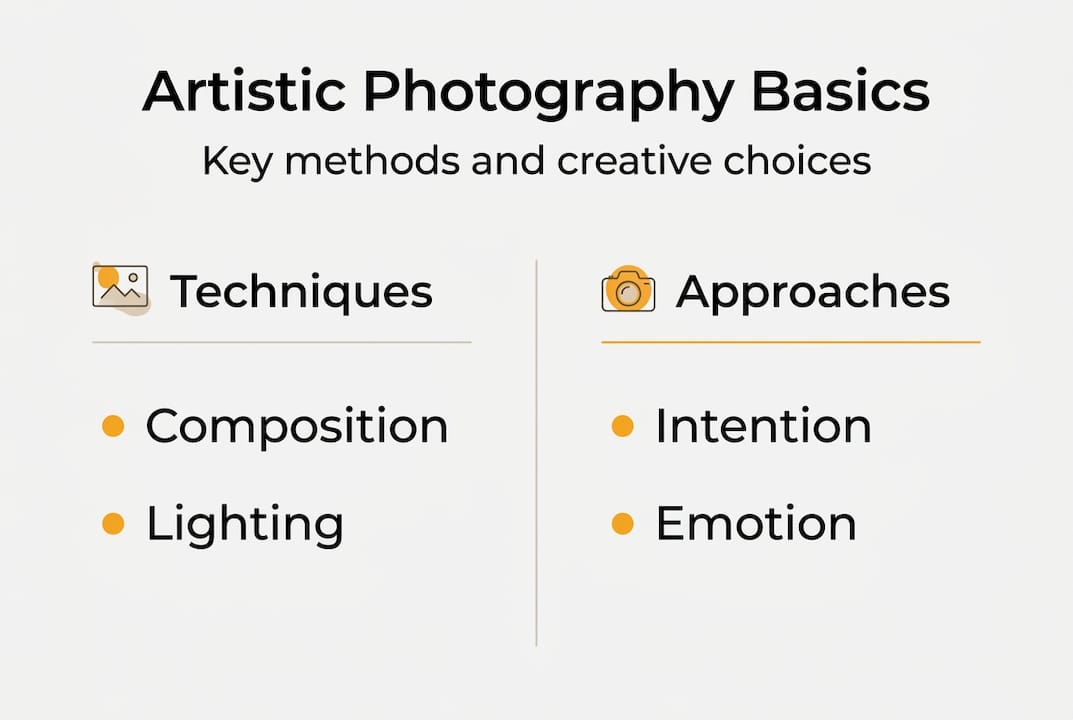
One of the most liberating truths in artistic photography is this: technical perfection does not equal art. Deliberate rule-breaking, when it serves expression, is not a mistake. It’s a choice. A slightly blurred portrait can feel more emotionally present than a razor-sharp one. A tilted horizon can create unease that a level one never could.
Conceptual photography takes this even further. As Serhii Fett notes, conceptual photography prioritizes idea over visual beauty, and sometimes the resulting image can appear even dull at first glance. What matters is the idea it carries, not its surface appeal. This challenges our instinct to judge photos by immediate visual pleasure.
Some common misconceptions worth addressing:
- Gear makes the artist: It doesn’t. A 35mm film camera in the hands of someone with genuine vision produces more compelling work than a professional mirrorless body used without intention.
- Artistic means abstract: Not necessarily. A sharply focused portrait of an elderly fisherman in Cinque Terre can be profoundly artistic if it carries emotional weight and intentional framing.
- Rules must always be followed: The rule of thirds, leading lines, and symmetry are starting points, not commandments. Knowing when to break them is part of developing your voice.
- Post-processing defines art: Editing is a tool, not a substitute for vision. The most powerful artistic choices happen before you open any software.
The ‘why’ behind an image matters far more than the ‘how.’ Technique serves intention, never the other way around.
In Italian settings, this philosophy becomes especially vivid. The fine art nuances of light falling across weathered stone, the texture of a Venetian doorway, or the stillness of a Tuscan hillside at dusk all invite you to respond emotionally rather than mechanically. The Italy Photo Tour photography blog explores many of these ideas through real locations and real images. You can also learn more about the fine art photography approach that guides these experiences.
Building your artistic vision: Practical steps for enthusiasts
Ready to put creative ideas into action? Here’s how you can start practicing and refining your own artistic approach, on your travels or at home.
Developing an artistic voice is not a sudden revelation. It’s a slow, pleasurable accumulation of choices, experiments, and honest self-reflection. The good news is that the process itself is deeply rewarding.
Here are five practical steps to begin:
- Study the masters: Look carefully at the work of photographers like Henri Cartier-Bresson, Sebastião Salgado, or Italian painters like Caravaggio. Notice how they use light, shadow, and framing to create emotional impact.
- Practice minimalism: Strip your compositions down. Remove everything that doesn’t serve the feeling you’re after. Simplicity often speaks loudest.
- Build a personal series: Choose one theme, perhaps doorways, hands, or reflections, and photograph it exclusively for 30 days. Consistency reveals your instincts.
- Experiment with Italian light: The golden hour in Tuscany or the diffused morning glow in Venice creates a quality of light that transforms ordinary subjects into something luminous and alive.
- Edit with intention: Choose one editing style and apply it consistently across your series. This builds visual coherence and helps you recognize your own emerging aesthetic.
Pro Tip: During golden hour, turn away from the obvious subject and look at what the light is doing to everything else. The most artistic images often come from noticing what others overlook.
The essential tips for Italy guide is a wonderful companion for applying these ideas in real Italian settings. Discovering hidden photo spots in Italy can also open up fresh creative possibilities beyond the iconic landmarks. And for those drawn to people and place, the cultural photography ideas for Italy resource offers rich inspiration for storytelling through the lens.
As Digital Photography School suggests, starting minimal, studying masters, using side-lighting for texture, completing thematic projects, and editing consistently are the most reliable paths to finding your own style.
Why true artistry begins with intention, not gear or settings
Having mapped the steps, let’s step back for an honest perspective on what really moves the needle in artistic practice.
Here’s something that rarely gets said plainly: buying a better camera has never made anyone a better artist. Not once. What changes your photography is changing how you think before you shoot. Intention is the invisible ingredient that separates a forgettable image from one that stays with a viewer for years.
Italy is extraordinary for this kind of growth, not because of its famous landmarks, but because of its atmosphere. The way light bends through a Venetian alley in early morning, the worn textures of a Sicilian market stall, the stillness of a Tuscan vineyard at dusk. These places invite you to slow down, to feel something, and to ask why you’re raising the camera at all.
Photo tours in Italy work precisely because they remove the logistical noise and place you directly inside moments worth photographing. The role of culture in artistic growth is something we see again and again: photographers who immerse themselves in a place’s story come home with images that have genuine soul. Embrace imperfection. Name your why. Let the place speak to you before you speak through your camera.
Take your artistic photography further in Italy
If you’re ready to move from theory to immersive experience, here’s the best way to start.
Understanding artistic photography is one thing. Living it in a place as visually and culturally rich as Italy is something altogether different. The golden warmth of a Tuscan afternoon, the shimmering reflections of Venice’s canals, the kaleidoscope of color in Burano’s streets. These are not backdrops. They are collaborators.

Italy Photo Tour offers curated, immersive photography tour experiences led by professional photographer Mino Di Vita, designed to help you refine your artistic vision in the field. Whether you’re drawn to quiet landscapes or vibrant urban scenes, these tours are built around creative growth, not sightseeing checklists. Explore the sensory exploration guide to discover how each tour is crafted to awaken your eye and deepen your practice.
Frequently asked questions
What is the main difference between artistic photography and regular photography?
Artistic photography expresses perceptions, emotions, or ideas beyond documentation, while regular photography often focuses on capturing reality accurately or achieving technical precision.
Can you practice artistic photography with basic equipment?
Absolutely. Prioritizing intention over gear and focusing on composition, light, and creative vision will take you far further than any camera upgrade.
What are the best locations in Italy for artistic photography?
Tuscany’s rolling hills, Venice’s mirrored canals, and the textured ruins of Rome offer extraordinary creative possibilities. Tuscany light and Venice silhouettes are especially prized for their atmospheric, painterly quality.
How can I develop a unique artistic style?
Study the masters, experiment with personal themes, and edit consistently across your work. Focused 30-day projects around a single subject are one of the most effective ways to uncover your own visual voice.
Recommended
- Sensory exploration in photography: complete 2026 guide
- What is sensory photography? A complete guide
- Role of Light in Artistic Photos: Elevating Your Images
- Role of Light and Shadow in Artistic Photography
- Intimate Couples Photography – How to Capture Your Love Story
- Event Photography Basics: Essential Skills for Success – team I