

Exploring Italy’s breathtaking landscapes and vibrant cityscapes through your camera lens starts with one challenge—finding the perfect natural light. For American photographers eager to capture authentic moments, discovering how sunlight transforms Italy’s scenery is key to creative storytelling. This guide will help you scout visually rich locations, plan your timing, and master camera settings, allowing you to use natural light as your artistic tool during unforgettable photo tours.
Table of Contents
- Step 1: Scout Locations for Ideal Light
- Step 2: Plan Timing to Maximize Natural Effects
- Step 3: Adjust Camera Settings for Artistic Impact
- Step 4: Compose Shots Emphasizing Light and Shadow
- Step 5: Evaluate and Refine Your Captures
Quick Summary
| Main Insight | Explanation |
|---|---|
| 1. Scout for Ideal Light | Explore varied locations and analyze how light interacts, especially during morning and evening for the best shots. |
| 2. Plan Your Timing Carefully | Utilize apps and tools to track optimal lighting conditions and adjust your schedule for the golden hour. |
| 3. Adjust Camera Settings Thoughtfully | Set your camera’s ISO, aperture, and shutter speed properly to capture the essence of Italy’s landscapes. |
| 4. Compose Strategically with Light | Use contrast and light-shadow interplay to create depth and visual interest in your photographs. |
| 5. Evaluate and Refine Post-Capture | Review and assess your images critically, using editing tools to enhance the scene’s natural beauty without over-manipulating. |
Step 1: Scout Locations for Ideal Light
Scouting the perfect locations for capturing natural light in Italy requires strategic planning and a keen eye for visual potential. You’re not just finding spots – you’re uncovering visual stories waiting to be told through your camera lens.
Start your location scouting by exploring UNESCO World Heritage Sites in Italy, which offer extraordinary landscapes with diverse lighting conditions. These incredible locations provide photographers with stunning backdrops featuring:- Ancient archaeological sites with dramatic shadows- Natural parks presenting unique terrain- Architectural monuments with intricate light interactions- Coastal regions showcasing spectacular sunrise and sunset perspectives
Pay special attention to how sunlight moves across different environments. In Italy’s varied landscapes, light transforms dramatically – mountain regions create crisp, angular shadows, while coastal areas offer soft, diffused illumination. Understanding light’s behavior becomes your primary strategy. Track the sun’s trajectory using smartphone apps or traditional methods like physical compass and time tracking.
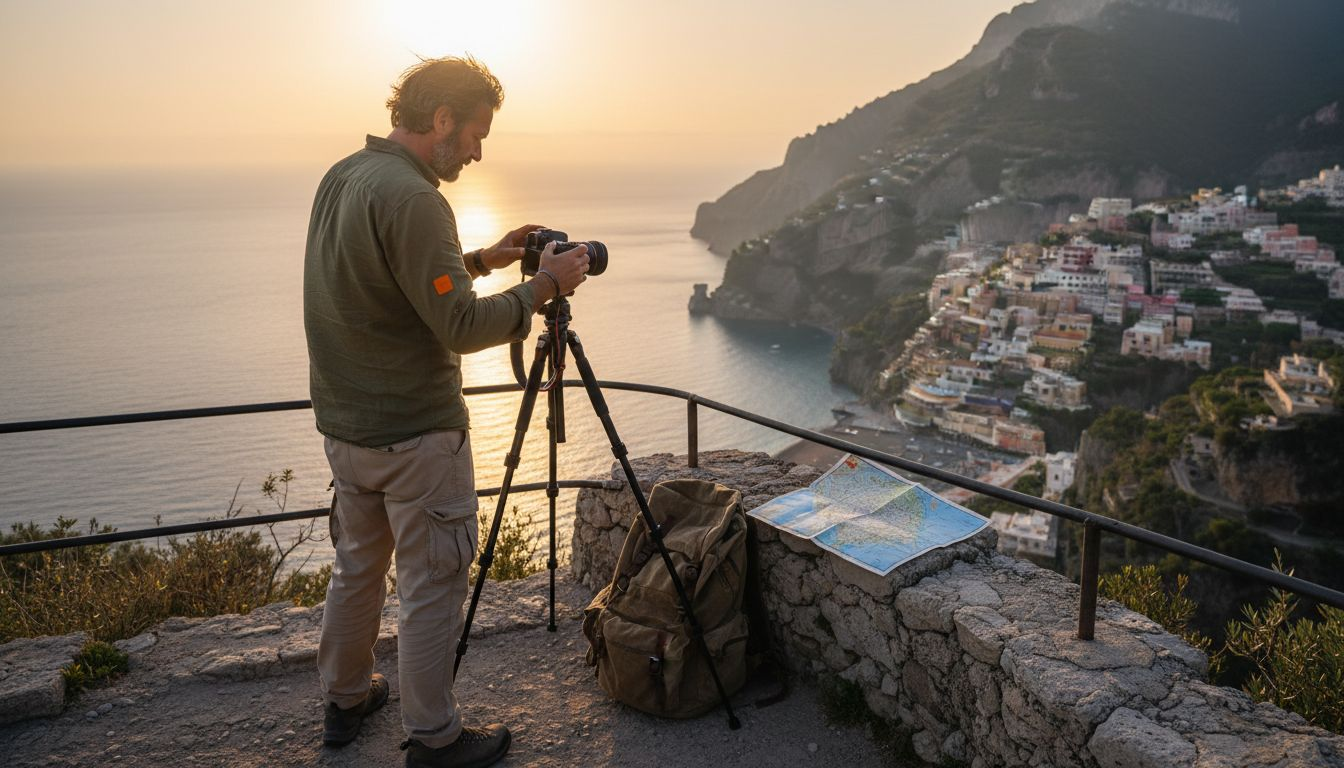
Research local geography and seasonal variations. Southern Italian regions like Sicily and Calabria offer more intense, direct sunlight compared to northern areas like Lombardy. Timing matters immensely. Early morning and late afternoon provide golden hour photography opportunities with warm, soft light that enhances every scene.
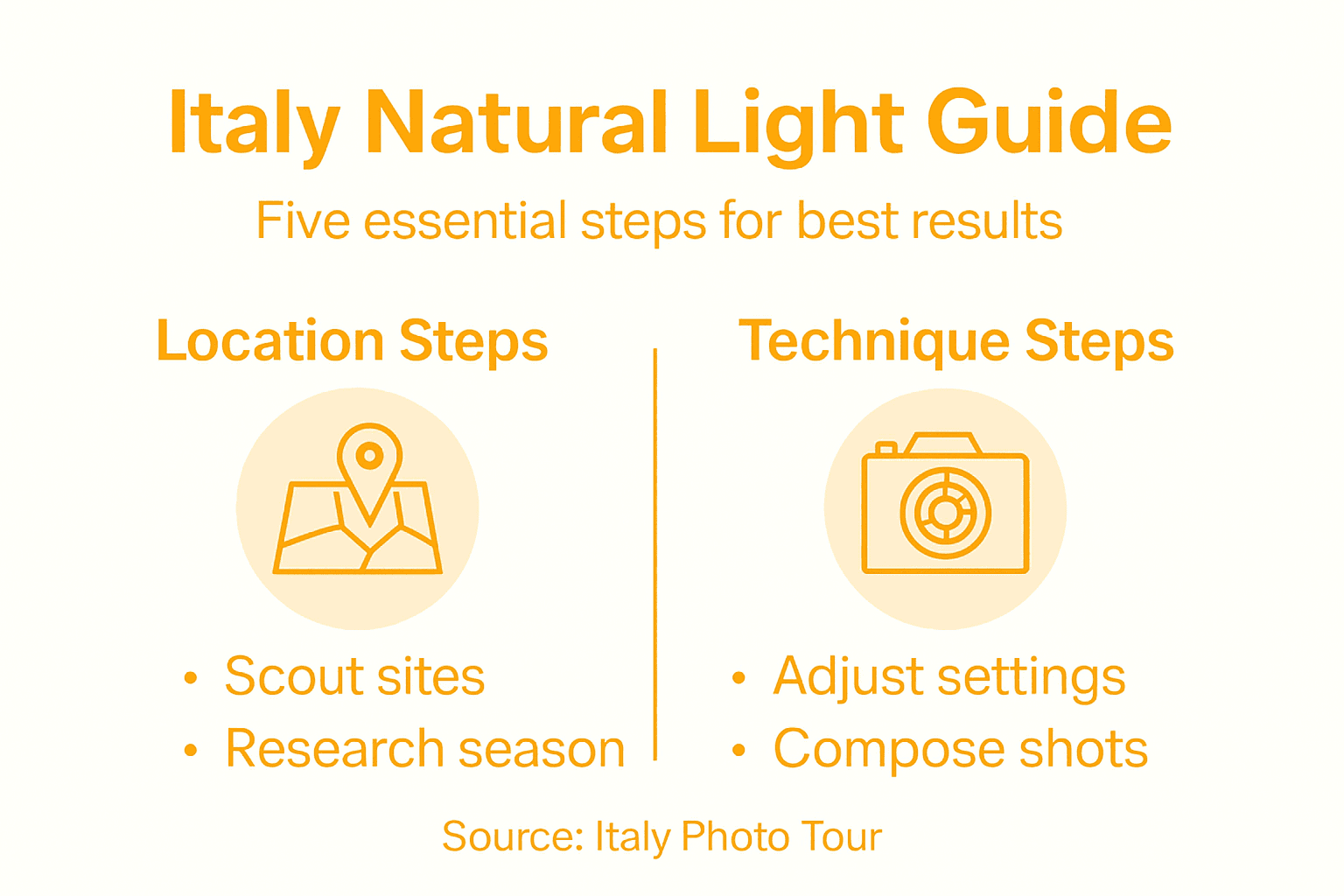
Here’s a comparison of natural lighting characteristics across key Italian regions:
| Region | Light Quality | Best Time of Day | Photographic Advantage |
|---|---|---|---|
| Northern Italy | Softer, diffused | Morning/evening | Subtle color gradients |
| Central Italy | Warm, balanced | Late afternoon | Ideal for architectural subjects |
| Southern Italy | Intense, direct | Golden hour | Vivid contrasts, bold shadows |
| Coastal Areas | Varied, reflective | Sunrise/sunset | Dramatic reflections on water |
The most extraordinary photographs emerge when preparation meets spontaneous beauty.
Pro tip: Always carry a lightweight tripod and neutral density filters to manage challenging lighting conditions and maximize your photographic potential.
Step 2: Plan Timing to Maximize Natural Effects
Mastering the art of natural light photography in Italy requires strategic timing and precise planning. Your goal is to capture those magical moments when light transforms ordinary scenes into extraordinary visual narratives.
Start by understanding how to plan night sky photography using specialized apps and tracking tools. Photographers have powerful resources at their fingertips to predict and prepare for optimal lighting conditions:
- PhotoPills for precise sun and moon tracking
- Stellarium for astronomical positioning
- Weather apps for cloud coverage predictions
- Sunrise/sunset calculators specific to Italian regions
Seasonal variations dramatically impact light quality across Italy. The Mediterranean climate offers unique photographic opportunities throughout the year. Northern regions like Tuscany experience softer, more diffused light during spring and autumn, while southern areas like Sicily provide intense, dramatic illumination during summer months.
Early mornings and late afternoons represent the golden photography windows. During these periods, sunlight creates warm, soft tones that enhance landscape textures and minimize harsh shadows. Pay attention to local microclimates – coastal areas and mountain regions will have distinctly different lighting characteristics.
Timing is not just about when you shoot, but understanding how light interacts with your chosen environment.
Pro tip: Invest in a lightweight tripod with adjustable legs to help you quickly adapt to changing terrain and capture those fleeting moments of perfect natural light.
Step 3: Adjust Camera Settings for Artistic Impact
Capturing the magical light of Italy requires more than just pointing your camera – it demands a nuanced understanding of technical settings that transform ordinary scenes into extraordinary images. Camera settings become your artistic palette, translating visual emotions through precise technical choices.
Mastering photography techniques involves understanding the critical interaction between ISO, aperture, and shutter speed. Professional photographers approach these settings strategically:
- Keep ISO as low as possible to minimize digital noise
- Select aperture based on desired depth of field
- Adjust shutter speed to capture motion or freeze moments
- Use white balance to accurately represent natural colors
Dynamic range management becomes crucial when photographing Italy’s diverse landscapes. Coastal regions like the Amalfi Coast present challenging light conditions with bright sunlight and deep shadows. Experiment with exposure compensation to preserve details in both highlight and shadow areas.
Modern cameras offer incredible flexibility. Bracketing techniques allow you to capture multiple exposures of the same scene, ensuring you don’t miss subtle lighting nuances. Professional photographers often take three to five shots at different exposures, providing a safety net for complex lighting scenarios.
A summary of essential camera setting adjustments for high-impact landscape photography in Italy:
| Setting | Recommended Adjustment | Artistic Outcome |
|---|---|---|
| ISO | Keep as low as possible | Maintains image clarity |
| Aperture | Control for depth change | Emphasizes subject or background |
| Shutter Speed | Adapt for motion effect | Freezes action or shows movement |
| White Balance | Match natural conditions | Accurate color representation |
Light is the language of photography – learn to speak it fluently.
Pro tip: Always carry a neutral density filter to help manage extreme light conditions and extend your creative possibilities in challenging Italian landscapes.
Step 4: Compose Shots Emphasizing Light and Shadow
Photographing Italy requires more than technical skill – it demands an artistic understanding of how light and shadow interact to tell visual stories. Your camera becomes a storytelling instrument, transforming ordinary scenes into extraordinary narratives through strategic compositional techniques.
Understanding emphasis techniques in art allows you to create dynamic compositions that draw viewers into your photographic narrative. Photographers can leverage several key strategies to highlight light and shadow:
- Use strong contrast to create visual depth
- Position subjects at intersection points of light and shadow
- Experiment with silhouettes during golden hour
- Create depth through layered lighting environments
Chiaroscuro techniques transform Italian landscapes into dramatic visual experiences. In cities like Venice, narrow streets create natural light tunnels where shadows dance across ancient stone walls. Pay attention to how sunlight filters through architectural elements – archways, windows, and narrow passages become natural framing devices.
Composing with light requires patience and observation. Look for natural light sculpting opportunities in different environments. Tuscan hillsides offer soft, diffused light that gradually reveals texture, while coastal regions provide sharp, dramatic contrasts between bright surfaces and deep shadows.
Mastering light and shadow is about seeing the invisible spaces between illumination.
Pro tip: Carry a small reflector to manipulate light and create subtle fill effects, transforming challenging lighting conditions into photographic opportunities.
Step 5: Evaluate and Refine Your Captures
Capturing remarkable images of Italy is just the beginning – transforming good photographs into extraordinary visual stories requires critical reflection and strategic refinement. Your photographic journey continues long after you press the shutter button.
Leveraging photography evaluation techniques helps photographers develop a discerning eye and continuous improvement process. Critical analysis involves examining your images through multiple perspectives:
- Assess technical elements like exposure and composition
- Compare images against your original creative vision
- Identify strengths and potential improvements
- Review images with emotional and technical objectivity
Digital post-processing tools become essential in transforming raw captures. Modern editing software allows precise adjustments to highlight the nuanced beauty of Italian landscapes. Focus on subtle enhancements that amplify the scene’s inherent mood and atmosphere, rather than dramatic transformations.
Professional photographers recommend a systematic review process. Comparative analysis reveals insights – place similar shots side by side, examining lighting, framing, and emotional impact. Look beyond technical perfection and seek images that tell compelling stories about Italy’s unique visual poetry.
Great photography is not about capturing what the eye sees, but what the heart remembers.
Pro tip: Create a dedicated folder for your best shots and revisit them after several weeks to gain fresh perspective and emotional distance.
Elevate Your Natural Light Photography Experience in Italy
Capturing Italy’s natural light can feel like a constant challenge whether you are scouting locations, timing the golden hour, or adjusting your camera settings for dramatic effect. This expert guide highlights key pain points such as managing dynamic range, understanding light quality across regions, and composing shots with purposeful shadow play. If your goal is to go beyond technical tips and immerse yourself in Italy’s unique atmosphere through authentic, hands-on experiences, then stepping into a guided photo tour can transform your vision into reality.

Join a community of passionate photographers on a journey where artistry meets craftsmanship. Italy Photo Tour offers specialized experiences in iconic destinations like Milan, Tuscany, Venice, and beyond that are designed to inspire creativity with natural light and storytelling at the heart of every shot. Discover the subtle interplay of light and shadow under the guidance of professional photographer Mino Di Vita. Don’t just capture Italy — feel it, see it, live it through your lens. Visit Italy Photo Tour to explore authentic opportunities and enrich your photographic skillset today. Start your artistic adventure now with Uncategorized Archivi – Italy Photo Tour and rediscover the magic of Italian landscapes with every frame.
Frequently Asked Questions
How can I find the best locations for natural light photography in Italy?
Finding the best locations involves scouting UNESCO World Heritage Sites and observing how sunlight interacts with different landscapes. Start by visiting sites known for their stunning backdrops and monitor light patterns at different times of day to discover ideal settings for your photography.
What times of day are best for capturing natural light in Italy?
The best times for photographing natural light are during the golden hours, which are early morning and late afternoon. Aim to shoot within an hour after sunrise and an hour before sunset to get warm, soft light that enhances your images.
How should I adjust my camera settings for different lighting conditions?
Adjust your camera settings by keeping the ISO as low as possible, selecting the appropriate aperture for depth of field, and using shutter speed to control motion. Start with ISO 100 for clear images, and modify settings based on the specific light conditions you encounter during your shoot.
What compositional techniques should I use to emphasize light and shadow?
To emphasize light and shadow, use strong contrasts in your compositions and position your subjects at the intersections of light and shadow. Experiment with silhouettes and layered lighting to create depth and draw attention to your main subject.
How can I evaluate and refine my photographs after capturing them?
Evaluate your photographs by critically analyzing technical aspects like exposure and composition, and comparing them to your original creative vision. Set aside your best shots for a few weeks, then revisit them with fresh eyes to identify areas for improvement and refine your editing process.