

TL;DR:
- Place-based photography focuses on capturing a location’s cultural, historical, and human stories.
- It involves research, community engagement, repeated visits, and ethical considerations.
- This approach creates deeper, more meaningful images that tell authentic stories of Italy’s landscapes and cities.
Most travel photos tell only half the story. You capture the famous piazza, the rolling Tuscan hills, the gondola gliding past a palazzo, and yet something feels missing. The image is technically correct, perhaps even beautiful, but it lacks the soul of the place. Place-based photography offers a richer path forward, one that moves beyond scenic views to capture the cultural, historical, and human dimensions that give a location its true identity. In this guide, we explore what this approach means, the methodologies behind it, how it plays out across Italy’s most enchanting landscapes, and the practical steps you can take to transform your own images.
Table of Contents
- What is place-based photography?
- Core methodologies: How to approach place-based photography
- Beyond pretty pictures: Avoiding common pitfalls and embracing depth
- Place-based photography in action: Iconic Italian landscapes and cities
- Our perspective: The real rewards of place-based photography in Italy
- Ready to immerse yourself? Take your photography further in Italy
- Frequently asked questions
Key Takeaways
| Point | Details |
|---|---|
| Context matters most | Place-based photography captures the story and spirit behind every location, not just its scenery. |
| Engage local voices | Methods like photovoice and participatory tours deepen connection and photo meaning. |
| Avoid clichés | Research, ethics, and conceptual depth set authentic place-based images apart. |
| Italy offers variety | From UNESCO landscapes to lively cities, Italy is filled with opportunities for true place-based photography. |
What is place-based photography?
Now that you know why most photos miss the mark, let’s break down exactly what makes place-based photography different. At its heart, place-based photography emphasizes deep engagement with specific locations and their cultural, historical, social, and human dimensions. It is not about arriving at a viewpoint, pressing the shutter, and moving on. It is about listening to a place before you photograph it.
This approach has roots in place-based education and participatory art, where the environment itself becomes both subject and teacher. A photographer practicing this method spends time observing the rhythms of daily life, researching local history, and forming genuine connections with the community. The resulting images carry weight because they are built on understanding rather than assumption.
Several key characteristics set this approach apart from snapshot or postcard photography:
- Narrative depth: Each image is part of a larger story, not an isolated moment.
- Ethical mindfulness: The photographer considers the impact of their presence on the community and the site.
- Cultural sensitivity: Local customs, histories, and voices shape the visual choices made.
- Connection over spectacle: The goal is meaning, not merely visual drama.
- Serial vision: Returning to a place over time reveals layers that a single visit never could.
Consider the difference between a postcard image of Venice and a photograph that shows an elderly glassblower on Murano, hands dusted with ash, eyes focused on a glowing gather of molten glass. Both images feature Venice. Only one tells you something true about it. Place-based photography asks you to seek that second kind of image, always.
Statistic to consider: Studies in visual anthropology suggest that photographs made with prior contextual research are perceived as significantly more emotionally resonant by viewers than technically similar images made without that preparation.
This philosophy does not demand that you abandon beauty. Italy is breathtaking, and that beauty is worth honoring. But when beauty is grounded in meaning, it becomes unforgettable.
Core methodologies: How to approach place-based photography
After understanding the philosophy, let’s explore the techniques you can actually use. The place-based methodologies available to photographers are varied and adaptable, whether you are visiting a Sicilian village for a weekend or spending a month wandering the Dolomites.
Drawing from Gabrielle Bendiner-Viani’s work on urban photography, four core methods stand out as especially valuable:
- Participatory approaches: Join guided local experiences, speak with residents, and let community members shape your photographic agenda. Our Italy photography tours are designed precisely around this kind of participatory engagement.
- Photovoice: Invite locals or fellow travelers to photograph their own experiences, then use those images as a reference for your own perspective. This method surfaces stories that outsiders rarely see.
- Serial documentation: Return to the same location at different times of day, across seasons, or over years. Change reveals character in ways that a single visit cannot.
- Systems mapping: Gather maps, archival photographs, demographic data, and historical records before you shoot. Context transforms what you notice through the viewfinder.
Here is a simple comparison to illustrate the difference these methods make:
| Approach | What you capture | Depth of story |
|---|---|---|
| Snapshot tourism | Surface aesthetics | Shallow |
| Research-led visit | Historical context | Moderate |
| Participatory method | Community voices and lived experience | Rich |
| Serial documentation | Change, resilience, and time | Profound |
These methods are not mutually exclusive. The most rewarding images often emerge when you combine research with participation and return visits. To understand what we do on our guided experiences, you will see how these methods are woven into every itinerary.
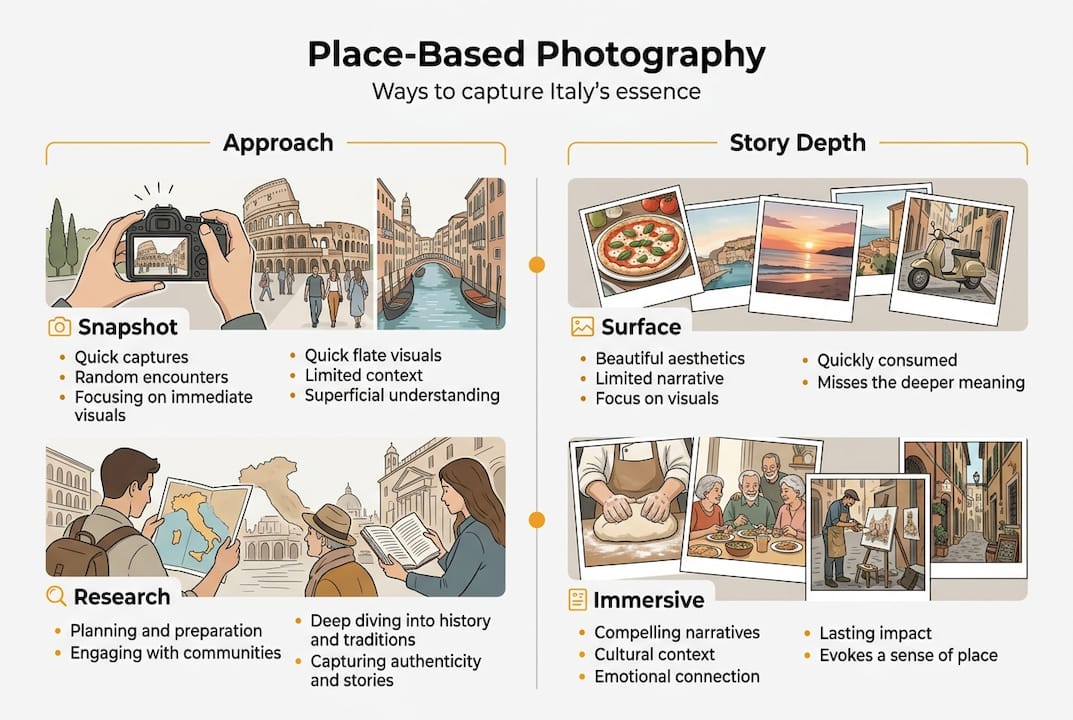
Pro Tip: Before visiting any Italian location, spend at least one hour reading local history and looking at archival photographs from that area. You will arrive with questions, and questions lead to extraordinary images.
Beyond pretty pictures: Avoiding common pitfalls and embracing depth
Once you know the methods, it’s essential to understand how to go deeper and avoid common mistakes. The most frequent error among enthusiast photographers is reaching for sentimentality when conceptual depth is what the image actually needs. A sun-drenched field of sunflowers in Tuscany is lovely. A portrait of the farmer who has tended that field for forty years, standing in its golden light, is extraordinary.
Avoiding shallow imagery requires deliberate effort. Research is your most powerful tool. Before you shoot, explore archival photographs of your chosen location, conduct informal interviews with locals, and spend time simply observing without a camera in hand. This preparation builds an internal map of meaning that guides every compositional decision you make.
Some practical ways to deepen your approach:
- Visit local archives or museums to understand how a place has changed over decades.
- Talk to people who live and work there, not just tourism staff, but shopkeepers, farmers, and artisans.
- Observe before you photograph. Sit in a piazza for an hour before raising your camera.
- Look for artistic photography techniques that honor the atmosphere rather than flatten it.
Sustainability and ethics deserve equal attention. Fragile sites across Italy, from the narrow lanes of Cinque Terre to the mossy banks of hidden Umbrian springs, are under pressure from overtourism. Sharing precise GPS coordinates of sensitive locations online can trigger damaging visitor surges. Respecting community guidelines, staying on marked paths, and asking permission before photographing people are not optional courtesies. They are the foundation of ethical practice.
“The best place-based images are not taken. They are earned through curiosity, patience, and genuine respect for the lives unfolding before the lens.”
Pro Tip: If you feel the urge to recreate a photograph you have already seen a hundred times online, pause. Ask yourself what story only you, in this moment, with your particular curiosity, can tell about this place. That question will redirect you toward something original.
Place-based photography in action: Iconic Italian landscapes and cities
Equipped with techniques and ethical depth, let’s see how these principles play out across Italy’s diverse locations. Italy is, in many ways, the ideal country for this approach. Every region carries centuries of layered history, every village holds stories that have never been photographed, and the light, that legendary Italian light, rewards those who understand what they are looking at.
The UNESCO-listed Val d’Orcia offers one of the most inspiring examples. The park has run participatory campaigns that blend archival and contemporary photographs to document the evolving bond between people and landscape. Locals and photographers collaborate to show how the land has shaped generations of Sienese culture. The result is not a travel brochure. It is a living archive of human belonging.
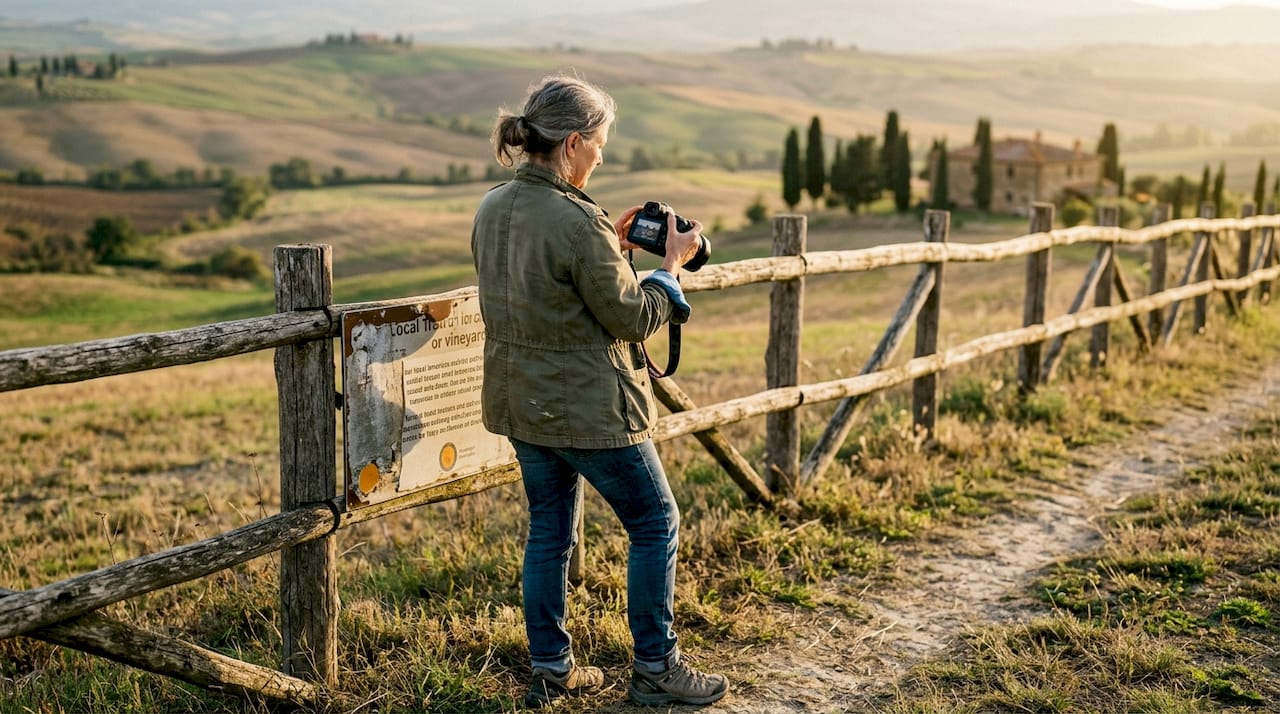
Here is a quick overview of how different Italian locations invite distinct place-based approaches:
| Location | Place-based focus | Photographic opportunity |
|---|---|---|
| Val d’Orcia, Tuscany | Man-landscape bond, agricultural heritage | Participatory portraits, seasonal change |
| Venice | Water culture, artisan traditions | Serial documentation, community stories |
| The Dolomites | Alpine ecology, mountain communities | Systems mapping, environmental narrative |
| Milan | Urban placemaking, migration, modernity | Photovoice, street-level social documentation |
To apply these ideas in the field, consider this sequence:
- Research: Gather maps, archival images, and local histories before you arrive.
- Observe: Spend your first hours without shooting, absorbing the atmosphere and rhythms.
- Connect: Introduce yourself to locals, ask questions, and listen generously.
- Photograph with intention: Let your research and conversations guide your framing.
- Reflect and return: Review your images critically and plan a return visit to deepen the series.
For more on capturing the human dimension of Italian cities, explore our urban photography tips Italy guide and our thoughts on Italy photos human storytelling. Both resources will help you translate these principles into images that genuinely resonate.
Our perspective: The real rewards of place-based photography in Italy
Now that you’ve seen place-based ideas come alive, here’s why this approach delivers so much more than expected. Surface-level shooting, however technically accomplished, tends to produce images that feel interchangeable. Italy’s layered stories resist that kind of treatment. The country rewards commitment and curiosity with a generosity that is almost overwhelming.
What surprises most photographers who embrace this approach is not the improvement in their images, though that is real and significant. It is the unexpected connections they form. A conversation with a Venetian lace-maker leads to a portrait series. An afternoon in a Sicilian archive unlocks a visual essay on memory and loss. These experiences change not just your photography but your understanding of what photography is for.
We believe that the role of culture in photo tours is inseparable from artistic growth. When you photograph with genuine curiosity about a place, the camera becomes a tool for connection rather than collection. That shift in intention is visible in every frame. Italy, with its inexhaustible depth of culture, history, and human warmth, is the perfect place to make that shift.
Ready to immerse yourself? Take your photography further in Italy
If you’re excited to capture Italy at its most authentic, here’s how you can start your own place-based journey. Italy Photo Tour offers expert-led experiences designed to put these principles into practice across the country’s most extraordinary locations.

Led by professional photographer Mino Di Vita, our journeys weave together local knowledge, cultural context, and artistic guidance to help you photograph Italy with genuine depth. Whether you are drawn to the golden hills of Tuscany or the vivid canals of Venice, what we do is built around meaningful engagement with place. Explore our full range of photography tour experiences and discover how Italy Photo Tour can help you create images that truly honor the places you visit.
Frequently asked questions
How does place-based photography benefit amateur photographers?
It helps amateurs create more meaningful, context-rich images by grounding each photograph in the cultural and historical dimensions of the location, resulting in photos that tell a deeper and more resonant story.
Can place-based photography be practiced in cities as well as natural landscapes?
Absolutely. It applies equally to urban and rural settings, capturing community stories, human-built environments, and social dynamics alongside natural scenery. Urban photovoice projects are a well-established example of this in city contexts.
What is ‘photovoice’ in place-based photography?
Photovoice is a participatory method where community members photograph their own lived experiences. As part of place-based methodologies, it surfaces personal and community stories that an outside photographer might never discover independently.
How can photographers avoid damaging fragile sites while practicing place-based photography?
Practice ethical awareness by following site guidelines, avoiding the online sharing of sensitive locations, and respecting community boundaries. Avoiding viral damage to fragile sites is a core ethical responsibility within this approach.
Are there notable Italian projects that use place-based photography?
Yes. The UNESCO Val d’Orcia park has run participatory photo campaigns blending archival and modern images to document the enduring bond between the people of the region and their landscape, serving as a model for this kind of engaged, community-rooted practice.