

Every photographer hoping to move beyond standard tourist snapshots faces the challenge of truly capturing Italian culture. For American travelers, the quest for powerful storytelling and artistry starts with genuine engagement in local life and traditions. Embracing cultural immersion photography means building real relationships, showing respect for customs, and documenting spontaneous moments that reveal Italy’s authentic spirit. This article reveals practical techniques and experiences that help amateur photographers deepen their craft while honoring the vibrant humanity of each image.
Table of Contents
- Defining Cultural Immersion In Travel Photography
- Types Of Immersive Photography Experiences In Italy
- Techniques For Capturing Authentic Italian Culture
- Building Respectful Connections With Locals
- Risks And Challenges Of Cultural Immersion
- Common Mistakes To Avoid In Italian Photo Tours
Key Takeaways
| Point | Details |
|---|---|
| Cultural Immersion Philosophy | True cultural immersion in photography fosters authentic narratives through deep connections with local communities. |
| Engagement Strategies | Develop relationships, learn local customs, and prioritize human connections for impactful storytelling. |
| Common Photography Risks | Be aware of potential risks like cultural disrespect and privacy violations, and take steps to mitigate them. |
| Mistakes to Avoid | Avoid superficial engagement and ensure explicit consent when photographing individuals to maintain authenticity and respect. |
Defining Cultural Immersion in Travel Photography
Cultural immersion in travel photography transcends traditional tourism by creating profound, meaningful visual narratives that capture the authentic essence of human experiences. Unlike surface-level snapshot photography, this approach demands deep respect, preparation, and genuine engagement with local communities and their lived realities.
At its core, cultural immersion photography represents a transformative approach to visual storytelling. Cultural immersion travel involves moving beyond passive observation to actively participating in a culture’s daily rhythms, traditions, and perspectives. Photographers committed to this philosophy seek to document genuine moments that reveal the nuanced humanity of their subjects.
Key characteristics of cultural immersion photography include:
- Developing genuine relationships with local communities
- Learning and respecting local customs and communication norms
- Approaching subjects with empathy and mutual understanding
- Capturing candid, unscripted moments that reveal cultural complexity
- Prioritizing human connection over technical perfection
Research demonstrates that cultural immersion involves researching local customs and traditions to gain authentic connections. This approach requires photographers to invest time in understanding context, learning basic language skills, and developing meaningful interactions that transcend tourist-photographer dynamics.
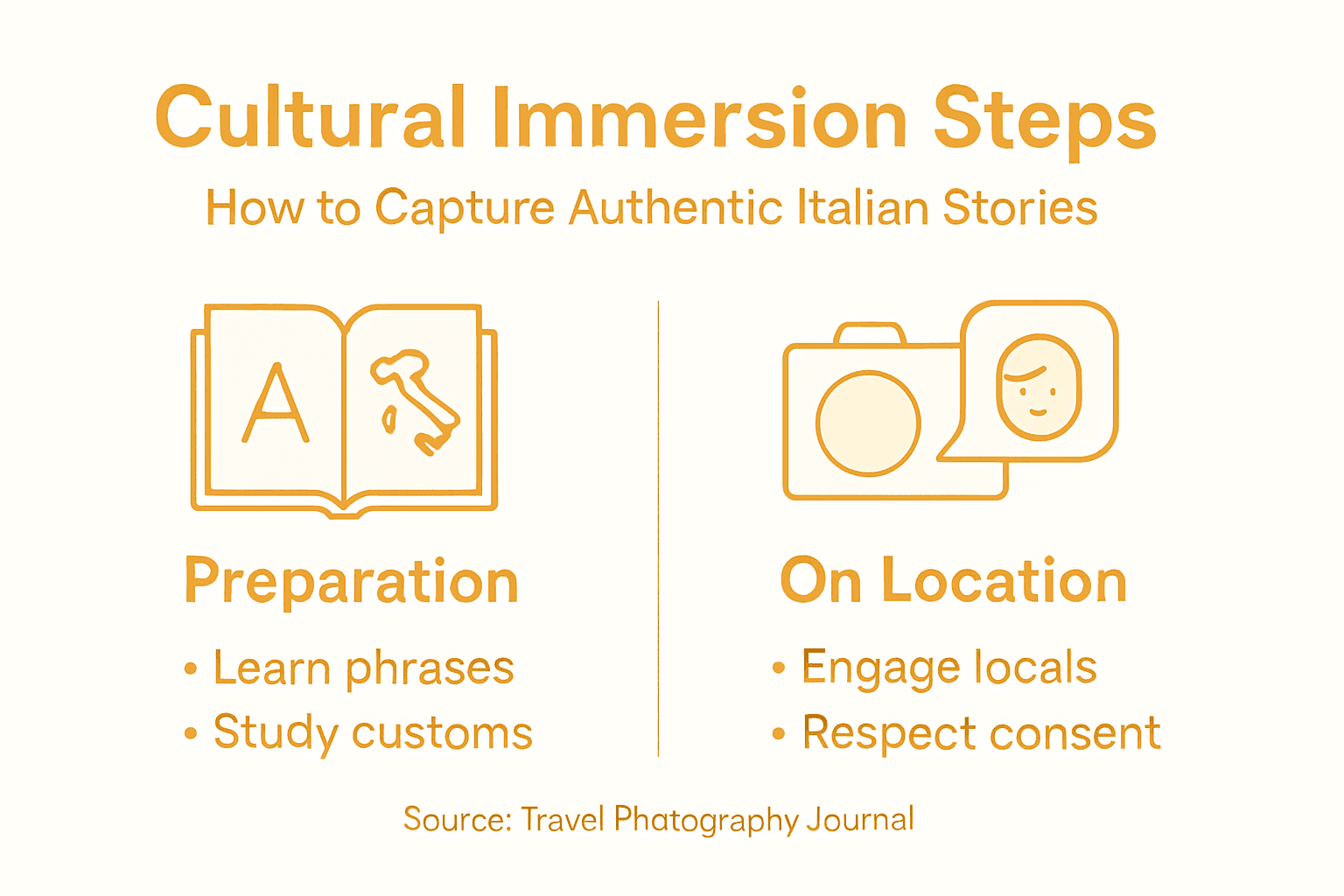
Pro tip: Before traveling, spend time learning basic cultural phrases, researching local etiquette, and understanding non-verbal communication cues to build genuine connections.
Here’s a comparison of surface-level snapshot photography and cultural immersion photography:
| Aspect | Surface-Level Snapshot Photography | Cultural Immersion Photography |
|---|---|---|
| Interaction with Locals | Brief or minimal conversation | Deep engagement and relationship |
| Storytelling Depth | Limited, often generic | Rich, complex human narratives |
| Respect for Customs | Variable, may overlook etiquette | Prioritizes local norms and values |
| Impact on Subjects | Can feel intrusive or impersonal | Builds trust and authentic moments |
Types of Immersive Photography Experiences in Italy
Immersive photography in Italy offers photographers a rich tapestry of experiences that go far beyond traditional tourist snapshots. Cultural immersion tourism enables capturing dynamic, personal perspectives through deeply engaging encounters with local communities and traditions.
These immersive experiences can be categorized into several transformative approaches:
- Neighborhood Documentary Projects: Embedding with local communities in authentic urban and rural settings
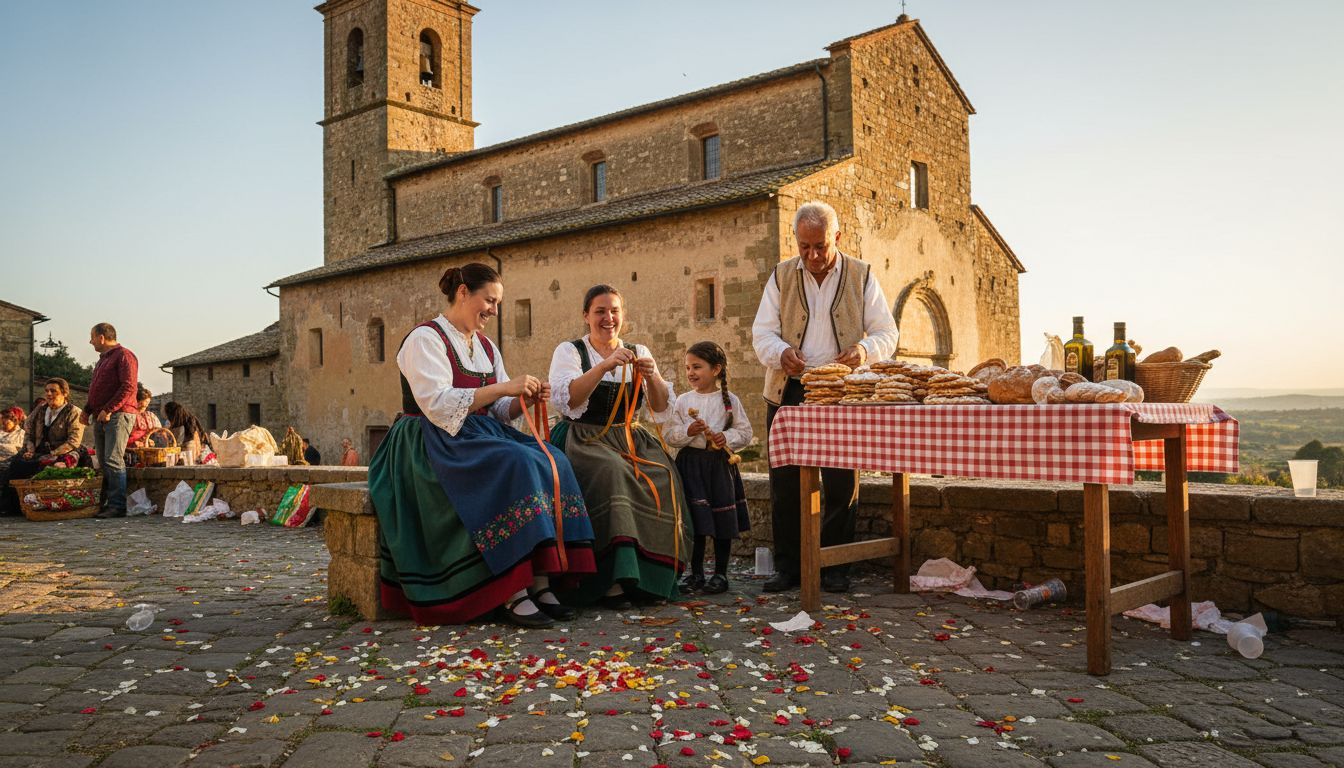
- Traditional Festival Photography: Capturing the vibrant energy of cultural celebrations
- Artisan Workshop Documentaries: Exploring and photographing traditional craft practices
- Rural Community Interactions: Participating in agricultural and daily life scenes
- Street Market Photography: Documenting everyday commercial and social interactions
Photographers seeking genuine cultural narratives can explore immersive experiences in authentic Italian neighborhoods that provide unprecedented access to daily life. These experiences allow for capturing candid moments that reveal the true spirit of Italian culture, moving beyond postcard-style imagery to create meaningful visual stories.
Authentic photography is about connection, not just composition. It requires patience, respect, and a genuine desire to understand the culture you are documenting.
Pro tip: Research local festivals, community events, and seasonal traditions before your trip to identify unique photographic opportunities that capture genuine cultural moments.
Techniques for Capturing Authentic Italian Culture
Cultural photography demands more than technical skill. Research reveals critical techniques for capturing authentic moments, emphasizing the importance of deep contextual understanding and genuine human connection.
Key techniques for authentic Italian cultural photography include:
- Developing conversational Italian language skills
- Seeking permission before photographing individuals
- Observing social interactions without disrupting them
- Understanding nonverbal communication nuances
- Focusing on storytelling over technical perfection
- Embracing natural, unscripted moments
Photographers must approach their craft with profound respect and curiosity. Forging genuine connections with locals transforms photography from mere documentation to a powerful narrative experience. This requires patience, active listening, and a willingness to become part of the community temporarily.
Authentic cultural photography is not about capturing images, but about telling stories that honor the dignity and complexity of human experience.
Pro tip: Learn basic Italian phrases and cultural etiquette before your trip to build immediate trust and rapport with local communities.
Building Respectful Connections with Locals
Cultural connections require more than superficial interactions. The art of cultural immersion involves deep empathy and a genuine commitment to understanding local experiences beyond tourist perspectives.
Key strategies for building meaningful local connections include:
- Learning basic Italian language phrases
- Showing sincere curiosity about personal stories
- Practicing active and respectful listening
- Participating in community activities without disrupting
- Demonstrating cultural humility and openness
- Avoiding stereotypical or exploitative representations
Successful photographers understand that cultural immersion requires reciprocal relationships built on mutual respect. This means approaching interactions with genuine interest, asking thoughtful questions, and creating space for local perspectives to emerge naturally.
Authentic connection is not about collecting stories, but about creating genuine human understanding that transcends cultural boundaries.
Pro tip: Always ask for permission before photographing individuals, and be prepared to engage in conversation that goes beyond just capturing an image.
Risks and Challenges of Cultural Immersion
Cultural photography demands extraordinary sensitivity and awareness. Photographers must navigate complex ethical landscapes when attempting to capture authentic moments without causing harm or misrepresentation.
Potential risks in cultural immersion photography include:
- Unintentional cultural disrespect
- Misinterpreting local customs
- Violating privacy boundaries
- Creating stereotypical representations
- Disrupting community dynamics
- Generating distrust among local populations
Balancing artistic vision with ethical responsibility requires profound self-awareness and preparation. Photographers must continuously examine their own assumptions, recognize power dynamics, and approach each interaction with genuine humility and respect.
True cultural understanding emerges not from capturing images, but from creating meaningful human connections that transcend visual documentation.
Pro tip: Develop a personal ethical framework before traveling, including clear guidelines about consent, representation, and respectful engagement with local communities.
Below is a summary of typical risks and mitigation strategies in immersive travel photography:
| Risk Type | Example Scenario | Best Mitigation Practice |
|---|---|---|
| Privacy Violation | Photographing private events | Always obtain clear, informed consent |
| Cultural Misinterpretation | Misreading gestures | Research and seek local guidance |
| Causing Community Disruption | Distracting daily routines | Keep a low profile, observe politely |
| Stereotype Reinforcement | Oversimplified portrayals | Document diverse, authentic stories |
Common Mistakes to Avoid in Italian Photo Tours
Cultural photography requires nuanced understanding beyond technical skills. Photographers often make critical errors that compromise the authenticity and respect of their visual storytelling.
Common mistakes photographers should avoid include:
- Rushing through locations without meaningful engagement
- Prioritizing iconic landmarks over human stories
- Photographing people without explicit consent
- Ignoring local cultural communication norms
- Using intrusive or aggressive shooting techniques
- Treating interactions as transactional experiences
- Imposing external narratives onto local experiences
Successful photo tours demand deeper cultural understanding beyond superficial visual documentation. Photographers must develop sensitivity, patience, and a genuine commitment to representing Italian communities with dignity and complexity.
Authentic photography is not about capturing images, but about creating meaningful human connections that transcend visual representation.
Pro tip: Spend at least 30 minutes observing and interacting with a community before taking any photographs, allowing genuine connections to emerge naturally.
Experience True Cultural Immersion on Your Italy Photo Tour
Capturing authentic stories through travel photography requires more than just technical skills. The challenge lies in forging genuine connections with local people, respecting their customs, and patiently documenting unscripted moments that reveal deep cultural truths. If you feel limited by surface-level snapshots and want to move beyond tourist clichés to evoke real human experiences in Italy, you are not alone. Key concepts like empathy, cultural humility, and immersive storytelling featured in the article align perfectly with the personalized approach offered by Italy Photo Tour.

Discover immersive photo tours in iconic Italian locations such as Milan, Tuscany, Venice, and Cinque Terre that help you develop conversational Italian skills, build respectful relationships with locals, and capture candid moments full of life and tradition. These guided experiences are crafted to inspire creativity and deepen your understanding of local culture through leisure, artistic exploration, and professional mentorship. Take the next step now to transform your photography from simple images into powerful cultural narratives by visiting Italy Photo Tour. Start your journey toward authentic Italian storytelling today.
Frequently Asked Questions
What is cultural immersion photography?
Cultural immersion photography involves engaging deeply with local communities and their traditions, capturing authentic moments that convey the true essence of culture beyond surface-level observations.
How can I build respectful connections with locals during photo tours?
To build respectful connections, learn basic local language phrases, show genuine curiosity about personal stories, and engage in community activities while practicing active listening and cultural humility.
What are some common mistakes to avoid in cultural photography?
Common mistakes include rushing through locations without engagement, photographing people without consent, and imposing external narratives onto local experiences.
What techniques can help me capture authentic cultural moments?
Key techniques include developing conversational language skills, seeking permission before photographing individuals, observing social interactions discreetly, and focusing on storytelling rather than technical perfection.