

You take sharp, well-exposed photos, but viewers scroll past them without a second glance. The problem is not your technical skill; it’s that your images lack a compelling story. This guide teaches you how to compose storytelling images that connect emotionally and narrate meaningful stories, transforming your Italy photo tour into a collection of impactful visual narratives.
Table of Contents
- Prerequisites: What You Need Before Composing Storytelling Images
- Planning and Preparation for Your Storytelling Shoot
- Composition Techniques to Enhance Visual Storytelling
- Capturing Emotional Connection in Images
- Single Image Vs Photo Series: Choosing Your Storytelling Format
- Capturing the Decisive Moment: Timing Your Shots
- Post-Processing Enhancements for Storytelling
- Common Mistakes and Troubleshooting in Storytelling Photography
- Expected Results and Outcomes: How to Measure Your Storytelling Success
- Enhance Your Storytelling with Italy Photo Tour Experiences
- Frequently Asked Questions
Key Takeaways
| Point | Details |
|---|---|
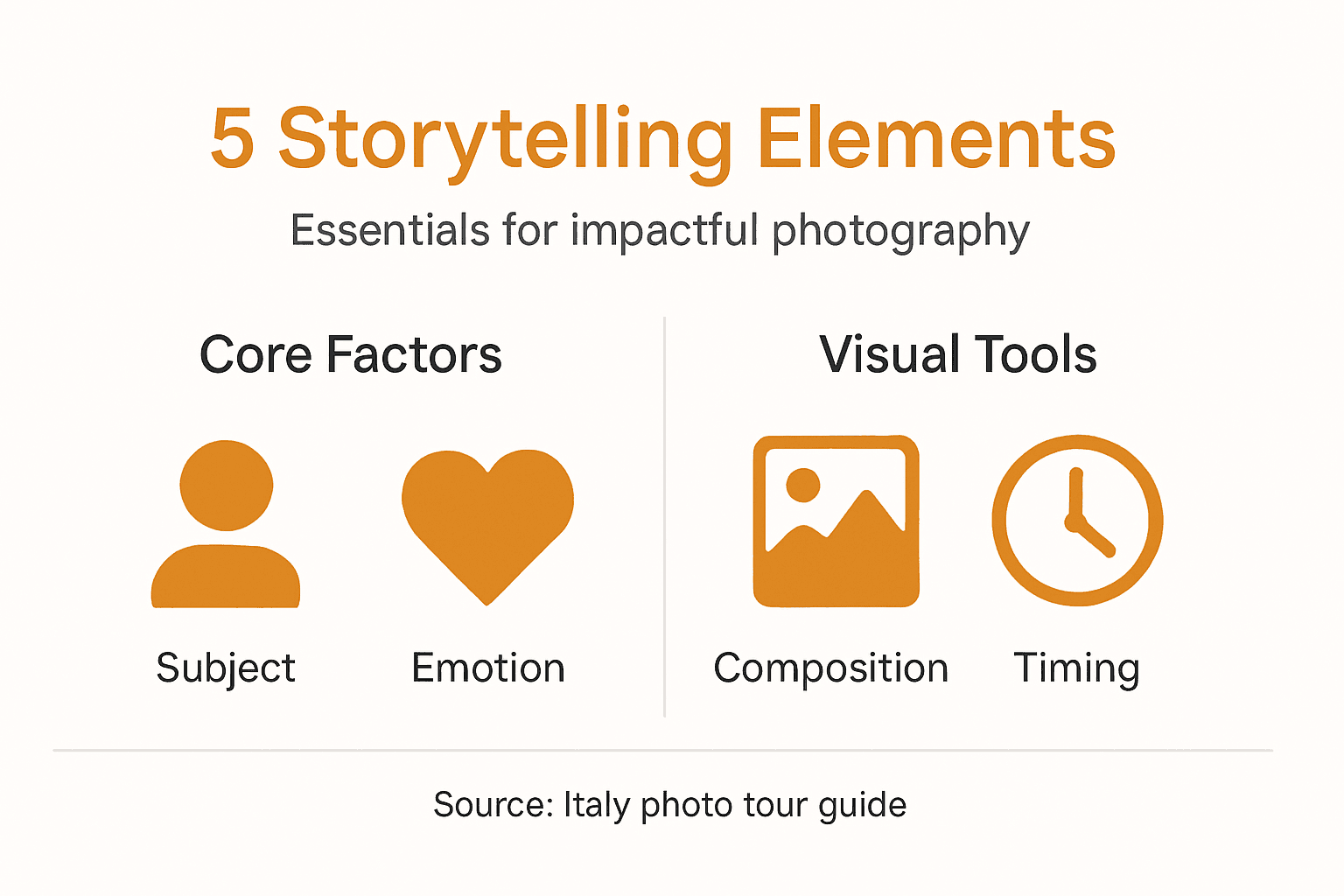
| Five Essential Elements | Storytelling images require deliberate use of subject, emotion, context, light, and composition to create narrative impact. |
| Planning Drives Success | Research and scouting before shooting increases storytelling effectiveness by revealing meaningful moments and unique perspectives. |
| Composition Guides Focus | Rule of thirds, leading lines, and framing direct viewer attention toward key story elements. |
| Authentic Emotion Connects | Genuine expressions and decisive moments captured naturally create stronger viewer engagement than posed shots. |
| Editing Refines Narrative | Subtle color, contrast, and cropping adjustments enhance mood without altering reality or story authenticity. |
Prerequisites: What You Need Before Composing Storytelling Images
Before you compose storytelling images, you need foundational skills and tools. Basic camera control lets you execute your creative vision without fumbling with settings during critical moments. Understanding narrative elements like subject, emotion, and context helps you visualize stories before pressing the shutter.
Access to diverse Italian locales and cultural subjects provides rich storytelling material. Markets, festivals, historic neighborhoods, and everyday street scenes offer authentic human stories waiting to be captured. Your Italy photography checklist should include location research and contact information for local guides.
Organize your story ideas using mood boards or shot lists. These tools clarify themes and help you identify gaps in your narrative before shooting. A simple notebook or smartphone app works perfectly for cataloging visual ideas and noting lighting conditions at different times.
Essential Skills and Tools:
- Manual camera controls including aperture, shutter speed, and ISO adjustments
- Basic understanding of 5 core storytelling elements: subject, emotion, context, light, and composition
- Research materials about Italian culture, traditions, and social contexts
- Shot lists or mood boards organizing themes and visual concepts
- Backup equipment and memory cards for extended shooting sessions
Your technical proficiency frees your mind to focus on storytelling rather than camera operation. When you see an emotional moment unfolding, you need muscle memory to capture it instantly. Practice until adjusting settings becomes automatic.
Planning and Preparation for Your Storytelling Shoot
Thorough planning separates compelling photo stories from random snapshots. Research local culture and social context before arriving at your location. Understanding regional traditions, festivals, and daily routines helps you anticipate meaningful moments worth photographing.
Scout locations during different times of day to assess light quality and identify advantageous angles. Notice how shadows fall, where crowds gather, and which backgrounds support rather than distract from your story. Planning photo tours Italy involves mapping sunrise and sunset times alongside cultural events.
Develop a clear story idea or theme guiding your photography choices. Ask yourself what emotion or message you want viewers to feel. A focused concept like “morning routines in Venice” produces more coherent stories than vague ideas about “Italian life.”
Planning Steps for Stronger Stories:
- Define your story concept and emotional goal before shooting
- Research cultural context to identify authentic moments worth capturing
- Scout locations noting light conditions, backgrounds, and vantage points
- Create flexible shot lists balancing planned compositions with spontaneous opportunities
- Schedule shoots around optimal lighting and peak activity times
Balance detailed planning with flexibility to capture unexpected moments. The best stories often emerge from spontaneous interactions you never anticipated. Your plan provides direction, but stay alert to serendipitous opportunities that enhance your narrative.
Pro Tip: Arrive at locations 30 minutes early to observe patterns, meet locals, and identify ideal shooting positions before the action begins. This extra time transforms rushed snapshots into thoughtful compositions.
Your photographic storytelling in Italy improves dramatically when you invest time in preparation. Stories built on research and planning resonate more deeply than improvised collections of pretty pictures.
Composition Techniques to Enhance Visual Storytelling
Composition directs viewer attention exactly where you want it. The rule of thirds places subjects off-center, creating visual tension and balance that feels natural to human eyes. Position key story elements at intersection points where gridlines cross for immediate impact.
Leading lines guide viewers through your frame toward the story’s focus. Roads, fences, architectural features, and even shadows create paths the eye naturally follows. Use these lines to connect foreground context with your main subject, building narrative depth.
Frame subjects using natural or architectural elements to add context and focus. Doorways, windows, arches, and tree branches create frames within frames, emphasizing your subject while incorporating environmental storytelling details. This technique works beautifully when capturing cultural photography ideas Italy offers in abundance.
Composition Techniques Comparison:
| Technique | Primary Benefit | Best Used When | Potential Challenge |
|---|---|---|---|
| Rule of Thirds | Creates balanced, dynamic compositions | Subject needs emphasis without centering | Can feel formulaic if overused |
| Leading Lines | Guides eye toward key story elements | Scene has natural directional features | Lines may distract if too prominent |
| Framing | Adds context while focusing attention | Environmental details support narrative | Frame elements may overwhelm subject |
| Negative Space | Emphasizes subject isolation or mood | Minimalist story requires breathing room | May feel empty without clear intent |
Simplify backgrounds ruthlessly to keep narratives clear. Cluttered backgrounds compete for attention, diluting your story’s impact. Move closer, change angles, or use wider apertures to blur distracting elements. Every element visible in your frame should contribute to the story.
Incorporate environmental details embedding cultural or location cues. A weathered doorway, hanging laundry, or distinctive architecture tells viewers where your story unfolds. These details provide context without requiring captions or explanations.
Pro Tip: Before shooting, scan your frame’s edges for distracting elements. Adjusting your position slightly eliminates poles, signs, or bright spots that pull attention from your subject. This habit dramatically improves urban photography composition tips effectiveness.
Capturing Emotional Connection in Images
Emotion transforms technical photographs into memorable stories. Engage naturally with subjects to capture authentic, candid expressions rather than forced smiles. Spend time talking, observing, and building trust before raising your camera. People reveal genuine emotions when they feel comfortable and respected.
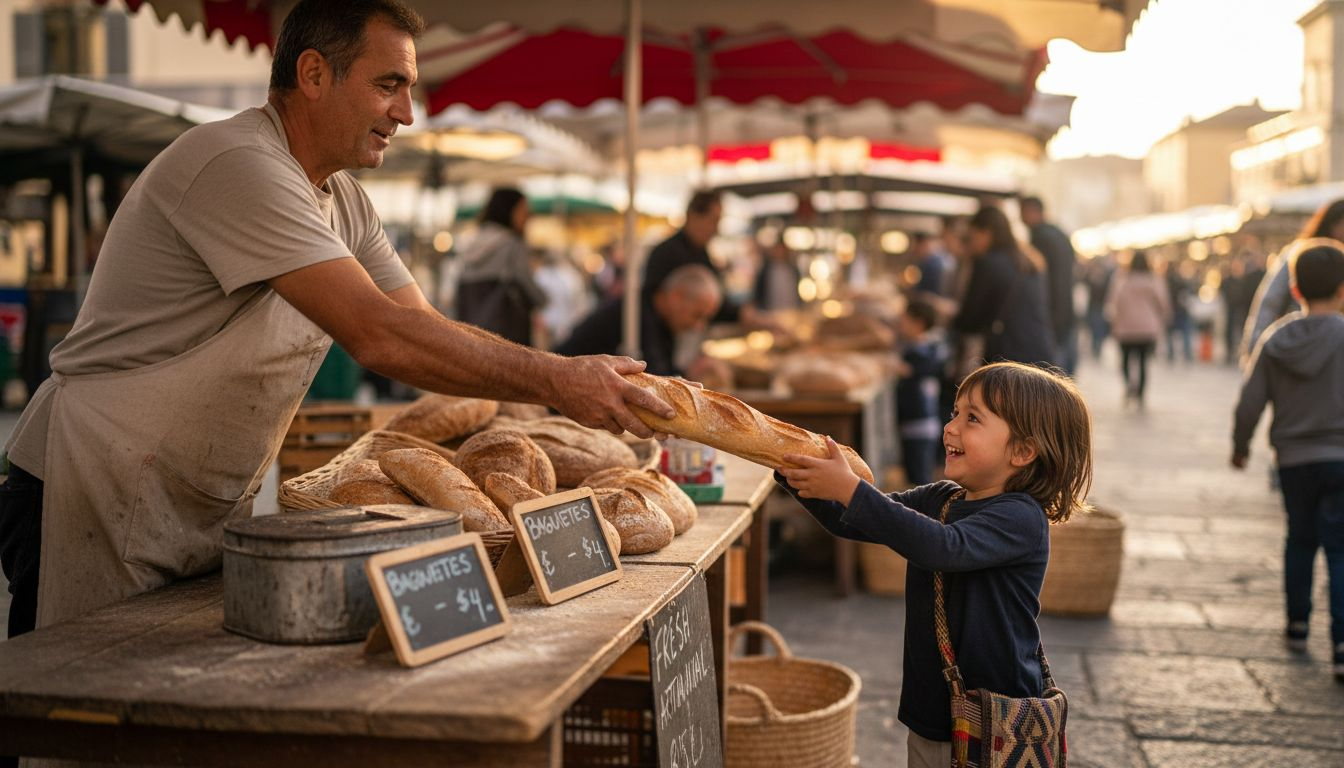
Focus on expressions, eyes, and interactions conveying feelings. Eyes communicate more emotion than any other facial feature. Capture moments when subjects connect with each other, react to events, or lose themselves in activity. These unguarded instants carry storytelling power posed portraits rarely achieve.
Use natural and soft lighting highlighting mood and emotion. Harsh shadows obscure expressions, while gentle window light or golden hour sun illuminates faces beautifully. Position yourself where light flatters your subject and supports the emotional tone you want.
“Emotion is the heart of every storytelling photo. Without it, you have documentation; with it, you create connection.”
Capturing Authentic Emotion:
- Observe subjects before shooting to anticipate genuine emotional moments
- Focus on eyes, hands, and body language revealing inner feelings
- Shoot during natural activities rather than interrupting for posed photos
- Use longer lenses allowing comfortable distance while capturing intimacy
- Wait for interactions between people creating spontaneous emotional exchanges
Capturing genuine emotional moments and expressions strengthens viewer engagement more than perfect technical execution. A slightly soft image showing raw emotion outperforms a razor-sharp photo with a blank expression.
Prioritize moments of genuine connection over technical perfection. Your cultural immersion photography succeeds when viewers feel something, not when they admire your equipment or settings.
Single Image vs Photo Series: Choosing Your Storytelling Format
Single image storytelling delivers concise, immediate impact through strong composition and clear narrative focus. One powerful photograph can convey an entire story when every element works together. Single images work perfectly for social media, portfolio highlights, or situations demanding instant visual communication.
Photo series allow nuanced, multi-faceted stories showing progression, different perspectives, or deeper context. A sequence reveals complexity single images cannot capture. You can show cause and effect, contrast different subjects, or document a process unfolding over time.
Photo essays of 5 to 12 images provide detailed narratives and maintain viewer engagement without overwhelming attention. Fewer than five images often feel incomplete; more than twelve risk losing interest. This range provides enough variety to build narrative depth while maintaining focus.
Format Comparison:
| Format | Advantages | Disadvantages | Best Used For |
|---|---|---|---|
| Single Image | Immediate impact, easy sharing, portfolio standout | Limited narrative depth, cannot show progression | Social media, impactful moments, portfolio highlights |
| Photo Series | Deep storytelling, shows progression, engages longer | Requires more planning, needs editing discipline | Photo essays, complex stories, exhibitions |
| Photo Book | Complete narrative control, immersive experience | Time intensive, expensive production | Career milestones, client deliverables, legacy projects |
Sequencing images thoughtfully creates narrative flow in series. Start with an establishing shot providing context, move through detail and action images, then conclude with a resolution or reflective moment. This classic structure guides viewers through your story naturally.
Your curated photo tour Italy experience might inspire either format depending on your goals. A single stunning Venice canal reflection tells one story; a series documenting a gondolier’s day tells another, richer one.
Capturing the Decisive Moment: Timing Your Shots
The decisive moment happens when emotion, action, and composition align perfectly. Learn to anticipate key moments by observing patterns in human behavior. People often repeat gestures or expressions; recognizing these patterns helps you predict when to shoot.
Patience and readiness increase your odds of capturing pivotal shots. Keep your camera prepared with appropriate settings so you can react instantly when moments unfold. Missing the decisive moment because you were adjusting ISO is frustrating and avoidable.
Use continuous shooting mode to seize fleeting opportunities. A burst of three to five frames often captures the peak expression or action you sought. Review images later to select the frame with perfect timing rather than hoping one single shot worked.
Timing Techniques:
- Observe subjects for several minutes before shooting to learn their patterns
- Pre-focus and pre-expose for anticipated action locations
- Position yourself where decisive moments likely occur
- Watch for emotion building toward a peak expression or reaction
- Use continuous shooting for fast action, single shots for deliberate moments
Observe subtle interactions often overlooked but impactful. A glance exchanged between strangers, a child’s hand reaching for a parent, or a vendor’s satisfied smile after a sale all carry emotional weight. These quiet moments often tell stronger stories than dramatic gestures.
Pro Tip: Practice mindfulness and situational awareness to improve timing. Put your phone away, stop planning the next shot, and become fully present. This focused attention reveals moments you would otherwise miss entirely.
Capturing the decisive moment significantly increases storytelling impact by freezing instants of pure emotion or action. Your travel photography timing tips improve through conscious practice and patient observation.
Post-Processing Enhancements for Storytelling
Thoughtful editing elevates good captures into compelling stories. Use color grading to set emotional tone matching your narrative intent. Warm palettes evoke comfort and nostalgia; cool tones suggest melancholy or contemplation; neutral colors emphasize reality and documentary feel.
Crop to eliminate distractions and emphasize key story subjects. Tighter crops intensify emotional connection by bringing viewers closer to subjects. Wider crops provide environmental context supporting the narrative. Every crop decision should serve your story’s purpose.
Adjust contrast and sharpness enhancing visual clarity without creating an artificial look. Moderate contrast adds depth and dimension; excessive contrast appears harsh and unnatural. Selective sharpening draws attention to important details while letting less critical areas recede.
Post-Processing Guidelines:
- Choose color palettes matching your story’s emotional intent
- Crop purposefully to strengthen composition and remove distractions
- Adjust exposure ensuring key subjects are properly lit
- Apply contrast moderately to add depth without harshness
- Use local adjustments highlighting story-critical areas
Avoid over-editing that changes story mood or misrepresents reality. Heavy filters, unrealistic colors, and excessive manipulation undermine authenticity. Your editing tools like Lightroom and Snapseed should enhance what you captured, not fabricate what wasn’t there.
Maintain consistency across photo series to preserve coherent narrative tone. Similar color treatments, contrast levels, and cropping styles unify separate images into a cohesive story. Wildly different editing approaches within one series confuses viewers and weakens impact.
Your urban photo editing tips should always prioritize story over stylistic trends. Edit to clarify and strengthen your narrative, not to chase popular presets or filters.
Common Mistakes and Troubleshooting in Storytelling Photography
Many photographers skip defining their narrative before shooting, resulting in collections of nice pictures lacking coherent stories. Define what you want to communicate before you start photographing. A clear concept guides every creative decision you make.
Cluttered backgrounds distract viewers from your subject and dilute narrative focus. Move closer, change angles, or use selective focus isolating your subject. Every visible element should contribute to the story or be eliminated.
Focusing exclusively on technical perfection often sacrifices emotional authenticity. A slightly imperfect image showing genuine emotion outperforms a technically flawless photo with wooden expressions. Prioritize feeling over specifications.
Common Errors and Fixes:
- Unclear story: Define your narrative concept and emotional goal before shooting
- Distracting backgrounds: Simplify through positioning, focal length, or aperture choices
- Missing emotion: Engage subjects naturally and wait for authentic moments
- Poor composition: Apply rule of thirds, leading lines, and intentional framing
- Over-editing: Keep adjustments subtle and maintain natural mood
Weak composition fails to guide viewer attention toward story elements. Use leading lines, framing, and strategic placement directing eyes where you want them. Composition should feel intuitive, not random or accidental.
Over-editing destroys the natural mood and authenticity viewers crave. Heavy-handed processing makes images feel artificial and disconnected from reality. Frequent mistakes include poor planning, ignoring emotions, cluttered backgrounds, and weak composition; correcting these dramatically improves results.
Your photo tour checklist essentials should include reminders about these common pitfalls. Awareness prevents mistakes; practice builds habits that naturally avoid them.
Expected Results and Outcomes: How to Measure Your Storytelling Success
Successful storytelling photos evoke emotional responses from viewers regardless of their background. When people pause, comment thoughtfully, or share your images, you’ve created connection. This emotional engagement matters more than technical accolades or equipment praise.
Strong narratives remain clear and coherent whether viewed as single images or series. Viewers understand your story without requiring lengthy captions explaining what they should feel. The image communicates independently through visual elements alone.
Improvement appears gradually through personal skill development and audience feedback over weeks and months. Consistent practice in storytelling photography improves viewer engagement as you internalize techniques and develop your unique voice. Track progress by comparing recent work against images from three or six months ago.
Success Indicators:
- Viewers describe specific emotions your images evoked
- People understand your story without extensive captions
- Technical execution supports rather than overshadows narrative
- Your images stand out in crowded feeds and portfolios
- You receive feedback about story impact rather than just equipment questions
Tracking progress encourages continued learning and experimentation. Maintain a portfolio showcasing your strongest storytelling work. Review it quarterly to identify patterns in successful images and areas needing development.
Your photography storytelling progress examples demonstrate how dedicated practice transforms casual snapshots into meaningful narratives. Success in storytelling photography is measured by emotional impact, not pixel counts or gear specifications.
Enhance Your Storytelling with Italy Photo Tour Experiences
Ready to transform storytelling knowledge into unforgettable photographic journeys? Join expert-led photography tours Italy designed specifically to elevate your narrative skills in iconic Italian settings. Our immersive Italy photo tours provide guided cultural immersion and hands-on composition workshops.

Explore Venice’s hidden canals, Milan’s urban energy, and Lake Como’s serene beauty with support tailored to your creative goals. Our Italy Photo Tour offerings include real-time feedback from professional photographer Mino Di Vita, accelerating your learning through personalized guidance.
Pro Tip: Booking a custom photo tour provides invaluable mentorship impossible to replicate through online tutorials alone. Direct feedback on location transforms understanding into instinct.
Frequently Asked Questions
How do I create a strong story idea for my Italy photo tour?
Research Italian cultural themes like daily markets, traditional crafts, or regional festivals, then choose a personal angle connecting to your interests. Create mood boards or shot lists visualizing your narrative before shooting. Your story planning checklist organizes themes and identifies gaps in coverage.
What composition techniques best support storytelling?
Use rule of thirds placing subjects at intersection points, leading lines directing attention toward key elements, and natural framing adding context. Simplify backgrounds ruthlessly to keep focus on story subjects. These composition techniques guide viewer attention exactly where your narrative needs it.
Should I focus on single images or photo essays for my project?
Single photos deliver immediate impact perfect for social media and portfolio highlights; photo essays offer narrative depth showing progression over time. Choose based on story complexity and available shooting time. Your single vs series storytelling decision depends on whether your narrative benefits from multiple perspectives.
How can I capture authentic emotions from strangers?
Be respectful, patient, and observant while prioritizing natural interactions over posed requests. Spend time building comfort before shooting, then focus on eyes and subtle expressions conveying genuine feeling. Your authentic emotion photography improves dramatically when subjects forget the camera exists.
What editing approaches keep my story natural and impactful?
Use color grading, contrast adjustments, and strategic cropping subtly to enhance mood and focus without over-processing. Keep edits consistent across series to maintain coherent narrative tone. Your editing for storytelling should clarify and strengthen the story you captured, never fabricate something that wasn’t there.
Recommended
- Photographic Storytelling: Elevating Your Italian Journey
- Immersive Photography: Transforming Visual Storytelling
- 7 Cultural Photography Ideas Italy for Creative Storytelling
- Role of Light in Artistic Photos: Elevating Your Images
- Wedding Storytelling: Capturing Real Love in Images
- Storytelling Through Photography: Capturing Family Milestones | Jodi Blodgett Photography