

TL;DR:
- Candid photography captures authentic, unposed moments that reveal genuine human emotions and stories.
- It relies on observation, anticipation, and a willingness to let life unfold naturally without heavy directing.
There is a quiet but persistent myth in photography circles: that truly memorable photographs require careful staging, deliberate posing, and full control over every element in the frame. Yet some of the most breathtaking images ever made were born not from direction, but from surrender — from the willingness to simply watch, wait, and let life unfold. Candid photography captures authentic, unposed moments as they happen, prioritizing genuine expressions and raw human emotion over any kind of arrangement. In this guide, you will discover what candid photography truly means, how it differs from posed work, and how to practice it with intention on an Italian photo tour.
Table of Contents
- What is candid photography?
- Candid vs. posed: Understanding the spectrum
- How candid moments are captured: Observation and anticipation
- Candid photography in Italy: Practical tips and tour applications
- What most aspiring candid photographers get wrong
- Ready to capture authenticity in Italy?
- Frequently asked questions
Key Takeaways
| Point | Details |
|---|---|
| Authenticity is key | Candid photography captures genuine emotions and real-life moments better than posed shots. |
| There’s a candid spectrum | Photos range from pure unposed to lightly directed, and both can be authentic when natural. |
| Observation and timing matter | Great candid photography hinges on recognizing and anticipating authentic moments during travel. |
| Apply skills on tour | Italian photo tours offer perfect opportunities to practice and refine your candid approach in vibrant settings. |
What is candid photography?
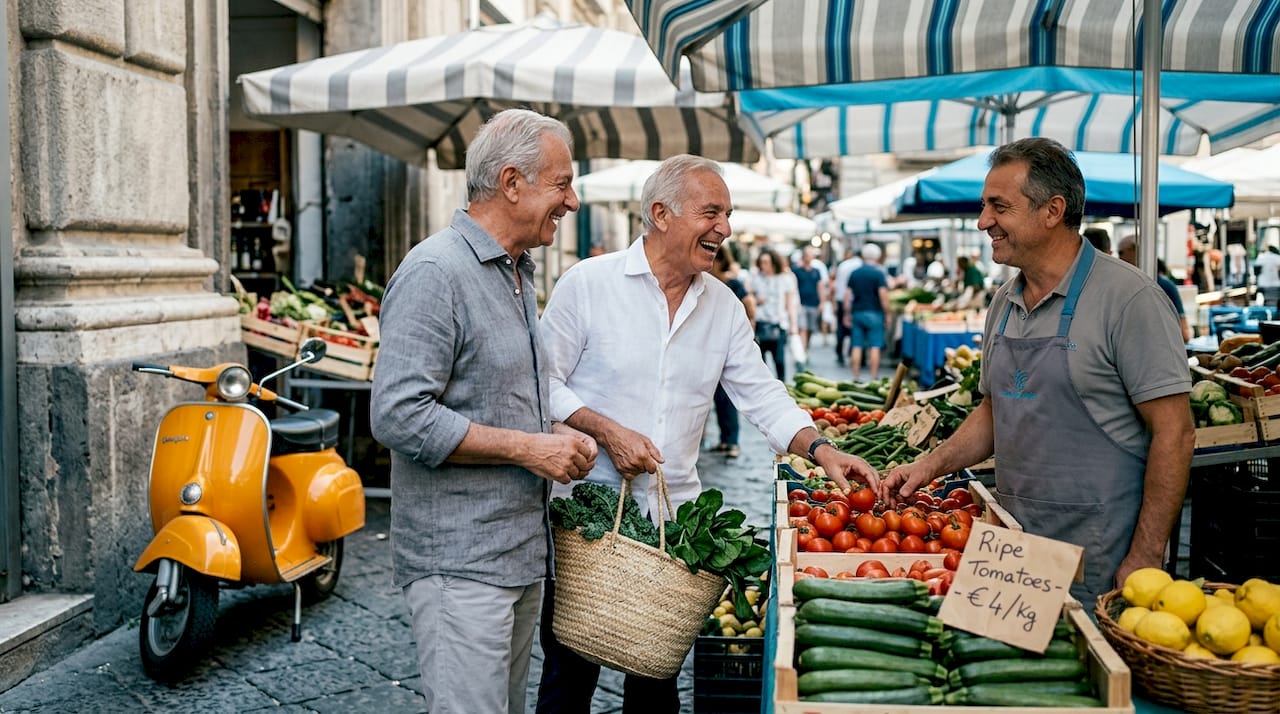
Having set the scene for why posed images aren’t everything, let’s define candid photography and what makes it so distinctly powerful. At its heart, candid photography is the art of capturing life as it genuinely unfolds — without interrupting, arranging, or directing the scene in any way. It is less about technical precision and more about emotional truth. When a Venetian fisherman laughs at a shared joke with his neighbor, when a grandmother in a Florentine market touches a ripe peach with practiced tenderness, when children chase pigeons across a sunlit piazza — these are the moments candid photography exists to preserve.
“Candid photography is photographing authentic, unposed moments as they unfold, prioritizing genuine expressions, emotions, and interactions rather than directing or arranging subjects.”
This approach is rooted in documentary tradition, yet it carries a deeply personal and artistic resonance. The best candid images feel as though they reach through the frame and touch you somewhere real. They tell stories that staged photographs simply cannot replicate, because the truth written on an unguarded face carries a weight no direction can manufacture.
For photographers exploring Italy through our authentic travel images guide, the candid approach transforms an already extraordinary landscape into a living, breathing gallery of human experience. Consider the characteristics that define a truly candid photograph:
- Unposed: The subject is not aware of, or not responding to, the camera’s gaze.
- Natural: The scene exists exactly as it would without a photographer present.
- Emotionally resonant: A genuine feeling, expression, or interaction is the photograph’s beating heart.
- Documentary in spirit: The image serves as a true record of a real moment in real time.
- Story-forward: The viewer is drawn into a narrative that unfolds on its own terms.
These traits combine to create images that feel less like photographs and more like windows — transparent, honest, and quietly alive.
Candid vs. posed: Understanding the spectrum
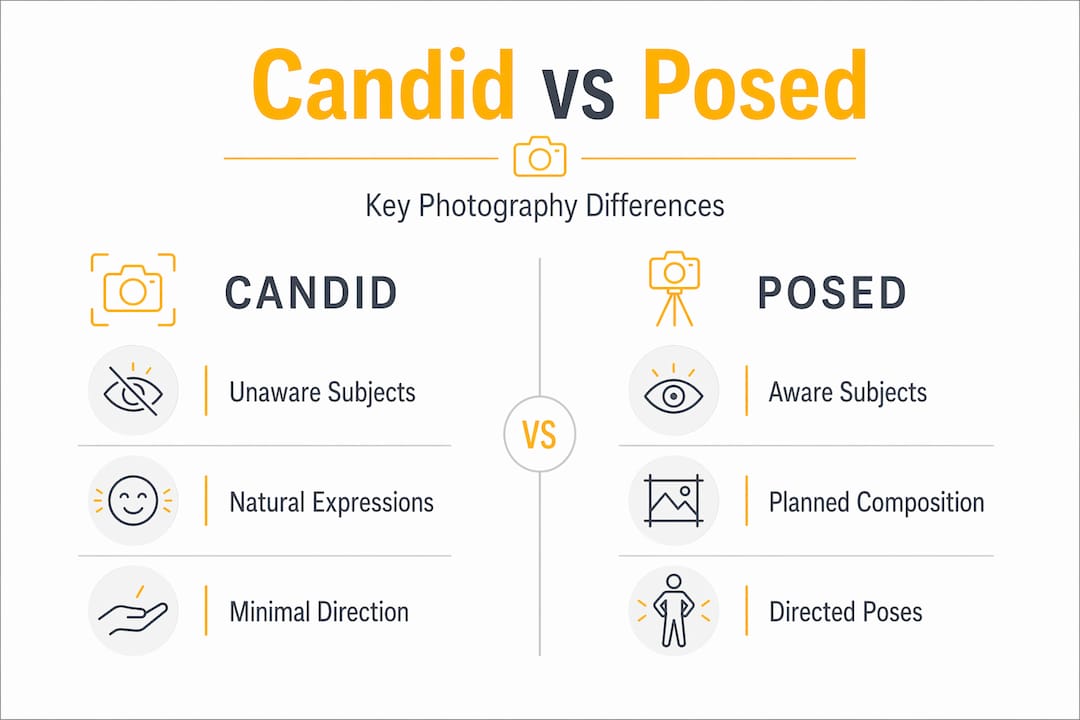
Once you understand the core definition, it’s important to grasp that candid photography isn’t all-or-nothing — there is a rich and nuanced spectrum to explore. Candid shooting is often a spectrum: some frames occur when the subject is entirely unaware of the camera, while many “candid-adjacent” images involve a subject’s awareness but minimal or gentle direction. Understanding where your images fall on this spectrum can sharpen your artistic intentions and help you make more deliberate creative choices.
| Type | Subject awareness | Direction given | Example in Italy |
|---|---|---|---|
| Pure candid | None | None | Capturing a local vendor in animated conversation at a morning market |
| Candid-adjacent | Aware but relaxed | Minimal or none | A tour guest laughing naturally moments after a brief introduction |
| Lightly directed | Fully aware | Some gentle guidance | Asking a subject to continue their activity while you photograph from the side |
| Posed | Fully aware | Full direction | Positioning a subject in specific light with a specific expression |
In practice, the line between pure candid and candid-adjacent can feel almost invisible, and that is perfectly acceptable. During a photography walk through the winding streets of Siena or along the colorful quays of Cinque Terre, you will encounter all four types within a single afternoon. The goal is not to adhere rigidly to any one category but to remain conscious of your intentions and of the authenticity you are preserving or compromising.
Pro Tip: Even when subjects know a camera is present — such as during a village festival or a neighborhood celebration — images can absolutely remain candid. The key is that no one is performing for you. If they are simply continuing to live in your presence, the authenticity survives beautifully. This is an important freedom to embrace, especially when practicing documentary travel photography in Italy’s vibrant public spaces.
How candid moments are captured: Observation and anticipation
With a sense of the candid spectrum, let’s dive into the practical methods for actually capturing these authentic moments. The honest truth is that candid photography is not primarily about camera technique — it is about seeing. For candid and documentary work, photographers rely on observation and anticipation to seize fleeting moments rather than posing subjects on command. These are learnable skills, and Italy provides one of the richest classrooms imaginable.
Think of observation as a form of patient attention — the ability to read a scene, to sense where energy is building, and to recognize the patterns of human behavior that hint at an approaching moment. A grandmother reaching into her market bag. Two men debating passionately over an espresso. A child watching the gondola slip past with wide, wondering eyes. Each small signal is a prelude to something worth photographing.
Anticipation, on the other hand, is what transforms observation into action. It is the quiet art of being ready before the moment arrives. Here is a practical process for developing both skills:
- Arrive early and settle in. Give yourself time to absorb the atmosphere of a location before lifting your camera. Let the scene become familiar so that changes and gestures stand out naturally.
- Study the patterns. Notice recurring rhythms — the path a vendor walks, the moment a coffee is placed on a bar, the angle of light that will eventually fall across a doorway. Patterns predict opportunities.
- Pre-focus and pre-expose. Set your camera for the expected conditions before the moment emerges. Manual or aperture priority mode, paired with continuous autofocus, reduces the hesitation that costs you the frame.
- Keep your camera at eye level or below. A camera raised suddenly to the eye can alert subjects. Shooting from a relaxed, natural position keeps you less conspicuous and the scene more genuine.
- Stay patient. The best candid images are rarely the first frame. Wait. Breathe. Trust that the moment is coming.
Applying these steps on a guided walk through Milan’s Navigli district or the labyrinthine neighborhoods of Naples opens a flow state that feels less like photography and more like poetry. You can deepen this practice by exploring authentic local photography or refining your approach through dedicated street photography skills developed over time.
Pro Tip: The most reliable way to stay unobtrusive is to become part of the landscape. Dress simply, move slowly, and avoid the furtive, darting behavior that signals you are hunting rather than observing. When you feel relaxed and genuinely curious, your subjects will too.
Candid photography in Italy: Practical tips and tour applications
Now that you understand how to anticipate moments, let’s turn to practical ways to apply candid skills during your time in Italy. Italy is, without question, one of the world’s great stages for authentic human storytelling. Its piazzas pulse with social life, its markets smell of saffron and citrus, and its festivals ignite with centuries of tradition. The challenge is not finding moments — it is being ready when they arrive.
A few foundational habits will serve you well:
- Know your camera by feel. Fumbling with settings while a spontaneous scene unfolds is heartbreaking. Practice changing aperture, ISO, and shutter speed without looking at the camera body.
- Use a prime lens for intimacy. A 35mm or 50mm lens brings you close enough to feel the moment without intruding. It also forces you to move naturally within a scene, which aids in blending in.
- Shoot in bursts during dynamic moments. Festivals, markets, and celebrations happen fast. Continuous shooting mode increases the chance of catching the precise peak expression.
- Embrace available light. The golden-hour glow on a Tuscan hillside or the diffused afternoon light flooding a Venetian arcade is a gift. Chasing that light often places you exactly where authentic moments are unfolding.
- Lower your expectations for perfection. Slight blur, an imperfect crop, or a little grain can all add to a candid image’s honesty rather than diminishing it.
The table below maps common Italian scenes to the candid techniques that work best in each:
| Scene in Italy | Best candid technique | Suggested camera setting |
|---|---|---|
| Morning market (e.g., Catania, Florence) | Shoot from a distance, then move closer gradually | Aperture priority, f/2.8, ISO auto |
| Piazza social gatherings | Position yourself at eye level with your subject | Continuous autofocus, burst mode |
| Local festivals and processions | Anticipate direction of movement, pre-focus | Shutter priority, 1/500s minimum |
| Café culture and espresso bars | Sit, order a coffee, observe without rushing | Wide aperture for shallow depth of field |
| Family moments in public squares | Use a longer focal length to maintain distance | 85mm or longer, image stabilization on |
Even if your subjects are fully aware of your camera — during a festival or open-air event, for instance — images remain genuinely candid as long as they are authentic and not staged or directed. This liberates you considerably during Italy’s extraordinary calendar of public celebrations. Further inspiration awaits in our Venice street photo guide and in our exploration of human stories in travel photography, both of which illuminate the rich possibilities Italy offers.
What most aspiring candid photographers get wrong
After the practical tips, it is worth pausing to reflect on some of the more surprising lessons that candid work teaches over time — often by delivering images that are not quite what you hoped, or by unexpectedly giving you your best shot when everything felt wrong.
The most common mistake beginners make is overthinking settings while a moment slips away unretrieved. You will see it on tour: a photographer carefully adjusting exposure while the street vendor’s laugh fades, the children run off, the light shifts. The camera exists to serve the moment, not the other way around. When you hesitate to perfect the technical side, you sacrifice the very authenticity you came to capture.
There is also a stubborn myth that true candid photography demands total invisibility. Many photographers believe they must become ghosts — unseen, unfelt, hovering at the edges. But some of the most richly candid moments arise from connection, not concealment. There is a vivid memory from a tour through Palermo’s Ballarò market: a photograph nearly didn’t happen because it seemed too intrusive to approach an elderly woman arranging olives with extraordinary care. Then a small exchange, a shared smile, a gesture of genuine interest in her work — and moments later, a frame emerged that no amount of stealth could have manufactured. The warmth was in the image because the warmth was real.
Exploring photographing local culture teaches another uncomfortable truth: many beginners pursue technically polished images at the expense of emotional truth. A perfectly exposed, sharply focused photograph of a bored subject in a beautiful setting is still a hollow image. Imperfections — a slight motion blur, an unconventional crop, a shadow falling just so — often carry more poetry than a technically flawless frame that says nothing.
The invitation here is to embrace uncertainty as a creative force. Candid photography is not a controlled medium. It asks you to trust the scene, trust the light, trust the human beings in your frame. The photographers who grow most profoundly in Italy are the ones who learn to let go of control and lean, with genuine curiosity, into whatever unfolds.
Ready to capture authenticity in Italy?
Italy’s streets, markets, piazzas, and festivals are an inexhaustible invitation to practice everything you have explored in this guide. Every cobblestone alley in Venice, every sun-drenched terrace in Tuscany, every luminous morning in Cinque Terre holds stories waiting to be seen by someone patient enough to look.
Our Italy photography tour experiences are designed precisely for photographers who want to move beyond the postcard frame and into the living heart of Italian culture. Led by professional photographer Mino Di Vita, each guided tour creates the conditions for authentic candid moments to emerge naturally — through intimate local access, thoughtful timing, and the kind of unhurried attention that transforms observation into art. Visit our immersive photo tours page to find the experience that calls to you, or explore what’s shaping photography travel in our guide to 2026 photo tour trends to plan your most inspired journey yet.
Frequently asked questions
What camera settings are best for candid photography?
Use aperture priority for flexibility and continuous autofocus to never miss a moment; a fast shutter speed of at least 1/250s helps freeze unexpected action beautifully.
How do I stay unobtrusive while taking candid shots?
Blend into the scene by dressing simply, using a smaller camera or prime lens, and avoiding prolonged eye contact — observation and anticipation are far more effective than invisibility alone.
Can I ask permission to photograph and still keep it candid?
Yes; light interaction or a simple permission gesture can preserve candid authenticity if you allow subjects to return to their natural activities without directing or staging the scene.
What are the best locations in Italy for candid photography?
Morning markets like Catania’s La Pescheria, the piazzas of Florence and Naples, local village festivals, and neighborhood espresso bars offer the richest and most spontaneous candid opportunities.
Is editing important for candid images?
Light editing can enhance mood, contrast, and storytelling, but the irreplaceable core of a candid photograph is always the authentic moment captured in the field, not the work done afterward.