

Amateur photographers often return from Italy with hundreds of snapshots but few images that truly capture the country’s soul. You can transform your travel photos into artistic narratives by mastering light, cultural storytelling, and composition techniques specific to Italian landscapes and urban scenes. This guide provides practical, actionable steps to elevate your photography from tourist snapshots to compelling visual stories that resonate with viewers and showcase Italy’s authentic beauty.
Table of Contents
- Prerequisites: Essential Gear And Knowledge For Artistic Travel Photography
- Creative Use Of Light In Italian Settings
- Techniques For Storytelling In Italian Travel Photography
- Common Mistakes And Troubleshooting In Artistic Travel Photography
- Safety And Cultural Considerations For Photography In Italy
- Expected Results And Outcomes From Following This Guide And Participating In Tours
- Explore Italy With Expert-Guided Photography Tours
- Frequently Asked Questions
Key takeaways
| Point | Details |
|---|---|
| Essential preparation | A compact gear kit with prime lens, tripod, and cultural knowledge prepares you for artistic success in Italy. |
| Golden hour advantage | Shooting during the 60 to 90 minute golden hour windows creates warm, directional light perfect for storytelling. |
| Narrative techniques | Capturing human interactions and local festivities increases engagement by 40% compared to landmark-only photography. |
| Common pitfalls | Poor histogram understanding causes 35% of exposure errors among amateur travel photographers. |
| Accelerated learning | Guided photography tours speed skill development by 30% through expert feedback and cultural immersion. |
Prerequisites: essential gear and knowledge for artistic travel photography
You don’t need a heavy equipment bag to create stunning artistic photos in Italy. A streamlined kit allows mobility while maintaining creative flexibility across diverse Italian settings.
Your essential gear should include a DSLR or mirrorless camera body, one 35mm or 50mm prime lens for sharpness and low light performance, a lightweight tripod for stability during golden hour shoots, and a circular polarized filter to manage reflections and enhance sky contrast. This compact setup fits easily in a day pack and covers 90% of artistic travel photography scenarios.
Beyond equipment, foundational photography knowledge makes the difference between snapshots and art. Master exposure triangle basics (aperture, shutter speed, ISO), understand rule of thirds and leading lines composition, and practice reading natural light direction and quality. These skills form your creative toolkit regardless of location.
Cultural preparation enhances both your photos and your experience. Learn basic Italian phrases for polite interaction, research regional customs and etiquette, and study the historical context of locations you’ll photograph. This step-by-step photography guide for Italy provides detailed cultural insights that transform how you see and capture Italian life.
Many beginners mistakenly believe expensive zoom lenses and multiple camera bodies guarantee better results. In reality, mastering one versatile prime lens develops your compositional eye faster than constantly switching focal lengths. Travel light, observe deeply, and let cultural understanding guide your artistic vision.
Creative use of light in Italian settings
Italy’s distinctive light quality has inspired artists for centuries, and you can harness these same conditions for dramatic travel photography. Golden hour in Italian cities and countryside typically lasts 60 to 90 minutes, offering warm, directional light that adds depth and emotion to your images.
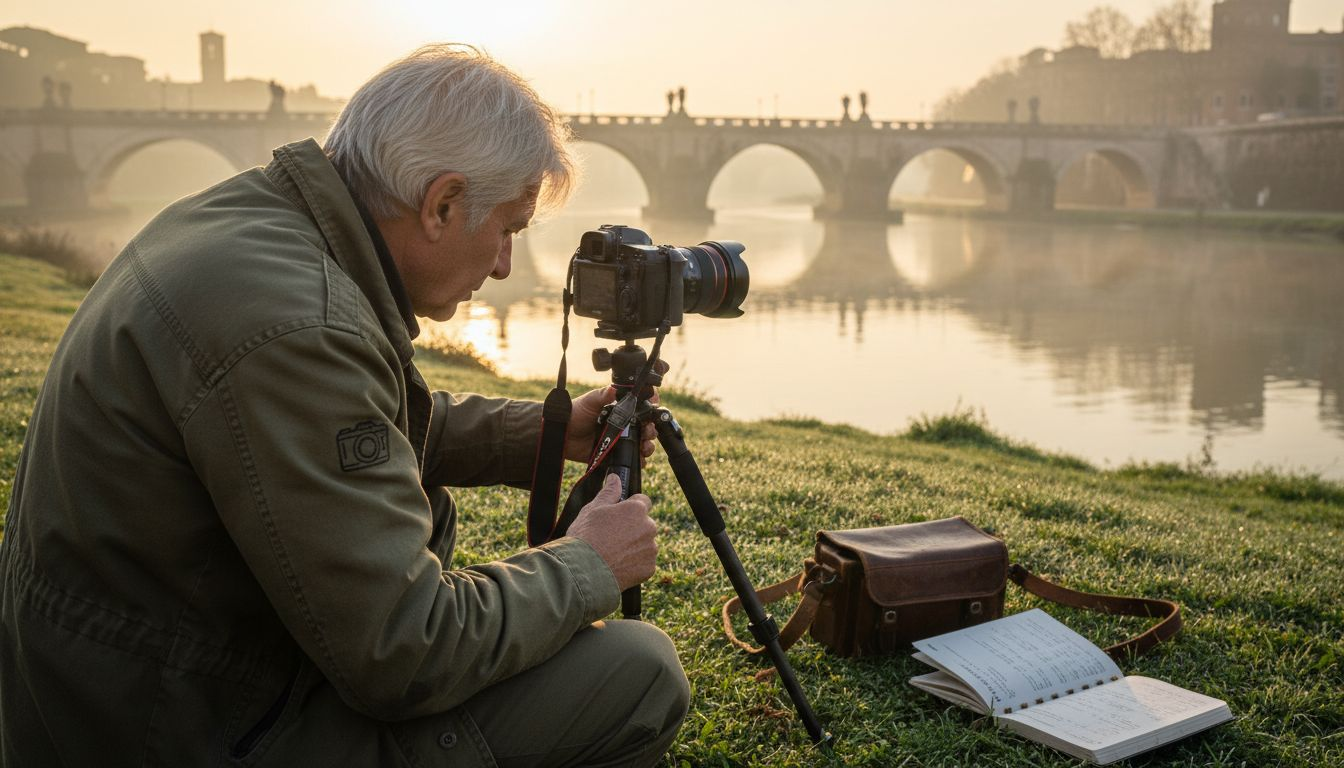
Timing your shoots around sunrise and sunset transforms ordinary scenes into extraordinary compositions. The low angle sun creates long shadows across Tuscan hills, illuminates Venice’s canals with golden reflections, and bathes Milan’s architecture in warm tones that emphasize texture and form. Plan your daily shooting schedule around these brief but powerful windows.
Regional and seasonal variations significantly affect light quality and color temperature. Summer light in coastal areas like Cinque Terre appears bright and saturated, while autumn fog in Tuscany creates soft, diffused conditions perfect for moody landscapes. Winter light in northern cities stays low and dramatic throughout the day, extending your creative shooting opportunities beyond traditional golden hours.
Shadows tell stories as powerfully as highlights. Italian architecture with its deep archways, narrow alleyways, and courtyards creates natural contrast that adds mystery and dimension to your photos. Position subjects where light transitions meet shadow, use buildings to block harsh midday sun, and embrace the interplay between illuminated and dark areas to guide viewer attention.
Capturing natural light in Italy requires understanding how Mediterranean climate affects photographic conditions throughout the year. Spring offers balanced light with moderate contrast, while summer demands careful exposure management during intense midday hours.
Pro Tip: Arrive at your chosen location 30 minutes before golden hour begins. Scout compositions, set your exposure manually based on the brightest areas, and use a collapsible reflector to fill shadows on portrait subjects during the fleeting optimal light window.
Advanced techniques include using graduated neutral density filters to balance bright skies with darker foregrounds in landscape shots, positioning subjects backlit for rim lighting effects, and leveraging natural light photography in Italy principles to create consistent mood across your travel portfolio.
Techniques for storytelling in Italian travel photography
Photographic storytelling transforms viewers from passive observers into emotional participants in your Italian journey. Capturing human interactions and local festivities increases engagement by 40% compared to landmark-focused images, creating deeper connections with your audience.
Narrative photography goes beyond documenting what you see to conveying how a place feels, sounds, and moves. Capture market vendors arranging produce in Rome’s Campo de’ Fiori, elderly men playing cards in Venetian piazzas, or children chasing pigeons across Milan’s Duomo square. These authentic moments reveal Italy’s living culture more powerfully than any monument.
Balancing iconic landmarks with everyday life scenes creates visual diversity and narrative depth. Photograph the Colosseum, but also capture the cobblestone street leading to it, the tourists’ reactions, or the street artist sketching nearby. This layered approach builds a complete story rather than a collection of isolated images.
Composition techniques enhance storytelling by directing viewer attention and establishing context. Use foreground elements to frame subjects and add depth, position people interacting with their environment rather than posing stiffly, and include contextual details that indicate location and culture. A photo of pasta gains meaning when you show the grandmother’s weathered hands rolling the dough.
Storytelling techniques in Italy emphasize capturing sequences that build narrative. Photograph preparation, action, and aftermath of events like religious processions or harvest festivals. This documentary approach creates photo essays rather than single images.
Seek permission and build rapport before photographing people in intimate or candid situations. A brief conversation in basic Italian, a smile, and genuine interest often result in more authentic expressions than stolen shots. Many Italians enjoy sharing their stories and take pride in their crafts and traditions.
Cultural photography ideas in Italy include documenting artisan workshops, agricultural practices, family-run restaurants, and neighborhood festivals. These subjects offer rich visual and emotional content that connects viewers to Italy’s authentic character beyond tourist experiences.
Common mistakes and troubleshooting in artistic travel photography
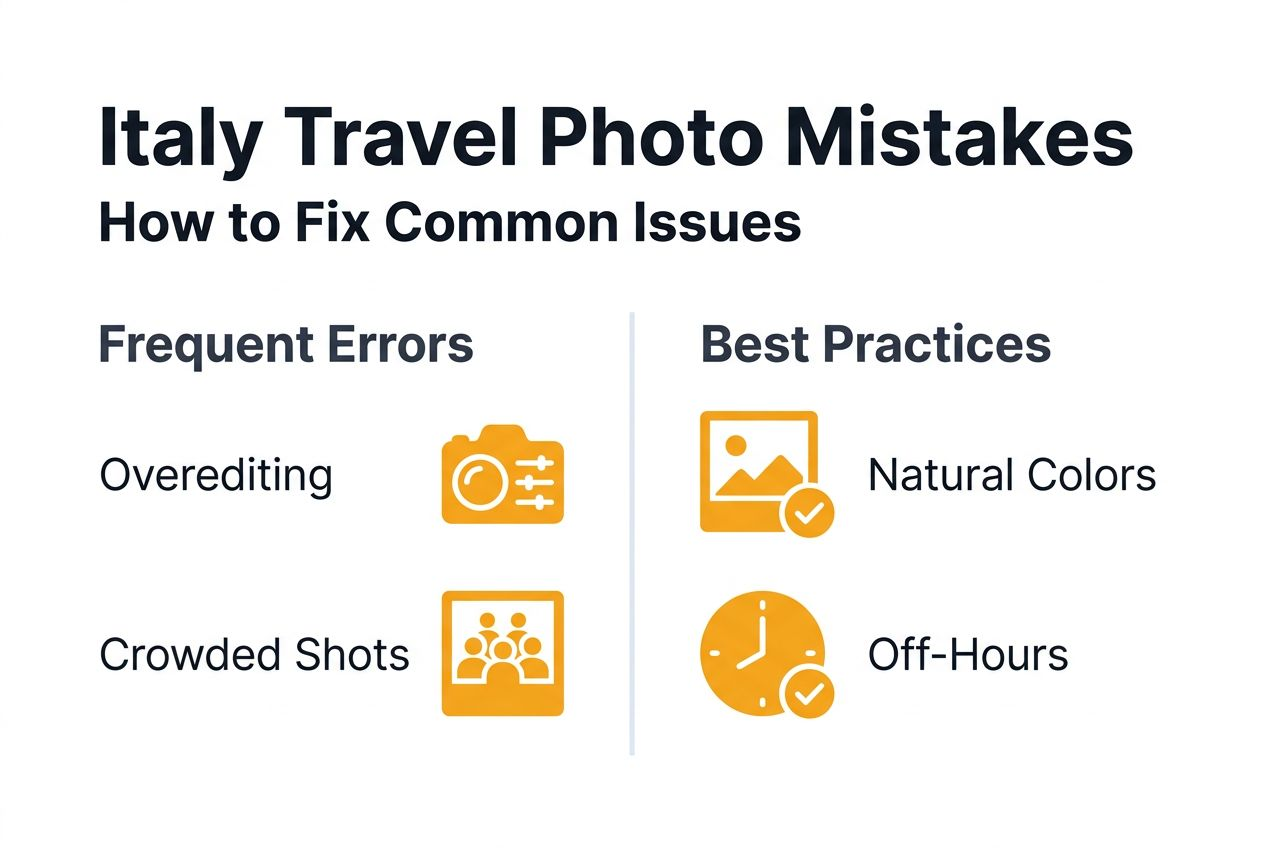
Over-editing destroys the natural light qualities that make Italian photography distinctive. Amateur photographers often boost saturation, contrast, and sharpness excessively, creating artificial-looking images that lack the subtle tonal transitions of Mediterranean light. Limit adjustments to minor exposure correction, gentle contrast enhancement, and selective color balancing that preserves natural atmosphere.
Ignoring cultural context damages both authenticity and respect. Photographing religious ceremonies without understanding their significance, capturing private moments without permission, or treating locals as exotic subjects rather than individuals creates ethically problematic work. Always prioritize dignity and consent over getting the shot.
Failure to understand histogram and exposure can result in 35% of under or overexposed travel photos, impacting artistic quality and limiting post-processing recovery options. Learn to read your camera’s histogram in real time, adjusting exposure to prevent clipped highlights in bright Italian skies or crushed shadows in dim interiors.
Shooting exclusively at crowded landmarks during peak hours results in cluttered, impersonal images. Visit popular sites during early morning or late evening when tourist numbers drop, or seek alternative perspectives that exclude crowds. A side alley near the Trevi Fountain often reveals more authentic Roman atmosphere than the fountain itself at noon.
Pro Tip: Set your camera to display the histogram immediately after each shot. If the graph bunches against the right edge, you’re overexposing; if it crowds the left, you’re underexposing. Adjust your exposure compensation or manual settings and reshoot until the histogram shows balanced distribution across the tonal range.
Poor lens selection limits creative options in Italy’s varied environments. Zoom lenses tempt constant focal length changes that prevent you from developing compositional instincts. Committing to a single prime lens forces you to move physically, discovering unexpected angles and perspectives that improve your photographic eye.
| Common Mistake | Solution |
|---|---|
| Oversaturated colors from excessive editing | Use subtle adjustments; preserve natural light tones |
| Blown highlights in bright skies | Expose for highlights; lift shadows in post-processing |
| Cluttered landmark compositions | Shoot during off-peak hours; use longer focal lengths |
| Missing cultural context | Include environmental details; capture interactions |
| Inconsistent exposure across images | Master manual mode; use histogram feedback |
Understanding these frequent errors and their corrections accelerates your progress from amateur snapshots to artistic travel photography. The fixing common photography mistakes resource provides detailed troubleshooting for technical and creative challenges specific to Italian locations.
Safety and cultural considerations for photography in Italy
Respectful photography in Italy requires understanding legal requirements and cultural sensitivities that vary significantly from other destinations. Always obtain explicit permission from subjects when doing street photography, as Italian privacy laws and social norms expect consent in approximately 90% of candid photography situations.
Local photography laws restrict commercial use of certain landmarks and prohibit photography inside many churches, museums, and private properties without authorization. Research specific location policies before your trip, and when in doubt, ask permission from staff or property owners. Violating these regulations can result in fines or confiscated equipment.
Cultural norms around photography differ between northern and southern Italy, urban and rural areas, and younger and older generations. Generally, Italians in tourist-heavy cities like Venice and Florence expect cameras but still appreciate polite requests. In smaller towns and villages, residents may feel uncomfortable with unsolicited photography, especially during private family gatherings or religious observances.
Religious sites demand particular sensitivity. Cover shoulders and knees when entering churches, never photograph during active worship services unless explicitly permitted, and avoid using flash that disturbs contemplative atmosphere or damages artwork. Many sacred spaces allow photography but request donations or restrict certain areas.
Building trust with local subjects enhances both your photos and your cultural experience. Learn phrases like “Posso fare una foto?” (May I take a photo?), offer to share contact information so subjects can receive copies, and engage in brief conversations that establish human connection beyond transactional image-taking.
Practical safety considerations include protecting equipment in crowded tourist areas where pickpocketing occurs, being aware of your surroundings when focused on composition, and avoiding isolated areas during early morning or late evening solo shoots. Travel with a companion when possible, especially in unfamiliar neighborhoods.
Respecting these legal and cultural boundaries doesn’t limit your artistic freedom but rather deepens the authenticity and ethical foundation of your Italian travel photography portfolio.
Expected results and outcomes from following this guide and participating in tours
Applying the techniques in this guide over a minimum seven-day photography tour in Italy produces measurable improvements in technical skill, artistic vision, and audience engagement. This timeframe allows you to experience diverse lighting conditions, cultural events, and regional variations essential for comprehensive skill development.
You’ll develop stronger compositional instincts by practicing with a single prime lens across varied Italian environments. Your ability to pre-visualize shots improves as you learn how Mediterranean light behaves throughout the day and across seasons. Manual exposure control becomes intuitive rather than intimidating as you apply histogram feedback in real shooting situations.
Narrative storytelling skills grow through daily practice capturing cultural moments, local interactions, and the rhythm of Italian life. Your photos will shift from isolated landmarks to cohesive visual stories that communicate place, atmosphere, and emotion. Viewer engagement increases substantially when you incorporate human elements and cultural context into your work.
Guided photography tours accelerate this learning process by approximately 30% compared to self-directed travel. Professional photographers provide immediate feedback on composition, exposure, and storytelling choices. They reveal optimal shooting locations, timing, and techniques developed through years of experience photographing Italian subjects.
Cultural immersion through guided experiences deepens the authenticity of your photographs. Local guides facilitate respectful interactions with communities, explain historical and social context, and provide access to locations and events unavailable to typical tourists. This insider knowledge transforms superficial documentation into meaningful artistic interpretation.
- Week one establishes technical foundations through daily practice with exposure, composition, and light management in varied conditions.
- Weeks two through four develop narrative vision as you learn to recognize and capture authentic cultural moments beyond obvious tourist scenes.
- Month two refines your artistic voice through consistent application of techniques, building a cohesive portfolio that reflects personal perspective.
- Ongoing practice after your tour maintains skills and allows you to apply Italian photography lessons to new locations and subjects.
The benefits of guided photo tours in Italy extend beyond immediate skill acquisition to lasting improvements in how you see, interpret, and photograph the world around you.
Explore Italy with expert-guided photography tours
Transforming your travel photography from snapshots to art requires more than technique; it demands immersive cultural experience and expert guidance. Italy Photo Tour’s professional-led experiences combine daily feedback on your work with authentic access to Italy’s most photogenic locations and cultural moments.
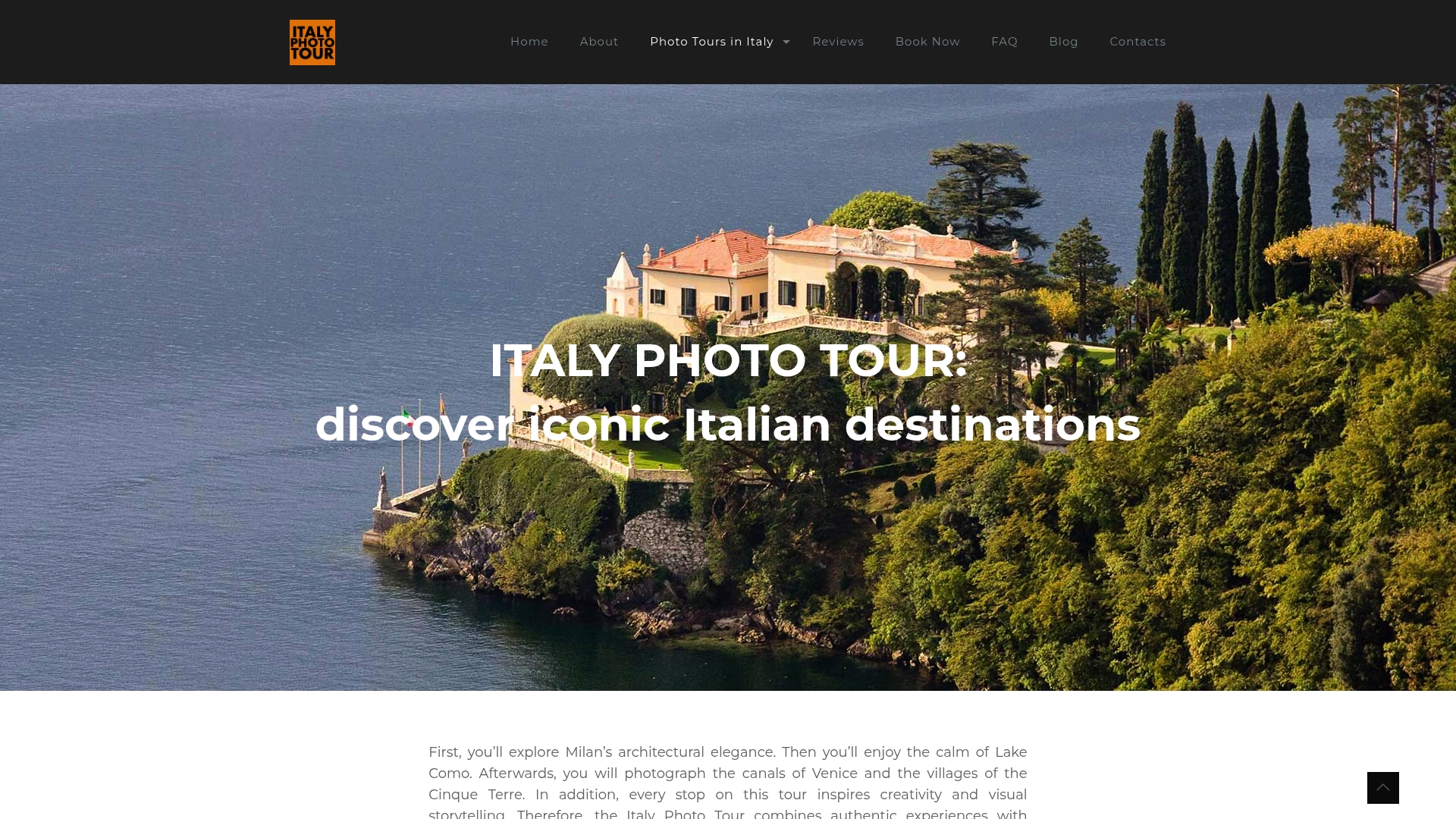
Our photography tours Italy take you beyond crowded landmarks to discover hidden perspectives in Milan’s historic neighborhoods, Tuscany’s rolling countryside, Venice’s quiet canals, and coastal villages where traditional life continues unchanged. Each tour balances technical instruction with cultural storytelling, helping you develop both your camera skills and your artistic vision.
Professional photographer Mino Di Vita leads small groups through carefully planned itineraries designed around optimal lighting conditions and authentic cultural experiences. You’ll receive personalized feedback on your compositions, learn advanced techniques for managing Mediterranean light, and gain insider access to locations that reveal Italy’s soul beyond the tourist surface. Explore our complete Italy Photo Tour offerings and take the next step in your photographic journey.
Frequently asked questions
What essential gear do I need for artistic travel photography in Italy?
A compact kit centered on a DSLR or mirrorless camera with a 35mm or 50mm prime lens covers most artistic travel photography situations. Add a lightweight tripod for stability during golden hour and low light conditions, plus a circular polarized filter to manage reflections and enhance sky contrast. This streamlined setup maintains mobility while providing professional image quality across Italy’s diverse environments.
How can I best use natural light for artistic photos in Italy?
Plan your primary shooting during the 60 to 90 minute golden hour windows around sunrise and sunset when warm, directional light creates depth and emotion. Adjust your approach for regional differences such as bright coastal light in summer versus soft foggy conditions in autumn Tuscany. Use shadows creatively to add mystery and guide viewer attention, and position subjects where light transitions meet darkness for dramatic effect.
Why are guided photography tours recommended for Italy travel?
Guided tours accelerate learning by approximately 30% compared to self-directed trips through immediate expert feedback and optimized shooting schedules. Professional photographers reveal optimal locations, timing, and techniques developed through years of experience while facilitating authentic cultural access unavailable to typical tourists. The combination of technical instruction and cultural immersion produces both better photos and deeper understanding of Italian subjects.
What are common mistakes to avoid in Italian travel photography?
Avoid over-editing that destroys natural Mediterranean light qualities; use subtle adjustments that preserve authentic atmosphere. Learn histogram reading to prevent the exposure errors that affect 35% of amateur travel photos, resulting in unrecoverable highlights or shadow detail. Always seek permission before photographing people to respect Italian cultural norms and privacy expectations. Schedule shoots during early morning or evening hours to avoid crowds at popular landmarks.